In this post
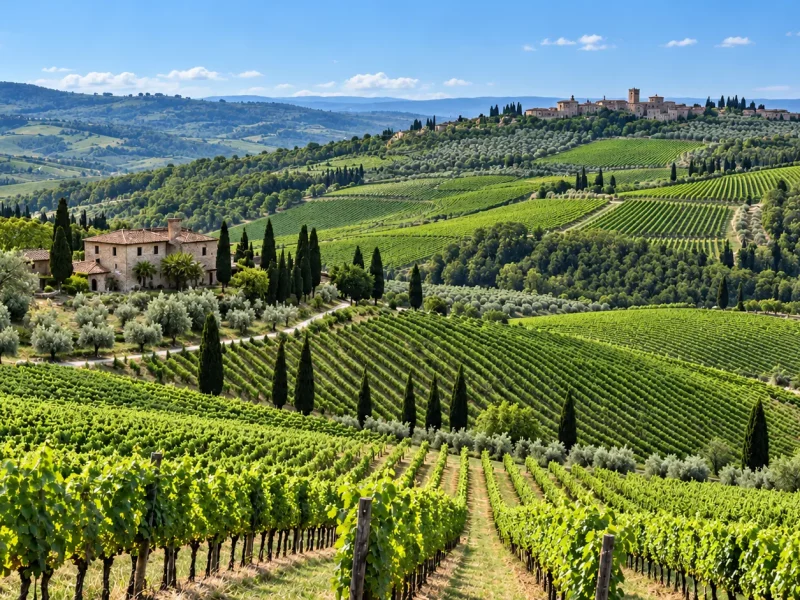
Tuscan wine regions explained in one line: the official map has more than twenty names, but the ones you'll meet on a wine list come down to five. Chianti Classico, Montalcino, Montepulciano, Bolgheri and San Gimignano. Chianti Classico is the closest and the easiest to visit in a day, which is why most wine trips from the city head south into the Chianti hills. You can reach the others too, with longer drives.
The others are still worth knowing. A Florentine trattoria will happily pour you a Brunello or a Bolgheri red. The label makes a lot more sense once you know roughly where the bottle came from. Here's the short version of each, with more space for the one closest to Florence.
Chianti Classico, between Florence and Siena
The Chianti Classico zone fills the hills between the two cities. For example, Greve, Castellina, Radda and Gaiole sit entirely inside it. Parts of San Casciano, Barberino Tavarnelle, Castelnuovo Berardenga and Poggibonsi are in too. In addition, the black rooster on the neck of the bottle is the consortium's mark. No rooster, no Chianti Classico.
That point confuses a lot of visitors. Plain "Chianti" is a separate, much larger appellation that wraps around the Classico area. It reaches toward Arezzo, Pisa and Pistoia, with sub-zones like Rufina and Colli Fiorentini. Some of it is very good. However, it isn't the same wine, or the same landscape.
The borders are old. In 1716 Grand Duke Cosimo III de' Medici issued an edict drawing the limits of four wine areas, Chianti among them. Also, the grape hasn't changed much since. Chianti Classico must be at least 80% Sangiovese, and plenty of producers go all the way to 100%.
On the label you'll find three levels: Annata, Riserva and Gran Selezione, the strictest, added in 2014. Since 2021 some bottles also name one of eleven villages, like Panzano, Lamole or Radda. That only happens when the grapes come from there. For a first visit you don't need more. The rules and the grape get a full piece of their own in Chianti wine explained.
From the map to the glass
What no map shows is how different two slopes a few kilometres apart can taste. The soil shifts from flaky grey galestro to harder alberese limestone, and some vineyards around Radda sit above 500 metres. You notice it much faster when a guide pours two wines side by side and points at the hill each one came from. Then the difference stops being theory. Most of a guide's job on a Chianti day is exactly that, plus translating the label in your hand. Choosing the estates is a craft of its own, and our notes on how to choose a winery in Chianti go through what to look for.
On the Chianti Wine Safari you cover this ground in a small group. The vehicle is an air-conditioned 4WD, and it leaves the tarmac for the tracks between private vineyards, stopping at viewpoints for photos. Over the day you taste nine different wines. Extra virgin olive oil, sheep's cheese and salumi come alongside.
Montalcino and Montepulciano
Both towns are south of Siena and both make Sangiovese. For most drinkers that's where the similarity ends.
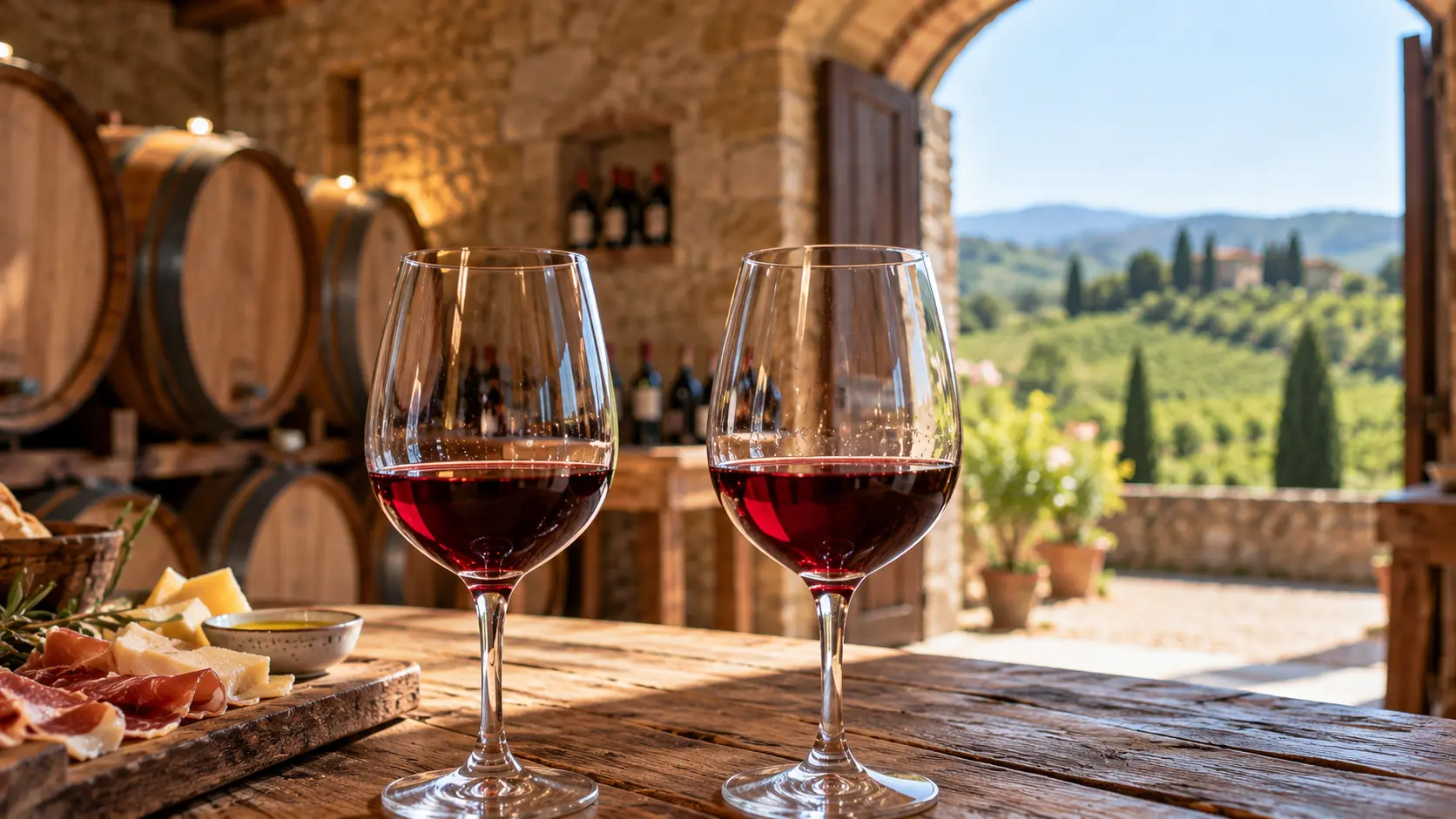
Brunello di Montalcino is 100% Sangiovese. It can't be sold until the January of the fifth year after harvest, with at least two of those years in wood. It's dense, long-lived and probably the best-known Tuscan red abroad. Rosso di Montalcino comes from the same vineyards, but producers release it much younger. As a result, it's a sensible restaurant order when you want the style without waiting years for it.
Vino Nobile di Montepulciano is made mostly from Prugnolo Gentile, the local name for Sangiovese. Montepulciano the town has nothing to do with Montepulciano d'Abruzzo, a grape from another region altogether. It's one of the most common mix-ups on an Italian wine list.
Each is close to two hours from Florence by road. A day trip works, but it's a long one: with the return, around four hours of the day go to the car.
What about the coast?
Bolgheri, in the province of Livorno, broke the Sangiovese rule. Its reputation rests on Cabernet Sauvignon, Merlot and Cabernet Franc. It started with Sassicaia, whose first commercial vintage was 1968. A straight avenue of cypresses, about five kilometres long, leads to the village. You can do it in a day from Florence, though it's the longest drive of the lot.
Bolgheri is also where most people first hear the phrase "Super Tuscan". In fact, it was never an official category. It grew up in the 1970s around wines that ignored the rules of the time, often blending Sangiovese with French grapes or skipping the white grapes Chianti then required. Antinori's Tignanello, first released with the 1971 vintage, is the one people usually name. Many of these bottles still carry the plain "Toscana IGT" label, which puzzles people who expect the famous wines to have the grandest designations.
You don't have to leave Florence to see the Antinori side of the story. The family palazzo stands on Piazza Antinori, at the top of Via Tornabuoni, and the wine bar on its ground floor has served their wines for decades.
One white, and two names near Florence
Tuscany is red country with one well-known exception. Vernaccia di San Gimignano was the first Italian wine to receive DOC status, in 1966. It grows on the slopes below the town's towers. If you're in San Gimignano for lunch, it's the glass to order. There's more on how it's made and what to expect from it in Vernaccia wine of San Gimignano explained.
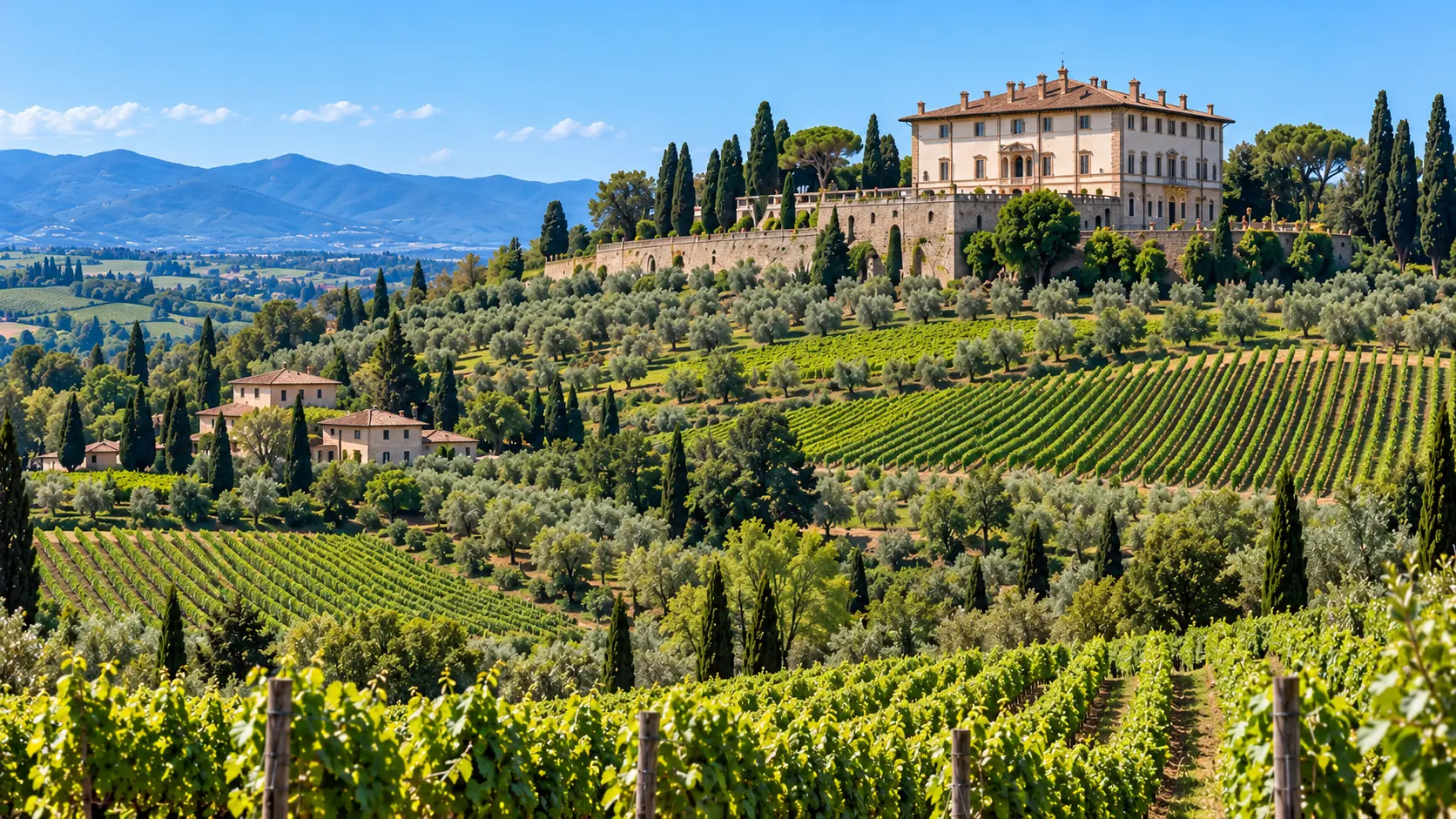
Closer to Florence, two small areas get overlooked. The 1716 edict also covered Carmignano, west of the city. It has blended Cabernet with Sangiovese since the Medici planted it there, long before Bolgheri made the idea fashionable. Rufina, north-east along the Sieve valley, produces some of the longest-lived Chianti outside the Classico zone. Look for both on wine lists in Florence.
Which Tuscan wine regions work as a day from Florence?
Any of them can be a day out from Florence. Chianti Classico is simply the one where the road takes the smallest share of the day. On the Wine Safari the longest drive of the day is about an hour. The rest of the time goes to wineries, cellars and vineyard tracks.
There are three versions of the day. The full day visits two wineries in historic Tuscan villas, with time in their old cellars. It ends with a traditional lunch at a winery restaurant, local antipasti and handmade pasta. The morning version goes to a family-owned estate that works organically, with a guided tasting and lunch afterwards. If that side of winemaking interests you, there's a separate piece on organic wineries in Tuscany. The afternoon one stops at a panoramic spot for a glass as the sun goes down. Then it moves on to a boutique winery for a tasting and dinner outdoors.
A few practical things before you book. The tour is for adults only, 18 and over. The kitchens can't cater for vegetarian or other dietary alternatives, so check the menu works for you. There's no room for luggage on the vehicle, which matters if you're catching a train straight after. There isn't much walking. Still, the ground at the estates is uneven and sometimes steep, so the day isn't suitable for anyone with walking difficulties.
If you only have one day for wine, the morning safari leaves your afternoon free in Florence. The full day suits anyone who wants two estates, two sets of cellars and a longer lunch to compare what they've tasted.