In this post
- Why This Ride Starts in Florence Specifically
- Timing and What's Included
- What Walkabout Requires to Ride
- The Tutorial Before You Set Off
- How an Automatic Scooter Actually Works
- Two Habits That Actually Help
- What to Wear on the Day
- A Few Other Things to Know Before Booking
- What the Rest of the Day Looks Like
- The Countryside Beyond the City Walls
- Riding as Part of a Group
- Riding Florence's Countryside for the First Time
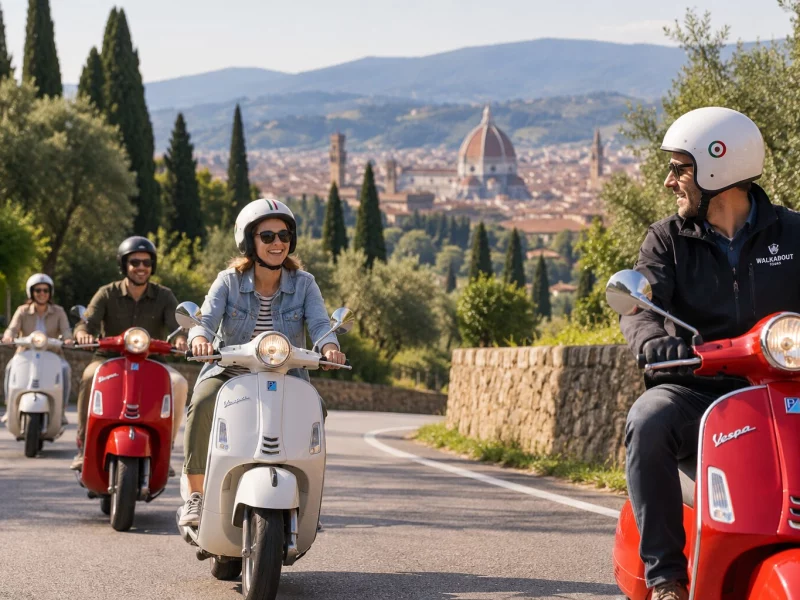
A Vespa tour Florence for beginners setup doesn't require any prior riding experience. Only a valid car license. The bikes are automatic, no gears, no clutch, and the tour builds a full instruction stop into the itinerary before anyone leaves the meeting point.
Why This Ride Starts in Florence Specifically
The Vespa itself has a real connection to the city before any tour ever existed. Piaggio filed the original patent for the Vespa design on April 23, 1946, at the Ministry of Industry and Commerce's Florence office. The scooters themselves were built at the Pontedera factory nearby. Engineer Corradino D'Ascanio designed it. The name came from Enrico Piaggio's own reaction to the prototype: "Sembra una vespa," it looks like a wasp, for the shape of the body and the sound of the engine.
Riding one through the same city where that patent was filed, almost eighty years later, adds a layer to the tour that has nothing to do with nerves or tutorials. Our guide to the history of the Vespa Piaggio covers this origin story in more depth. Useful background before or after the ride itself.
Timing and What's Included
The tour runs six hours, with departures at 8:20am or 1:00pm. Both include the Vespa and helmet rental, fuel, third-party insurance, and the food and wine stop at the estate. Nothing about the requirements or the instruction stop changes between the morning and afternoon slot, so the choice mostly comes down to which fits the rest of your day better.
What Walkabout Requires to Ride
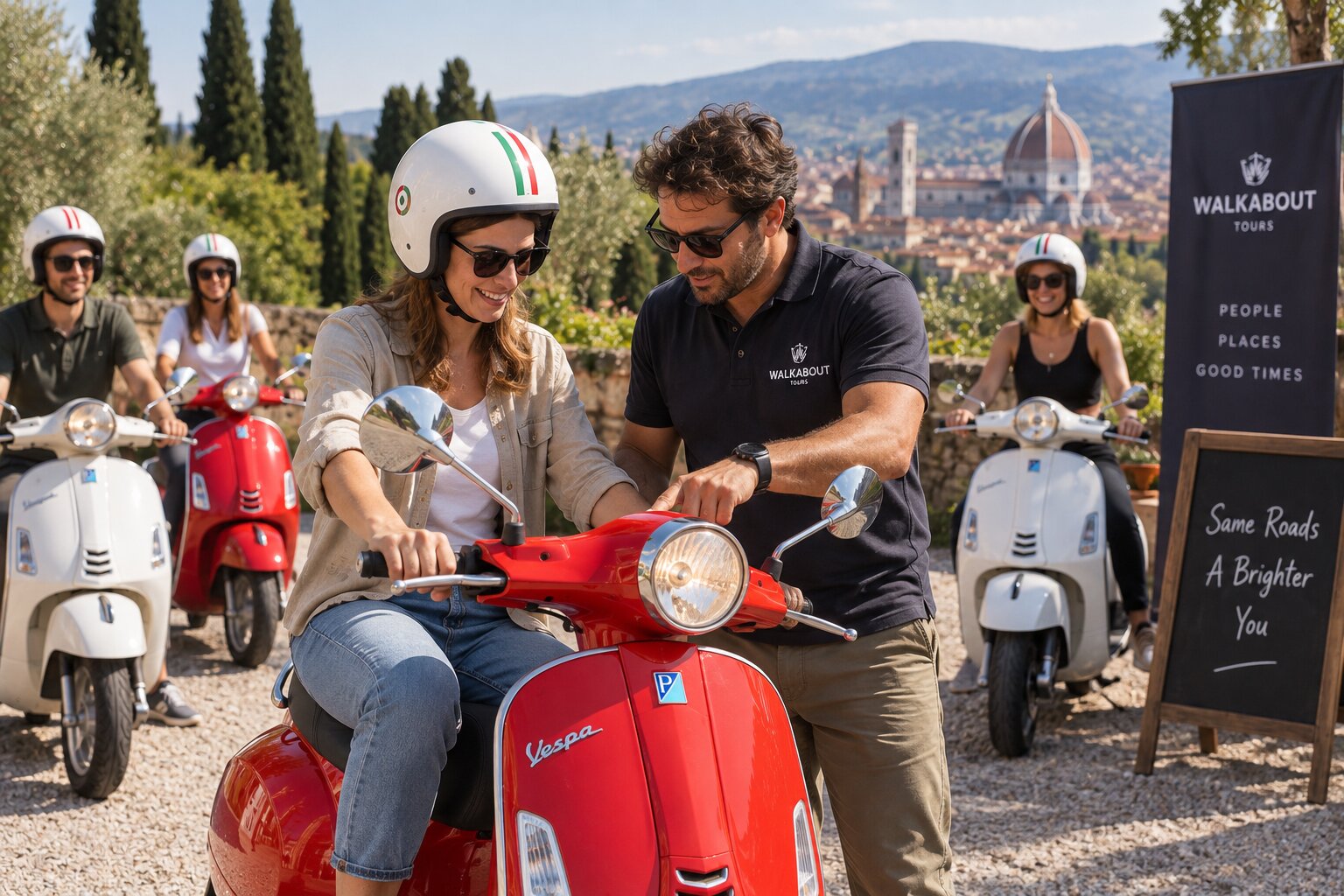
Walkabout's own booking terms state it directly. A valid car license is required. A motorbike license is not essential. Riders need to be 18 or over. Previous scooter experience helps, but isn't asked for anywhere in the requirements. The license gets checked before anyone is handed a helmet.
The Tutorial Before You Set Off
The tour leader fits each guest with a helmet, then runs through the basics. Throttle, braking, balance, turning. The ride only starts once everybody is feeling more confident. That's not a fixed five-minute slot on a schedule. It's a stop that runs as long as it needs to.
The route itself starts gently too. Along the riverside and quieter tree-lined avenues first. The more demanding countryside roads come later in the day. A guide leads from the front the whole way. The pace gets set by whoever in the group needs it slowest.
How an Automatic Scooter Actually Works
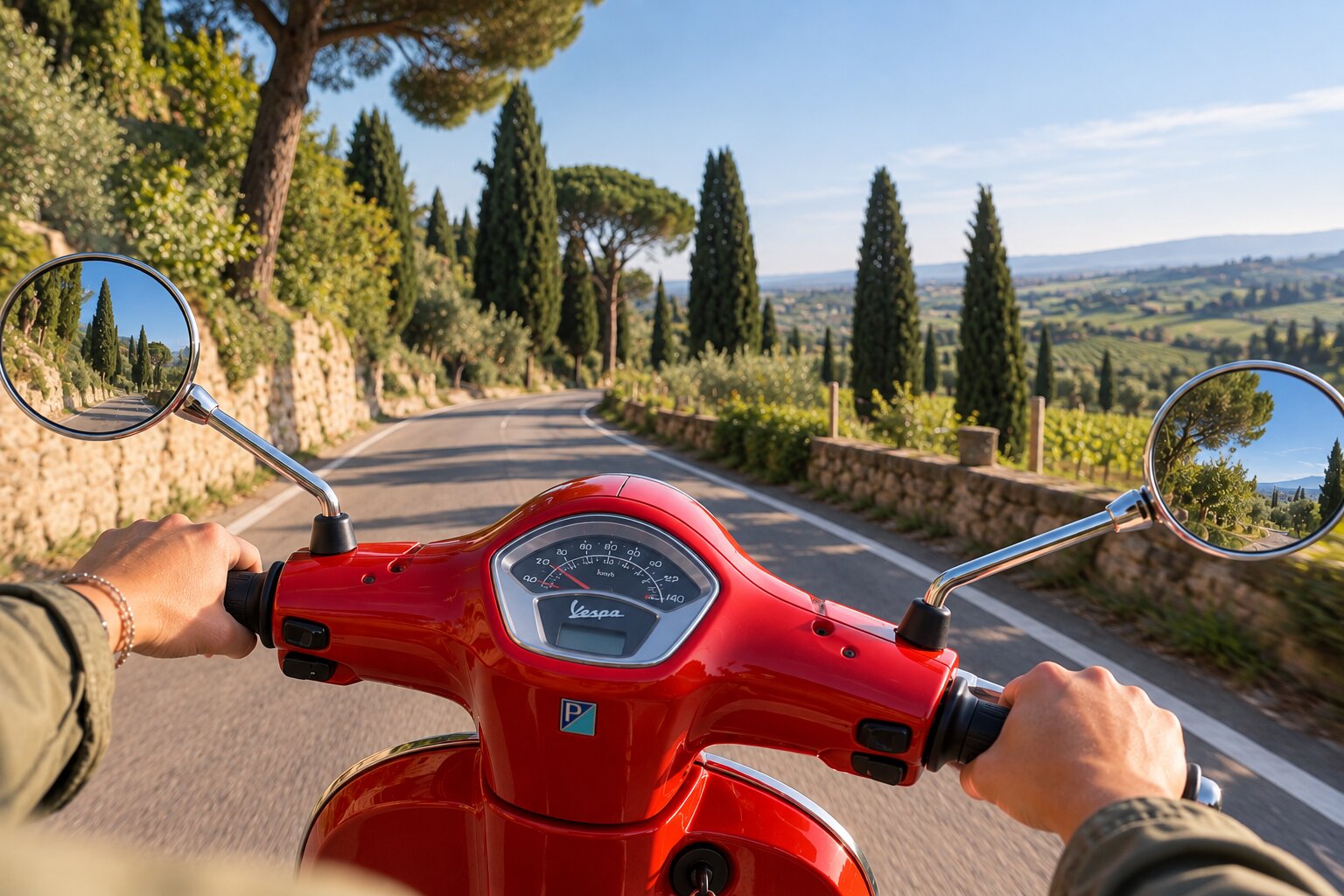
An automatic scooter like the ones used on this tour runs on a continuously variable transmission. That's a mechanical way of saying there's no gear lever to think about at all. Twist the throttle to go. Squeeze either brake lever to slow down, since both wheels have their own independent brake. That's the entire mechanical vocabulary a rider needs to know before setting off.
A manual motorcycle asks a new rider to coordinate a clutch and a gear shift at the same time, which takes most people far longer to get comfortable with. An automatic scooter removes that layer of coordination entirely. Balance and steering are the only real skills left to pick up during the tutorial.
Two Habits That Actually Help
Loose, relaxed hands on the handlebars matter more than a tight grip. A tight grip tends to make steering feel jerky instead of smooth. Looking ahead toward where you want to go, rather than down at the front wheel, helps balance settle in within the first few minutes.
Neither needs memorizing beforehand. A guide corrects both on the spot during the early, quiet stretch of the ride, well before the road gets more interesting.
What to Wear on the Day
Closed-toe shoes matter more than anything else on the list, since sandals leave feet exposed on a moving scooter. A light jacket helps too, even in warm weather, since the wind picks up once the route reaches open road outside the city. Sunglasses are worth packing for anyone riding a morning slot, when the sun sits lower and faces the group head-on for stretches of the route.
A Few Other Things to Know Before Booking
Walkabout's terms list a few other requirements alongside the license. Previous scooter experience is recommended, though not required, since the tutorial covers the basics regardless. Pregnant women aren't permitted on this particular tour.
What the Rest of the Day Looks Like
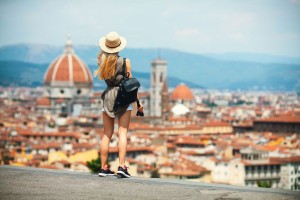
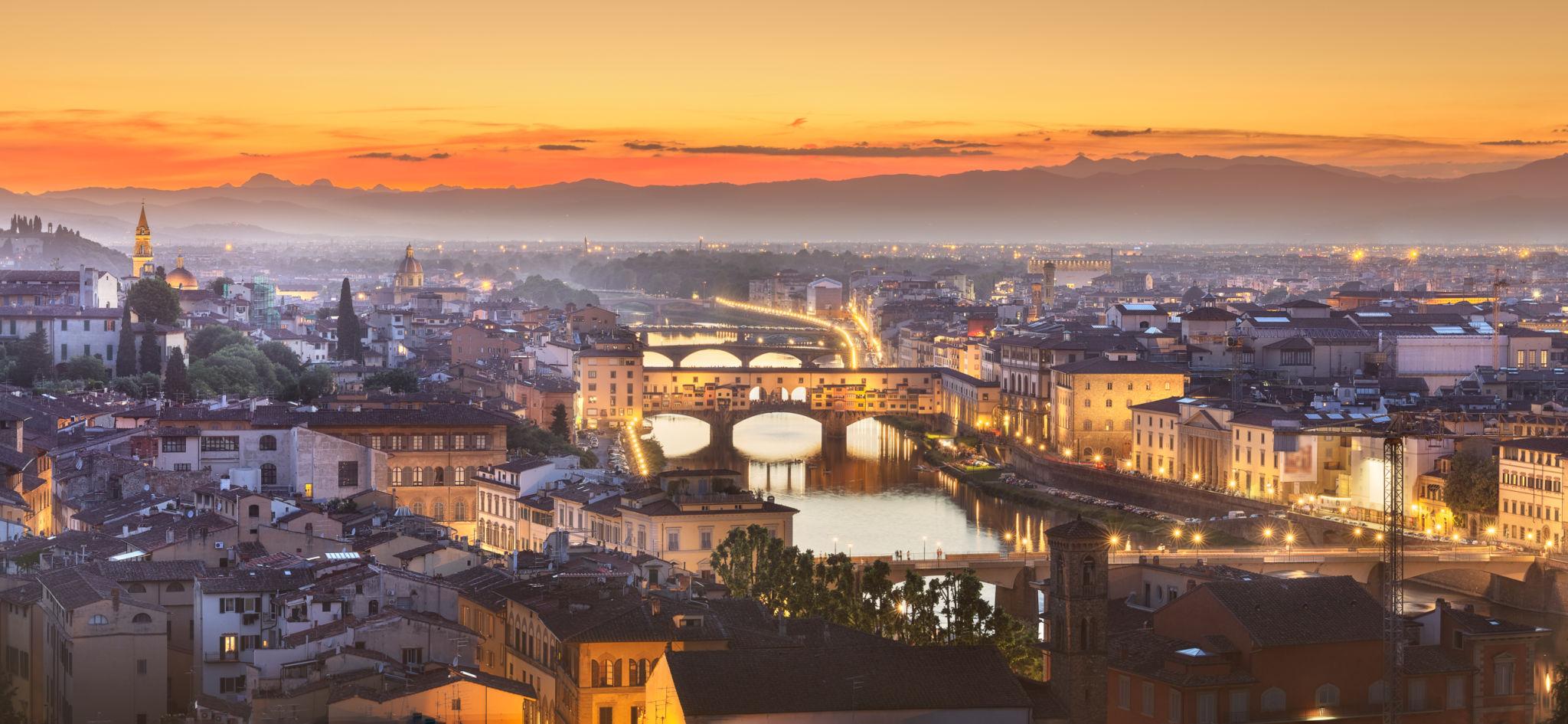
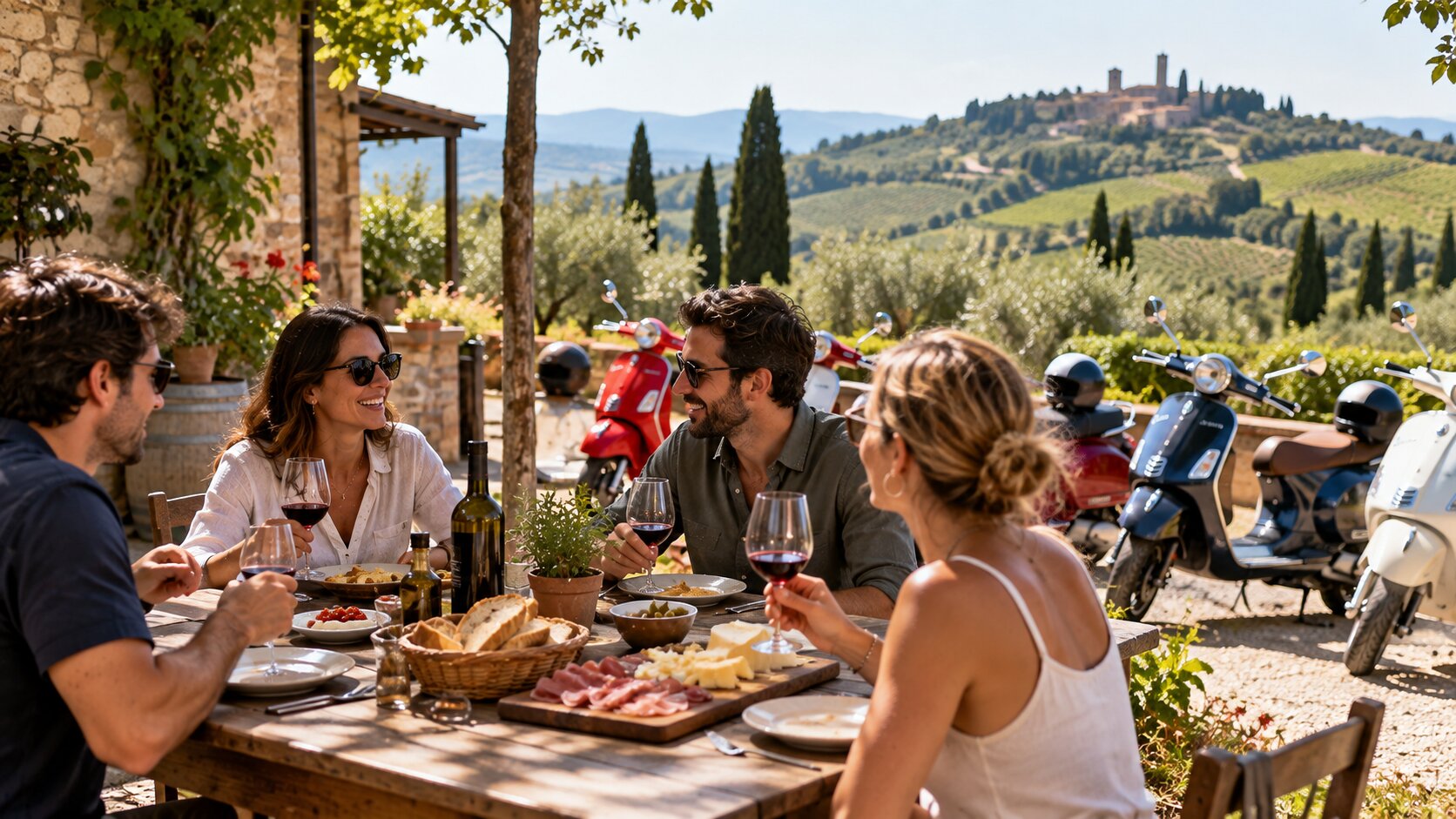
Once the group is comfortable, the route climbs toward a viewpoint over Florence, one the group reaches by following the tour leader along the riverside and a tree-lined avenue first. A stop follows at one of the region's oldest churches. Then it's onto the narrower countryside lanes between castles, villas, olive groves and vineyards, well away from the traffic and crowds of the city center. The estate stop at the end includes prosciutto, cheese, and a glass of Chianti, with a vegetarian option available on request, before the ride back into the city to close out the six hours.
Our guide to Vespa tour safety tips covers more of what the instruction stop involves. A guide to the best Vespa routes in Tuscany covers where the ride heads once the group leaves Florence behind. Useful for picturing the countryside stretch before you're on it.
The Countryside Beyond the City Walls
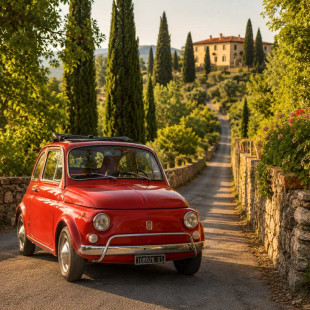
Florence sits in a valley ringed by hills, which is part of why the climb toward that first viewpoint feels so immediate. The city drops away within a few minutes of leaving the historic center. Beyond it, the countryside follows the pattern that defines most of Tuscany. Rows of cypress trees marking old property lines. Terraced olive groves on the steeper slopes. Vineyards filling the gentler ground between them.
None of this scenery is unique to a Vespa tour specifically. The same hills surround Florence whichever way you leave it. What changes on two wheels is how close it all feels. No windshield, no roof, just open air the whole way between the city and the estate.
Riding as Part of a Group
A guide rides at the front for the entire tour, with the rest of the group following behind in a loose line rather than side by side. Keeping a reasonable gap from the scooter ahead matters more once the pace picks up outside the city. Sudden braking on a rural road works differently than in slow city traffic. The tutorial covers this spacing along with the rest of the basics, so it's something every rider hears about before setting off, not something to figure out mid-ride.
Riding Florence's Countryside for the First Time
A Vespa tour Florence for beginners is built around one progression. Instruction first, quiet streets next, countryside once the group has actually had time to adjust. Our Tuscany Vespa Tour from Florence follows exactly this structure. The tutorial and safety briefing come built into the itinerary before the ride out toward the hills and the food and wine stop at the estate along the way. The same route that starts with a practice stretch by the river ends with the group riding back through the city on their own, on the same scooter, with nothing added beyond what the tutorial already covered.