In this post
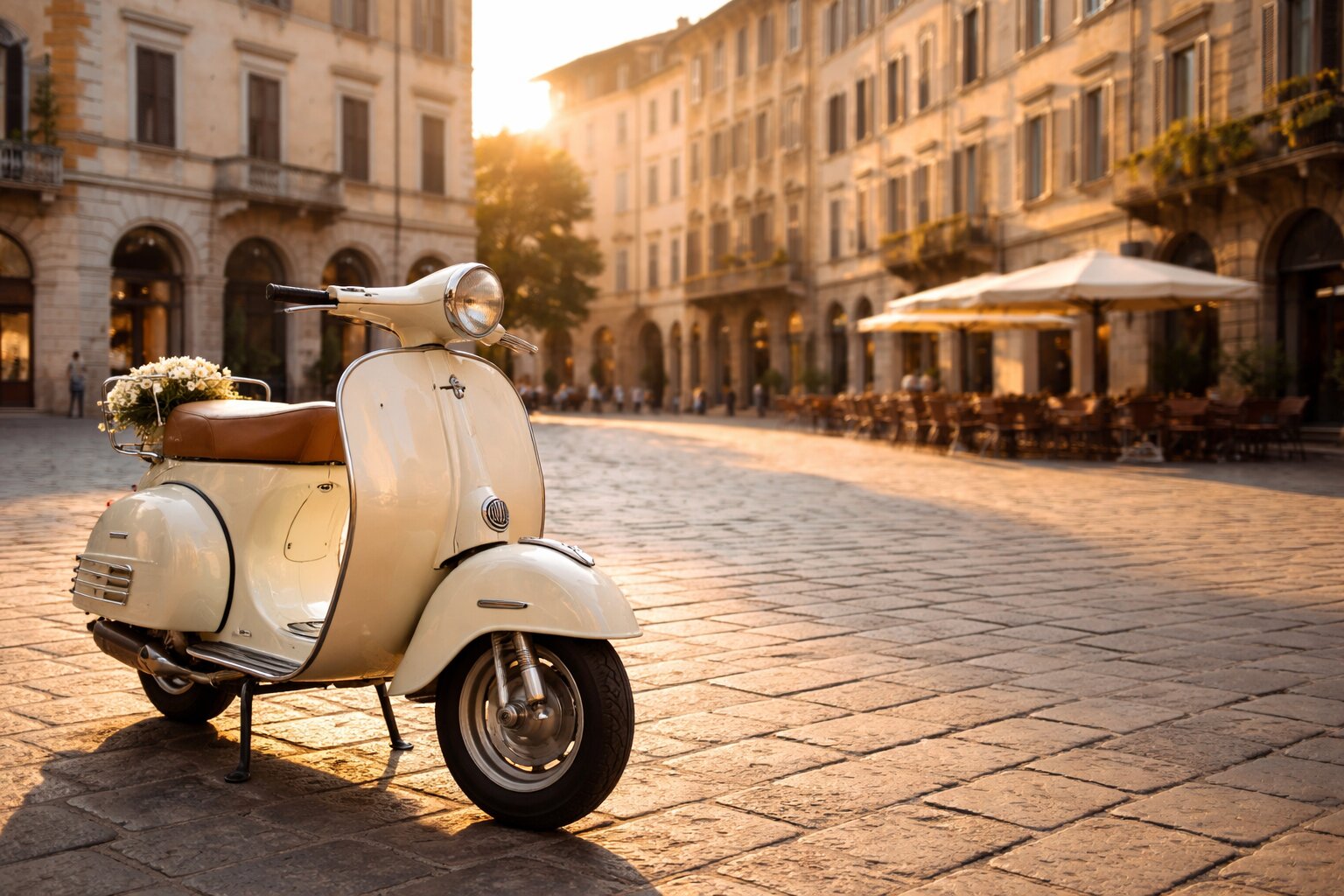
Italy is known for many symbols of design and cultural identity. Renaissance art, timeless cuisine, and landscapes shaped by centuries of history all contribute to the country’s global image. Among these symbols, however, few are as instantly recognizable as the Vespa.
Understanding the history of the Vespa Piaggio means understanding more than a scooter. It reveals a story of postwar ingenuity, industrial design, and a vision of mobility that helped redefine everyday life in Italy.
Today, the Vespa remains not only a practical vehicle but also an enduring cultural icon—one that continues to inspire travel experiences across the Italian countryside.
The Birth of Vespa After World War II
The origins of Vespa date back to the aftermath of World War II. Italy’s infrastructure was damaged, and the country needed an affordable, accessible means of transportation.
Piaggio, a company previously known for manufacturing aircraft components, sought to create a vehicle that was simple, economical, and easy to use. The result was a revolutionary design developed by engineer Corradino D’Ascanio.
Unlike traditional motorcycles, the Vespa featured:
- a step-through frame that allowed riders to sit comfortably
- a protective front shield to keep clothing clean
- a compact engine integrated into the rear wheel
When Enrico Piaggio first saw the prototype in 1946, he reportedly exclaimed that the shape resembled a wasp “Sembra una vespa.” The name remained.
The Vespa was officially born.
A New Form of Freedom
The success of Vespa was immediate. Within a few years, the scooter became a symbol of mobility for a generation eager to rediscover movement and independence after years of war.
The Vespa offered freedom in a simple form. It allowed workers to commute, couples to explore nearby countryside, and travelers to move through cities with ease.
Throughout the 1950s and 1960s, Vespa became embedded in Italian culture. It appeared in cinema, fashion photography, and everyday life.
Perhaps its most famous appearance came in the film Roman Holiday, where Audrey Hepburn and Gregory Peck rode a Vespa through the streets of Rome. The scene transformed the scooter into a global icon of Italian lifestyle.
Design That Defined Italian Style
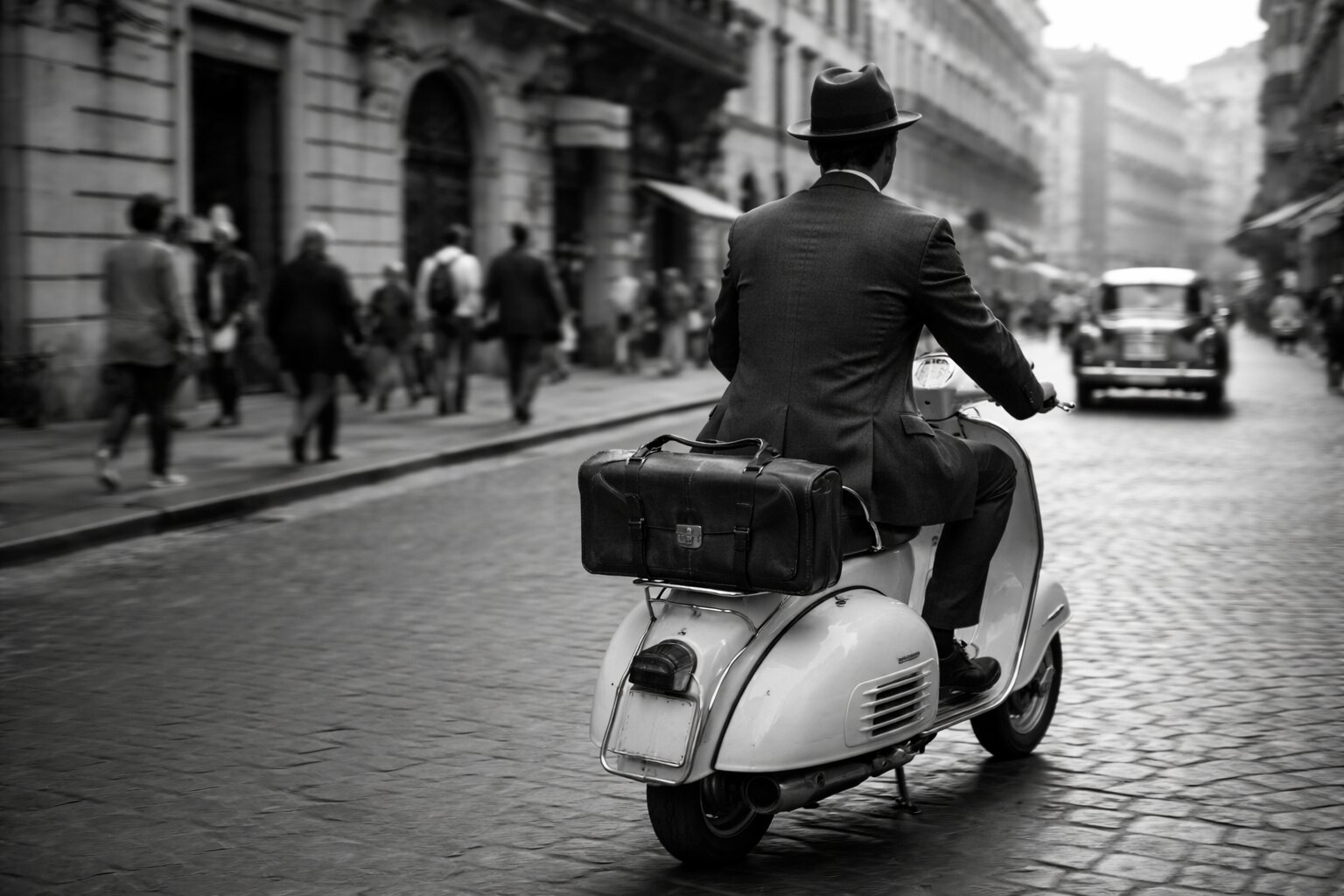
One reason the Vespa endured beyond its initial practical purpose lies in its design. From the beginning, the scooter was conceived not merely as transportation but as an object of elegance.
The curved metal body, clean lines, and compact proportions reflect the broader philosophy of Italian industrial design: beauty integrated with functionality.
Over the decades, the Vespa evolved technically while maintaining its recognizable silhouette. Even modern models remain faithful to the original design language introduced in the 1940s.
The history of the Vespa Piaggio is therefore also a history of Italian design where engineering and aesthetics are inseparable.
Vespa and the Spirit of Italian Travel
While the Vespa was originally designed for daily transportation, it quickly became associated with exploration.
Across Italy, riders discovered that the scooter offered a uniquely immersive way to move through landscapes. Narrow countryside roads, small villages, and panoramic routes became part of the Vespa experience.
This connection between mobility and discovery remains strong today. Travelers often associate the Vespa with the slower rhythm of Italian travel where the journey itself becomes as meaningful as the destination.
Alongside other iconic vehicles such as the Vespa and Fiat 500, it represents a form of travel rooted in style, simplicity, and authenticity.
The Vespa Today
Nearly eighty years after its creation, the Vespa continues to be produced by Piaggio and remains one of the most recognizable vehicles in the world.
Collectors, design enthusiasts, and travelers alike celebrate its legacy. Vintage models are carefully restored, while contemporary versions adapt to modern technology without abandoning their distinctive aesthetic.
More importantly, the Vespa still embodies a particular vision of Italy: one that values craftsmanship, elegance, and the pleasure of moving slowly through beautiful places.
Experiencing Italy Through Its Iconic Vehicles
Understanding the history of the Vespa Piaggio offers a glimpse into how design, culture, and everyday life intersect in Italy.
For travelers, experiencing these iconic vehicles firsthand can add another dimension to a journey combining landscape, heritage, and design into a single experience.
You can explore unique Italian travel experiences, including iconic vehicles and countryside adventures, through our curated collection of Florence unique experiences.