In this post
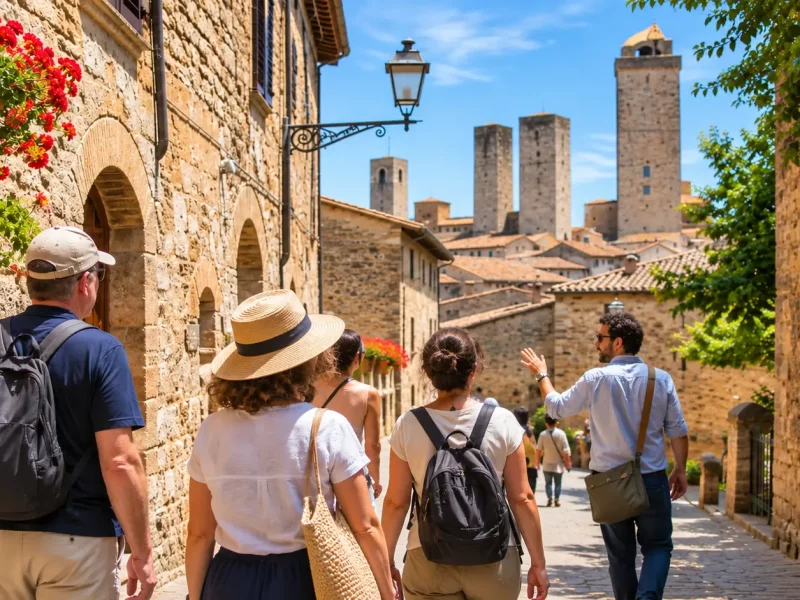
Yes, you can see Siena and San Gimignano in one day from Florence. The two towns are about 40 km apart, so you spend most of the day in them and not on the road. San Gimignano comes in the morning, then lunch at a winery in the hills, then Siena in the afternoon. There isn't time for long museum visits. You can still fit in one or two entrances along the way, and the tour includes Siena's cathedral.
Our Private Tuscany Tour to Siena and San Gimignano with Winery Lunch follows that plan. We pick you up at your hotel or apartment. You travel in an air-conditioned minivan with only your own group and a private local guide. It's a ten-hour day, door to door.
Still deciding which of the two matters more? We wrote a separate piece on Siena vs San Gimignano.
San Gimignano in the morning
On the drive out through the hills, your guide gives you the background on San Gimignano. That way your free time there can go on the town itself.
At its peak, in the 13th and 14th centuries, San Gimignano had 72 towers. Fourteen are still standing. Rich families built them to show off. The money came from the Via Francigena, the pilgrim road to Rome that ran straight through the town. It also came from saffron, which farms around the town still grow.
Vehicles stay outside the walls. Almost everyone comes in through Porta San Giovanni and walks up Via San Giovanni, the main street, to the two central squares. It's the busiest stretch in town and mostly shops, many of them selling the local saffron in small packets. Turn off it into any of the side lanes and the crowd thins out within a few steps.
Inside the walls the time is yours. The tallest tower, the Torre Grossa, is the one you can climb. It's 54 meters high. You go in through the old town hall, the Palazzo Comunale, which has a frescoed courtyard. Across the square, frescoes from the 1300s cover the Collegiata almost wall to wall. Both have their own tickets, which aren't part of the tour.
Then there's Piazza della Cisterna, with the old well in the middle and the queue outside Gelateria Dondoli. People sit on the steps of the well to eat. For the widest view, walk up to the Rocca di Montestaffoli, the ruined fortress at the highest point of town. It's free and usually quieter than the squares.
You won't fit everything in. Our suggestion is to choose either the tower or the Collegiata, and keep the rest for wandering.
Lunch at a family winery
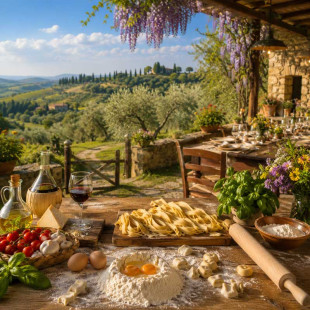
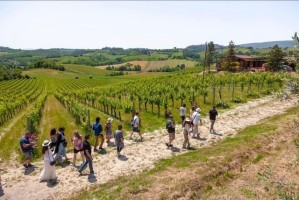
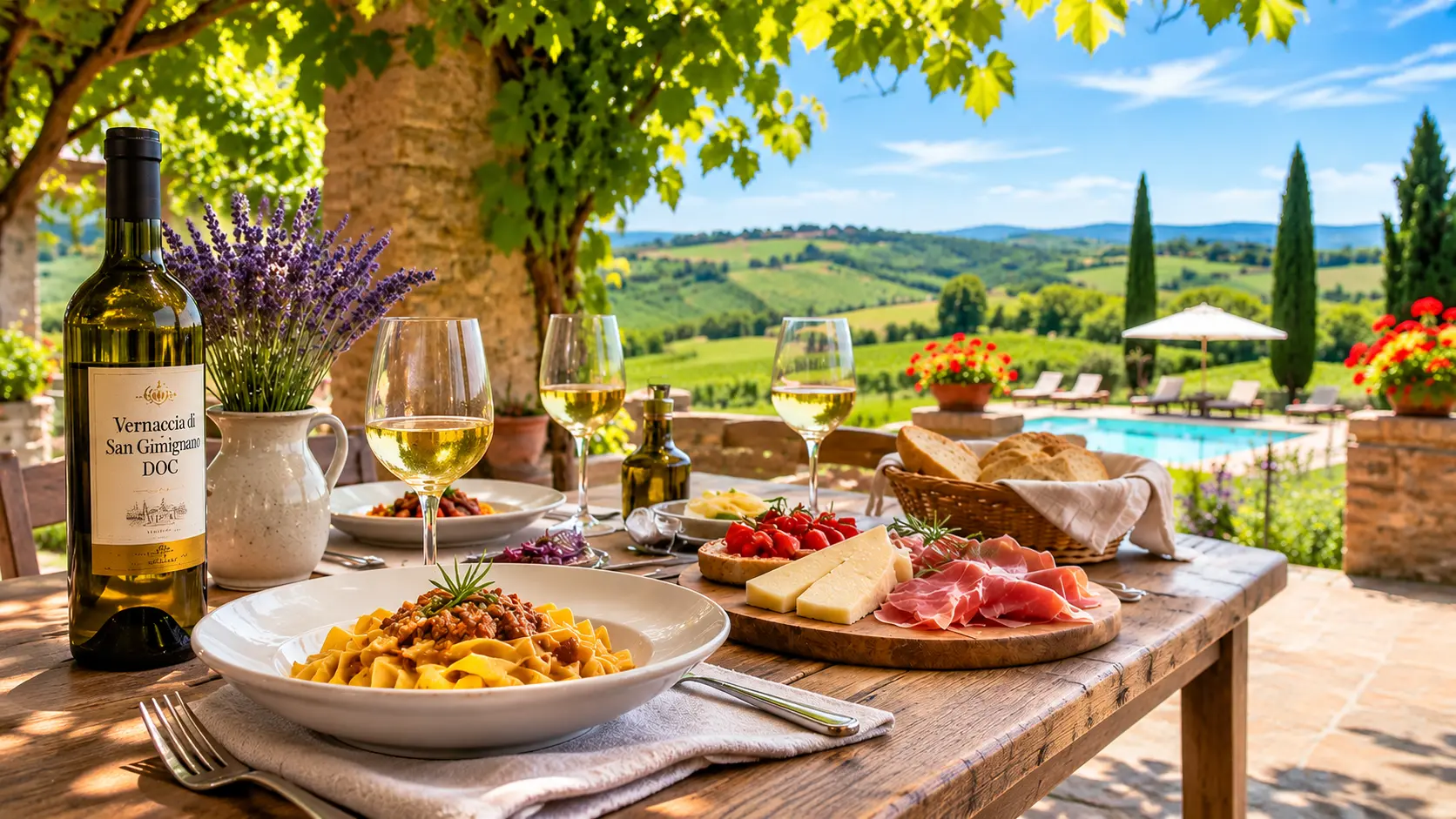
Lunch is at a family-run organic farm and winery in the hills, with San Gimignano's towers in view. Before you sit down there's a walk through the vineyard and a look at the cellar. Then four wines, with a homemade Tuscan lunch. Gluten-free and vegetarian options are available.
The local white is Vernaccia di San Gimignano, which in 1966 became the first Italian wine to receive DOC status. It's dry, with a slightly bitter almond finish. There's more on the grape and how it's made in our guide to Vernaccia wine of San Gimignano.
Is an afternoon enough for Siena?
Yes, for the center. Siena is a real city, much bigger than San Gimignano. In the afternoon your guide walks you through its historic center: Piazza del Campo, the streets of the contrade and the Duomo. The Pinacoteca and the museum inside the Palazzo Pubblico would need another trip.
Cars and vans can't drive into the old center, a restricted traffic zone. The van leaves you at the edge and the walk starts there. Siena sits across three ridges, and some of the streets up toward the Campo are steep.
The Campo slopes down toward the Palazzo Pubblico like an open shell. Twice a year, on 2 July and 16 August, the Palio horse race runs around its edge. Your guide will explain how the contrade work, and it gets easier once you start noticing them. Each one has its own animal or symbol and its own fountain. Ceramic plaques on the walls mark where one contrada ends and the next starts. Ask your guide which one you're standing in. They will know.
Free time in the Campo and the Duomo
There's free time in the Campo, and the Torre del Mangia is there if you want it. The climb isn't included. It's around 400 steps, and only small groups go up at a time, so there can be a wait. From the top you look straight down into the square.
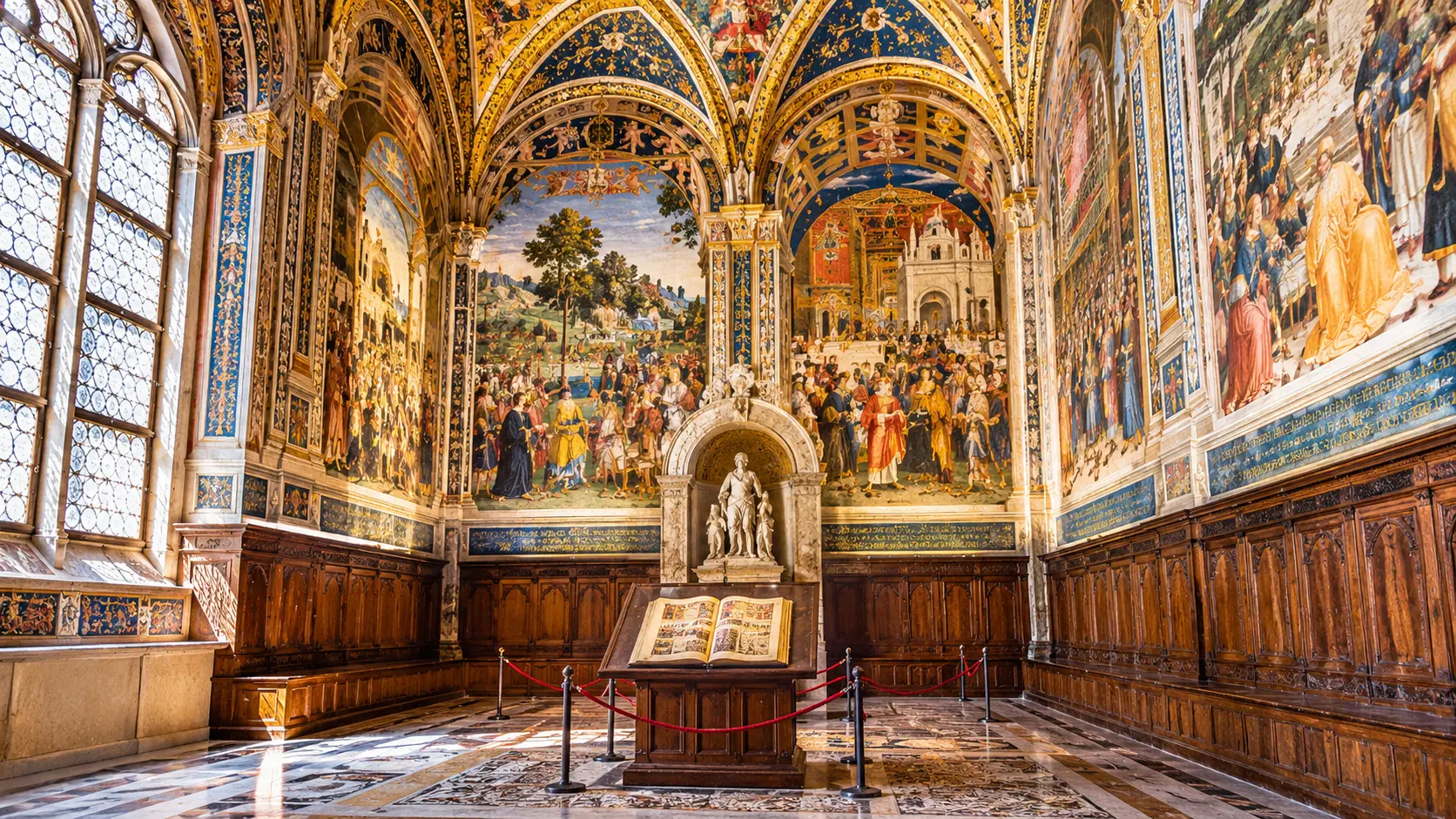
The tour includes entrance to the Duomo. You need to cover shoulders and knees, so in summer bring a scarf or a light shirt. Inside, the black and white stripes run up the columns. Nicola Pisano's marble pulpit from the 1260s is worth the time your guide gives it. Off the nave, Pinturicchio painted the Piccolomini Library floor to ceiling, and the colors are still bright.
Panels protect the marble floor for much of the year. The cathedral uncovers it only in certain periods, usually in summer and early autumn. The dates change every year, so check the Opera del Duomo calendar if seeing it matters to you. If a religious service closes the cathedral, the visit moves across the square to Santa Maria della Scala. It worked as a hospital until the 1990s.
On the right side of the Duomo there's a huge wall with empty windows, standing on its own. It's what remains of a plan from 1339 to turn the cathedral into the transept of a much bigger church. The Black Death of 1348 and problems with the structure put an end to it.
Siena and San Gimignano in one day: who it suits
It's a long day with plenty of walking on stone, much of it uphill. Both towns have steep and uneven streets, so this tour isn't suitable for wheelchair users or anyone with limited mobility. Children can come along, and the booking form has adults and youths aged 8 to 17. Wear comfortable shoes.
In winter, Siena is already getting dark by late afternoon. The end of the walk often happens under the street lamps. The Campo is still busy then, and the shops along Banchi di Sopra stay open into the evening.
With a private group, nobody waits for a coach to fill up. The guide can spend the Siena walk on what you're curious about. That might be the Palio, the art in the cathedral, or where to buy panforte afterwards.
Panforte is Siena's dense cake of nuts, honey, spices and candied fruit. You'll find it in almost every bakery in the center. Ricciarelli, soft almond biscuits dusted with sugar, are the other Siena sweet worth bringing home.
With only two towns and the winery on the day, nothing squeezes the free time in San Gimignano or the walk in Siena, and lunch can take its time. If you want to see Siena and San Gimignano in one day at that pace, our private tour picks you up at your door in Florence.