In this post
- Siena vs San Gimignano: The Essential Difference
- Choose Siena If You Want a Richer Urban Experience
- Choose San Gimignano If You Want Atmosphere and Immediate Impact
- Which Is Better for a First Visit to Tuscany?
- Which Is Better for Couples and Photography?
- Can You Visit Both in One Day?
- Where Pisa and a Winery Lunch Fit In
- Siena vs San Gimignano: Which Should You Choose?
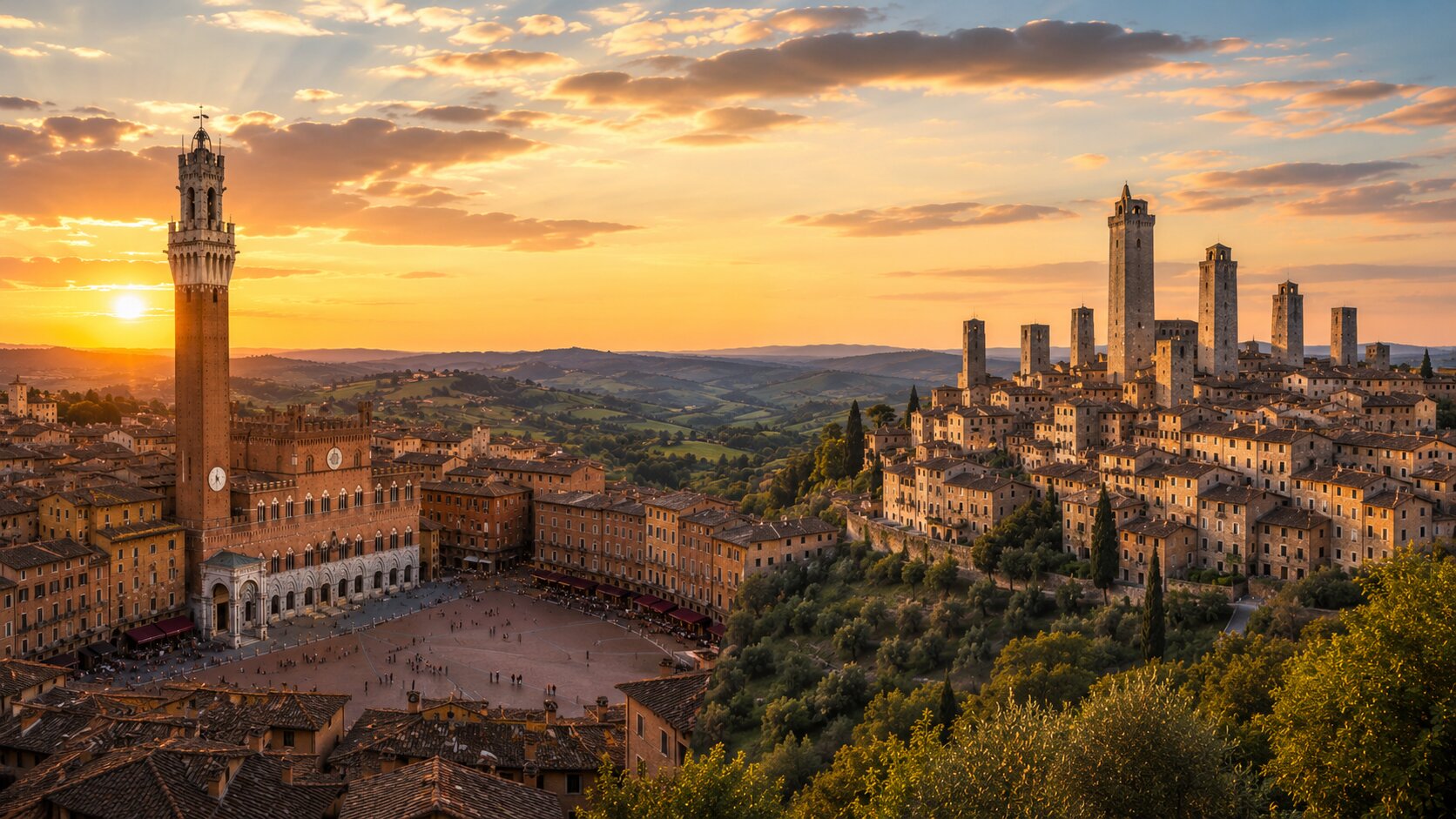
Both towns show up on nearly every Tuscany itinerary out of Florence. Travelers almost always ask which one deserves the day. The honest answer is that they're not really competing. One is a city. The other is a fortress town frozen at a specific moment in its history. Knowing what that moment was makes the choice a lot easier.
Siena vs San Gimignano: The Essential Difference
On September 4, 1260, Siena defeated Florence at the Battle of Montaperti, a few kilometers outside the city. Dante wrote about it later in the Inferno, describing the nearby Arbia river running red. San Gimignano actually fought on Florence's side that day. Siena won anyway, and for a while genuinely rivaled Florence for power in the region. That history still shows in Siena's scale. Real civic architecture. A real political center. Streets built for a city that once mattered on a Tuscan-wide stage.
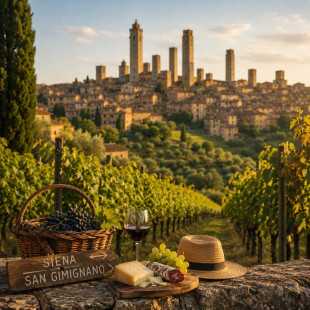
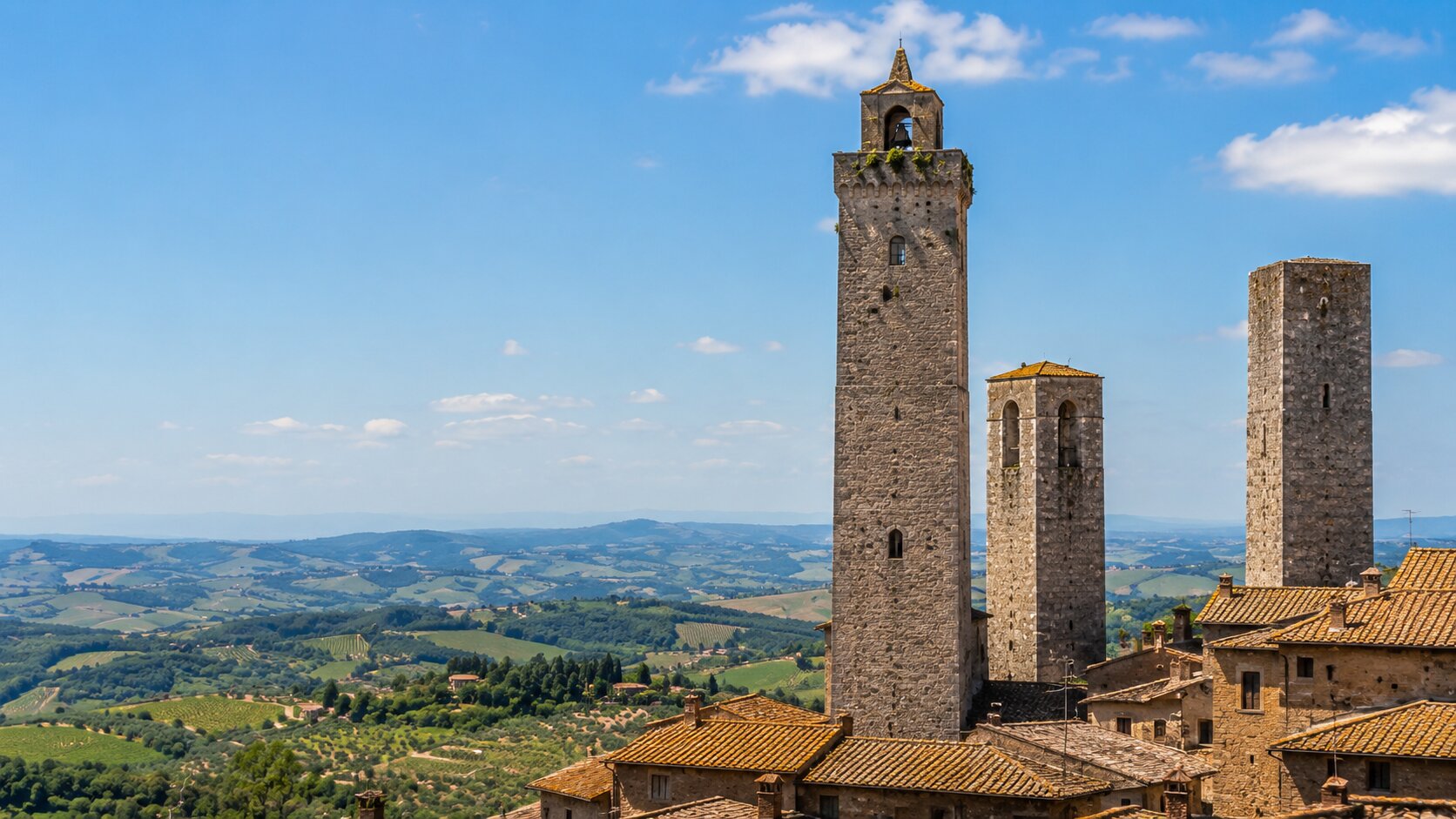
San Gimignano tells a smaller, sharper story. In the Middle Ages, noble families here competed to build the tallest tower. San Gimignano ended up with as many as 72 of them. Only 14 survive today, but they're enough to give the town its famous skyline from miles away. Siena asks for time to understand. San Gimignano delivers its whole identity the moment you see it on the horizon.
Choose Siena If You Want a Richer Urban Experience
Piazza del Campo is the heart of it. The shell-shaped square slopes down toward the Palazzo Pubblico, dropping roughly nine meters. Builders designed it that way in the 1300s, specifically to work as a public gathering space. Twice a year, on July 2 and August 16, it becomes the track for the Palio. That's the horse race between the city's seventeen contrade.
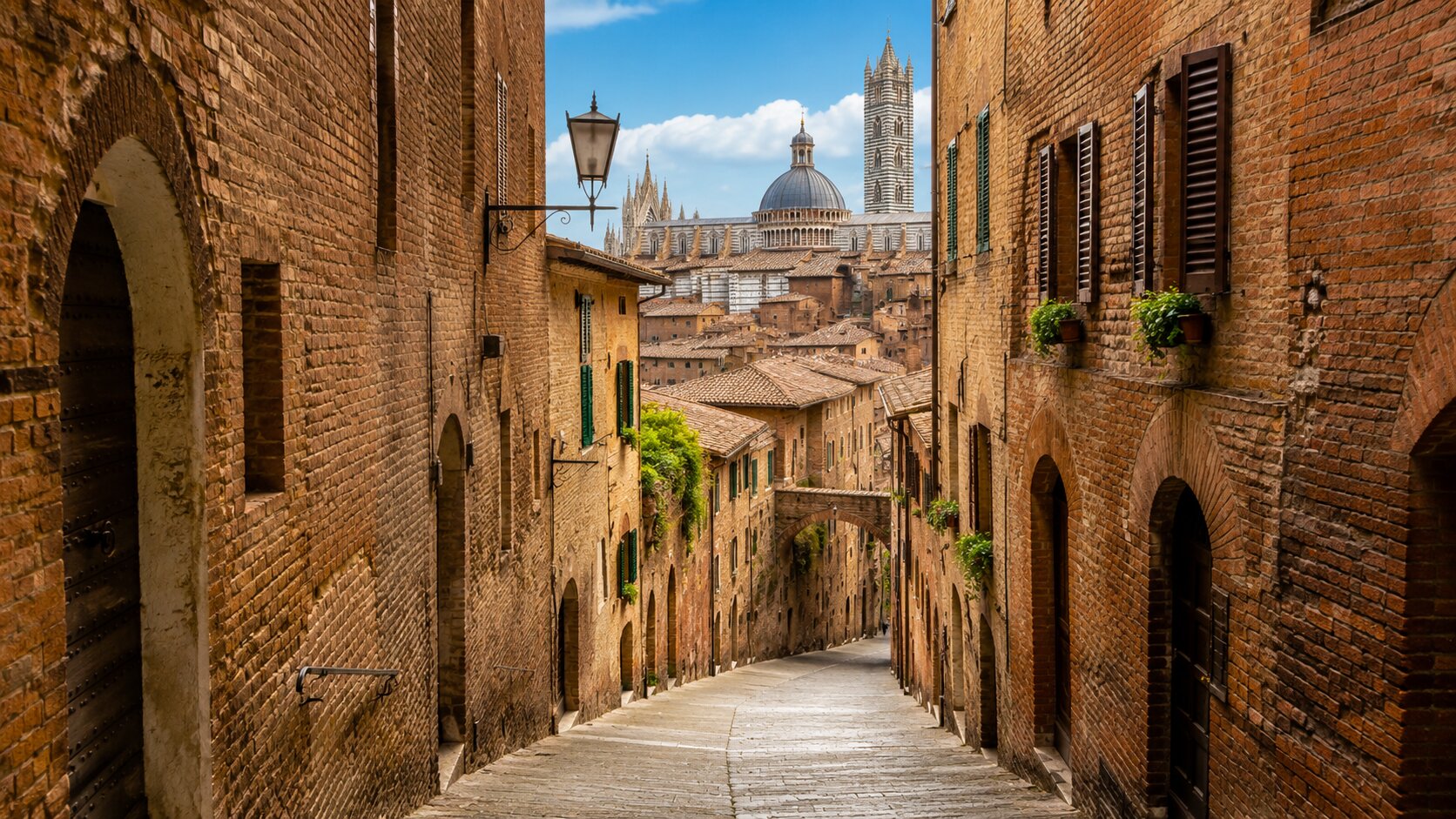
The Duomo hides a detail most visitors walk right past. Its floor holds 56 inlaid marble panels, created between the 1300s and 1500s. It's uncovered only for a few weeks each year. Siena rewards the kind of visitor willing to look for details like that. Not just snapping a photo of the obvious landmarks and moving on.
Choose San Gimignano If You Want Atmosphere and Immediate Impact
You can cross San Gimignano's entire historic center on foot in about 20 minutes. That size is exactly what makes it work as a shorter stop. The tallest surviving tower, Torre Grossa, stands 54 meters and is the only one open to visitors. From the top, it frames views over the Val d'Elsa and the vineyards that produce Vernaccia. That local white wine became the first in Italy to earn DOC status, back in 1966.
The town's compact, almost frozen feel isn't an accident. The Black Death swept through in 1348. It thinned the population enough that San Gimignano never regained its earlier importance along the Via Francigena pilgrim route. That decline explains a lot. So much of the medieval skyline survived untouched, instead of getting rebuilt over the centuries.
Which Is Better for a First Visit to Tuscany?
For a genuinely first visit, Siena usually gives more to hold onto. Real civic history. Real architecture. A real sense of how a medieval Italian city actually functioned. San Gimignano works better if what you actually want from Tuscany is towers, hilltop views, and a strong, immediate visual. Neither answer is wrong. It depends on whether you'd rather spend the afternoon reading a place or looking at one.
Size also shapes the visit itself. Siena's historic center takes real time to explore properly — expect at least two to three hours to see the Campo, the Duomo, and a handful of side streets without rushing. San Gimignano's compact 20-minute footprint means you can see nearly everything in under two hours, which makes it a much easier fit alongside a second stop on the same day.
Which Is Better for Couples and Photography?
San Gimignano's small scale suits an unhurried wander well, especially outside peak hours, when the crowds thin out. Siena offers a different, more layered elegance. Coffee in Piazza del Campo. A quiet stretch of the Duomo's interior. Streets that rise and fall in ways San Gimignano's flat little grid simply doesn't.
For photography, San Gimignano wins from a distance. Its skyline rises out of the countryside before you've even reached the gates. Siena wins up close, in the geometry of Piazza del Campo and the brick façades along its steep medieval streets.
Can You Visit Both in One Day?
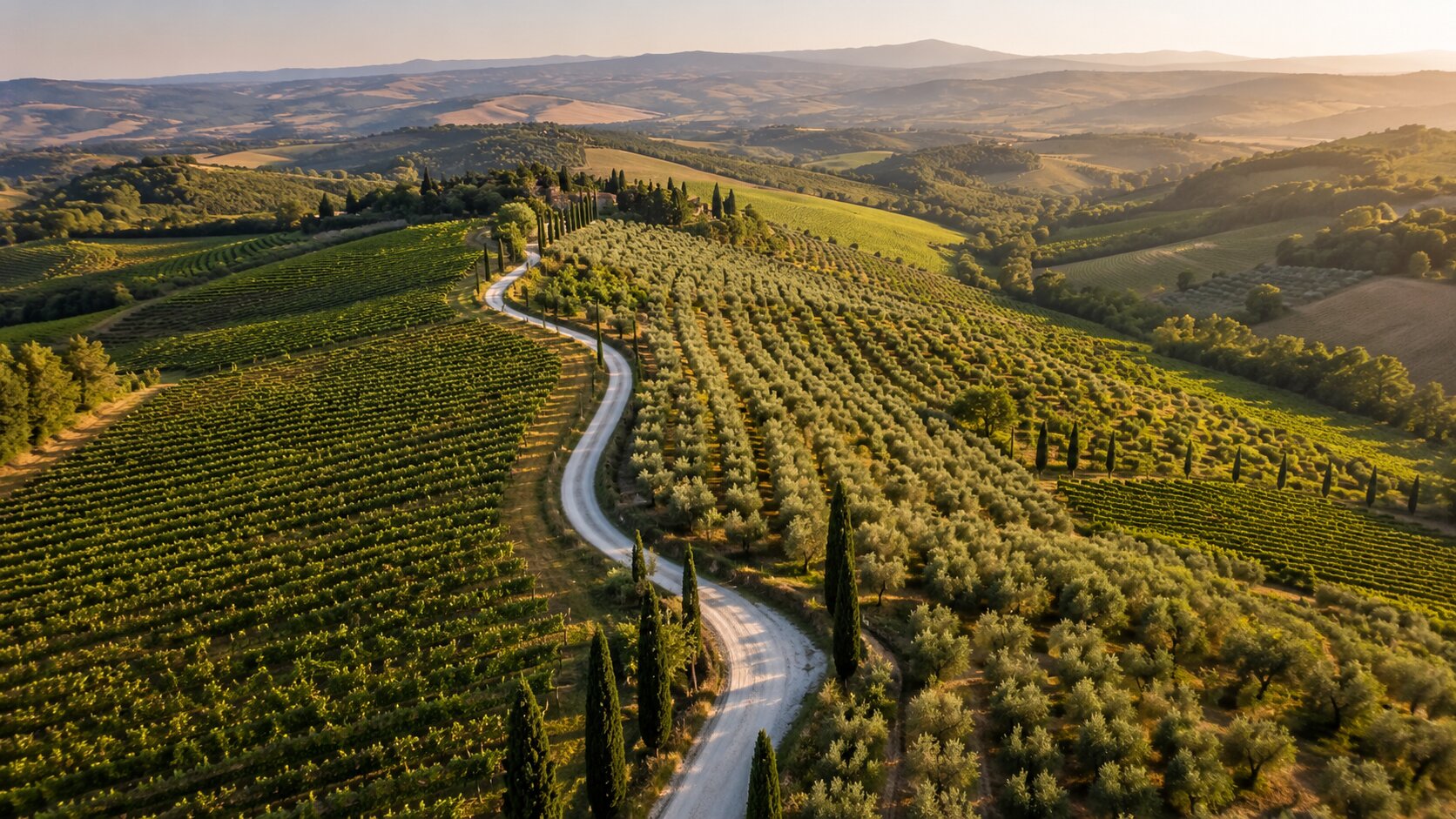
Yes, and the drive between them is part of what makes it work. Siena to San Gimignano runs through Chianti's vineyards and olive groves, which keeps the trip from ever feeling like dead time between two stops — as long as someone else is doing the driving and you're free to actually look out the window. Whether a day like this is worth leaving Florence for is its own separate question. Our guide on whether a Florence day trip is worth it covers when that kind of excursion adds real context, instead of just taking time away from the city.
Where Pisa and a Winery Lunch Fit In
Adding Pisa introduces a third identity entirely. Maritime history and Romanesque architecture, centered on Piazza dei Miracoli and a tower currently leaning about 3.9 degrees. It's different enough from both Siena and San Gimignano to add contrast rather than repetition. That only works if it's not just tacked on as a third box to check.
A winery lunch does something different again. It slows the day down deliberately. A lot of this region's appeal genuinely runs on Sangiovese, olive oil, and a table under a pergola, not another monument. Our guide to how to choose a winery in Chianti covers what separates a small family estate from a larger commercial one.
Siena vs San Gimignano: Which Should You Choose?
If you can only pick one, choose Siena for depth and San Gimignano for atmosphere. If your schedule allows both, the two towns work better together than either does alone. One shows medieval Tuscany as a functioning city. The other shows it as a compact, almost symbolic fortress. Our San Gimignano medieval history guide goes deeper into how the towers actually came to be built in the first place.
Add the Chianti countryside and a proper lunch to stitch it together, and the whole day says more about Tuscany than either town could say on its own.