In this post
- How to Visit Pisa for the First Time
- Begin at Piazza dei Miracoli
- A Square Younger Than You'd Think
- Pisa Isn't Florence at a Smaller Scale
- Should You Climb the Tower?
- How Much Time Does Pisa Actually Need?
- What Changes Once You Leave the Square
- Where Pisa Fits Into a Tuscany Trip
- The Three Mistakes Worth Avoiding
- The Best Way to Visit Pisa
If you're wondering how to visit Pisa, the answer isn't simply to spend more time there. It's about knowing what to prioritise and how to experience the city within the context of a wider journey through Tuscany. Too often, visitors arrive, photograph the Leaning Tower, and leave again without discovering why Pisa has remained one of Tuscany's most important historic cities.
Yet Pisa works best when it is approached with balance. It does not need to occupy several days of a Tuscany itinerary, nor should it be reduced to a thirty-minute photo stop. For most first-time visitors, the ideal visit sits somewhere in between: enough time to understand Piazza dei Miracoli, see the city beyond its most famous monument, and continue through Tuscany without feeling rushed.
This is where Pisa becomes especially valuable. It is compact, historic, visually memorable, and easy to include within a broader journey through Tuscany. The key is knowing what to prioritise, how much time to allow, and what kind of experience you want from the city.
How to Visit Pisa for the First Time
Pisa is not Florence on a smaller scale, and it should not be judged by the same criteria. Florence is dense, layered, and museum-like in its concentration of Renaissance art. Pisa is more open, more spatial, and more defined by contrast: monumental architecture, quiet streets, riverside views, and traces of its medieval and maritime past.
Many visitors feel disappointed by Pisa because they arrive with only one image in mind. The Leaning Tower is extraordinary, but the city becomes more interesting when the tower is seen as part of a wider architectural and historical setting, not as an isolated attraction.
The aim is not to “do everything.” It is to give Pisa enough attention to make the visit feel complete.
Begin at Piazza dei Miracoli
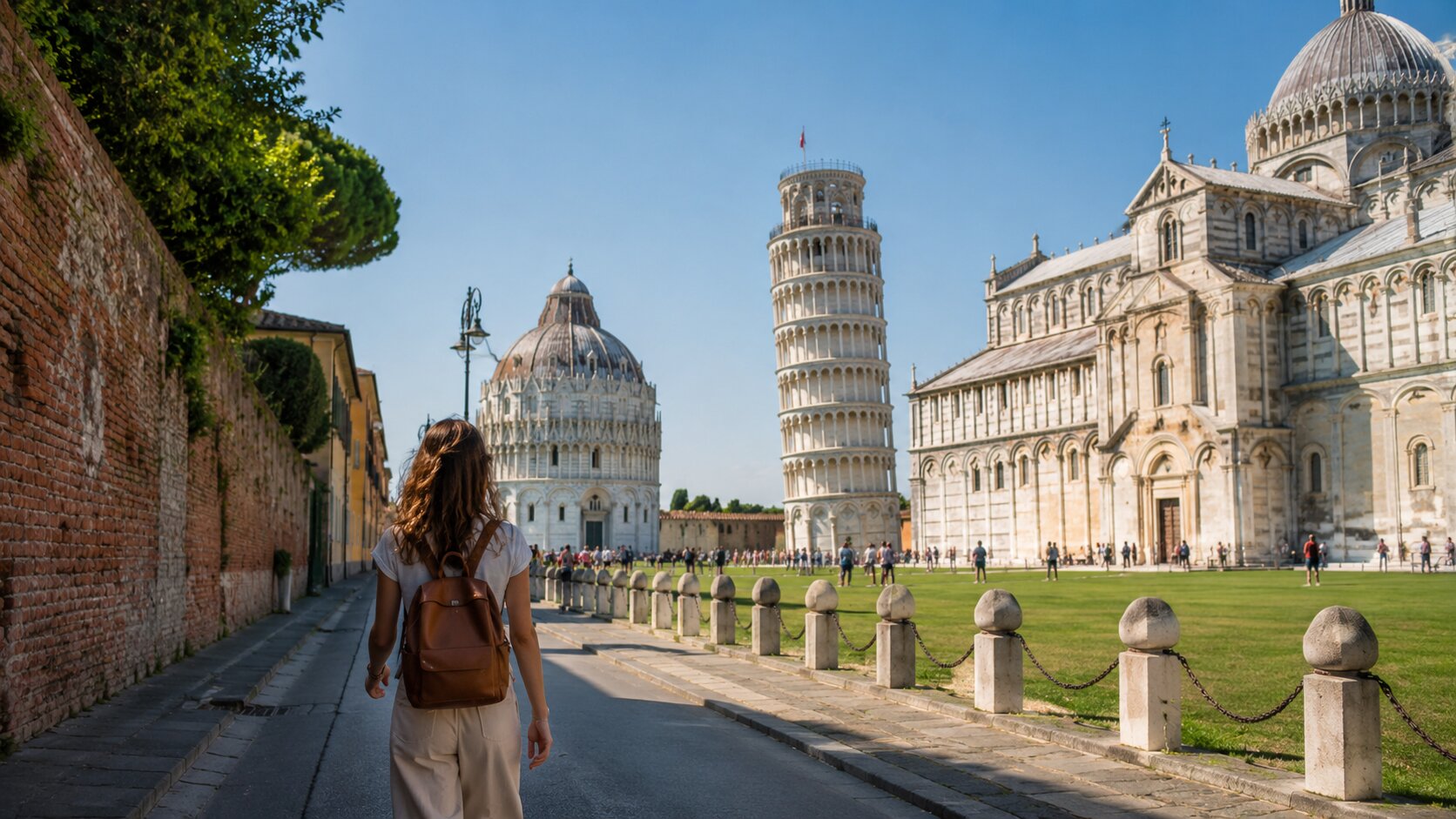
For most travelers, the natural starting point is Piazza dei Miracoli. This is where Pisa delivers the image everyone expects, but the square deserves more than a quick glance.
The Leaning Tower, Cathedral, and Baptistery form one of the most distinctive architectural ensembles in Italy. What makes the square remarkable is not only the fame of its monuments, but the way they sit within an unusually open space. Unlike many Italian piazzas, this one is not enclosed by everyday city life. The buildings stand almost apart from the city, surrounded by grass and light.
Figuring out how to visit Pisa well isn't really about adding more time. It's about knowing what the city actually is before you get there. Most disappointment traces back to one mismatched expectation: showing up hoping for a second Florence, and finding something built on entirely different logic instead.
Pisa doesn't need to swallow several days of a Tuscany itinerary, and it shouldn't get reduced to a thirty-minute photo stop either. For most first-time visitors, the right amount of time sits somewhere between those two extremes: enough to actually understand Piazza dei Miracoli, see something of the city beyond its most famous monument, and still move on through Tuscany without feeling rushed.
A Square Younger Than You'd Think
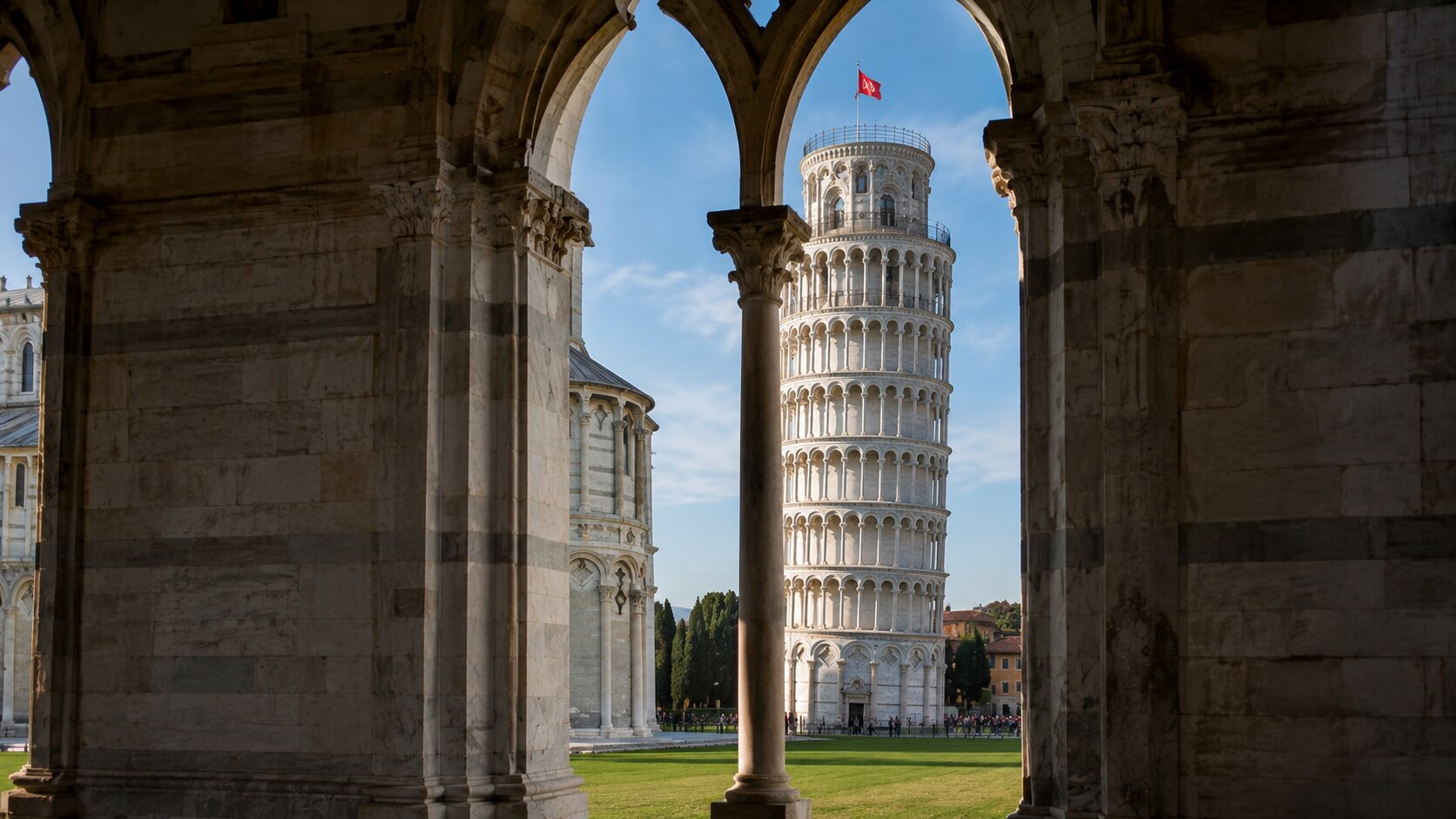
Officially, the plaza everyone photographs is called Piazza del Duomo. The name most people actually use, Piazza dei Miracoli, only dates to 1910. Writer Gabriele D'Annunzio described it in his novel Forse che sì forse che no as the "prato dei Miracoli," the meadow of miracles. The nickname stuck so completely that most visitors assume it's centuries old. The square itself, walled and covering nearly nine hectares, genuinely is centuries old. The poetic name attached to it, though, is barely older than a hundred years. UNESCO recognized the whole complex as a World Heritage Site in 1987.
Even the cemetery on the square's northern edge carries a story worth knowing. The Camposanto supposedly encloses soil brought back from Calvary by Archbishop Ubaldo de' Lanfranchi after the Third Crusade. That's where the name "Campo Santo," holy field, originally came from. The square also holds a building most visitors walk straight past: the old hospital of Santo Spirito, which now houses the Museo delle Sinopie and the Cathedral Museum, both usually far quieter than the four main monuments a few steps away.
Pisa Isn't Florence at a Smaller Scale
Judging Pisa by Florence's standards sets up disappointment before you've even arrived. Florence is dense and museum-like, built around layered interiors packed with Renaissance art. Pisa runs on a different logic entirely: open space, monumental architecture, and contrast rather than density. Most first-time visitors carry a single mental image: the tower alone. The city becomes far more interesting once that tower gets read as part of a wider architectural composition, instead of an isolated photo opportunity.
Should You Climb the Tower?
Climbing isn't essential for everyone. But it does add something a ground-level view can't. A physical sense of the tower's genuinely strange lean, felt underfoot on every step, plus a vantage point that places the rest of the square in context. Travelers focused on photography or architecture tend to find it worthwhile. Those who'd rather spend the same time slowly working through the Cathedral and Baptistery interiors get just as much out of skipping it.
How Much Time Does Pisa Actually Need?
An hour barely scratches the surface, enough for a photo and not much else. Two to three hours covers Piazza dei Miracoli properly. The tower, a walk around the Cathedral and Baptistery, time to actually take in the square instead of rushing through it. Four to five hours adds room to leave the square entirely. Wander toward the river, or explore streets most day-trippers never reach. A full day rewards genuine interest in medieval history or slower urban exploration. Most travelers building a wider Tuscany itinerary don't need to give Pisa quite that much, though.
What Changes Once You Leave the Square
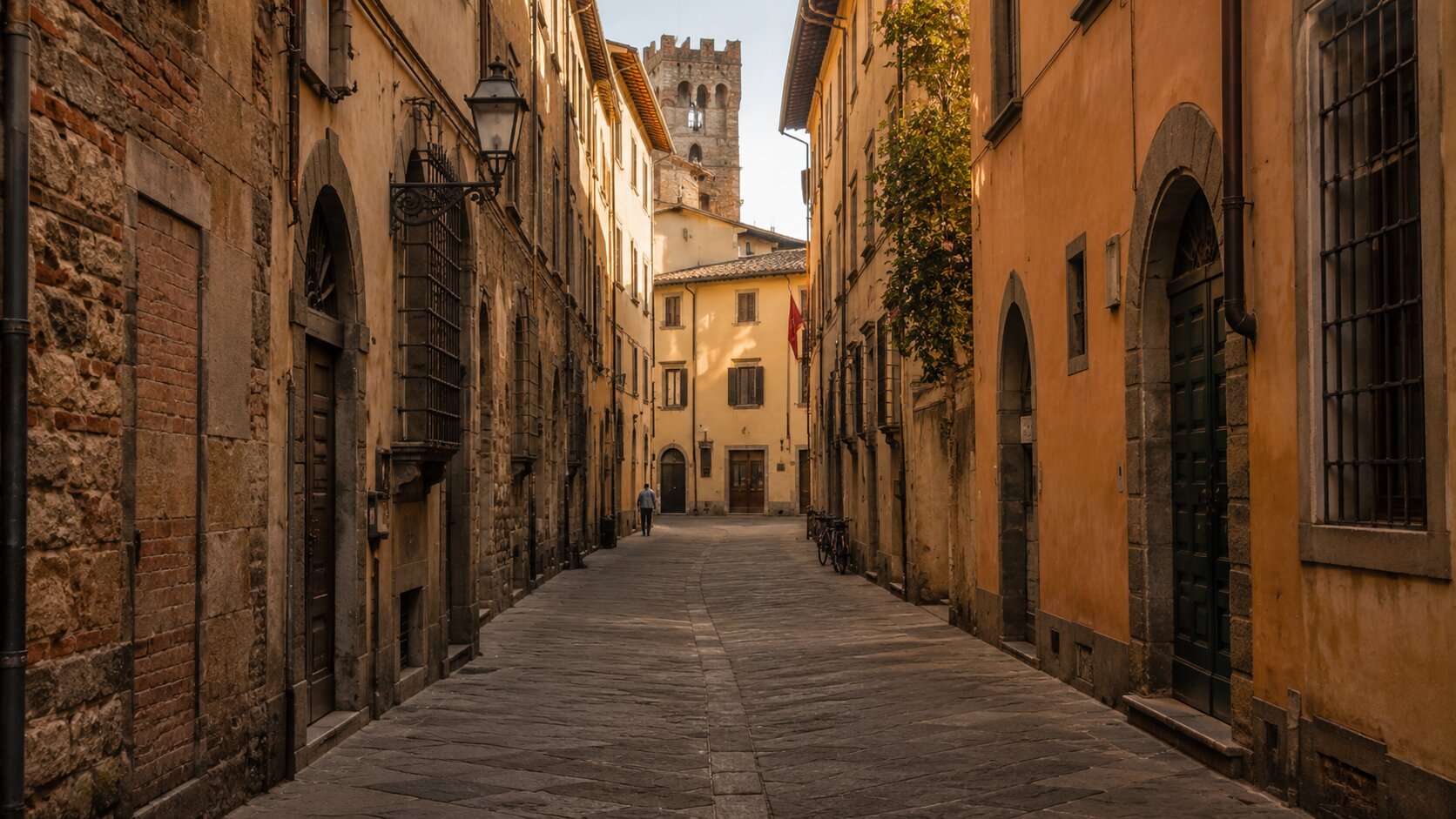
The real shift in a Pisa visit happens the moment you walk away from the tower. Streets narrow. Crowds thin out fast. The city stops behaving like a monument with a town attached. It starts feeling like an actual place people live in. The Lungarno, the streets running along the Arno, offers a quieter, more understated version of Pisa. Historic façades reflected in the water. Bridges connecting both banks. Nothing as dramatic as the tower, but a real dimension the square alone can't provide.
For an even more revealing angle, Pisa's medieval walls offer an elevated view most visitors never see. Our guide to walking the walls of Pisa covers that route in detail. Our guide to Piazza dei Miracoli explained breaks down the history behind each building on the square itself.
Where Pisa Fits Into a Tuscany Trip
Pisa works best in relation to what else it's paired with. Florence supplies artistic density. Siena offers medieval civic grandeur. San Gimignano brings vertical hill-town drama. Chianti brings landscape and rural rhythm. Pisa adds something none of the others do: maritime history and one of Europe's most recognizable architectural compositions. It doesn't need to compete with the rest of a Tuscany itinerary. It completes it by adding genuine contrast.
That contrast is exactly why Pisa tends to work better as one stop within a bigger day than as a destination visited entirely on its own. A city built around open space and monumental architecture pairs naturally with a hill town built around narrow streets and vertical towers, or a wine region built around rolling countryside. Each one makes the others feel more distinct by comparison.
The Three Mistakes Worth Avoiding
Rushing is the most common one. A few minutes with the tower satisfies recognition but rarely leaves a real memory behind. Overplanning is the opposite mistake. Pisa doesn't need an exhausting schedule. Part of its appeal sits in the space between sights. The walk from one area to another, the way the square's proportions shift as you move through it. The third mistake is expecting Florence's density here. Pisa's value is architectural and spatial, not a long list of museum interiors. The visit gets much more satisfying once that distinction actually lands.
The Best Way to Visit Pisa
Enough structure to avoid wasting the day, enough flexibility to let the city breathe. Start at Piazza dei Miracoli and give it real attention. Decide in advance whether the climb matters to you rather than treating it as an afterthought. Leave room for at least one view beyond the square itself. The Lungarno works. So does the elevated walk along the walls.
Handled that way, Pisa stops being a famous stop that needs justifying. It becomes something more useful. One well-placed chapter in a longer journey through Tuscany, not the whole book. That's really the whole answer to how to visit Pisa well: give it structure, give it room to breathe, and let it be exactly the size it actually is.