In this post
- The Origins of Pisa’s City Walls
- A View of the Piazza dei Miracoli from Above
- Understanding Pisa Beyond the Leaning Tower
- Architecture Seen from a New Perspective
- A Slower Way to Experience the City
- The Relationship Between City and Landscape
- Who Will Appreciate Walking the Walls
- Pisa as More Than a Brief Stop
- Seeing Pisa Differently
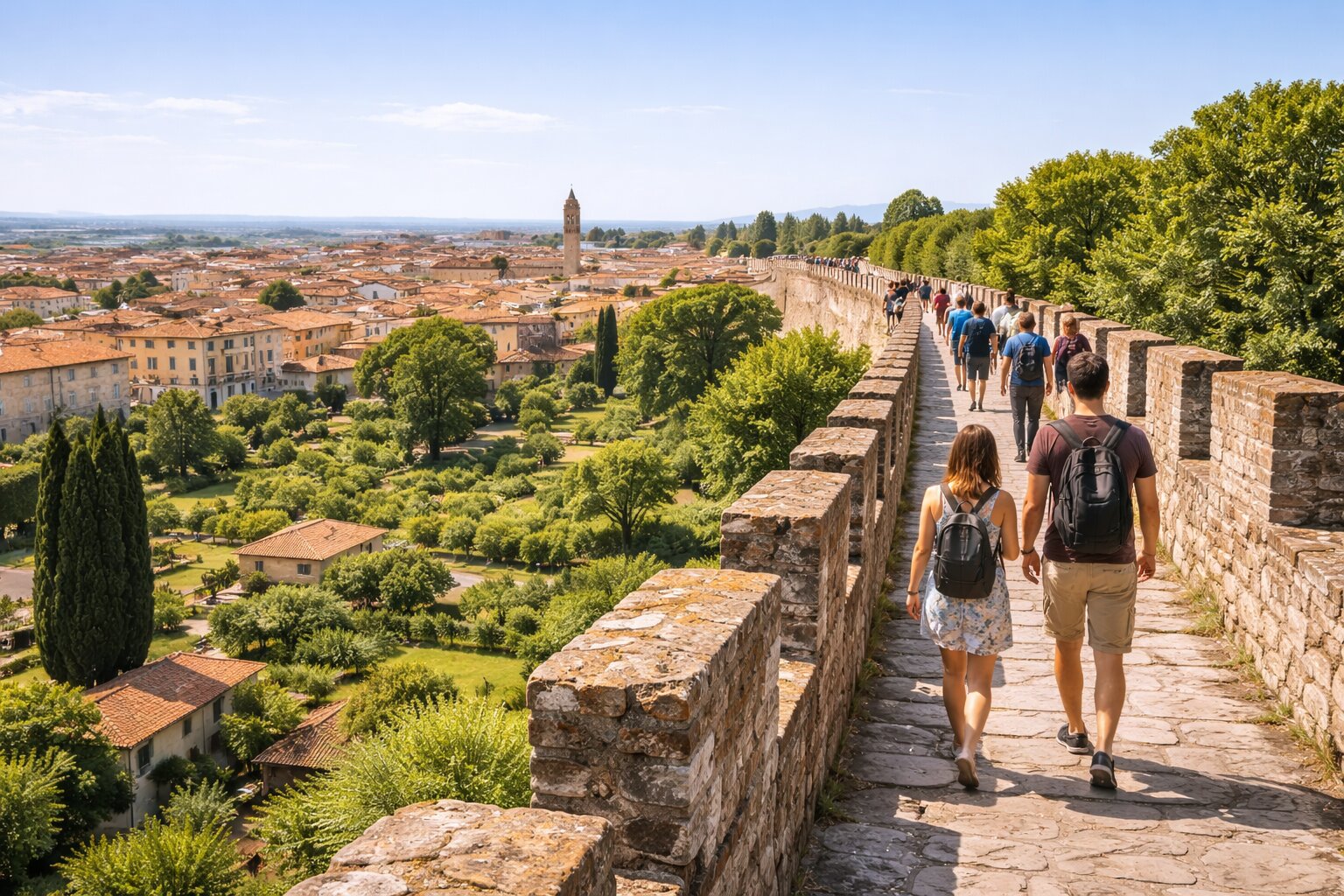
The Leaning Tower dominates the way Pisa is perceived, rising above the Piazza dei Miracoli as its defining image. Yet beyond this famous square lies a quieter and more layered city, shaped by centuries of maritime power, medieval expansion, and architectural ambition.
One of the most revealing ways to understand this history is by walking along the ancient city walls. Elevated above the streets yet closely connected to the urban landscape, the walls offer a rare perspective on how Pisa developed through time.
Walking the walls of Pisa transforms a simple visit into a deeper exploration of space, history, and geography. From above, the city’s monuments, rooftops, gardens, and distant riverbanks form a coherent picture that is difficult to grasp at street level.
The Origins of Pisa’s City Walls
Pisa’s defensive walls were constructed primarily during the 12th century, when the city was one of the most powerful maritime republics in the Mediterranean.
At that time, Pisa controlled important trade routes and maintained naval influence across parts of the Mediterranean world. Protecting the city became essential, and a system of fortified walls was built to enclose the expanding urban center.
These walls stretched for several kilometers and included:
- watchtowers
- defensive gates
- elevated patrol paths
- fortified entrances to the city
Today, large sections of these medieval walls remain remarkably intact. Walking along them reveals the scale of Pisa’s medieval ambitions and the strategic importance the city once held.
A View of the Piazza dei Miracoli from Above
One of the most striking moments during a walk along the walls occurs when the path overlooks the Piazza dei Miracoli.
From street level, visitors usually experience the square surrounded by crowds and monumental architecture. From above, however, the perspective changes completely.
The Leaning Tower, the Cathedral, and the Baptistery appear arranged within a carefully balanced architectural composition. The geometry of the square becomes visible, and the relationship between the monuments is easier to understand.
This elevated viewpoint also restores a sense of proportion. Instead of standing beneath the monuments, visitors can observe how the complex fits into the broader urban landscape of Pisa.
The result is a quieter and more contemplative encounter with one of Italy’s most famous architectural spaces.
Understanding Pisa Beyond the Leaning Tower
Although the Leaning Tower attracts global attention, Pisa itself contains a much broader historical narrative.
From the walls, the city reveals layers that are often overlooked during short visits:
- medieval streets extending beyond the monumental square
- Renaissance buildings scattered through the historic center
- church towers and quiet courtyards hidden behind residential blocks
- distant views toward the Arno River, which played a central role in Pisa’s commercial life
The elevated path allows visitors to observe these elements simultaneously, connecting different parts of the city into a coherent visual story.
For travelers interested in exploring Pisa more deeply, experiences such as private Pisa tours can place these architectural and historical details within a broader cultural context.
Architecture Seen from a New Perspective
Walking along the city walls also changes how Pisa’s architecture is perceived.
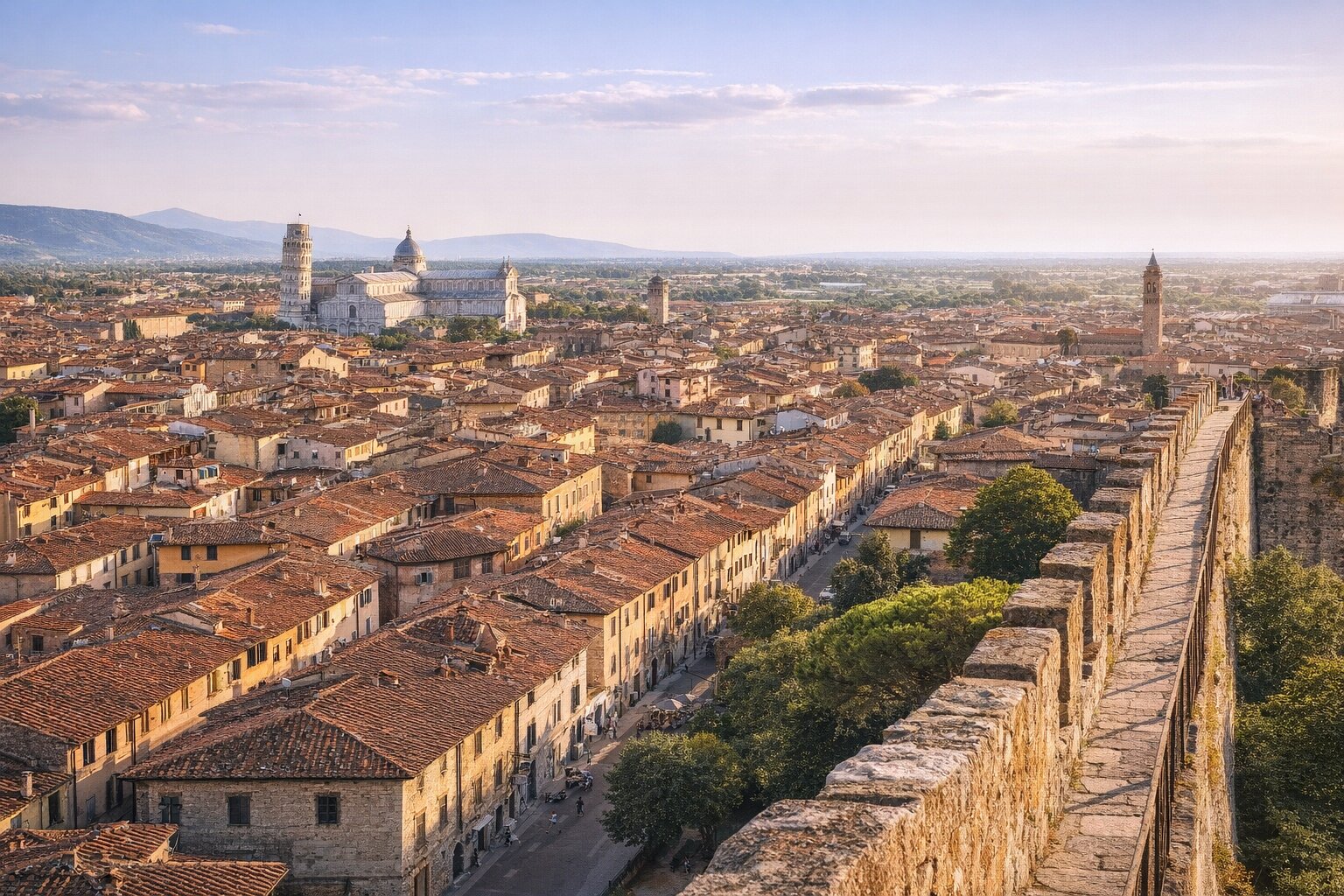
At ground level, buildings appear individually: a church façade here, a narrow street there, a palace corner revealed between houses. From the walls, architecture becomes part of a wider composition.
Terracotta rooftops form patterns across the city. Gardens appear between stone walls. Church domes rise unexpectedly above residential quarters.
Even small architectural details become noticeable:
- hidden cloisters
- interior courtyards
- historic towers embedded within neighborhoods
This elevated perspective reveals how the city evolved gradually rather than through a single architectural plan.
A Slower Way to Experience the City
Another advantage of walking the walls is the pace it naturally encourages.
Unlike crowded streets or busy squares, the elevated path tends to feel calmer. Visitors move slowly along the stone walkway, pausing to observe views across the rooftops or toward the surrounding countryside.
This slower rhythm allows the city to unfold more quietly.
Instead of rushing from monument to monument, travelers gain time to notice subtle details:
- the texture of medieval brickwork
- the alignment of historic streets
- the contrast between green gardens and dense urban blocks
In many ways, walking the walls provides the kind of reflective experience that historic cities often invite but rarely allow in crowded areas.
The Relationship Between City and Landscape
Another aspect revealed from the walls is Pisa’s relationship with its surrounding landscape.
Beyond the rooftops, the view gradually opens toward the Tuscan plains that stretch toward the coast. The city’s historical connection to the sea becomes easier to imagine when seen within this wider geography.
Pisa was once a maritime republic, and its prosperity depended heavily on its access to water routes and trade networks. The Arno River connected the city to the coast, allowing ships and merchants to move goods across the Mediterranean.
From the elevated walkway, the city appears not as an isolated destination but as part of a larger historical landscape.
Who Will Appreciate Walking the Walls
While the Leaning Tower remains the most famous attraction, walking the walls tends to appeal particularly to travelers who appreciate:
- architecture
- urban history
- quieter viewpoints
- alternative perspectives on well-known destinations
It is also an ideal experience for visitors who have already seen the main monuments and wish to understand the city in greater depth.
Rather than replacing the classic sights, the walls complement them by offering context and perspective.
Pisa as More Than a Brief Stop
Many travelers visit Pisa as a quick stop during a journey through Tuscany. The Leaning Tower is photographed, the square explored, and the visit continues elsewhere.
Walking the city walls encourages a different approach.
From above, the city feels less like a single monument and more like a living historical environment shaped by centuries of development. Streets, towers, rooftops, and distant landscapes combine to reveal the broader identity of Pisa.
This perspective transforms a brief stop into a more meaningful encounter with one of Tuscany’s most historic cities.
Seeing Pisa Differently
Historic cities often reveal their character through unexpected viewpoints.
In Pisa, the ancient walls provide one of the most revealing of these perspectives. Elevated above the streets yet closely connected to the urban fabric, they allow visitors to observe how the city’s architecture, geography, and history intertwine.
For travelers willing to step beyond the famous square, walking the walls becomes an opportunity to experience Pisa with greater depth, clarity, and calm.
From above, the city tells a story that is far richer than the Leaning Tower alone.