In this post
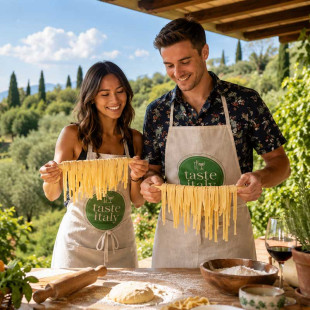
Tuscan pasta shapes aren't decorative choices. Each one solves a specific problem. How to catch a thick meat sauce. How to stretch dough by hand without a machine. How to stuff a filling without it leaking out. Learning to make pasta here means learning why these particular shapes exist, not just how to copy them.
More Than a Cooking Lesson
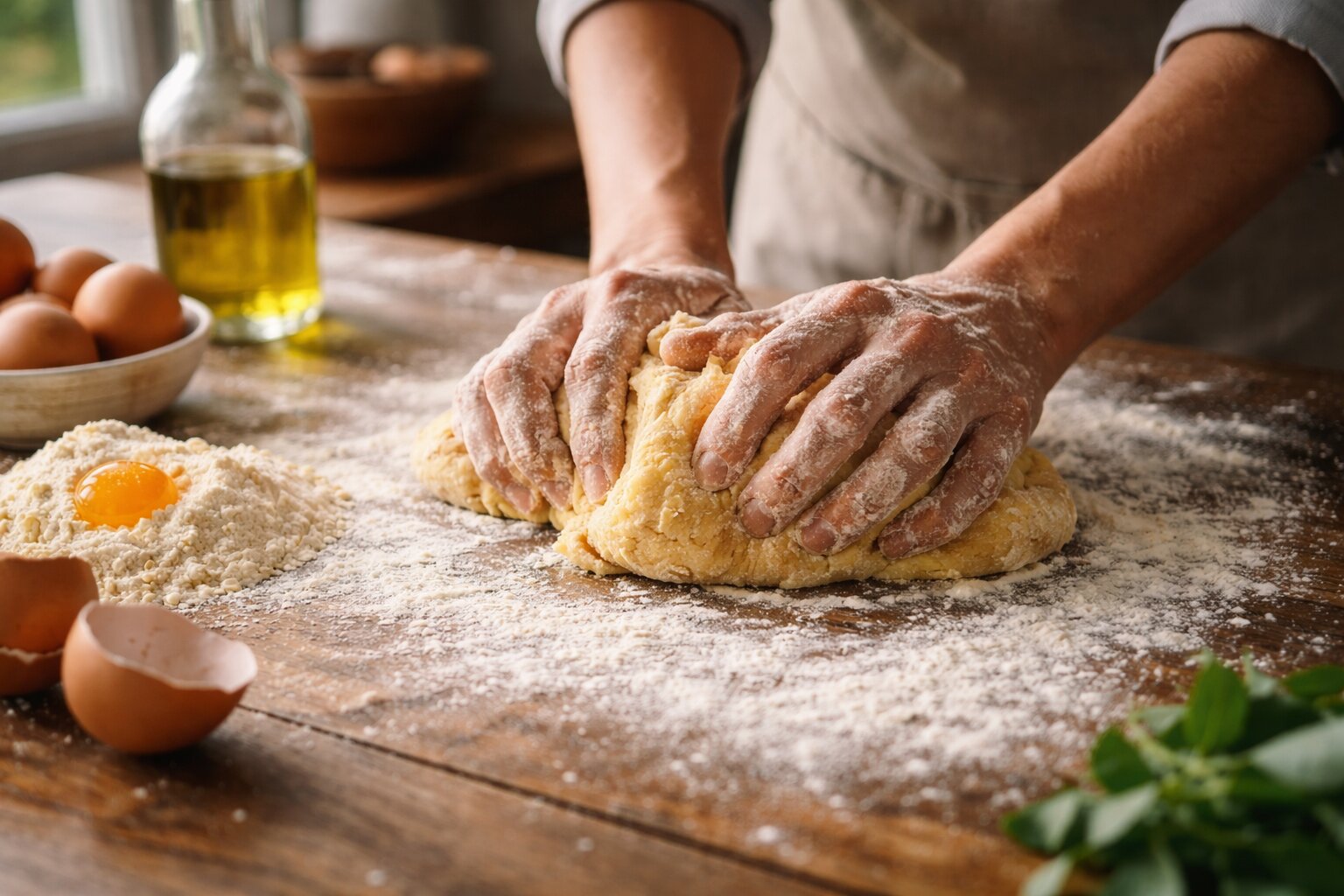
The core of it looks deceptively simple: flour, eggs, and a wooden rolling pin called a mattarello. The dough gets rolled into a single continuous sheet, called a sfoglia. It needs to be thin enough to see your hand through it, and that thinness gets judged entirely by feel, not by measurement. Getting that sheet even, without tearing it or leaving it too thick in the middle, takes real repetition. Most people don't get it right on the first try, and that's part of the point.
The technique itself dates back generations, refined by home cooks long before anyone thought to teach it as a class. Machines can now roll a sheet of pasta in seconds, but hand-rolled dough has a rougher, more porous surface that holds sauce differently than anything a pasta machine produces. Once you've felt the difference under your own hands, it's hard to unnotice it on a plate.
Tuscany's Pasta Shapes, Explained
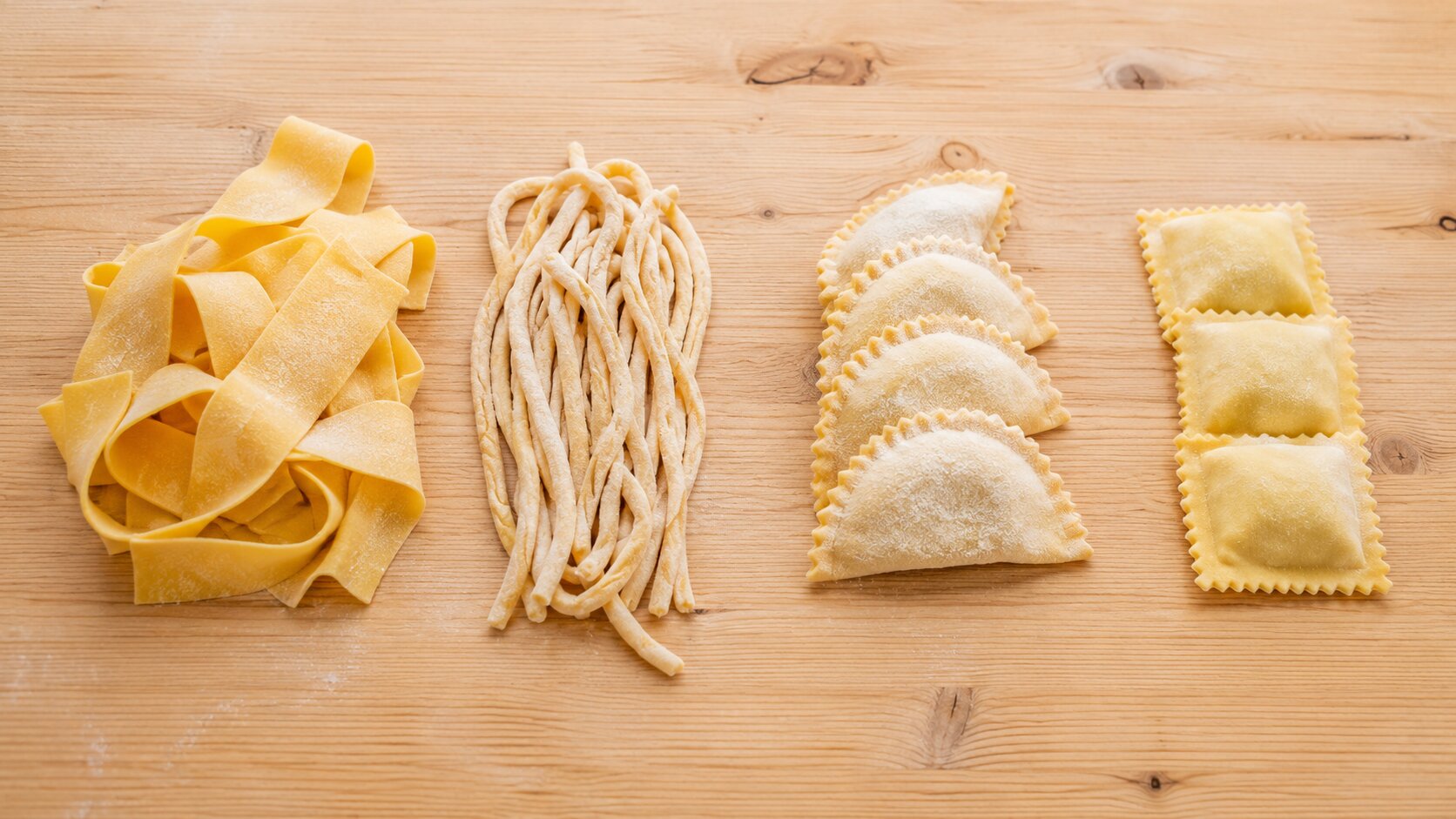
Pappardelle, the wide ribbon pasta most associated with the region, gets cut deliberately broad, often two to three centimeters across. That width isn't stylistic. Tuscan cooking leans heavily on game — wild boar, hare, mushroom ragùs simmered for hours. A wide ribbon catches shredded meat and sauce the way a narrow noodle simply can't.
Tordelli work differently. In Lucca and the surrounding Versilia coast, these half-moon parcels get filled with a mix of ground meat, mortadella, Swiss chard, and stale unsalted bread. Cooks seal the edge with a zigzag press. Families up and down the coast, in Camaiore, Pietrasanta, and Viareggio, all make their own version. Most save it for holidays and Sunday lunch, rather than an everyday meal — which means the recipe in any given household is really a family recipe, not a fixed regional standard.
Not far away, in Arezzo, a cousin dish called pannicelli takes a similar ricotta-and-greens filling but skips boiling entirely. Instead, they go straight into the oven under tomato sauce, or butter, parmesan, and cinnamon. Same starting logic as tordelli, a completely different finish.
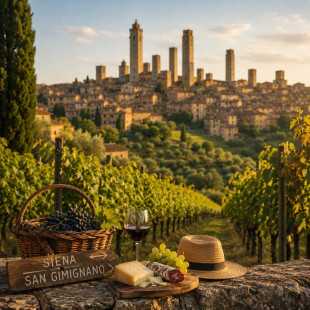
A few hours south, pici tells a different story. This thick, hand-rolled strand from around Siena skips egg entirely — just flour, water, and a lot of manual stretching, traditionally paired with a garlicky tomato sauce called aglione.
Our guide to Tuscan cooking classes with local chefs goes deeper into how these regional differences show up. Especially across a hands-on lesson.
Learning from Local Knowledge
The people who teach these classes usually aren't professional instructors in the traditional sense. They're home cooks and local chefs who've rolled this same dough hundreds of times. It shows in how they teach. Less recitation, more correction by feel. A good instructor watches your hands, not just your final result. They adjust what you're doing before you've even noticed the mistake yourself.
The Setting Matters
Where the class happens changes the experience almost as much as who's teaching it. A countryside kitchen surrounded by olive groves puts the ingredients in context in a way a hotel conference room never could. The eggs, the flour, sometimes even the meat for the filling — all sourced from within walking distance of the table you're about to eat at.
Some classes happen in historic town kitchens instead, where centuries-old stone walls and a worn wooden table carry their own kind of context. Either setting does something a sterile demonstration kitchen can't: it ties the food you're making to the specific landscape that shaped it, rather than treating the recipe as something that could have come from anywhere.
From Technique to Experience
Somewhere in the middle of rolling and cutting, the class usually stops feeling like instruction and starts feeling like participation. Hands get more confident. The shapes start looking less improvised. By the time the pasta actually goes into boiling water, the point of the morning has quietly shifted. It's no longer about learning a skill. It's about sharing a meal you made yourself, usually with a glass of local wine and people you didn't know a few hours earlier.
A Memory That Skips the Skill and Keeps the Rest
Most people who take one of these classes won't end up rolling pasta regularly once they're home. That's fine. What tends to stick isn't the technique itself. It's the specific memory of doing it. Whose hands corrected yours. Which shape gave you the most trouble. What the sauce actually smelled like, simmering while you worked. In Tuscany, that kind of memory often outlasts the souvenir photos.
Even the failures tend to become part of the story afterward — the tordello that split open in the boiling water, the pici that ended up more like fettuccine than spaghetti. Nobody remembers the class for how perfect their pasta looked. They remember it for the couple of hours they spent actually making something with their hands, alongside people who knew exactly how to help without ever making it feel like a lesson.
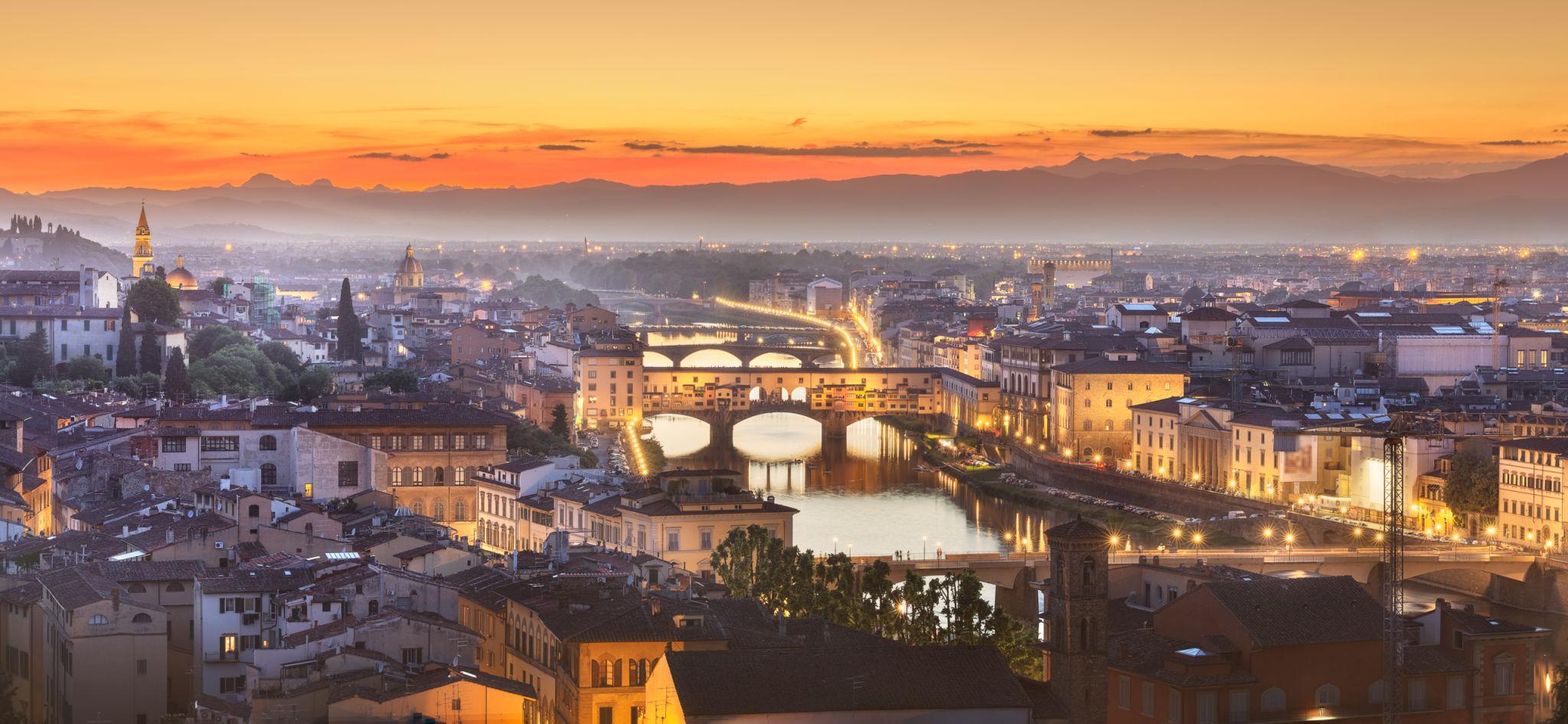
Ready to roll your own sfoglia? Explore our Florence cooking classes and learn hands-on from local chefs.