In this post
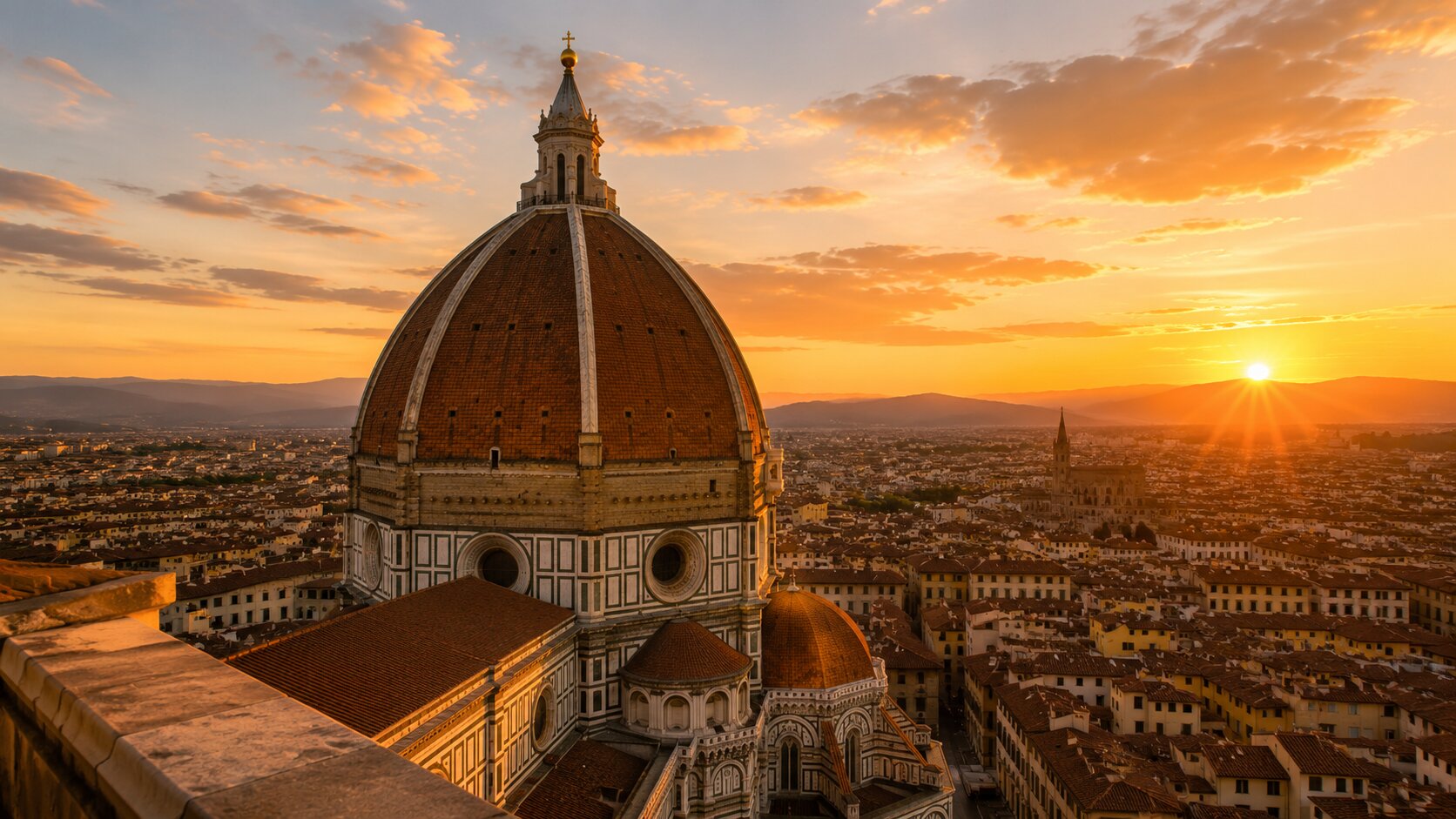
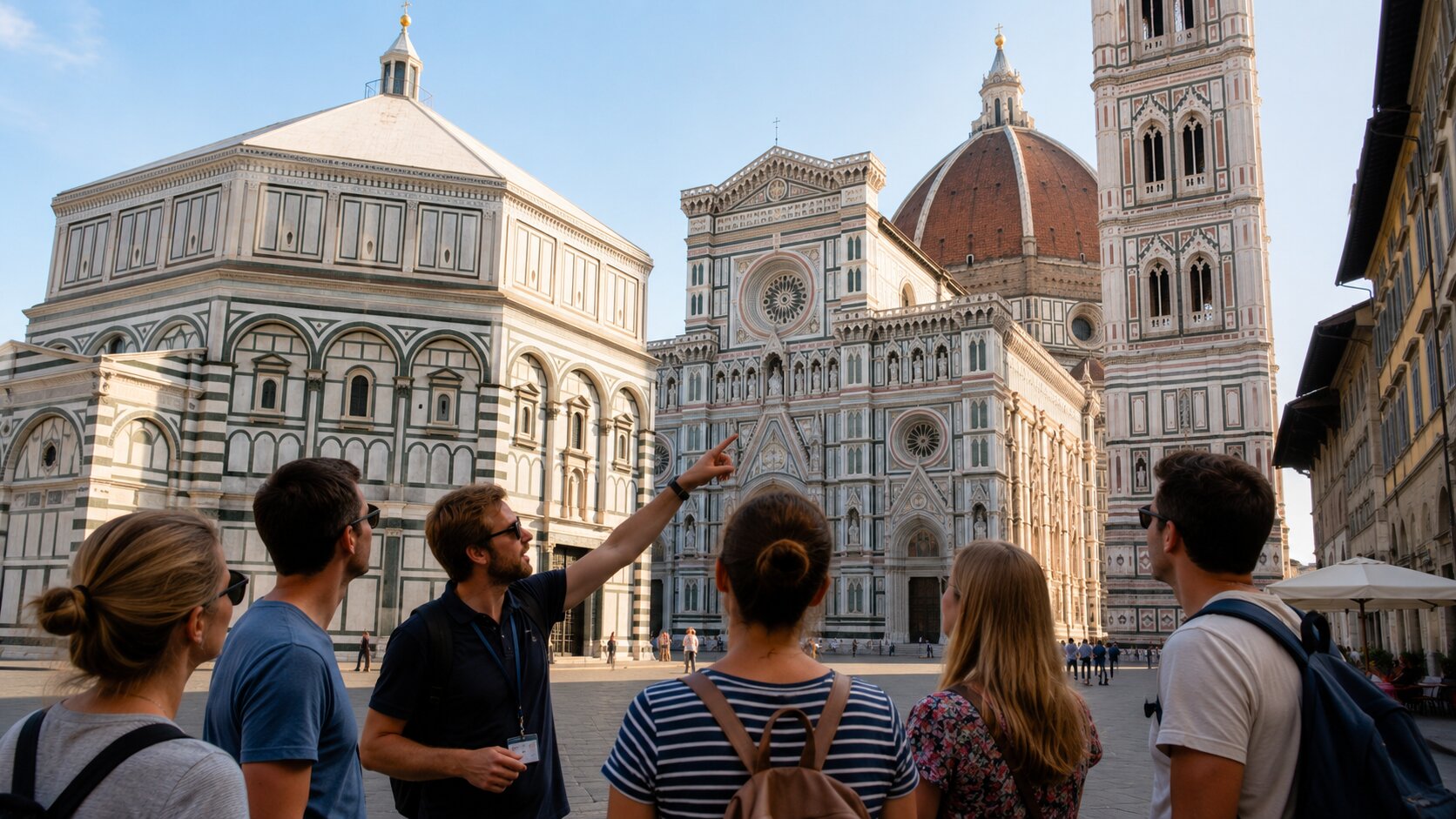
Stand in Piazza del Duomo and it's obvious why this became Florence's defining image. What's less obvious, until you're actually there, is that "the Duomo" isn't one building. It's a whole complex, five structures deep, each one carrying a different piece of the city's history.
First-time visitors often assume a quick look at the cathedral covers it. In practice, the complex works more like a set of chapters than a single stop, and skipping most of them means missing the parts that made this square famous in the first place.
What Is the Florence Duomo, Exactly?
The official name is the Cathedral of Santa Maria del Fiore. Workers laid the first stone on September 8, 1296. Architect Arnolfo di Cambio led the project, though he died before seeing much of it finished. The building wasn't consecrated until March 25, 1436. That's 140 years after that first stone, and it only happened once Filippo Brunelleschi solved a problem nobody else could. He had to cover a 45-meter opening at the crossing with a dome, using no wooden scaffolding at all.
The complex today includes the cathedral itself, Brunelleschi's dome, Giotto's Bell Tower, the Baptistery of San Giovanni, and the Museum of the Opera del Duomo. It also includes the excavated remains of Santa Reparata, the older church that stood on this spot before the current cathedral replaced it.
Brunelleschi's Dome: An Engineering Trick That Still Gets Studied
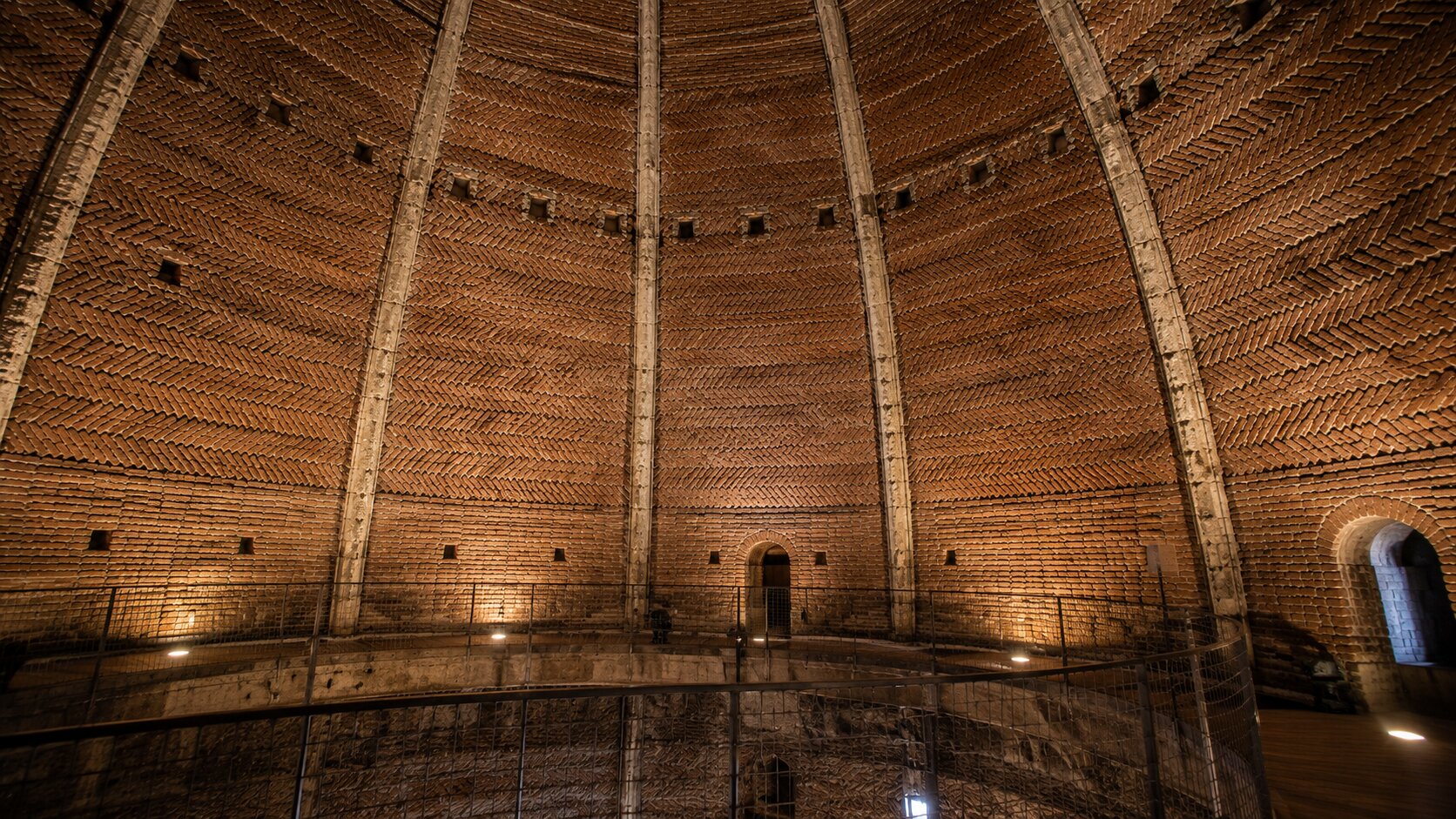
Brunelleschi built his solution between 1420 and 1436. Instead of one solid shell, he built two. An inner structural layer and an outer weatherproof one, connected by stone ribs and horizontal chains that worked like invisible tension rings holding the whole thing together. The bricks themselves went in at an angle, in a herringbone pattern Florentines call spina di pesce, "fish bone." Each ring of brick supported itself the moment it was laid, with no scaffolding that could have reached that high anyway.
He also had to invent the machinery to build it. His ox-powered hoisting system could lift materials over 100 meters, and it could reverse direction without the ox turning around. Leonardo da Vinci sketched the design decades later, still impressed by it. The dome remains the largest masonry dome ever built. Engineers still study exactly how Brunelleschi managed the physics of it. Our guide to climbing Brunelleschi's Dome covers what the ascent through that structure is actually like from the inside.
Which Parts Are Worth Your Time?
Most visitors only ever step inside the cathedral itself, largely because it's free to enter. The interior earns the visit on its own. Paolo Uccello's 1443 clock has hands that run counter to the ones we're used to. Forty-four stained glass windows line the nave. But the most memorable parts of the complex often sit elsewhere, in the buildings people walk past without a second look.
Giotto's Bell Tower rises 84.7 meters. Giotto himself started the project in 1334 but never finished it — he died in 1337. Andrea Pisano and Francesco Talenti carried the design forward to completion in 1359. Climb its 414 steps and you get one advantage the dome climb can't offer. A clear view of the dome itself, which you can't really see from inside it.
The Baptistery holds some of Florence's oldest mosaics, plus Lorenzo Ghiberti's bronze doors. Michelangelo reportedly called them the Gates of Paradise. They took Ghiberti 27 years to complete. The Museum of the Opera del Duomo displays the original sculptures that once stood on the cathedral's exterior. Careful copies have since replaced them outside, to protect the originals from centuries of weather.
How Much Time Does the Whole Complex Actually Need?
A fast pass through just the cathedral can take under an hour. Doing the complex properly, dome, tower, baptistery, and museum together, is closer to half a day. That's without rushing any one part of it.
Visitors with a real interest in Renaissance Florence often stretch that further. The Duomo pairs naturally with the Accademia Gallery and Michelangelo's David nearby. Our guide to Michelangelo in Florence looks at how his work connects back to the same Renaissance ambitions that built the Duomo.
Why a Guide Changes This Particular Visit
The Duomo complex rewards context more than most monuments in Florence, precisely because it isn't one building telling one story. Five different structures, built across nearly three centuries by different architects working under different popes and different city governments. They only make sense together if someone connects the threads. Why the dome took until 1436, while the walls around it had already stood for over a century. Why Giotto designed a bell tower he never got to finish. Why the sculptures inside the museum aren't the ones actually on the building anymore.
A guide also solves the complex's biggest practical headache. Five separate sites, each with its own entry point and its own crowd patterns, layered on top of a piazza that gets packed by mid-morning most of the year. Walking in with someone who already knows which door leads where, and when each part of the complex is at its calmest, changes everything. A full-day complex starts feeling manageable in an afternoon instead.
More Than Florence's Most Famous Landmark
The Duomo isn't just a beautiful skyline marker. It's the physical record of roughly 250 years of Florentine ambition. Arnolfo di Cambio's first stone in 1296. Brunelleschi's impossible engineering solution in the 1420s. Uccello's backward-running clock in 1443. Even the archaeological layer underneath the cathedral floor, the excavated remains of Santa Reparata, pushes that timeline back further still — a reminder that this square has been the religious heart of Florence for far longer than the current cathedral has stood. Whether you're looking up at the marble façade from the piazza, standing inside Brunelleschi's herringbone brickwork, or reading the original sculptures in the museum, every piece adds another layer to the same story. A city that kept insisting on building things nobody had figured out how to build yet.