In this post
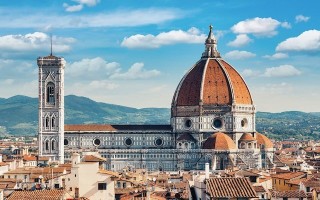
From Piazza del Duomo, Brunelleschi's dome reads as a single, impressive silhouette. Climb inside it, and it stops being a shape you look at and becomes a structure you actually move through. That difference is the whole reason the climb is worth the 463 steps.
Why This Climb Is Different from Any Other
Most historic domes you can climb are just tall viewpoints. This one is different because it's also the solution to a problem nobody had solved before. Brunelleschi built two shells instead of one, connected by internal ribs. He laid the brick in an interlocking herringbone pattern that let each ring support itself as it went up, with no wooden scaffolding required. Our complete guide to the Florence Duomo covers that engineering story in more depth. Along with the rest of the complex around it.
What the Climb Actually Feels Like
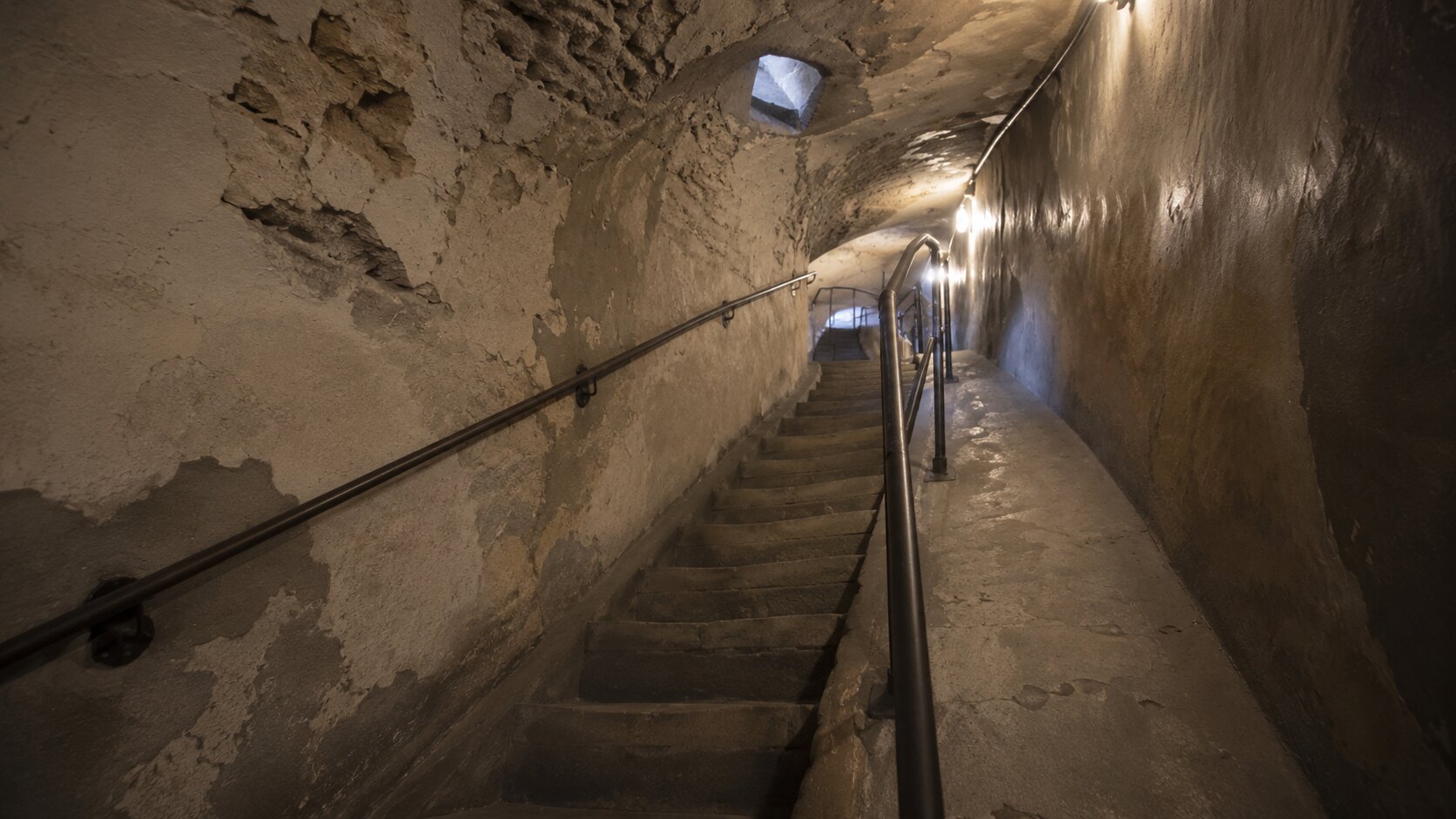
The staircase runs 463 steps, with no elevator and no shortcut. Unlike a modern tower, the route follows Brunelleschi's actual internal structure rather than a staircase built for tourists. Some stretches feel almost spacious. Others narrow down enough that passing someone coming the other way takes real coordination. The path changes direction repeatedly as it winds between the dome's two shells. That's part of why the climb feels so different from a simple straight ascent.
Seeing the Last Judgment From a Few Meters Away
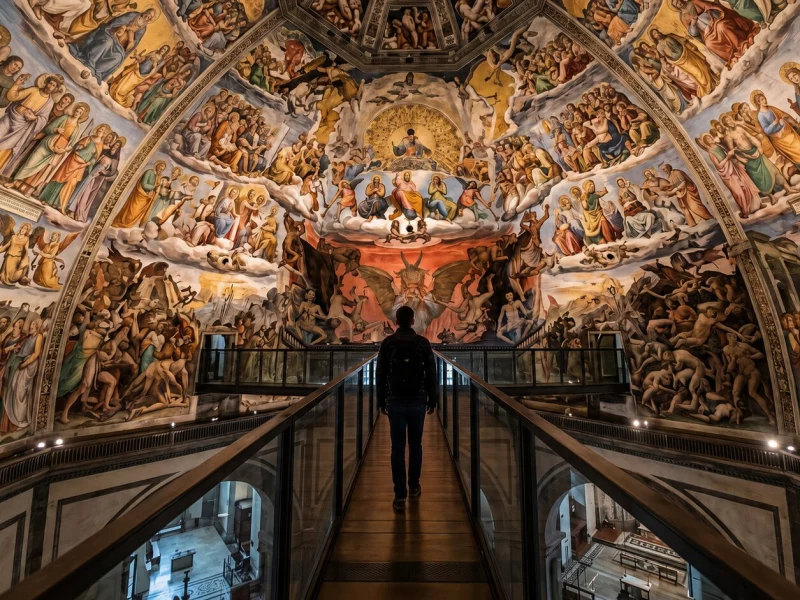
Partway up, the staircase opens onto an internal gallery directly beneath the dome's interior fresco, the Last Judgment. Grand Duke Cosimo I de' Medici commissioned it in 1572 and assigned it to Giorgio Vasari. Vasari died in 1574, having only finished the uppermost registers. Cosimo's successor brought in Federico Zuccari to complete it by 1579. To move fast enough, Zuccari worked partly in secco, painting on dry plaster rather than true wet fresco. That technique let him cover ground quickly, but it hasn't aged quite as well as Vasari's original sections.
The finished work covers roughly 3,600 square meters. It includes around 700 figures — angels, saints, the damned, animals, personifications of virtue — making it one of the largest fresco cycles ever painted. Theologian Vincenzo Borghini helped design the iconographic program alongside Vasari, drawing partly on Dante's Divine Comedy for the imagery in the lower registers, where the seven deadly sins each get their own dedicated section of Hell.
From the cathedral floor, those figures blur into a general impression of color and scale. From the internal gallery a few meters away, individual faces and gestures suddenly resolve into real detail. Florentines were reportedly unimpressed when the work was unveiled in 1579. Six centuries of hindsight have been considerably kinder to it.
Walking Between the Two Shells
The most unexpected part of the climb is the stretch between Brunelleschi's inner and outer shells. Here, the brickwork itself becomes visible up close. The herringbone pattern. The way each course locks into the next. The subtle shifts in geometry as the dome curves inward. All of it reads less like sightseeing and more like walking through an engineering diagram made physical. Very few historic structures let visitors move through the actual system holding them up. Most only let you admire it from outside.
The View Is Only Part of the Reward
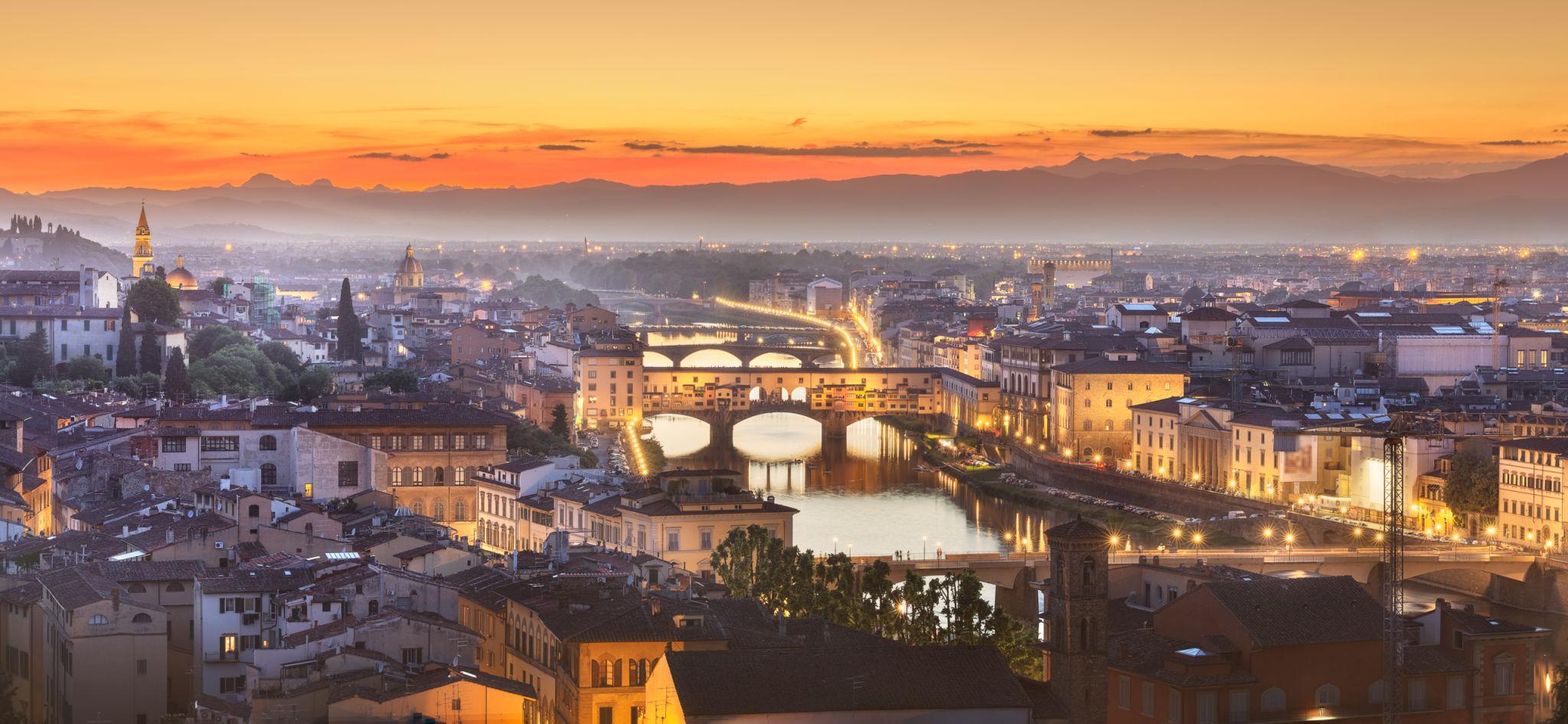
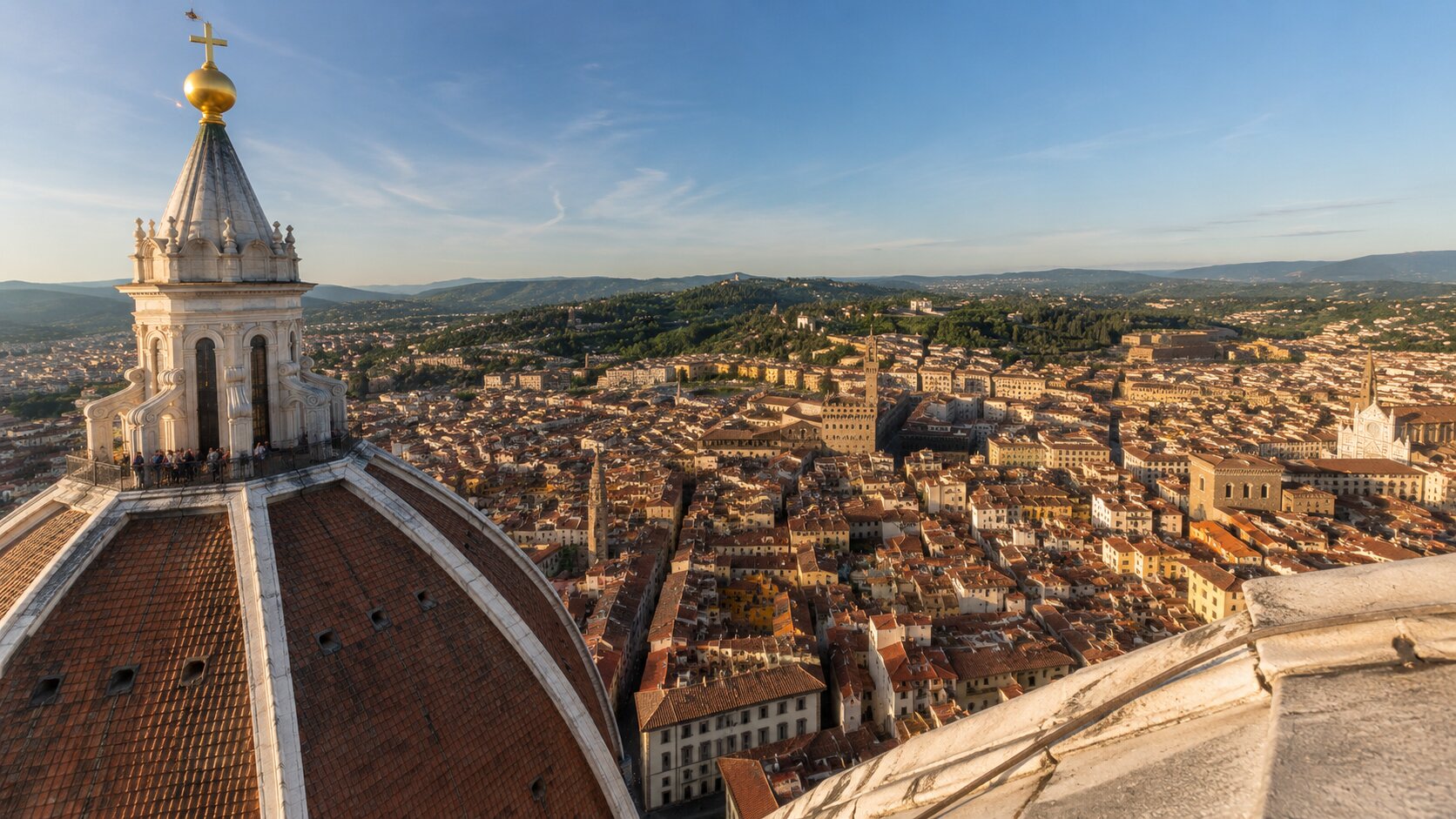
The terrace at the top delivers the view most people come for. Red rooftops stretching toward the Tuscan hills. Palazzo Vecchio rising above the historic center. The Arno cutting through the middle of it all. But by the time you reach it, you've already climbed through the fresco gallery and the space between the shells. The view arrives as a conclusion, not the entire point of the trip.
Is the Climb Difficult?
Most reasonably active travelers manage it without much trouble. There's no elevator and no way to skip sections once you've started, though. Narrow stretches occasionally require timing your pace around people coming from the opposite direction, since two-way traffic on a spiral staircase built six centuries ago was never really part of the design brief. Severe claustrophobia, vertigo, or significant mobility limitations can make specific sections genuinely difficult.
Comfortable shoes and a steady, unhurried pace help more than raw fitness does. The architecture itself naturally builds in pauses, at the fresco gallery and again between the shells. Treating the climb as one continuous sprint usually backfires, and it also means missing most of what actually makes the ascent worth doing in the first place.
Timing the Visit Well
Spring and autumn generally make for a more comfortable climb, especially through the middle of the day. The enclosed staircase has no ventilation to speak of. Summer heat builds up fast inside that stone, which pushes many visitors toward the earliest available access instead. Our guide to the best time to visit Florence breaks down how each season shapes the city more broadly. Crowds and weather included.
Why Context Changes the Climb
The dome sits inside a larger complex. The cathedral, the Baptistery, Giotto's Bell Tower, and the excavated remains of Santa Reparata underneath it all. Climb without knowing any of that, and the ascent risks becoming just another item checked off a list. Knowing it changes the texture of every stage. The fresco reads as a specific Counter-Reformation commission, not generic religious art. The brickwork reads as a genuine engineering solution, not decorative texture. The final view reads as the payoff for six centuries of decisions that all led to this exact spot.
More Than a View Over Florence
Plenty of viewpoints in Florence offer a nice panorama. Very few let you physically walk through the structure that solved one of architecture's hardest problems. What makes the climb memorable isn't really the terrace at the top. It's the fresco gallery. The space between the shells. The specific engineering decisions still visible in the brick. All of it discovered on the way up, rather than waiting at the summit.