In this post
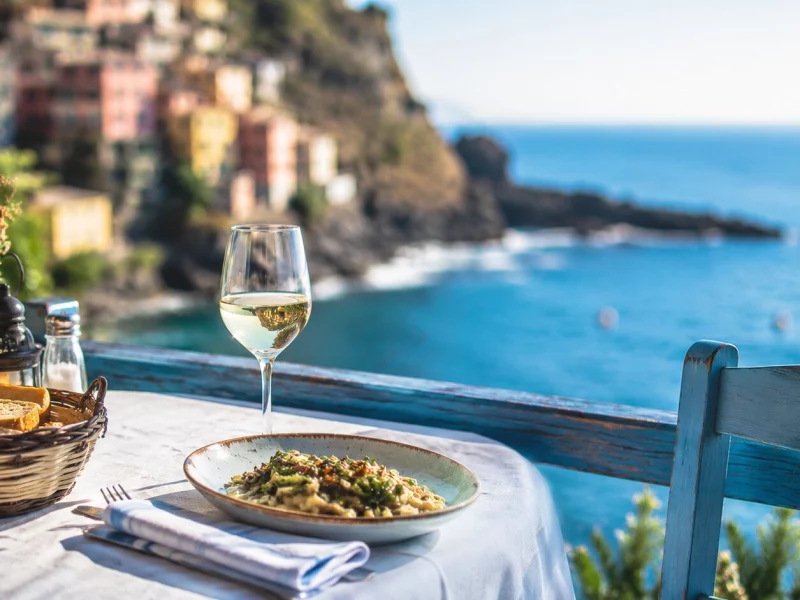
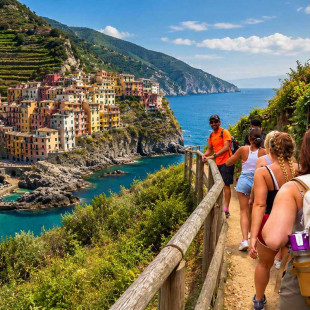
Cinque Terre's food starts with a simple fact: there's almost no flat land here. Five villages cling to cliffs above the Ligurian Sea. Every ingredient that ends up on a plate had to be wrestled out of a landscape that never wanted to grow anything. That struggle shows up in the food. It's direct, coastal, built from ingredients that had to earn their place.
A Landscape Built by Hand
The terraces that make Cinque Terre's vineyards and olive groves possible are held up by dry-stone walls. By some estimates they run close to 7,000 kilometers in total — longer than the Great Wall of China. All of it built without a drop of mortar, some of it nearly a thousand years old. UNESCO recognized the whole landscape as a World Heritage Site in 1997. The listing points specifically at this relationship between people and an almost impossible terrain. Machinery can't reach most of these slopes even today. Nearly everything, from planting to harvest, still gets done by hand.
The Sea on the Plate
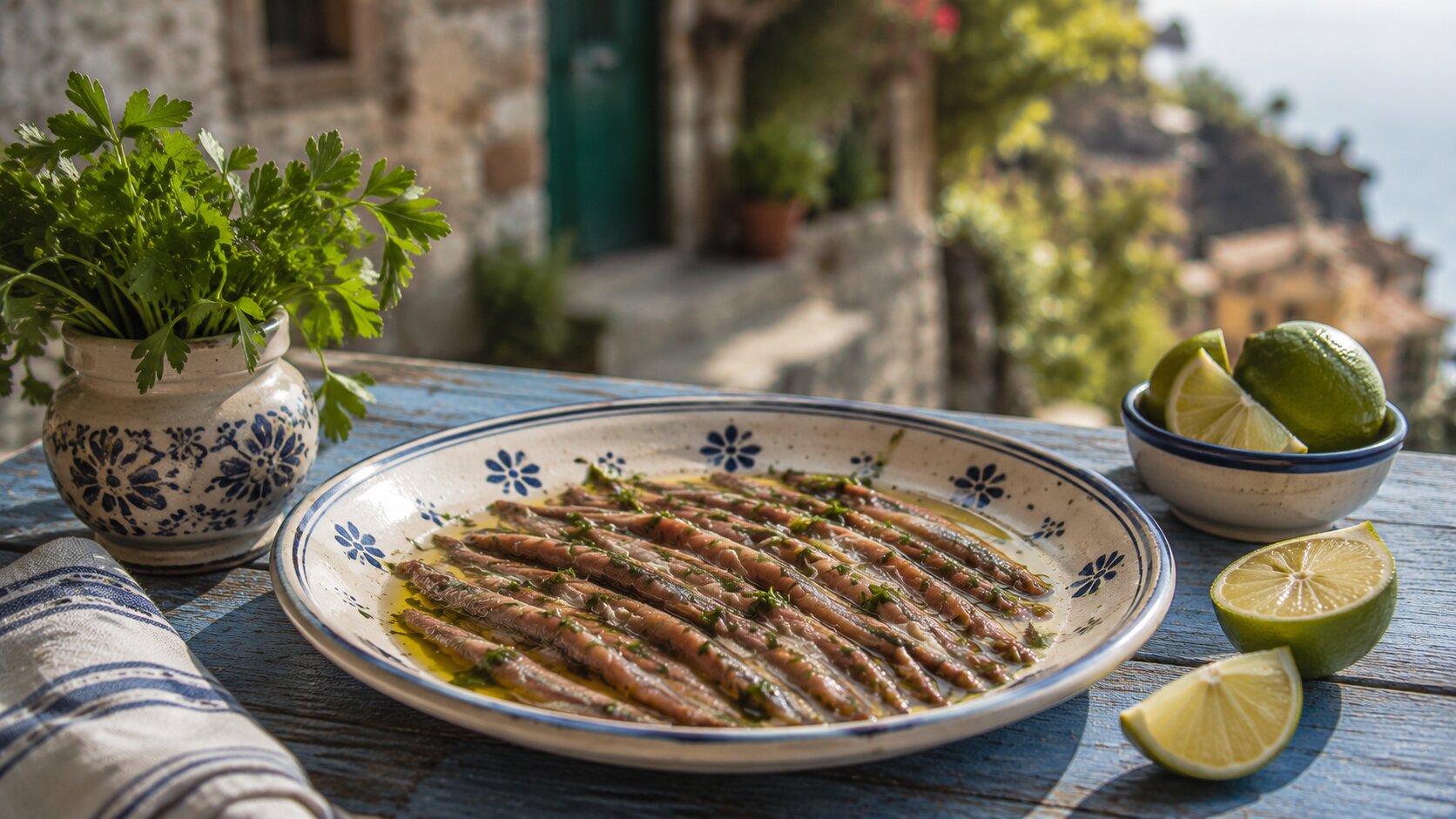
Anchovies aren't a minor ingredient here the way they are almost everywhere else. Locals call them pan du ma, "bread of the sea." The name says everything about how central they've been to survival along this coast. Fishermen have long used the lampara method, luring anchovies at night with lamps before netting them. The tradition runs deep enough that Monterosso still holds a Fried Anchovy Festival every third Saturday of June, and a Salted Anchovy Festival every third Sunday of September.
Preserving the catch used to fall to the village women. They cleaned and salted the fish into clay pots, to last through the year. Today the anchovies show up marinated, fried, or folded into pasta. The flavor stays unmistakably maritime, even when the preparation gets more refined.
Pesto and the Ligurian Identity
Pesto's basil-forward recipe wasn't written down until 1863, when gastronomist Giovanni Battista Ratto published it in La Cuciniera Genovese. Before basil took over, Ligurian cooks made a related garlic paste called agliata, dating back to the Middle Ages. The word pesto itself comes from pestare, "to pound." That's a reference to the mortar and pestle still considered the proper way to make it. Basil, olive oil, garlic, pine nuts, and cheese — pounded rather than blended. That short list sums up a style of cooking built on intensity rather than abundance.
Focaccia, Farinata, and Everyday Food
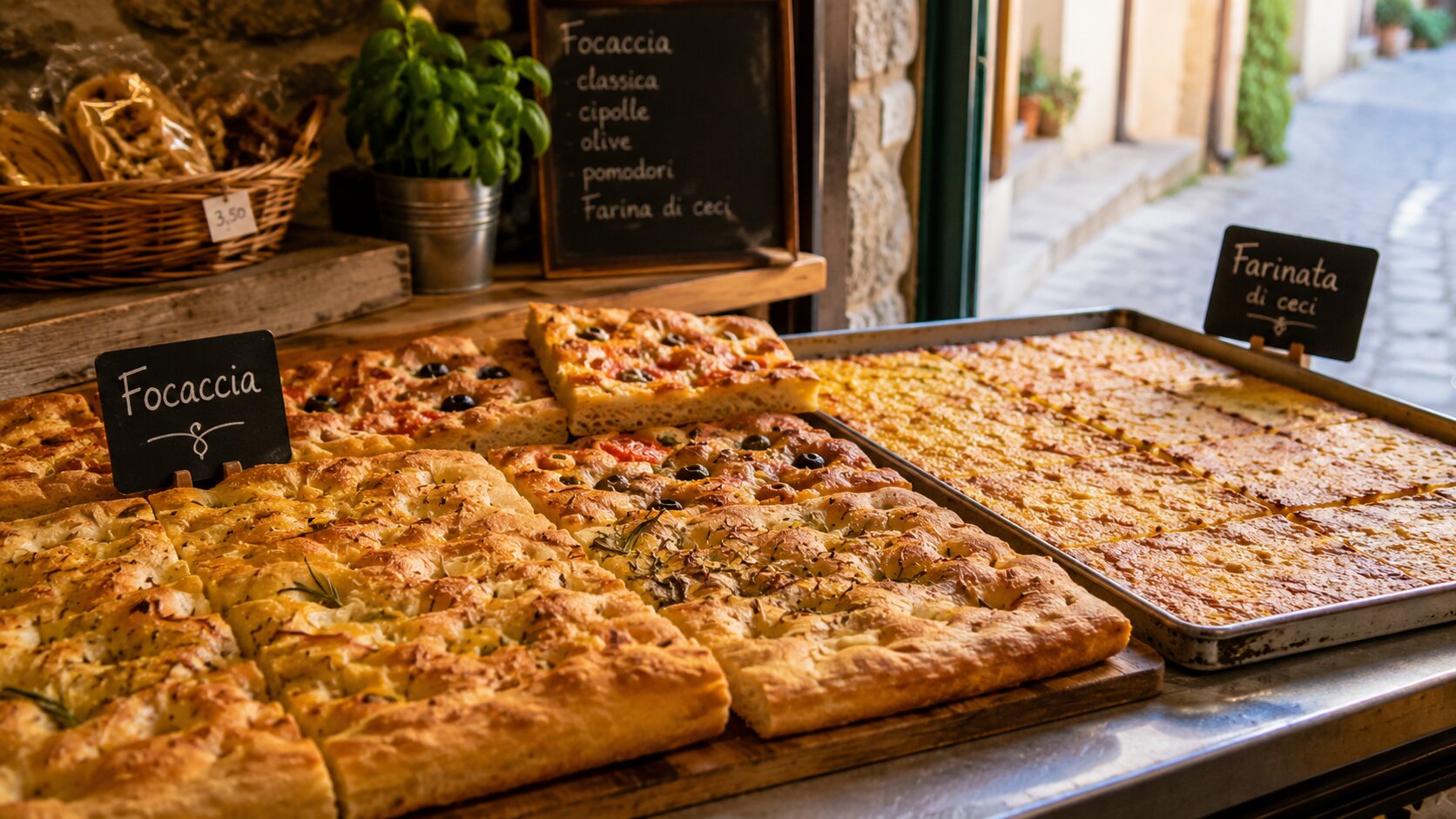
Some of the best eating here has nothing to do with a restaurant table. Focaccia, plain or topped with onions and herbs, is a Ligurian staple that predates any modern idea of regional branding. Farinata is made from little more than chickpea flour, water, and olive oil, baked until thin and slightly crisp. It's a reminder that some of Liguria's best food was never meant to be fancy. Just good.
Wine from an Impossible Terrain
Vineyards here cover roughly 150 hectares under the Cinque Terre DOC. Almost all of it sits on terraces too steep for machinery. That difficulty shapes the wine directly. Fresh, mineral, coastal whites, made mostly from Bosco, Albarola, and Vermentino grapes grown on soil that gives up very little without a fight.
Walking near the terraces makes that effort visible in a way tasting the finished bottle never quite manages. Our guide to Cinque Terre hiking trails looks at these paths as part of the same infrastructure that shaped the coastline. Not just scenery — the record of centuries of labor.
Sciacchetrà: The Wine of Patience
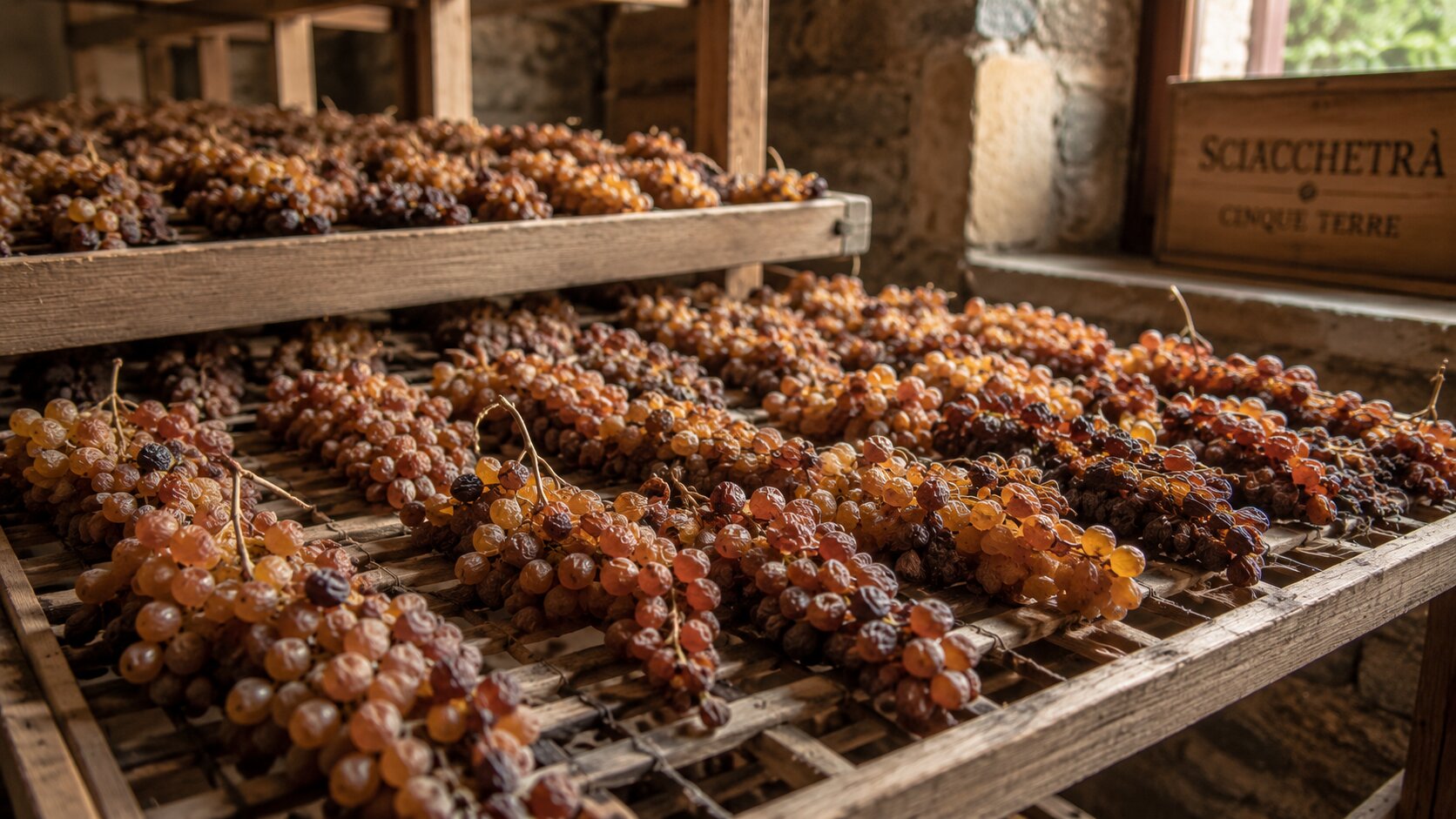
Sciacchetrà takes those same three grapes and dries them before fermentation. That concentrates the sugar and aroma into a sweet passito wine, made in genuinely small quantities. It's one of Italy's most labor-intensive wines, and it shows. Nothing about the process is fast, from the drying to the fermentation. Tasting it isn't really a quick drink. It's closer to tasting the patience this region has needed just to keep farming these slopes for a thousand years.
Village Life and Local Food
Monterosso has more open space and a beach-town rhythm that suits its anchovy tradition. Vernazza stays close to its working harbor. Corniglia is the only one of the five villages without direct sea access. It has a more agricultural character, sitting above vineyards rather than beside the water. Manarola and Riomaggiore reveal the vertical relationship between houses, cliffs, and terraces most clearly of all five.
Each village's food carries a slightly different accent because of it. Our guide to Cinque Terre villages explained goes deeper into what sets each one apart, beyond the postcard view.
Lunch as Part of the Experience
It's easy to treat lunch here as an interruption between viewpoints, something to grab quickly before moving on. That misses most of the point. A proper two-course meal in a small, family-run dining room says more about Cinque Terre than another photo of the harbor ever will. Local wine, whatever the kitchen pulled from the sea that morning — that's the real souvenir. The best meals here aren't theatrical. They're rooted, built from ingredients that only make sense in this exact stretch of coastline.
Portions tend to run smaller and more deliberate than in inland Tuscany, closer to a Ligurian rhythm: a plate of anchovies to start, a bowl of trofie al pesto, maybe fish for the second course, and a glass of the local white throughout. Nobody's rushing the meal along, and the terraced hillside outside the window is doing a lot of the same work the wine in the glass is — reminding you how much effort went into everything on the table.
Beyond the View: Food as a Way to Understand Cinque Terre
Most people come to Cinque Terre chasing a view, and the coastline earns every bit of that attention. But a plate of anchovies tells you about the sea. A glass of local white tells you about the terraces. A piece of focaccia tells you about daily life rather than spectacle. Put together, they say something the view alone can't. This is a working landscape, shaped by fishing, farming, and a thousand years of people refusing to give up on impossible ground. Understanding the food here means understanding exactly what that effort has always tasted like.