In this post
Florence rarely feels finished. There's always one more church, one more street, one more museum room you skipped. So leaving the city for a full day, even to see Chianti or Siena, can feel like giving something up. In practice, it usually does the opposite.
Why Travelers Hesitate to Leave Florence
The hesitation makes sense on paper. A single day out of a five-day trip is 20% of your time in the city, and Florence alone has enough packed into its historic center to fill a week without repeating a single stop. Giving up a day feels like a real cost.
There's also a practical worry underneath the emotional one: what if the day trip turns into hours of driving with little to show for it? That fear isn't irrational. A poorly planned excursion really can waste a day. The fix isn't staying in Florence out of caution. It's picking a day trip built around a clear focus instead of a vague promise of "the countryside."
What that math misses is how tightly Florence and the land around it are actually connected. The city's wealth was built on wool trade, banking, and agriculture from the same countryside travelers are hesitant to visit. Florence was never really separate from Tuscany. It was always the capital of it.
What Changes Outside the City
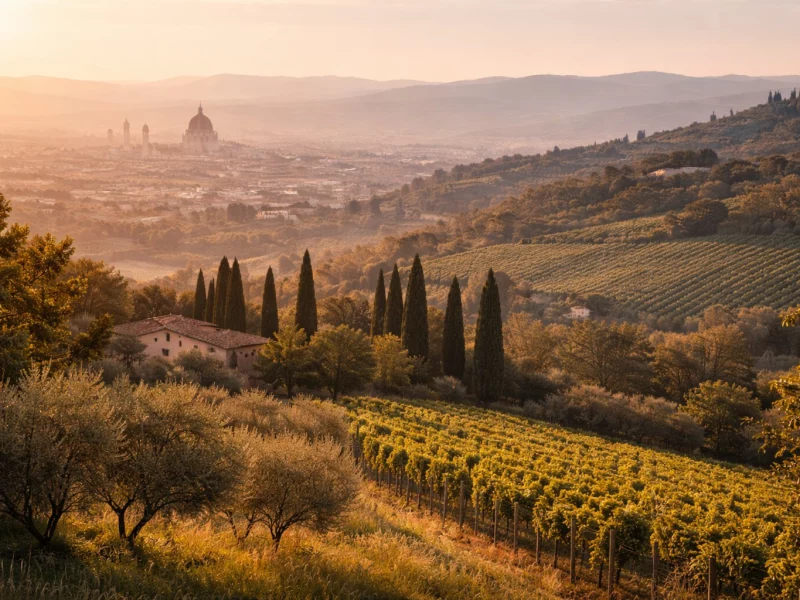
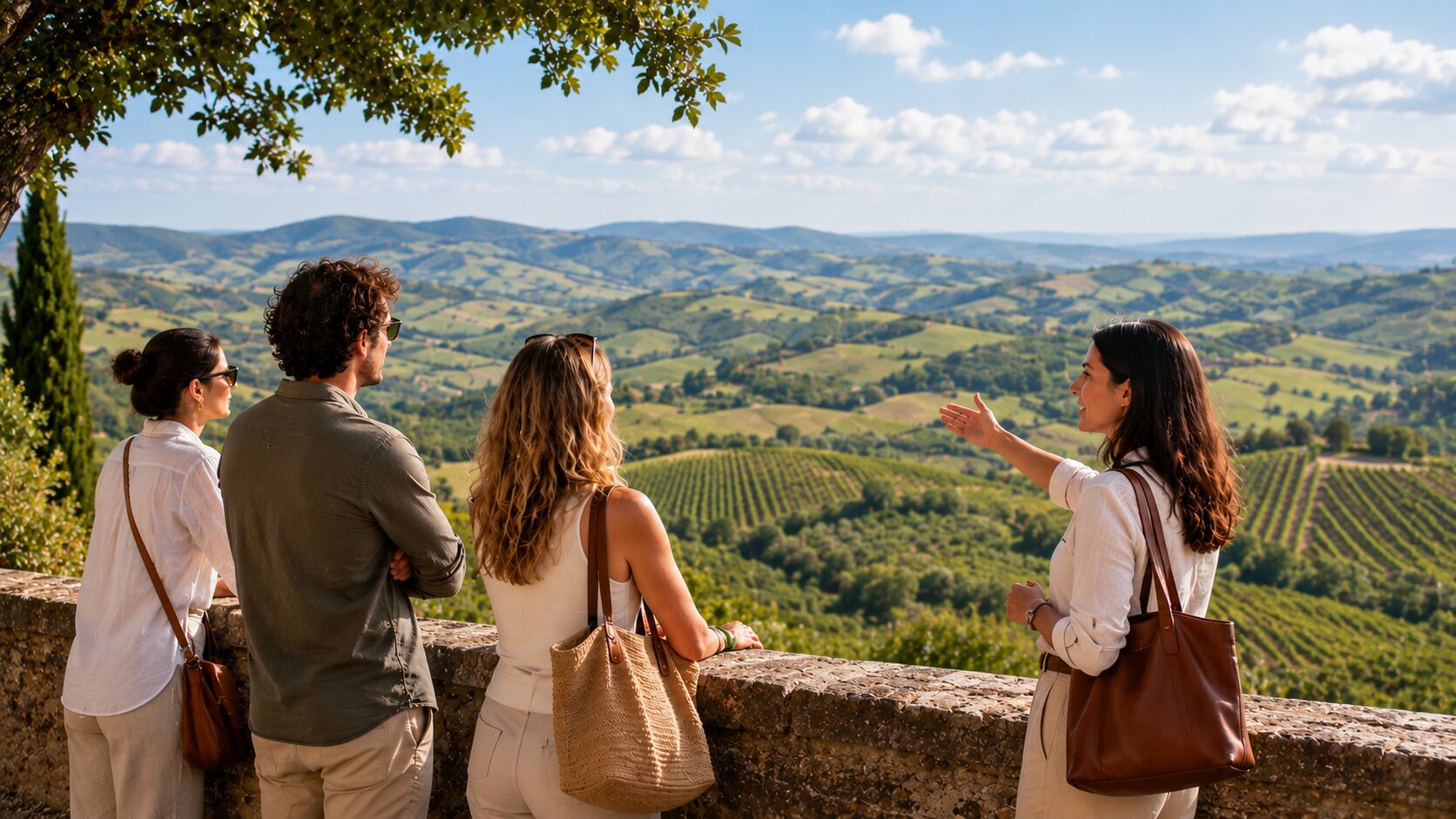
The shift happens fast. Twenty minutes outside Florence's center, the density drops away and the hills open up. A vineyard on the way to Chianti stops being a nice view through a car window and starts being a specific decision: which grape, which slope, which soil. The historic Chianti Classico zone got its boundaries in 1716, under an edict from Grand Duke Cosimo III de' Medici. That's not scenery. That's three centuries of land management you're driving through.
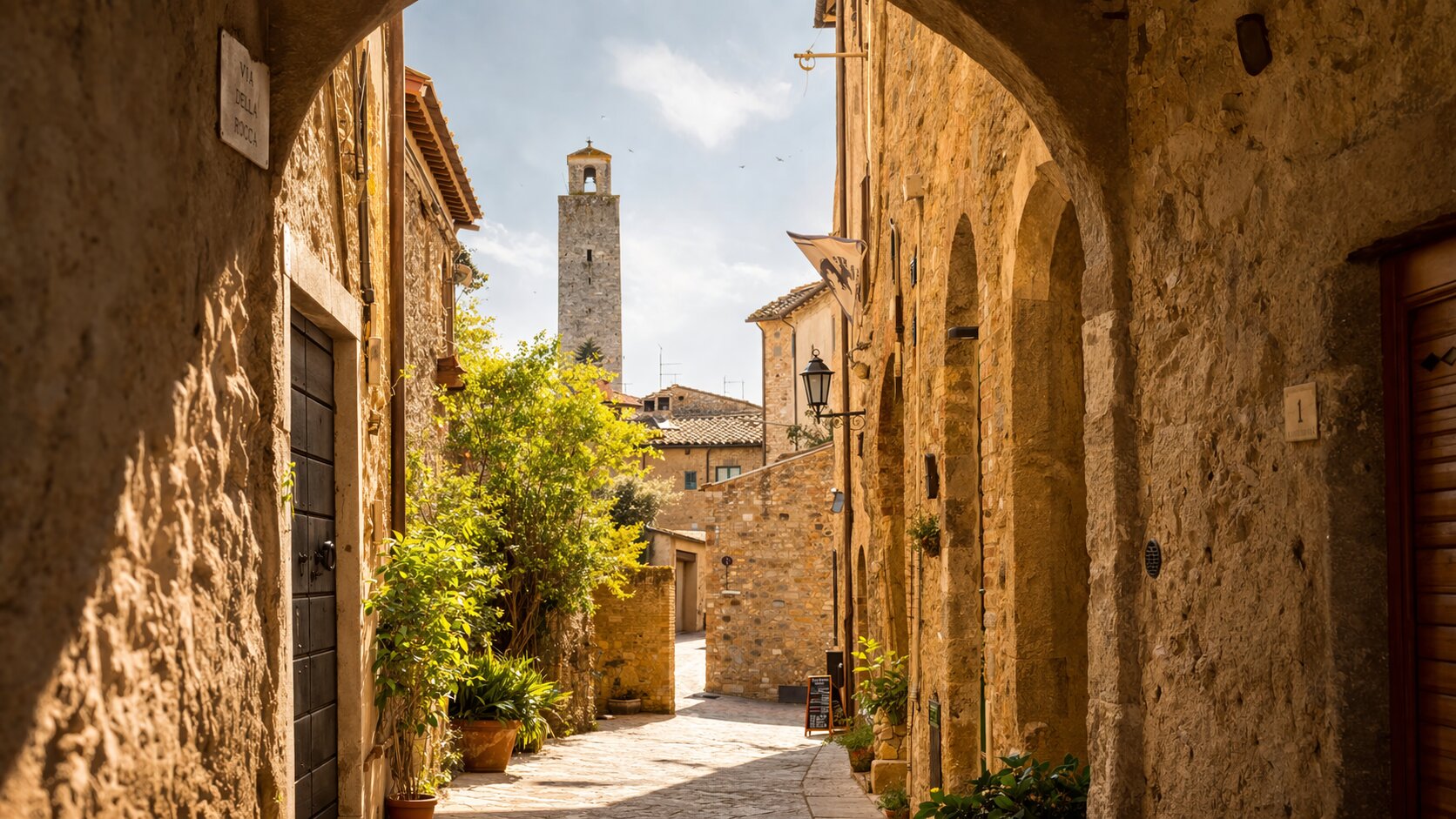
A hill town reads differently too, once you're standing in it instead of looking at a photo. San Gimignano's surviving towers, 14 out of an original 72, weren't decoration. They were built by rival families competing for status and, occasionally, defense. Seeing that in person changes what the postcard image actually means.
Even the road itself becomes part of the shift. Cypress-lined driveways, stone farmhouses, and olive groves that look staged in photographs turn out to be working land, still farmed by families who've worked the same hillside for generations. That's a different kind of scenery than a museum wall, and it asks for a different kind of attention.
Is One Day Enough?
It depends entirely on structure, not the number of hours available. Trying to fit Siena, San Gimignano, and Pisa into one day means spending a big chunk of it in the car, working out routes and parking in three unfamiliar towns instead of actually seeing them. That leaves barely enough time to walk each town's main square, let alone sit down anywhere for a real lunch.
A tighter focus works better. Chianti alone, with a proper winery lunch, fills a day without feeling rushed. Siena paired with San Gimignano, connected by a scenic drive through vineyards, gives you two very different versions of medieval Tuscany without burning the whole day figuring out logistics. Our guide to private day trips from Florence to Tuscany breaks down how these combinations actually get structured.
The Difference Between a Good Day Trip and a Forgettable One
Some day trips run on a fixed schedule: six stops, twenty minutes each, back on the bus by 4pm. Others leave real room to slow down. That difference decides what you actually remember afterward.
The moments that stick tend to be the ones nobody planned in detail. A ten-minute conversation with the person pouring your wine about why this vintage differs from last year's. A quiet side street in Siena, empty because you arrived twenty minutes before the tour buses. A view over the Val d'Elsa that only opens up if you're not rushing to the next stop. None of that shows up on a fixed itinerary with six boxes to check.
The pace of the guide matters as much as the itinerary itself. A guide watching the clock treats every stop as a checkbox. A guide reading the group knows when to linger at a viewpoint and when a town has already given you what it's going to give. That difference rarely shows up in a tour description, but it's usually the biggest factor in how the day actually feels.
Who a Florence Day Trip Is Really For
Not everyone needs one. A traveler purely focused on art and museums can spend four or five days inside Florence without running out of things to see, and staying put may genuinely be the better use of limited time.
But for anyone who wants Tuscany as a region, not just Florence as a city, a single day outside changes the picture. It adds space, a different pace, and a landscape Florence itself, dense and urban by nature, simply can't offer inside its own walls.
Returning to Florence, Differently
Something shifts on the way back into the city after a day in the countryside. The Duomo's brick and stone start reading differently once you've seen the same materials in a farmhouse an hour away. References that felt abstract in a museum gallery — wool merchants, wine trade, agricultural wealth — suddenly have a physical place attached to them.
Even something as ordinary as dinner changes. A plate of pici with a Chianti sauce reads differently after you've stood in the vineyards that grew the grapes, or watched pasta rolled by hand at a farmhouse table. The city doesn't feel smaller after a day away from it. It feels more explained, like a piece of context finally clicked into place.
A day trip doesn't interrupt a Florence itinerary. Done well, it's what makes the rest of the trip make more sense.
Ready to see Tuscany beyond Florence's walls? Explore our day trips from Florence and find the itinerary that fits your pace.