In this post
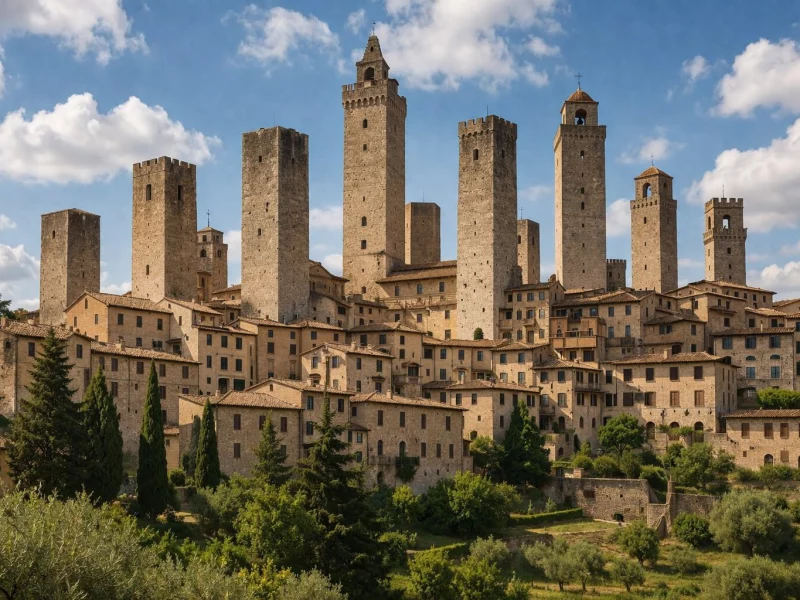
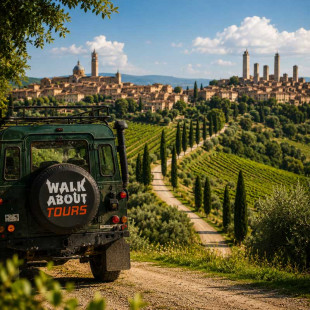
Rising above the Tuscan hills, San Gimignano presents a skyline unlike any other in Italy.
Its towers, visible from a distance, define not only the identity of the town but also the story of a place shaped by ambition, rivalry, and power during the Middle Ages.
Understanding San Gimignano means looking beyond its appearance. It means interpreting a landscape where architecture became a language of status and where verticality reflected influence.
A City of Towers and Power
During the medieval period, San Gimignano developed into an important commercial center, strategically positioned along the Via Francigena, one of the main pilgrimage routes connecting Northern Europe to Rome.
This position brought wealth, and with wealth came competition.
Prominent families began to express their power through architecture. Towers became symbols of prestige. The higher the tower, the greater the influence it represented.
At its peak, San Gimignano is believed to have had more than seventy towers, creating a vertical skyline that distinguished it from other Tuscan towns.
Architecture as a Statement
The towers of San Gimignano were not built for defense alone.
They were declarations.
Each structure communicated the ambition of a family, transforming the town into a dense and competitive urban landscape. Unlike fortified castles or city walls, these towers served a more symbolic purpose.
They shaped the identity of the town and established a visual hierarchy that could be read from afar.
Even today, the remaining towers continue to define the character of San Gimignano, offering a rare glimpse into a period where architecture was directly tied to social and political influence.
The Role of Trade and Pilgrimage
San Gimignano’s prosperity was closely linked to movement.
Travelers, merchants, and pilgrims passed through the town, contributing to its economic growth and cultural exchange. The Via Francigena not only connected distant regions but also positioned San Gimignano within a broader European network.
This flow of people and goods allowed the town to flourish, supporting the construction of its distinctive towers and the development of its urban structure.
Experiencing the town today through curated journeys such as private San Gimignano toursallows visitors to understand how this movement shaped its evolution.
Decline and Preservation
Like many medieval towns, San Gimignano eventually faced decline.
Economic shifts, changing trade routes, and the impact of the Black Death reduced its prominence. As Florence extended its influence over the region, San Gimignano lost its independence.
Yet this decline contributed to its preservation.
Without significant later development, much of the medieval structure remained intact. The towers, the streets, and the overall urban form were left largely unchanged.
This is what allows San Gimignano today to retain such a strong sense of historical continuity.
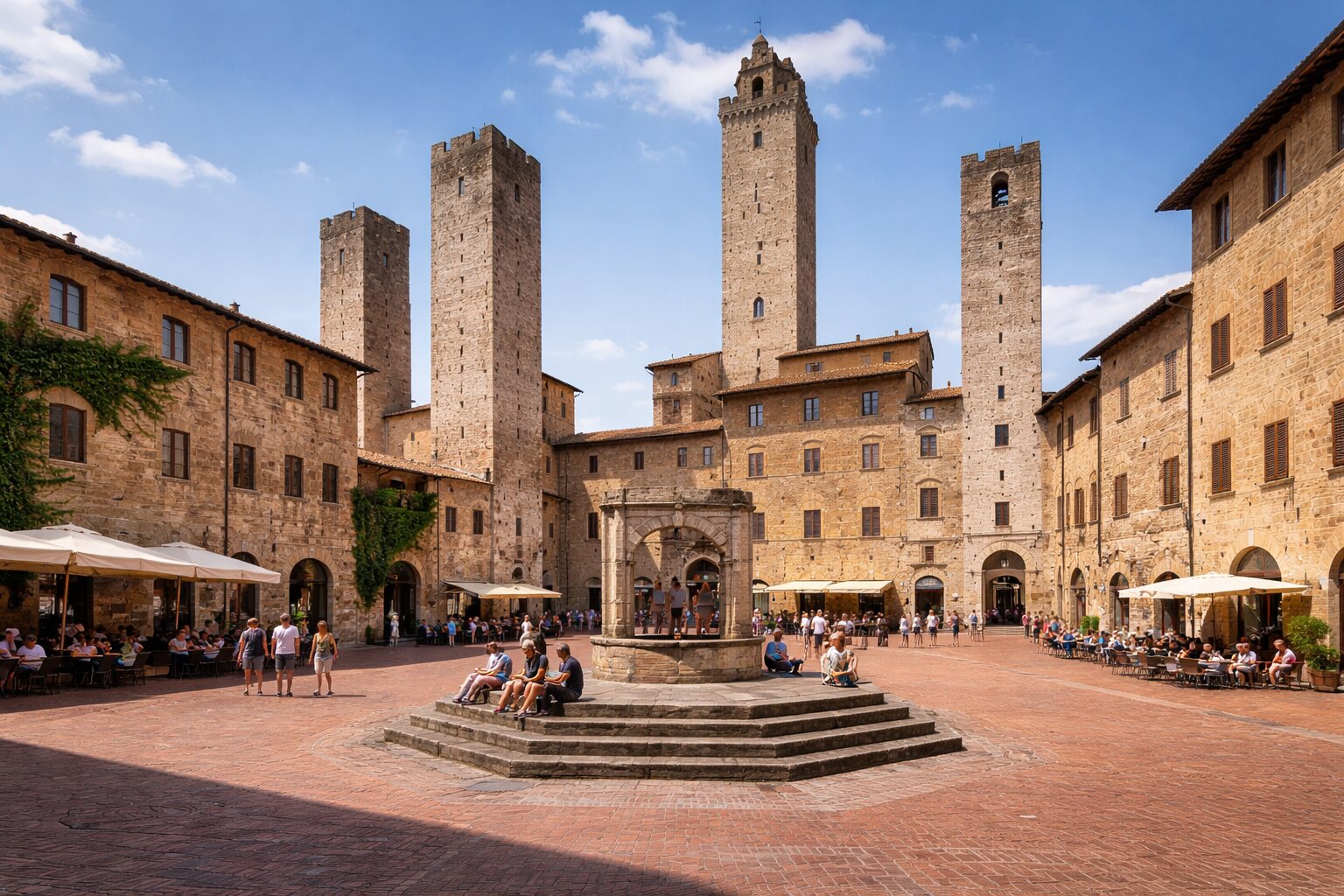
A Landscape of Identity
San Gimignano is not defined by a single monument, but by the relationship between its elements.
The towers, the piazzas, and the surrounding countryside all contribute to a cohesive identity that feels both architectural and cultural.
The town does not present itself as a collection of isolated attractions. Instead, it functions as a unified landscape shaped by centuries of human decisions.
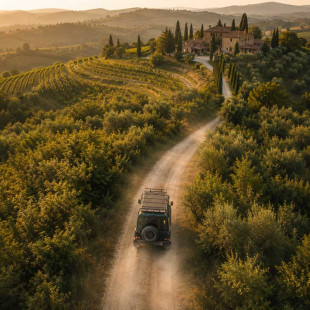
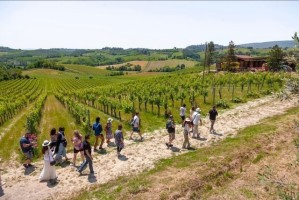
Even the agricultural context surrounding the town plays a role. The production of local wine, particularly as explained in the Vernaccia wine of San Gimignano, reflects the continuity between the medieval past and present-day traditions.
Understanding San Gimignano Today
To walk through San Gimignano is to experience a form of continuity that is increasingly rare.
The town does not rely on reconstruction or interpretation. Its identity is embedded in its physical form.
The towers remain, not as isolated landmarks, but as part of a broader narrative that continues to shape how the town is perceived and experienced.
Rather than focusing on individual sites, understanding San Gimignano means reading it as a whole an urban landscape where history, architecture, and identity are inseparable.