In this post
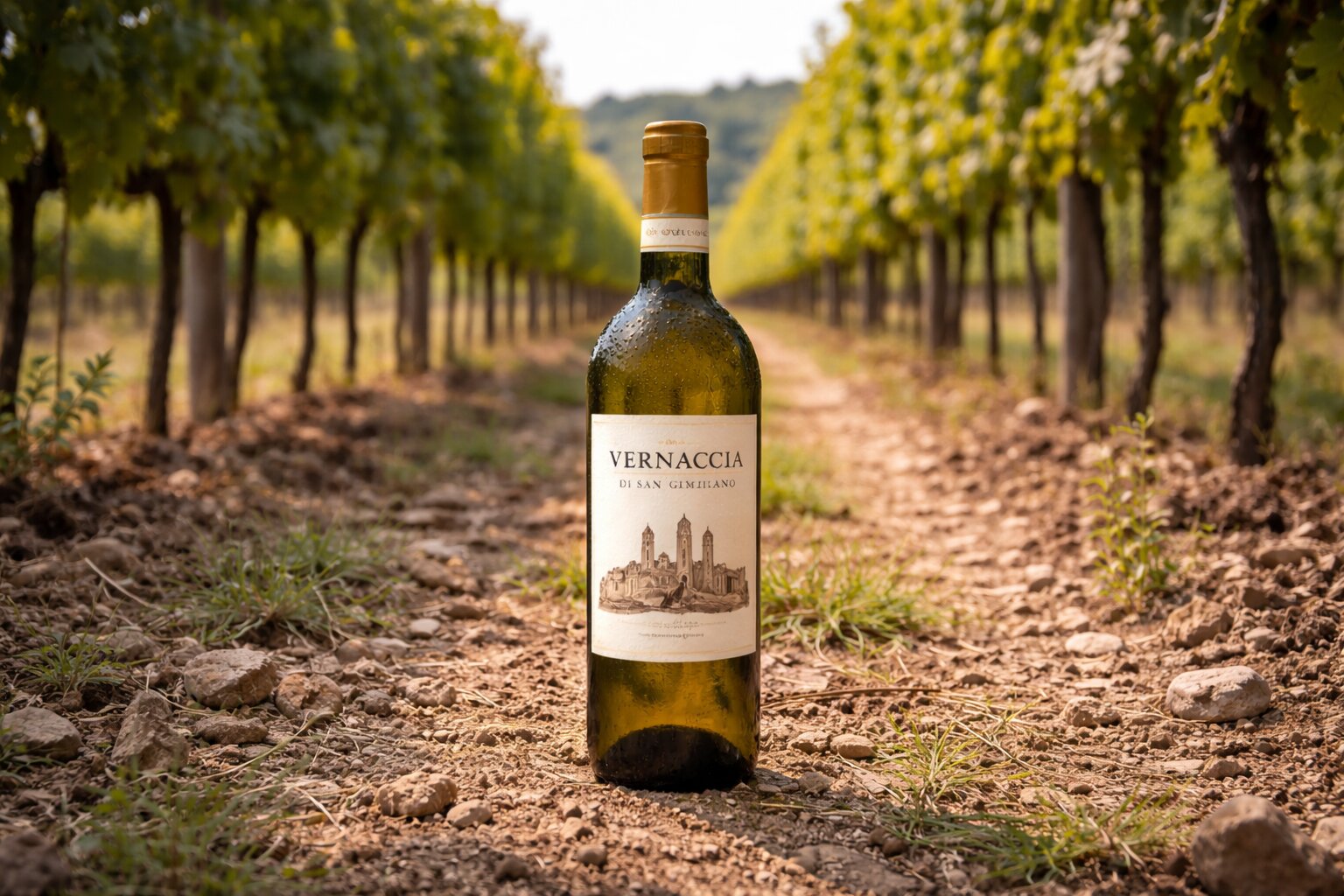
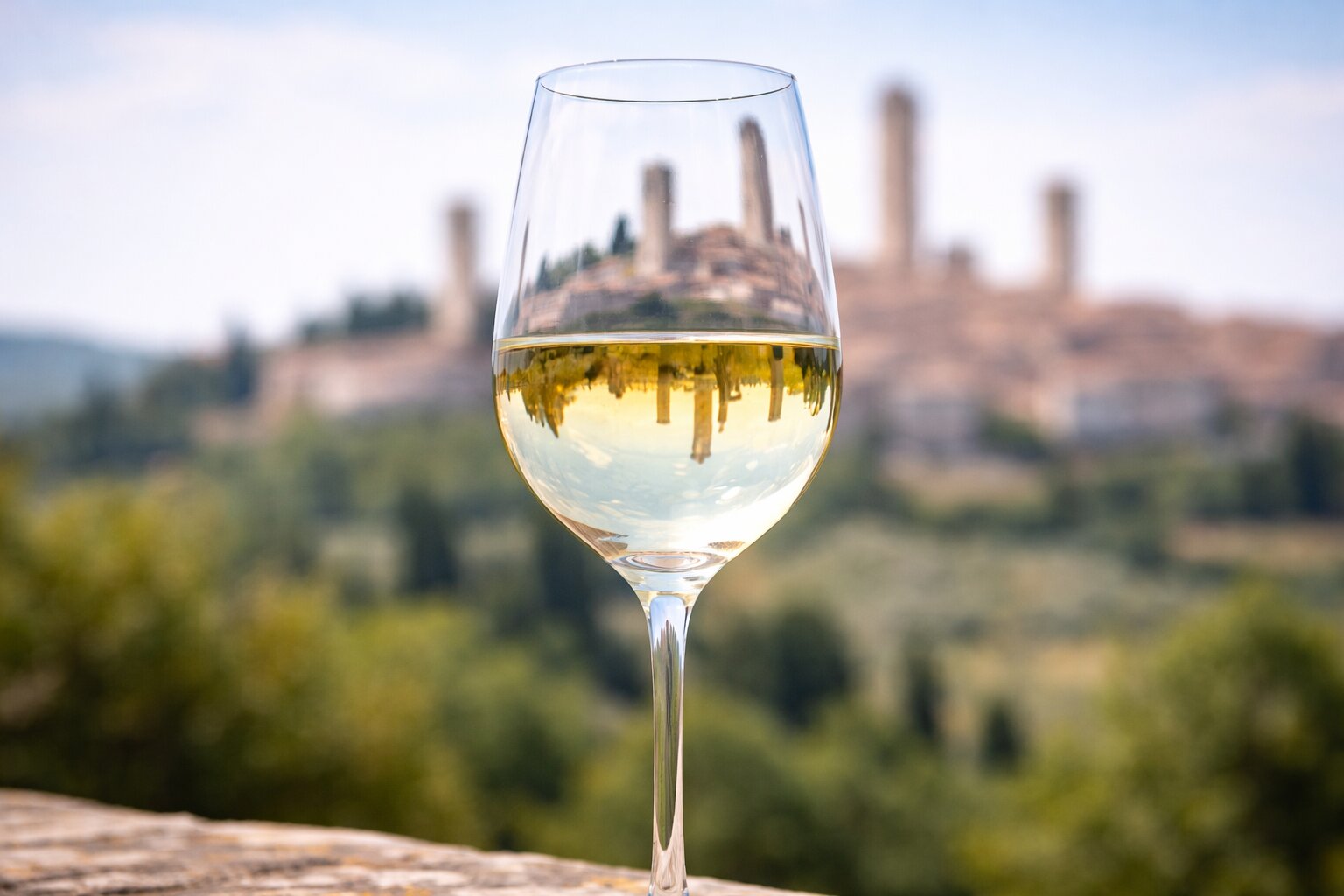
San Gimignano's towers get all the attention, but the town's oldest export isn't stone. It's Vernaccia di San Gimignano, a white wine with a documented history stretching back to 1276. It's also the only wine Dante Alighieri ever mentioned by name in the entire Divine Comedy.
That's a strange kind of fame for a wine most visitors walk right past on their way to photograph the skyline. Understanding it means understanding San Gimignano itself. Not just as a medieval power struggle carved into towers, but as a farming community that happened to grow something popes and poets couldn't stop writing about.
A Wine Old Enough to Get Someone Sent to Purgatory
The earliest written record of Vernaccia appears in San Gimignano's own municipal tax ledgers from 1276. They taxed anyone selling a "soma di Vernaccia" outside the town's territory at three soldi. Dante himself passed through San Gimignano in person on May 7, 1300, arriving as an ambassador for the Guelph league. The visit is documented in the town's own archives.
Twenty years later, in Purgatorio, Canto XXIV of the Divine Comedy, Dante placed Pope Martin IV among the gluttonous. His sin: overindulging in Bolsena eels drowned in Vernaccia. It's the only wine named anywhere in the poem's three volumes. Out of everything Dante could have picked to make his point about excess.
Popes, Poets, and 200 Flasks for a Wedding
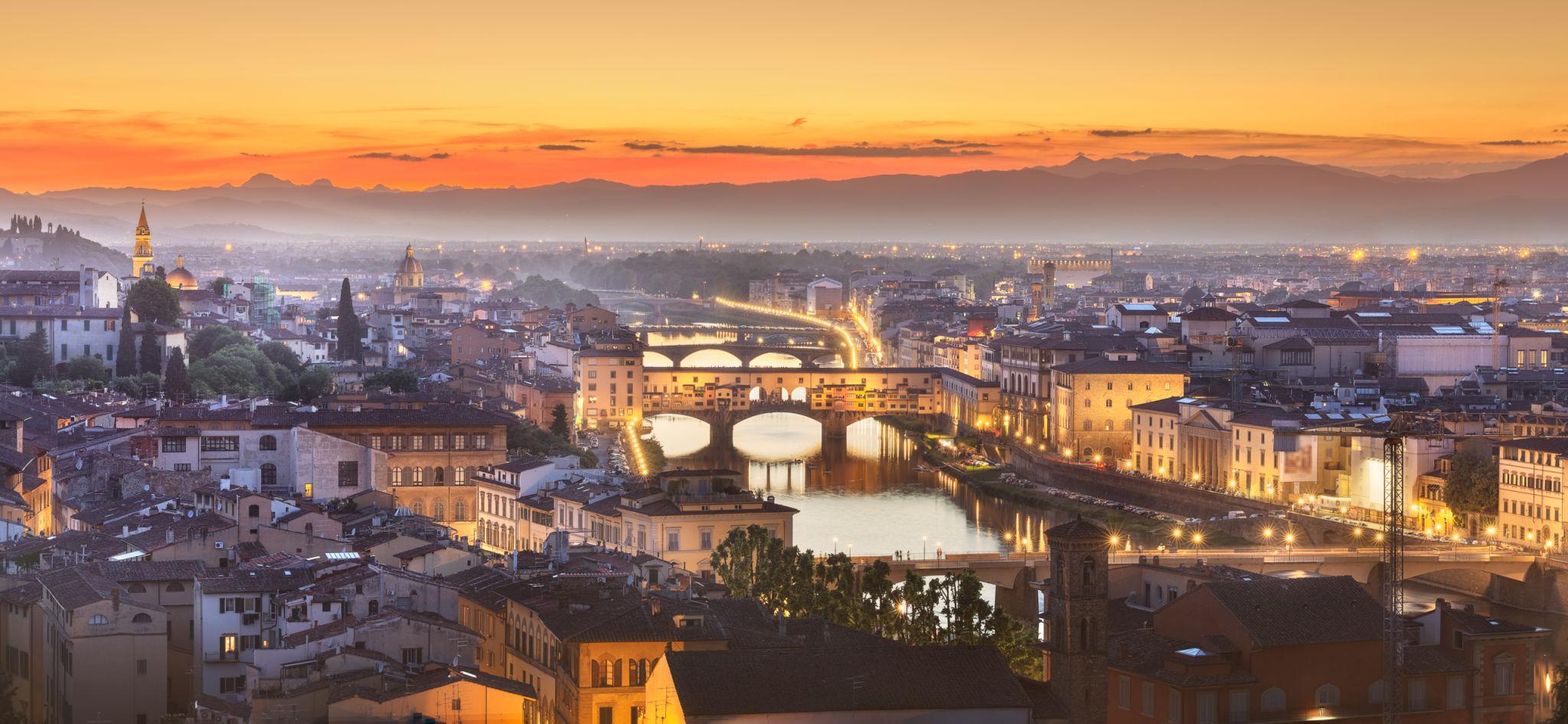
Dante wasn't the only writer taken with it. Boccaccio mentioned Vernaccia eight times across the Decameron, usually as a marker of wealth or hospitality rather than a passing detail. Chaucer had one of his characters drink it before a wedding night in The Canterbury Tales, apparently believing it improved a man's chances at romance. In 1487, Ludovico il Moro, the powerful Duke of Milan, demanded 200 flasks of it. The request went to San Gimignano's town council, for a Visconti family wedding. By the Renaissance, every noble family in San Gimignano kept vineyards of it. It reportedly made its way onto the Medici family's own table in Florence, too. Giorgio Vasari later painted an allegory of the town in the Salone dei Cinquecento at Palazzo Vecchio, complete with a satyr drinking its wine.
Why Vernaccia Tastes Different from Chianti
Tuscany's reputation runs almost entirely on Sangiovese reds, which makes Vernaccia the exception rather than the rule. It's structured but mineral. It often carries almond notes and a faint saline edge that traces back to the marine sediment layered into the hills around San Gimignano — ground that was seabed millions of years before anyone planted a vine in it. Instead of chasing intensity through oak aging or bold fruit, it stays closer to clarity and restraint. That fits the vertical, compact town it comes from better than it fits the sprawling reds Tuscany is better known for.
The DOCG rules keep that character locked in place. The grape has to make up at least 85% of the blend. The production zone stays limited entirely to San Gimignano's own municipal boundaries, and vineyards can't legally sit above 500 meters. Nothing about the wine can be stretched or diluted into something more generic without simply losing the designation.
How the Landscape Ends Up in the Glass
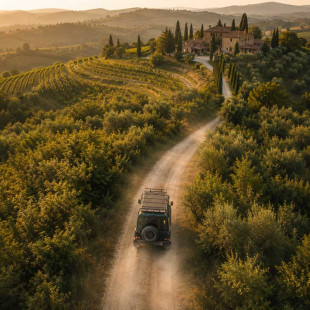
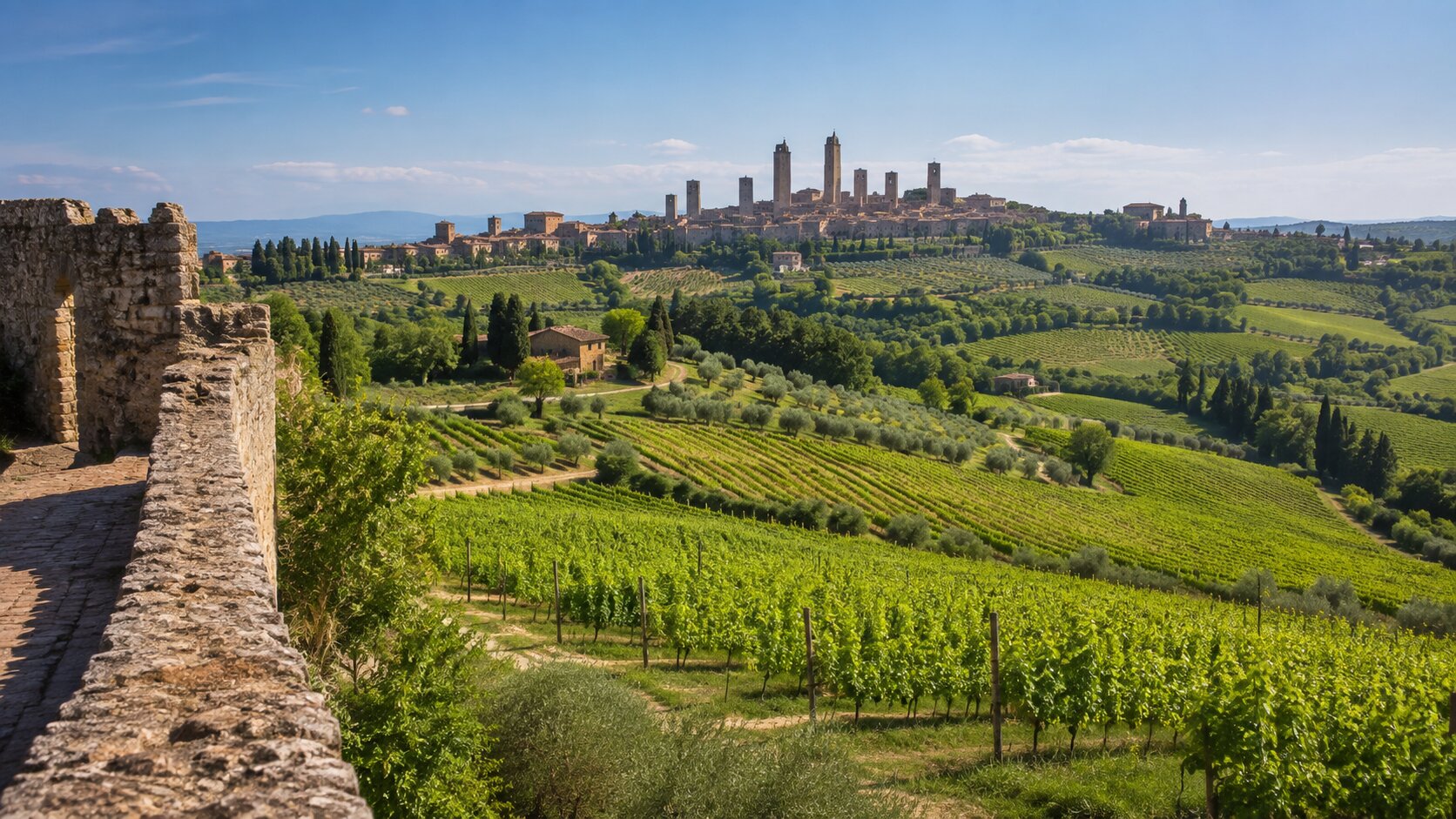
From San Gimignano's elevated streets, vineyards stretch out beyond the medieval walls, and that proximity isn't incidental. The town's medieval wealth depended on the countryside around it just as much as on trade routes and towers. Soil composition, sun exposure, and the rhythm of the seasons all show up eventually in what ends up in the glass. That's part of why understanding a bit of the land turns a simple tasting into something closer to reading the place itself.
From Medieval Prestige to Modern DOCG
Vernaccia's fortunes didn't rise in a straight line. Production declined through the 19th and early 20th centuries. Easier-to-grow varieties like Trebbiano and Malvasia gradually replaced it in local vineyards. By the mid-20th century, the wine that once graced papal and ducal tables had become a regional curiosity more than a serious export. Its comeback started in the 1960s. On March 3, 1966, it became the first wine in Italy to earn DOC status. Ahead of every other Italian wine, including the reds Tuscany is far more famous for. It was upgraded to DOCG on July 9, 1993, and remains Tuscany's only white DOCG to this day — a distinction that puts it in genuinely rare company among Italian whites.
That formal recognition hasn't changed its character much. It still pairs naturally with pecorino, vegetable dishes, and light pasta. The same kind of unpretentious local food it would have been served alongside centuries before any classification existed.
Tasting It Where It Actually Comes From
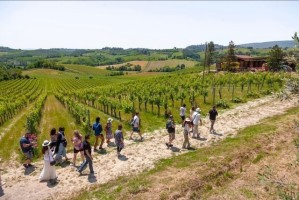
Vernaccia makes more sense tasted somewhere near the vines that grew it. Poured on its own, far from the hills that shaped it, it loses something — the same way a story loses something when it's told without the place it happened in. Most vineyards here sit at altitudes between 200 and 400 meters. The soil is genuinely Pliocene in origin: yellow sand, known locally as tufa, layered over sandy clay, laid down between 1.8 and 6.8 million years ago, when this stretch of Tuscany still sat under the sea. That geological detail isn't trivia. It's the reason the wine carries the faint salinity tasters keep coming back to, a trait vineyards planted on different soil simply can't replicate.
Our guide to private San Gimignano tours covers how towers, terraces, and vineyards fit together into one coherent afternoon. Rather than three separate stops.
Almost 750 years after that first tax record, and seven centuries after Dante decided it was worth naming in a poem about the afterlife, Vernaccia is still doing what it's always done. Quietly explaining the land it comes from, one glass at a time.