In this post
Tuscan street food comes down to a few cheap, filling things eaten standing up: lampredotto sandwiches in Florence, cecina and torta di ceci on the coast around Pisa and Livorno, and chestnut-flour necci in the hills once the weather turns cold. In Florence you'll also find fried coccoli and schiacciata, and at village fairs there are brigidini. This Tuscan street food guide covers where each one comes from and where people still buy it.
Most of it started as food for porters, market traders and farm workers, which is why it's still cheap. For the sit-down side of the region, ribollita, pici and bistecca included, our guide to traditional Tuscan food covers the dishes you'll meet in a trattoria.
Florence and the lampredotto question
Lampredotto is the fourth stomach of the cow, the abomasum. Cooks simmer it for hours in broth with vegetables and herbs until it goes soft. Most Florentines trace the name to lampreda, the lamprey, because of the dark folds of the meat.
You buy it from small kiosks and carts run by trippai, the tripe sellers. The trippaio fishes a piece out of the pot, chops it on a wooden board and piles it into a round roll. Then he asks if you want it bagnato, with the top half of the roll dipped in the cooking broth. Say yes. After that comes salsa verde, the parsley sauce, or salsa piccante, the chilli oil, or both.
The taste is milder than most people expect. The texture is what puts visitors off. It's soft and slightly chewy, close to a very tender stew. If you can't face it, every trippaio also sells a bollito panino. It has boiled beef instead, in the same roll with the same sauces, and plenty of Florentines order it.
Where to eat it in Florence
Da Nerbone, on the ground floor of the Mercato Centrale, has been serving lampredotto since 1872. Most people eat standing at the marble counter. Across town, the cart in Piazza de' Cimatori sits a few steps from Dante's House. The Mercato Centrale and Sant'Ambrogio are both morning markets, closed on Sundays. For opening hours and what to buy at each, see our article on markets in Florence.
The market is also where our cooking class day begins. On the Pasta & Pesto Class with a View, plus Tiramisù, the optional market tour visits the Mercato Centrale with a guide. There are tastings at the stalls, then the group drives out to a private estate in the hills. One of the things the guide explains there is why Tuscan bread has no salt.
Coccoli and schiacciata
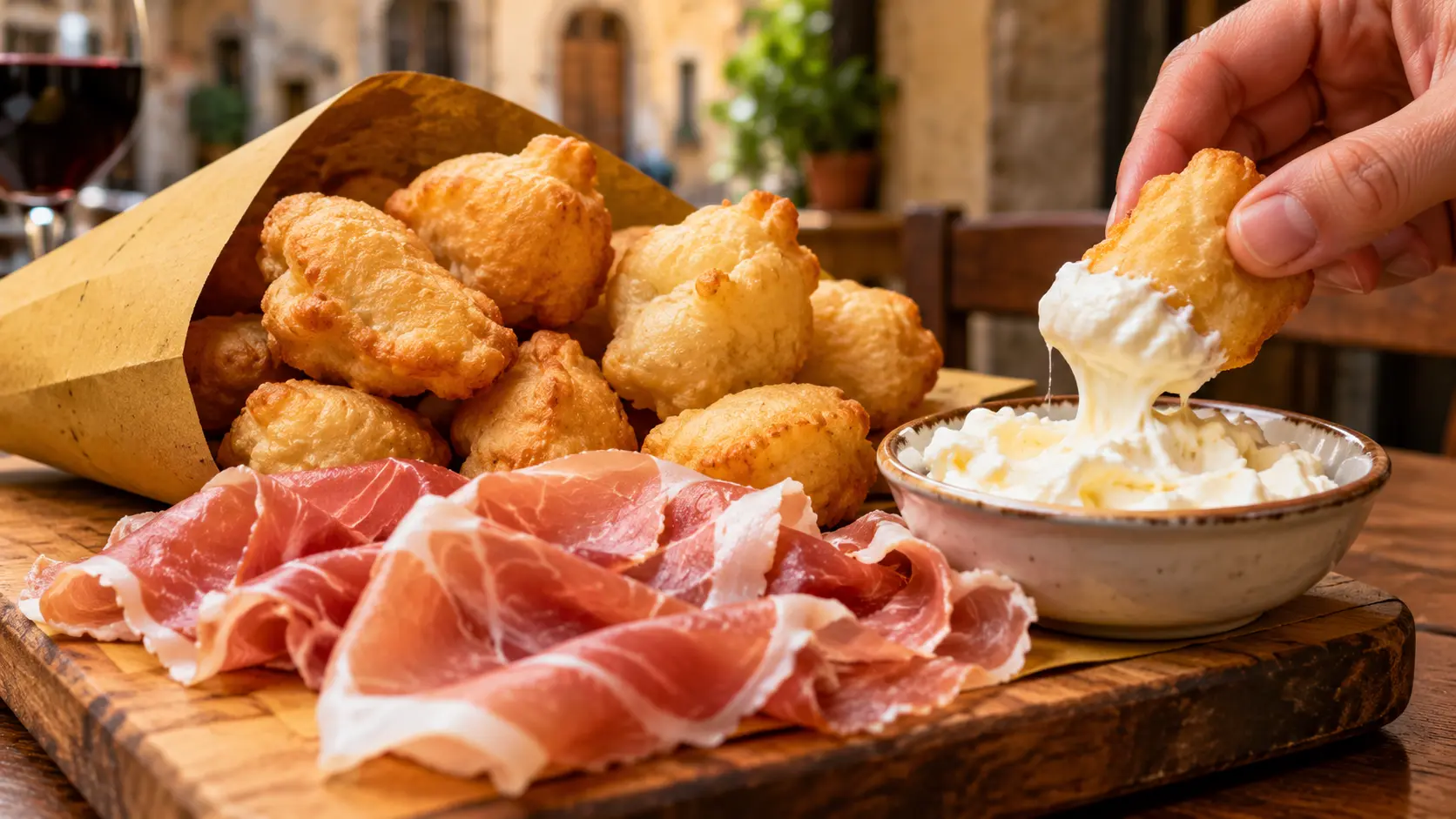
Coccoli are little balls of fried bread dough that come hot in a paper cone. You eat them with soft stracchino cheese and slices of prosciutto crudo, ideally with your fingers. They're easy to find in Florence now, though they turn up on restaurant antipasti more often than on the street.
Schiacciata is Florence's flatbread. Unlike the bread, it has salt in it, and enough olive oil to leave marks on the paper wrapping. Bakeries sell it plain by weight, or split and filled with finocchiona, pecorino or porchetta. The long queues in Via dei Neri are for stuffed schiacciata.
On the coast, it's chickpeas
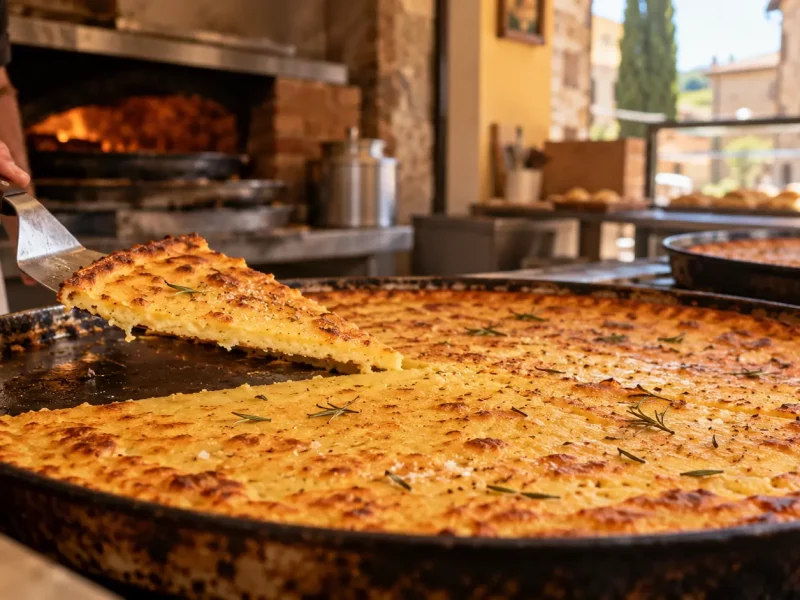
Drive an hour west and lunch changes completely. Pisa and Livorno both make a thin, golden flatbread from chickpea flour, water, olive oil and salt. Bakers pour the batter into wide copper pans and bake it in a very hot oven, then cut it into wedges and add black pepper. Pisans call it cecina. Livorno calls it torta di ceci, or just la torta, and the two names aren't interchangeable there.
In Pisa the best known place is Il Montino, a small pizzeria in Vicolo del Monte, a narrow lane just off Borgo Stretto. Students eat their cecina there inside a small round focaccia, standing in the alley or on the benches outside. The odd thing about Pisa is that cecina also has a second life at the table. In the city's sit-down pizzerias, plenty of people order a slice as a starter before the pizza arrives. Elsewhere, that would be bruschetta. So you can eat it standing in a lane at noon, then again at nine in the evening with a knife and fork. Both count as the normal way to have it. Pisan pizzerias bake their own pizza thin, in small pans, but that's a separate subject.
Livorno and the cinque e cinque
Livorno's version of the same snack is the cinque e cinque. Early in the last century people would ask the tortaio, the chickpea baker, for five cents of bread and five cents of torta. The order became the name. Today you get torta di ceci stuffed into a soft roll, sometimes with slices of grilled aubergine. The traditional drink with it is spuma bionda, a sweet, slightly herbal soft drink. One of the best-known torta shops is right next to the city's covered food market, the Mercato delle Vettovaglie.
Whatever you call it, it's best in the first few minutes out of the oven, while the middle is still soft. If the slices on the counter look dry, it's fine to wait for the next pan.
Necci and brigidini
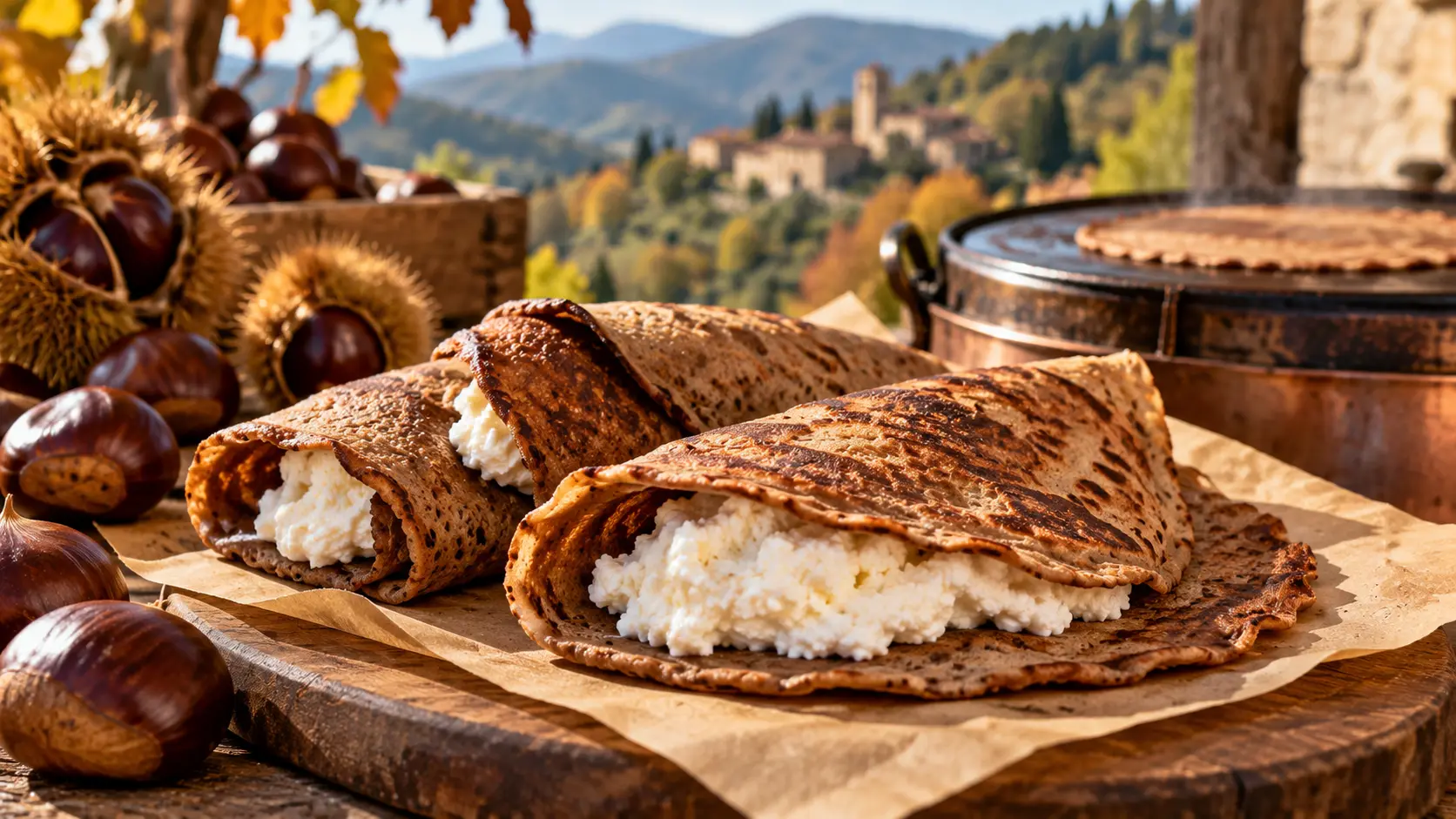
Necci come from the mountains north of Pistoia, the Garfagnana and the hills around Pescia. The batter is just chestnut flour and water. It cooks between two hot iron plates called testi, and the cook rolls each neccio around fresh ricotta while it's still warm. Chestnut flour has no gluten. You won't find them in the centre of Florence. They show up at autumn chestnut festivals, the sagre, in October and November. Flour from the new harvest is sweet enough that the batter needs no sugar.
Brigidini are paper-thin aniseed wafers from Lamporecchio, near Vinci. Stallholders press them between hot irons and sell them by the bag at fairs and festivals.
How to use this Tuscan street food guide on the ground
A few practical things help. Lampredotto is a lunchtime food, and most market stalls close by mid-afternoon. Small counters may not take cards, so carry a few euros in coins. There are rarely tables, and most people eat standing up, close to where they bought it. Take more napkins than you think you need if you've ordered it bagnato.
Sunday is the worst day for most of this. The food markets close, Nerbone with them, and in smaller towns the bakery that sells the good schiacciata may not open either.
Cooking after the market
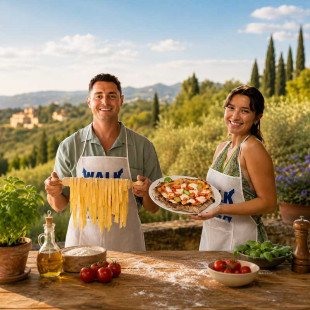
If you'd like to see the market with a guide, the Pasta & Pesto Class with a View is the easiest way to do it. It's a group class. The guide meets everyone by the taxi stand at Santa Maria Novella station. If you've booked the market tour, the group then walks to the Mercato Centrale, which is close by. After the tastings and the shopping, a minibus takes the group up to the Walkabout kitchen on an estate in the Tuscan hills.
The cooking is hands-on: fresh pasta made by hand, bruschetta with the estate's own olive oil, and tiramisù. Lunch is what you've cooked, with a glass of Chianti, and Walkabout emails the recipes afterwards. Bear in mind that the kitchen can't offer vegetarian or other alternative menus, and the class is open from age eight.