In this post
- Starting Where Florence's Power Actually Sat
- Dante and Orsanmichele
- The Religious Center and Santa Trinita
- Medici Florence
- The Vasari Corridor
- Crossing Into the Oltrarno
- Santa Felicita and the Vasari Connection
- Is Three Hours Enough for This Much History?
- What a Private Florence Renaissance History Tour Leaves Out
- Walking Seven Centuries in One Morning
A private Florence Renaissance history tour starts in Piazza della Repubblica, built over the old Roman forum. It ends across the river in the Oltrarno. In between: Dante's neighborhood, Orsanmichele, the religious center, Santa Trinita's frescoed interior, Ponte Vecchio, and the Pitti Palace. Three hours, on foot, with a private guide.
Starting Where Florence's Power Actually Sat
Piazza della Repubblica sits on the site of the Roman forum, the city's original center. From here the route moves into the medieval district, past the tower houses wealthy families built both to live in and to defend. These predate the Renaissance by centuries. The skyline they created still shapes how the historic center looks today.
Dante and Orsanmichele
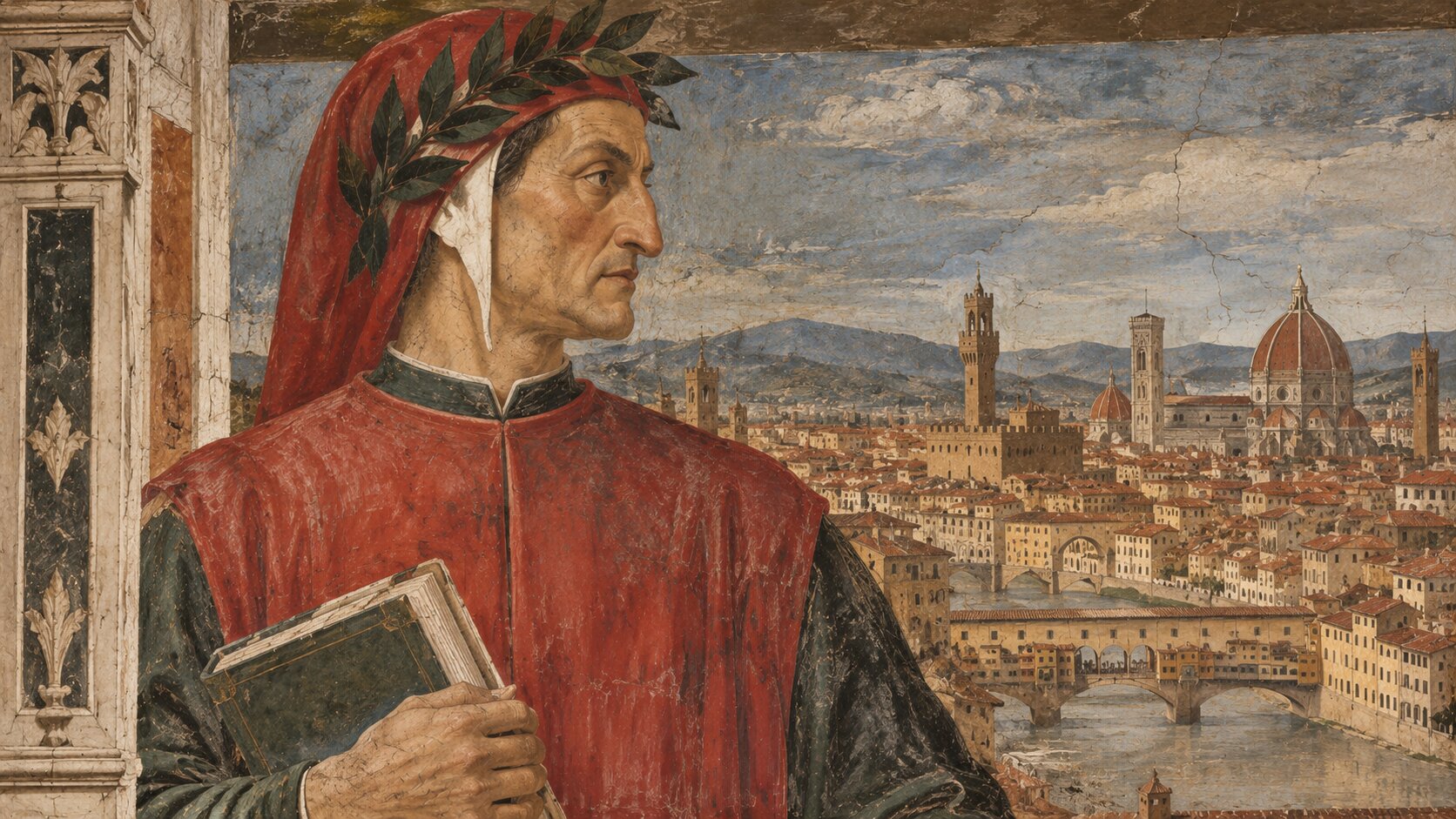
The route passes Dante's house in the medieval district that still carries his name. Dante was born in 1265, two centuries before the Medici rose to dominate Florentine politics in the 1430s. His Florence belongs to a different political world than the one most visitors associate with the city.
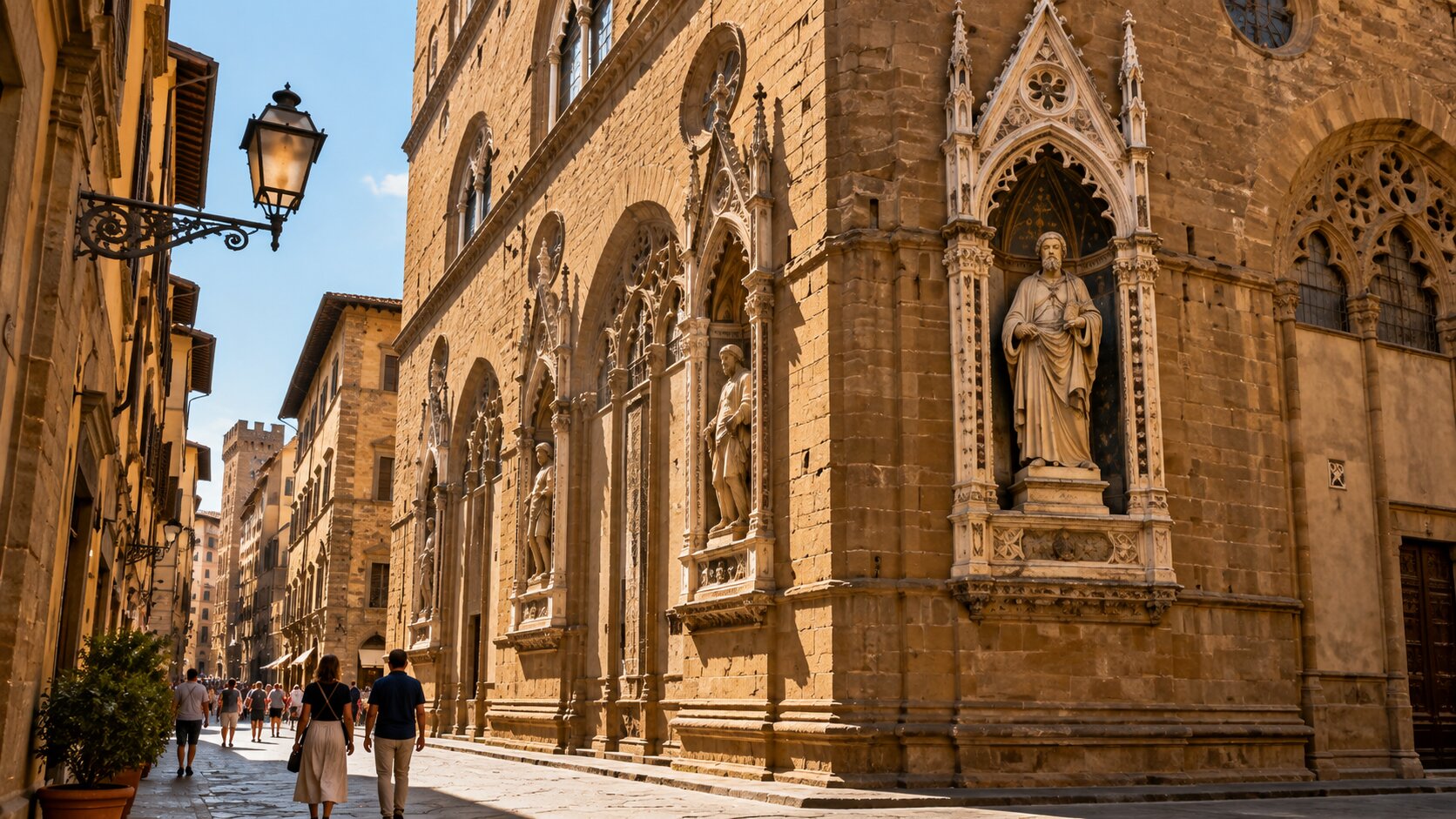
Orsanmichele comes next, originally a grain market before its conversion into a church. The exterior niches hold statues commissioned by Florence's guilds, each one competing to put forward the most impressive figure. Donatello and Ghiberti both worked here. This was decades before either artist became associated with Medici patronage specifically.
The Religious Center and Santa Trinita
From Orsanmichele, the route reaches the Duomo, the Baptistery, and the Campanile, seen from outside. The tour doesn't go inside these buildings or the major museums. Three hours covers a wide span of the city's history. It doesn't include entry to its most famous interiors. Santa Trinita is the exception. A full visit is built into the route to see Ghirlandaio's frescoes, painted in the 1480s, which show Florentine citizens of the period worked into religious scenes as background figures.
Medici Florence
The Medici thread picks up more directly from here. The Strozzi and Rucellai palaces, both built by families who rivaled the Medici for influence, sit along the route as the physical record of that competition. Construction on Palazzo Strozzi began in 1489. Filippo Strozzi, who commissioned it, died two years later with the facade and cornice still incomplete. His son eventually finished the building in 1538, nearly fifty years after it started.
Pitti Palace comes later in the walk, and its history runs the opposite direction from what most visitors assume. Luca Pitti, a banker and Medici ally turned rival, began building it in 1458 specifically to outshine the Medici's own residence. It wasn't until 1549, decades after Pitti's death, that Eleonora di Toledo bought the unfinished building for her husband Cosimo I de' Medici. That purchase is when it actually became a Medici residence.
The Vasari Corridor
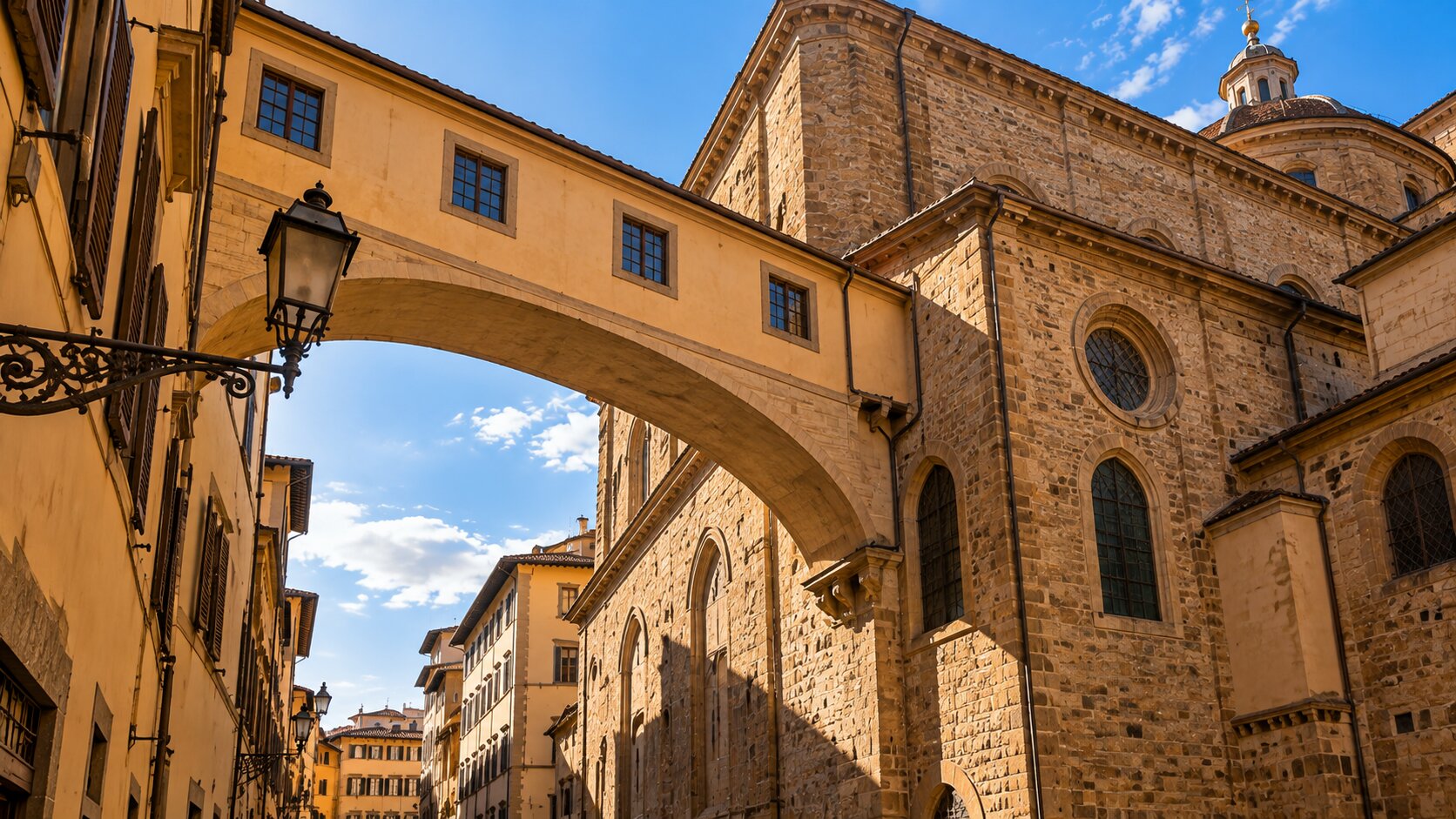
Part of the route runs beneath the Vasari Corridor. Giorgio Vasari built it in 1565, connecting Palazzo Vecchio to Palazzo Pitti, passing above the Uffizi and Ponte Vecchio along the way. Cosimo I de' Medici commissioned it, reportedly so he could move between his seat of government and his family's residence without walking the streets below. It's often called "secret," though the corridor itself is well documented. What stayed private was simply who got to use it.
Crossing Into the Oltrarno
Ponte Vecchio marks the crossing point from the Renaissance core into the Oltrarno. Via Tornabuoni and Via Maggio come first, Florence's historic shopping streets. Artisan workshops follow, tucked into quieter side streets. Santa Felicita, one of the city's oldest churches, sits close to where the route ends near Pitti Palace.
Santa Felicita and the Vasari Connection
Santa Felicita connects back to the Vasari Corridor directly. A barred window set into the corridor let the Medici attend Mass from above, without descending to the pews below or mixing with the congregation. Inside, Pontormo's Deposition altarpiece, painted in the 1520s, remains one of the more striking works along the entire route. Elongated figures, sharp colors, a clear departure from the balanced proportions of earlier Renaissance painting.
Is Three Hours Enough for This Much History?
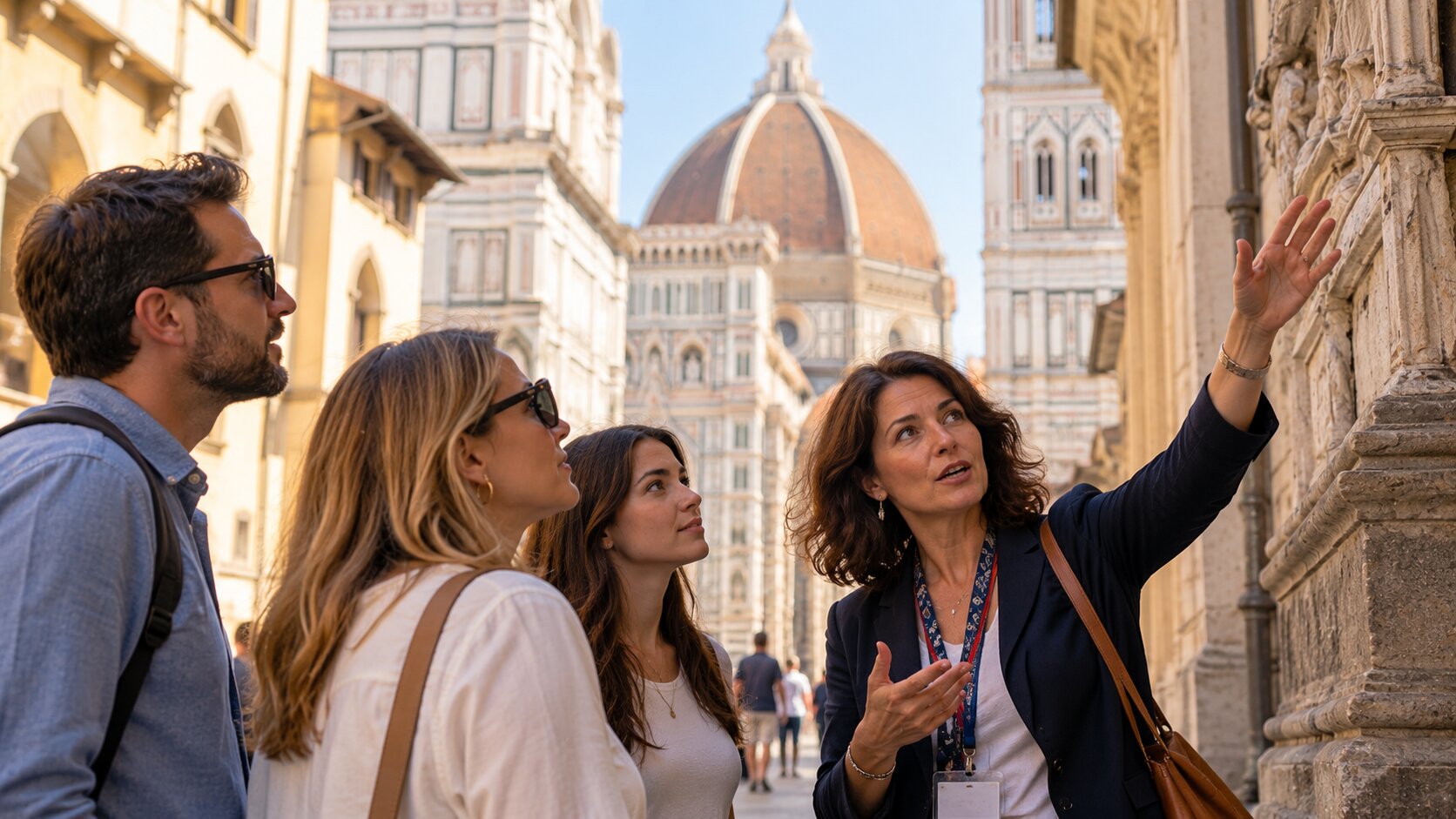
For the ground this route covers, yes, though it means prioritizing breadth over depth at any single stop. A private format helps here more than it would on a shorter walk. A guide can spend extra time wherever a question comes up. On the Strozzi-Medici rivalry, on Dante, on the Vasari Corridor. A larger group moving on a fixed schedule doesn't allow for that.
Our guide to what first-time visitors should know before booking a private Florence tour covers more on how that flexibility plays out for someone seeing the city for the first time.
What a Private Florence Renaissance History Tour Leaves Out
This route stays outdoors for most of its length, which means skipping the Duomo's interior, the Uffizi's collection, and the Baptistery's bronze doors, the Gates of Paradise, up close. Travelers who want those too usually treat this walk as a first-morning orientation, something to build the rest of a Florence trip around rather than a replacement for separate museum visits later.
Walking Seven Centuries in One Morning
From the Roman forum under Piazza della Repubblica to the artisan workshops of the Oltrarno, this route moves through roughly seven centuries of Florentine history in a single private morning. Our guide to planning a Florence day trip covers how a walk like this fits into a longer day in the city.
Our Private Essential Florence Walking Tour with an Expert Local Guide runs this exact route. Piazza della Repubblica through Dante's neighborhood, the religious center, Santa Trinita, and across Ponte Vecchio into the Oltrarno. A gelato stop is built into the three hours too. A private guide can follow whichever thread of the Medici story your group actually wants more of, rather than sticking to a fixed script built for a larger group.