In this post
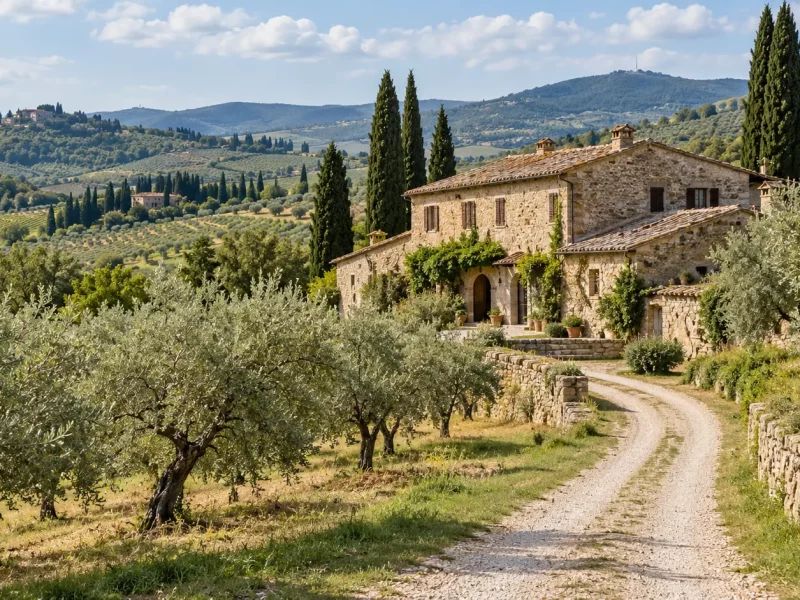
Authentic Tuscan rural experiences are the ones where the countryside is still at work: an estate pressing its own olives, lunch at a farm table, a gravel track that exists because two properties needed connecting. You find them less than an hour south of Florence, around San Casciano and Panzano in Chianti. Most of these places open by appointment and sit on private land, so a local guide is the practical way in.
Our Private Tuscany Wine Tour: Off-Road Chianti Wine Safari with Lunch visits three of them in a day, in an air-conditioned 4WD with a guide: Villa Le Corti, Rignana and Poggio Torselli. There are nine wines along the way. This article is mostly about the other things you see, starting with the oil.
If you're still comparing Chianti with other parts of the region, our overview of a Chianti day trip from Florence looks at the area as a whole.
Three Levels Under Villa Le Corti
The cellars at Le Corti go down three levels, under the villa and under the lawn in front of it. Even in summer the air down there is cool, and it smells of wood and wine more than stone. Work on the cellars began in 1604, together with the villa. The design was by the painter and architect Santi di Tito.
The passages connect rooms the estate still uses: the barrel cellars, the vinsantaia where the Vin Santo ages, and the olive mill. Vin Santo ages for years in small barrels called caratelli. Nobody opens them in the meantime, so there isn't much to see except the barrels themselves. Then there's the orciaia, which still has its rows of orci, the big terracotta jars that held the oil before steel tanks replaced them.
The Corsini family has owned this land since 1363, when they bought three farms with vineyards, olive trees, a mill and a lord's house. They describe the mill as the oldest one still working in the area. Until 1985 San Casciano held the Tuscan record for working oil mills. Most people think of Chianti as wine country, but these hills grew olives just as much as vines.
The tasting here is salumi with three wines. From late October through November the olive harvest is usually on. In the groves along the road you'll often see nets spread under the trees, and people on ladders combing the branches with small hand rakes.
Who Lived in All Those Farmhouses?
From Le Corti the 4WD heads for Rignana on unmarked dirt roads, through old woodland and past small churches, farms and cypresses. Tuscans call these gravel tracks strade bianche, white roads, after the pale dust they throw up in summer.
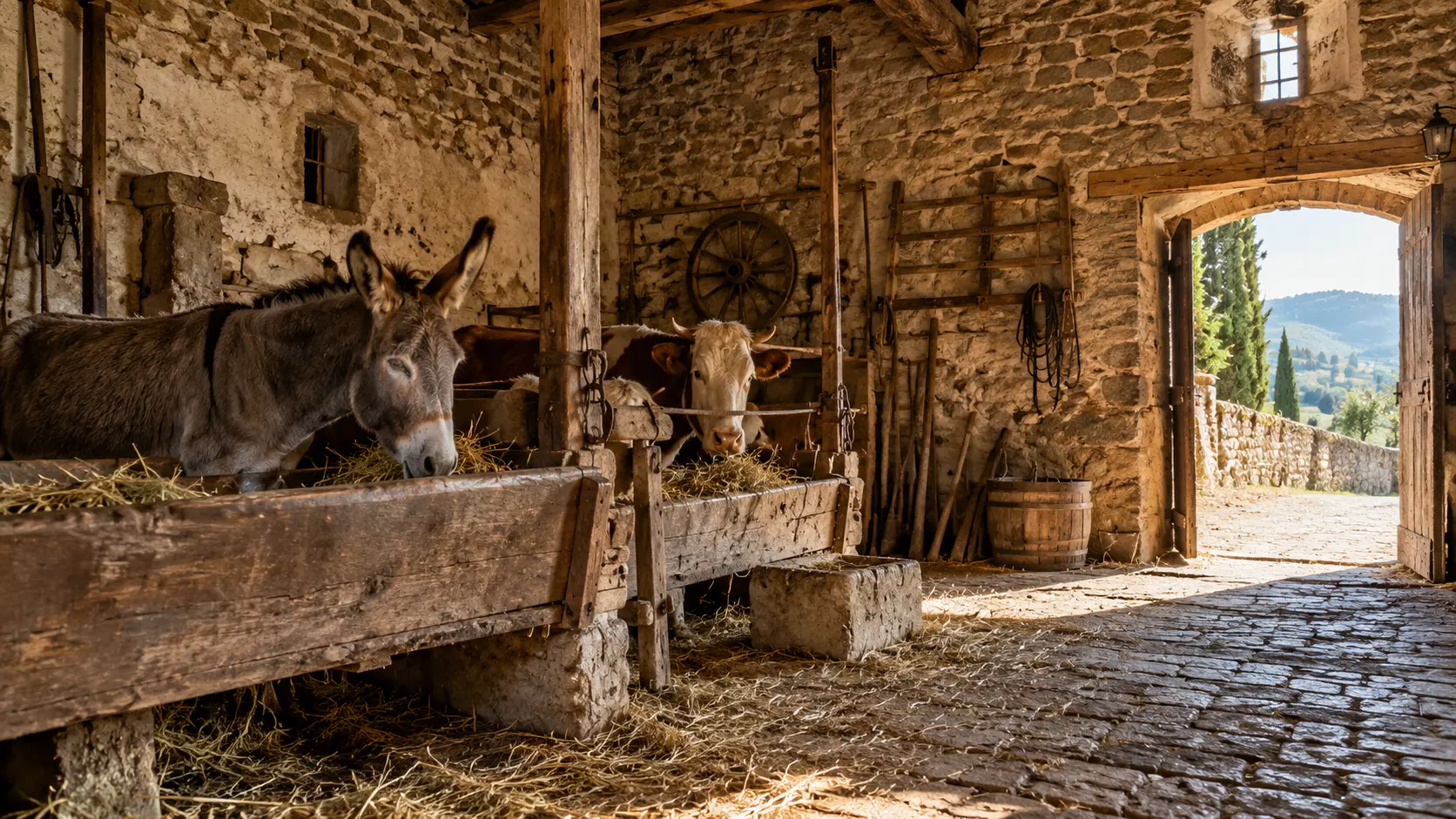
The stone houses along the way are case coloniche. Some still have a small square tower on the roof, the colombaia, where the family kept pigeons. Landowners built them for sharecroppers under the mezzadria, the system that organised the Tuscan countryside for centuries. A family lived on a farm, the podere, and worked it. The family shared the harvest with the landowner, who usually lived in the villa on the hill.
The sharing happened at the fattoria, the estate's working centre, and that's what the old pesa was for. Every fattoria had one: a scale for weighing carts of grapes, olives and grain before anyone divided anything. Le Corti still has its old weighing station.
Sharecropping lasted much longer than most visitors expect. Until the early 1950s it still covered around three quarters of the cultivated land in central Italy. A law of September 1964 banned new contracts, and in 1982 the remaining ones became ordinary leases. By then many families had left for jobs in town, and plenty of houses stood empty for years. Most authentic Tuscan rural experiences today, from farm stays to estate lunches, happen inside buildings that came out of that system. The restored farmhouse with a pool on a booking site was, two generations ago, somebody's entire working life. The animals lived on the ground floor and the family above them.
Lunch Above Panzano
Rignana is one of those old farm complexes. Its oldest part goes back to the 11th century, when the area belonged to the league of Val di Greve. It's still reached on an unpaved road above Panzano. The current owners started the estate in 1999, and the restaurant looks out over the valley.
Lunch is three Tuscan courses with red wine and a blind olive oil tasting. You get a few oils with no labels and try to tell them apart. Most Chianti oil is a blend of the same few local varieties, mainly Frantoio, Moraiolo and Leccino, and the proportions change from one estate to the next.
Worth knowing before you book: the menu is fixed, with no vegetarian or alternative option. The ground at the estates is steep and uneven, so the tour isn't suitable for wheelchair users or anyone with walking difficulties.
Poggio Torselli
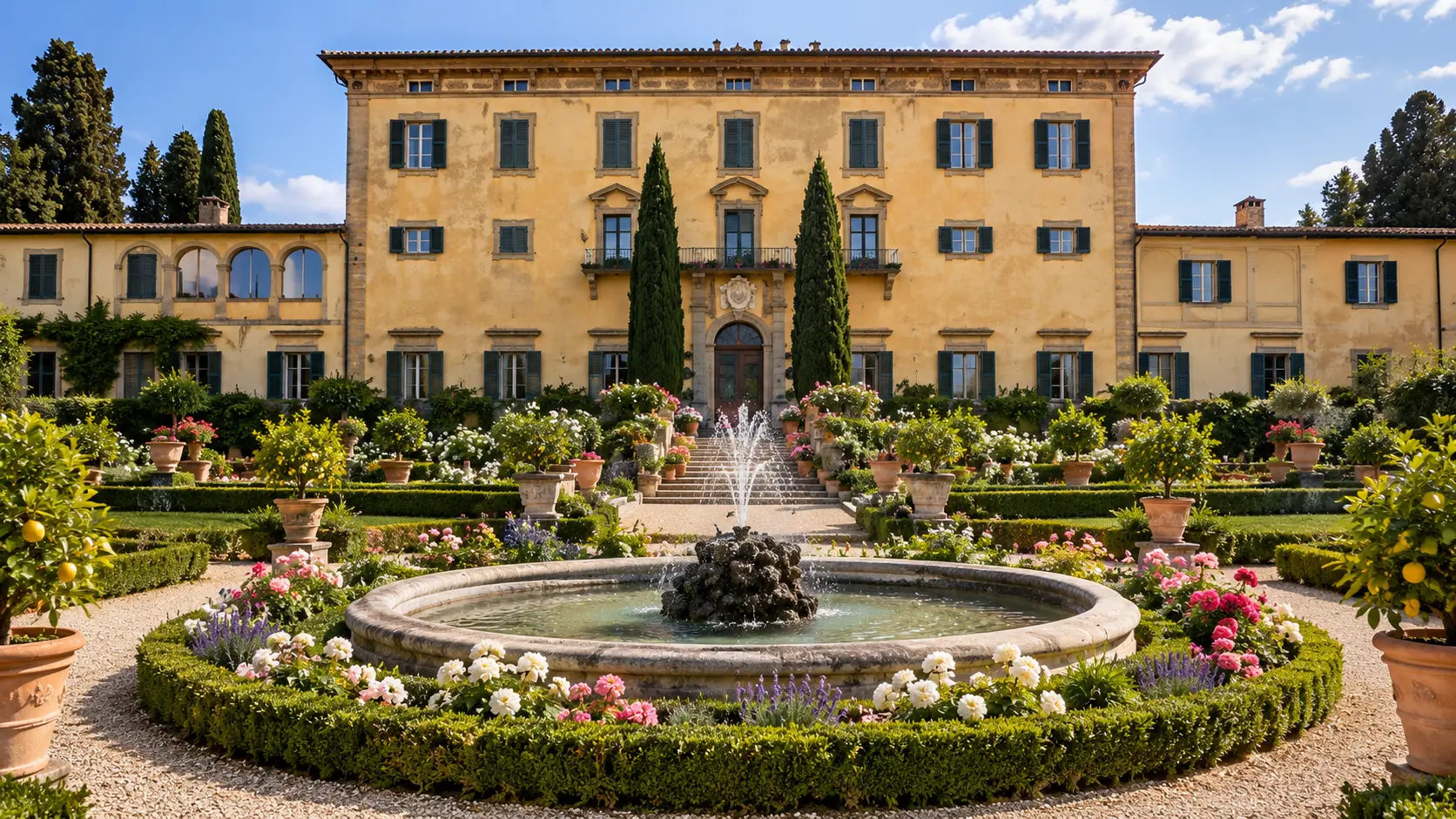
People have long called the last stop the queen of Chianti villas. The Machiavelli family owned the property in the 1400s, but the building you see is from the early 1700s, by the sculptor and architect Lorenzo Merlini. A long cypress avenue leads up to it, and on a clear day you can pick out Brunelleschi's dome to the north. The garden has more than a hundred lemon trees in terracotta pots, which spend the winter in the limonaia. The visit covers the villa, its grounds and the families who lived there, and ends with three wines and cheese.
Niccolò Machiavelli himself spent his exile a few minutes away, at Sant'Andrea in Percussina, where he wrote The Prince in 1513. In a letter to a friend that December he described his days. He snared birds in the morning. Then he spent hours at the inn across the road, playing cards with the innkeeper, a butcher and a miller and arguing over pennies. In the evening he changed out of his muddy clothes into formal ones before sitting down with his books.
When the Oil Is New
September is grape harvest, and the estates are at their busiest. Sangiovese ripens late. In Chianti Classico, picking often runs from mid-September into early October, depending on the year.
Then come the olives. New oil is green, peppery and slightly cloudy, and around here it goes straight onto toasted bread with salt. That's fettunta, and in November it's on most farm tables in Chianti.
Winter is quieter, with bare vines being pruned and the woods easier to see through. In spring the lemon pots go back outside at Poggio Torselli. July and August are hot and dusty on the unpaved stretches, and the air conditioning in the 4WD earns its keep.
If you'd rather go further from the city, Val d'Orcia is the other obvious choice. It has wheat fields, isolated farms and a landscape listed by UNESCO in 2004. We cover that side of the region in our private Val d'Orcia tour from Florence article.
The Off-Road Chianti Wine Safari is private. The 4WD carries only your group and the guide, from Florence out to the three estates and back. If you go in November, ask at lunch whether the new oil is in yet.