In this post
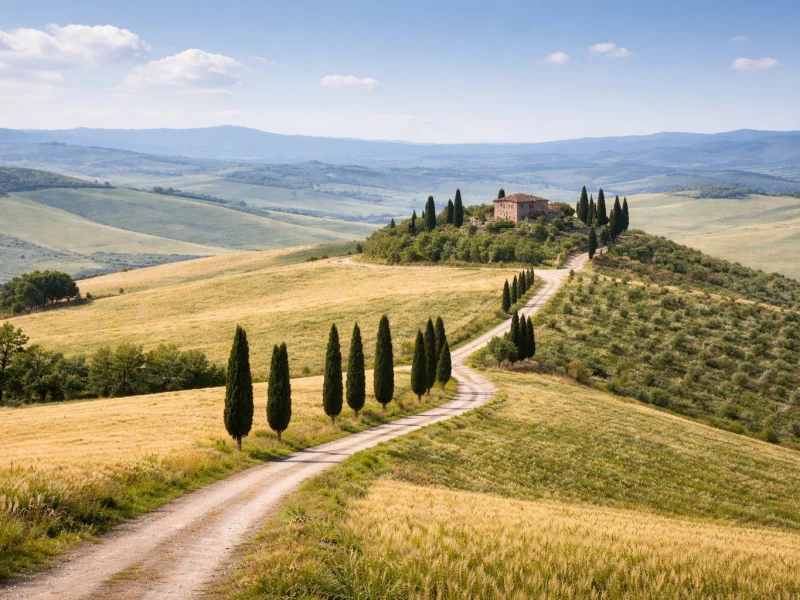
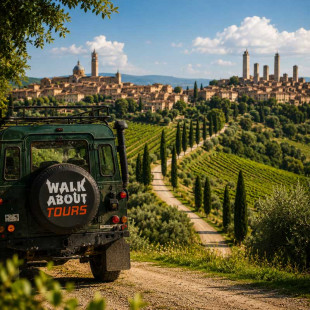
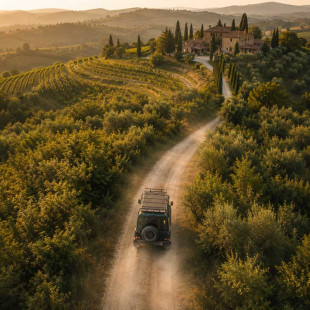
Val d'Orcia is the landscape behind most of the postcards anyone's ever seen of Tuscany. Rolling hills, a lone cypress-lined road, a stone farmhouse on a ridge. It earned that image honestly. In 2004, UNESCO named it a World Heritage Site. It was the first landscape anywhere in the world recognized under that specific cultural category, ahead of any building or monument.
A Landscape That Was Actually Designed
Val d'Orcia isn't scenic by accident. Its wheat fields, vineyards, and olive groves follow centuries of deliberate agricultural planning. Farmers shaped them to work with the land's natural contours, rather than against them. UNESCO's own citation calls it a landscape "re-written in Renaissance times to reflect the ideals of good governance." The hills you see were, in a real sense, designed to look exactly the way they look.
The region covers five towns: Castiglione d'Orcia, Montalcino, Pienza, Radicofani, and San Quirico d'Orcia. Each contributes something different to the same overall composition. Montalcino anchors the wine side of the valley. Radicofani sits on a volcanic outcrop that once sheltered a notorious medieval bandit. San Quirico d'Orcia guards one of the most photographed cypress-lined roads in all of Tuscany, a stretch that shows up in films and advertisements more often than almost any other single road in Italy.
Pienza: A Renaissance City Built on Purpose
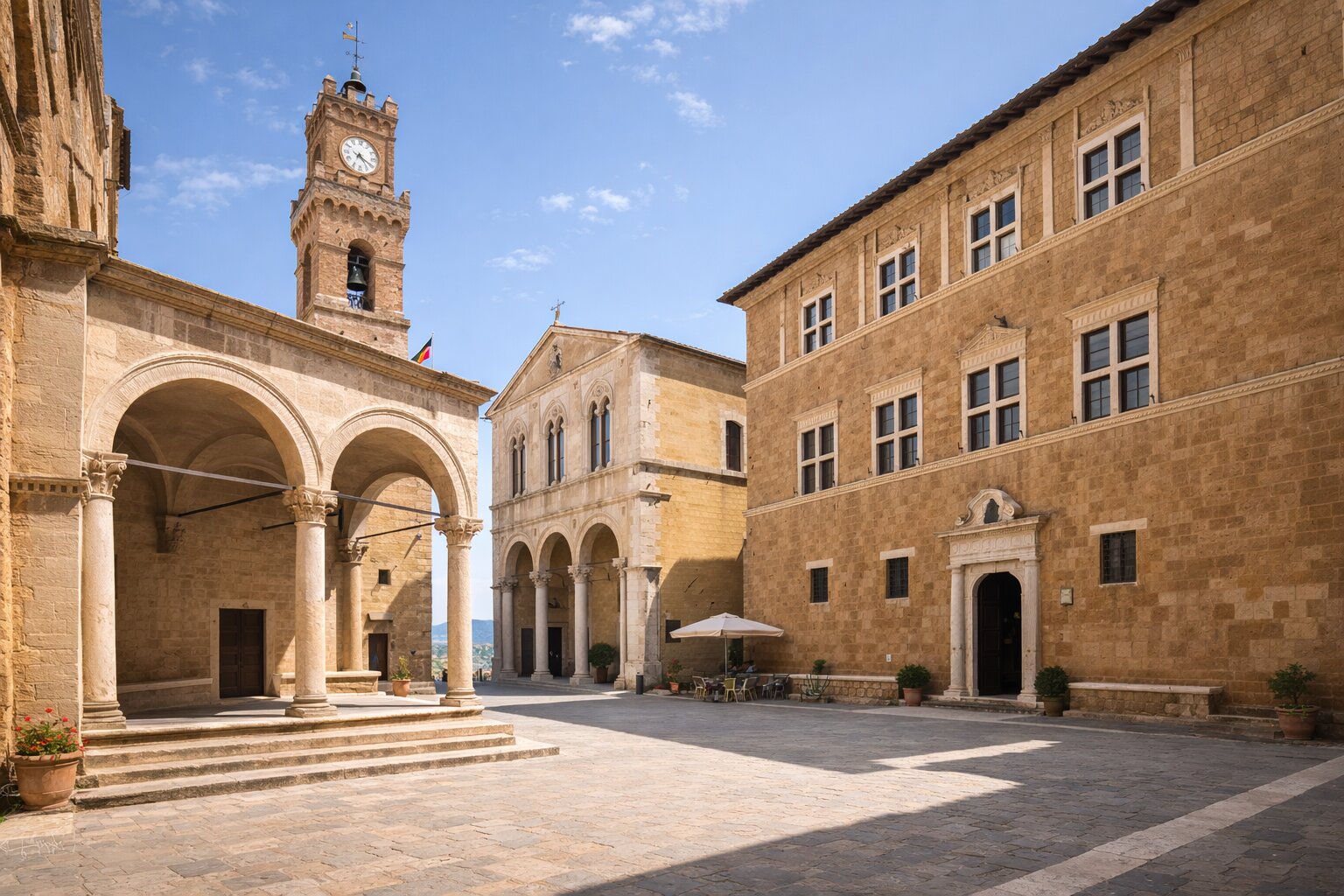
Pienza is the clearest evidence that this landscape was engineered, not just preserved. Pope Pius II was born Enea Silvio Piccolomini, in this same small village, then called Corsignano. In 1459, he hired architect Bernardo Rossellino to rebuild his hometown as an "ideal city," following the humanist principles of Rossellino's mentor, Leon Battista Alberti. Rossellino finished the job in just three years, by 1462. That's an almost impossibly fast timeline for a full urban redesign in the 15th century.
The result, Piazza Pio II, is a trapezoidal square engineered with early rules of architectural perspective. It was deliberately designed to look larger and grander than its actual size. It remains one of the purest realizations of Renaissance urban planning anywhere in Italy. That's why architectural historians consider Pienza the first "ideal city" concept ever actually built, rather than just theorized about on paper.
A Slower Kind of Tuscany Day
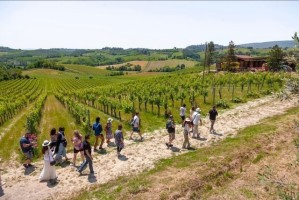
Most Tuscany day trips run on a tight schedule: stop, photo, back in the van, next stop. Val d'Orcia resists that rhythm by design. The scenery itself asks for a slower pace. A good day here treats the drive between towns as part of the experience, not dead time between the "real" stops — with room to actually pause at a viewpoint, instead of just slowing down for it.
That's a different kind of Tuscany day than a Chianti-focused one closer to Florence. Chianti days tend to lean more toward wineries in quick succession. Our guide to private Tuscany hill towns tours is useful for comparing what Val d'Orcia offers against other hill-town regions nearby.
Food and Wine Rooted in the Land
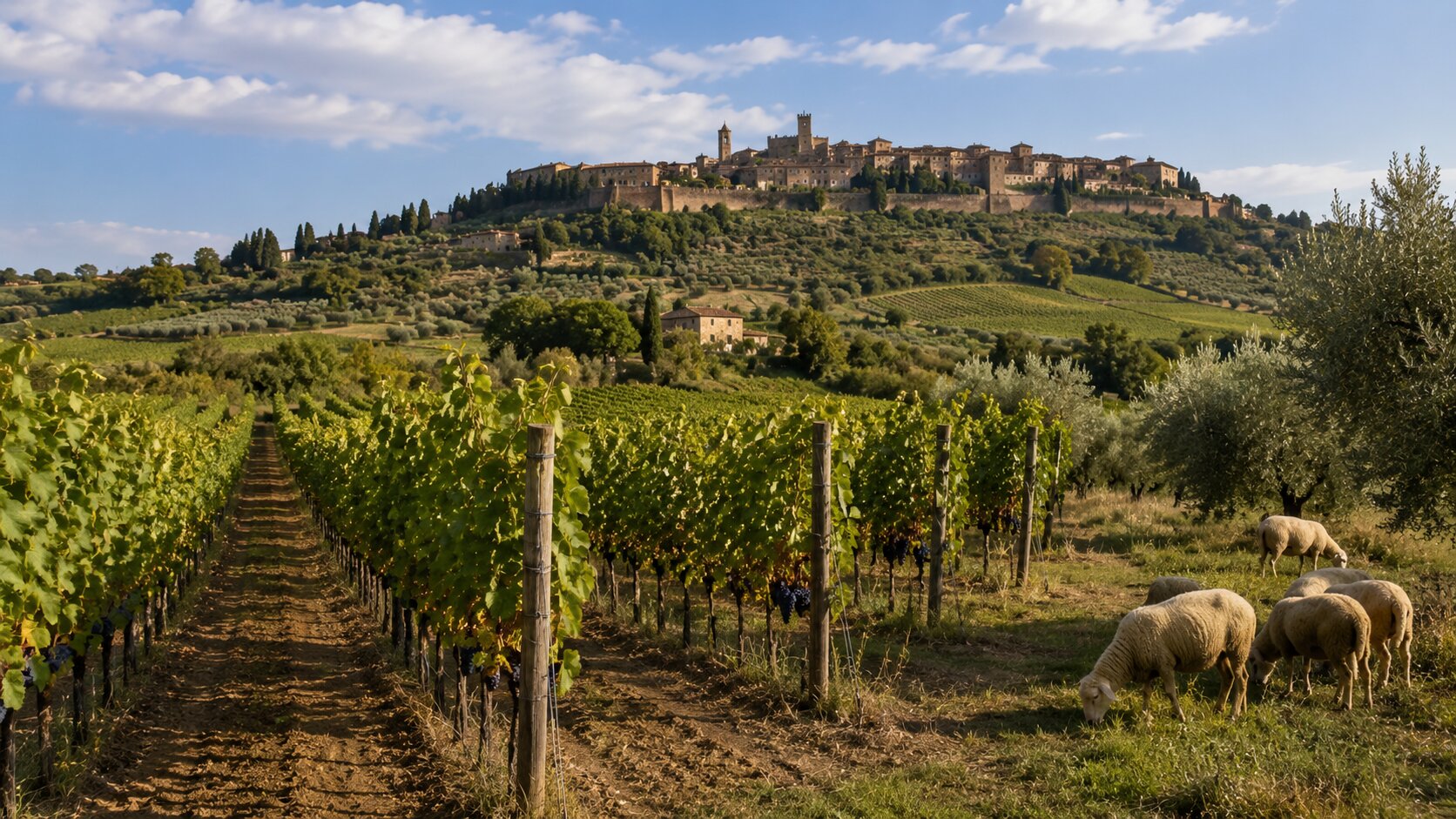
Pecorino di Pienza, the sheep's milk cheese the town is known for, sits alongside two of Italy's most significant reds. Brunello di Montalcino became one of the first four wines in Italy to receive DOCG status. That happened in 1980, alongside Barolo. It's made from 100% Sangiovese Grosso, a local clone Tuscans call "Brunello." Ferruccio Biondi-Santi first bottled it under that name in 1888. Vino Nobile di Montepulciano earned DOCG status that same year. Its own roots reach back to wine trade the Etruscans were already running in this valley, more than two thousand years ago.
None of this works well as a rushed tasting squeezed between two other stops. It works as part of a slower day instead. The wine, the cheese, and the landscape all point back to the same place. Even the terrain plays a role: Brunello vineyards sit between 120 and 600 meters above sea level, on some of the driest, warmest ground in Tuscany, which lets the Sangiovese grapes ripen fully in a way cooler, wetter regions nearby simply can't manage.
Who This Kind of Day Actually Suits
Val d'Orcia rewards travelers who'd rather go deep on one region than skim several. It suits couples, families, and small groups who want space and quiet. The kind of pace where nobody's checking a watch between stops. Photographers in particular tend to leave with more than they expected. The valley changes character completely depending on the light and the season.
The kind of unhurried, personally paced day this landscape rewards is exactly what separates a thoughtfully built private itinerary from a fixed-route group tour — and it's worth understanding the difference before booking either one. Our guide to bespoke travel versus standard tours in Italy looks at that distinction. It matters more in a region built around slowness than almost anywhere else in Tuscany.
Val d'Orcia as a Counterweight to Florence
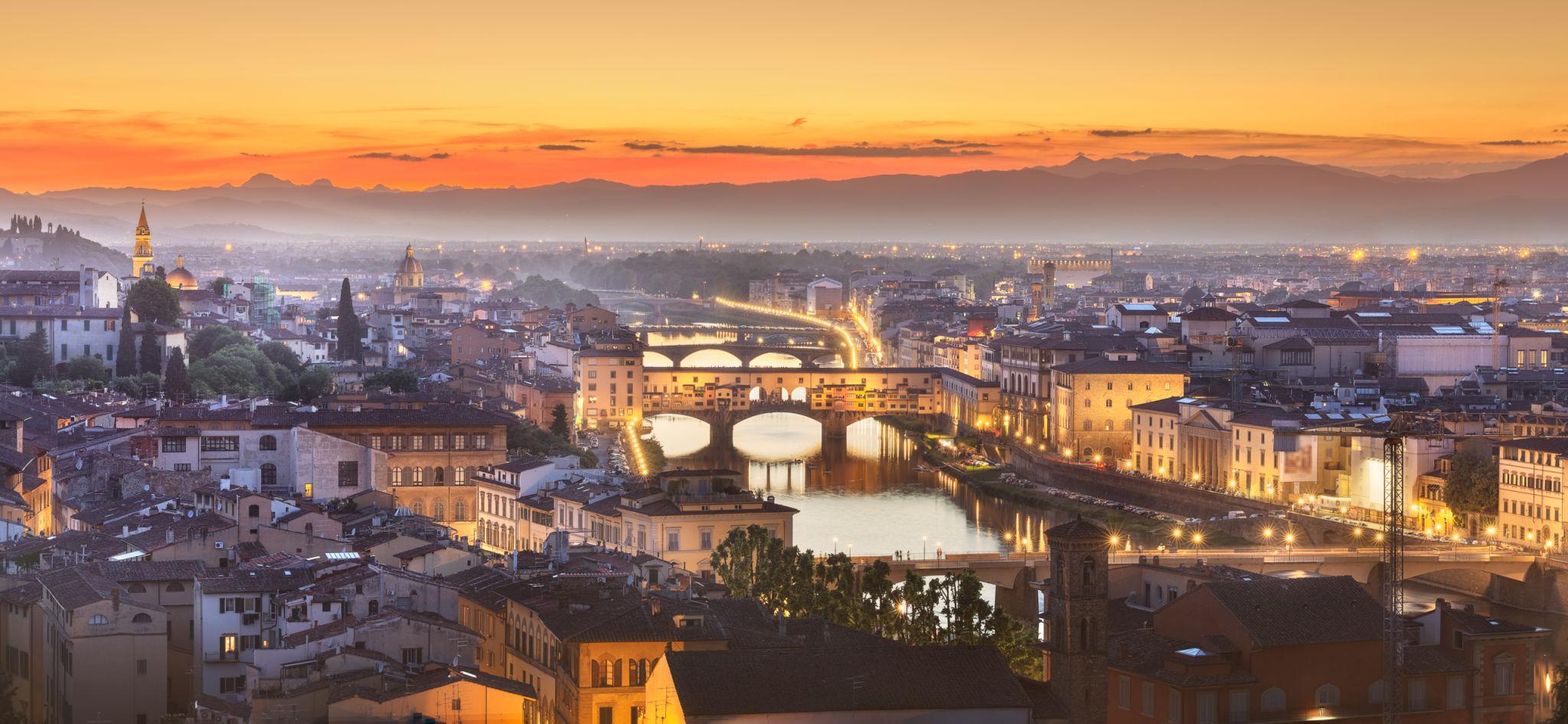
Florence runs on density: art stacked on art, street after street of Renaissance ambition packed into a small historic center. Val d'Orcia runs on the opposite principle. Open space, long views, a handful of towns spread across a valley designed centuries ago to feel exactly this expansive. Seeing both within the same trip gives a far more complete sense of Tuscany than either one delivers alone. The city shows what concentrated ambition looks like. The valley shows what happens when that same ambition gets applied to an entire landscape instead of a single building.