In this post
- The Oltrarno: Florence's Working Quarter
- What Makes a Workshop Worth Stopping At
- Crafts That Have Survived Centuries
- Is This Different from a Regular Sightseeing Walk?
- Why These Workshops Stay Tucked Away
- Watching Craft Happen, Not Just Reading About It
- A Guide Who Knows Which Doors to Knock On
- What a Morning Like This Actually Looks Like
- Materials That Tell Their Own Story
- Questions Worth Asking Along the Way
- Bringing Renaissance Florence Into the Present
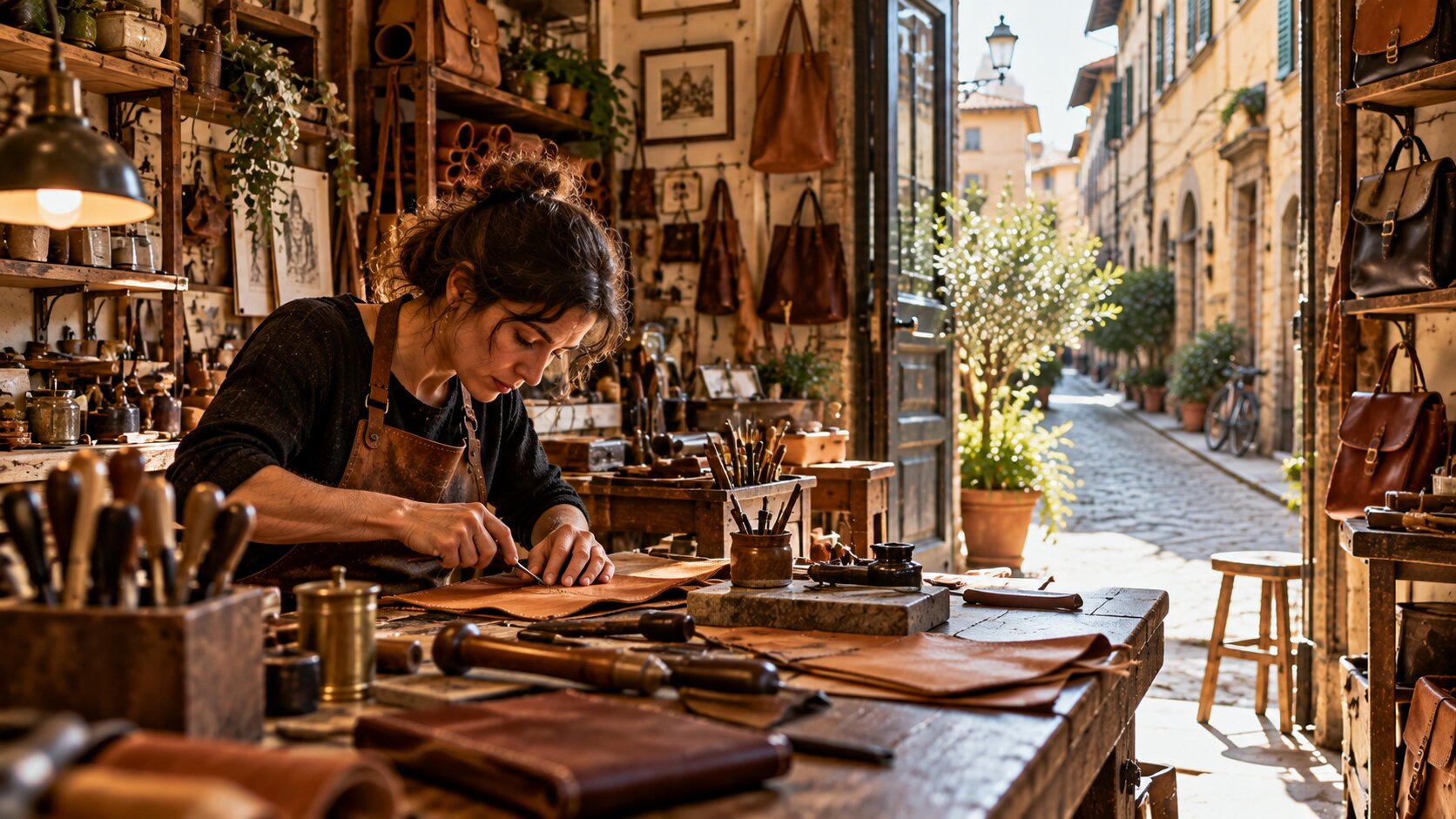
Most visitors see Florence's Renaissance through its museums. A private Florence tour with artisan workshops shows a different side entirely. The same craft traditions that produced those masterpieces are still alive today, in small studios most tourists walk straight past.
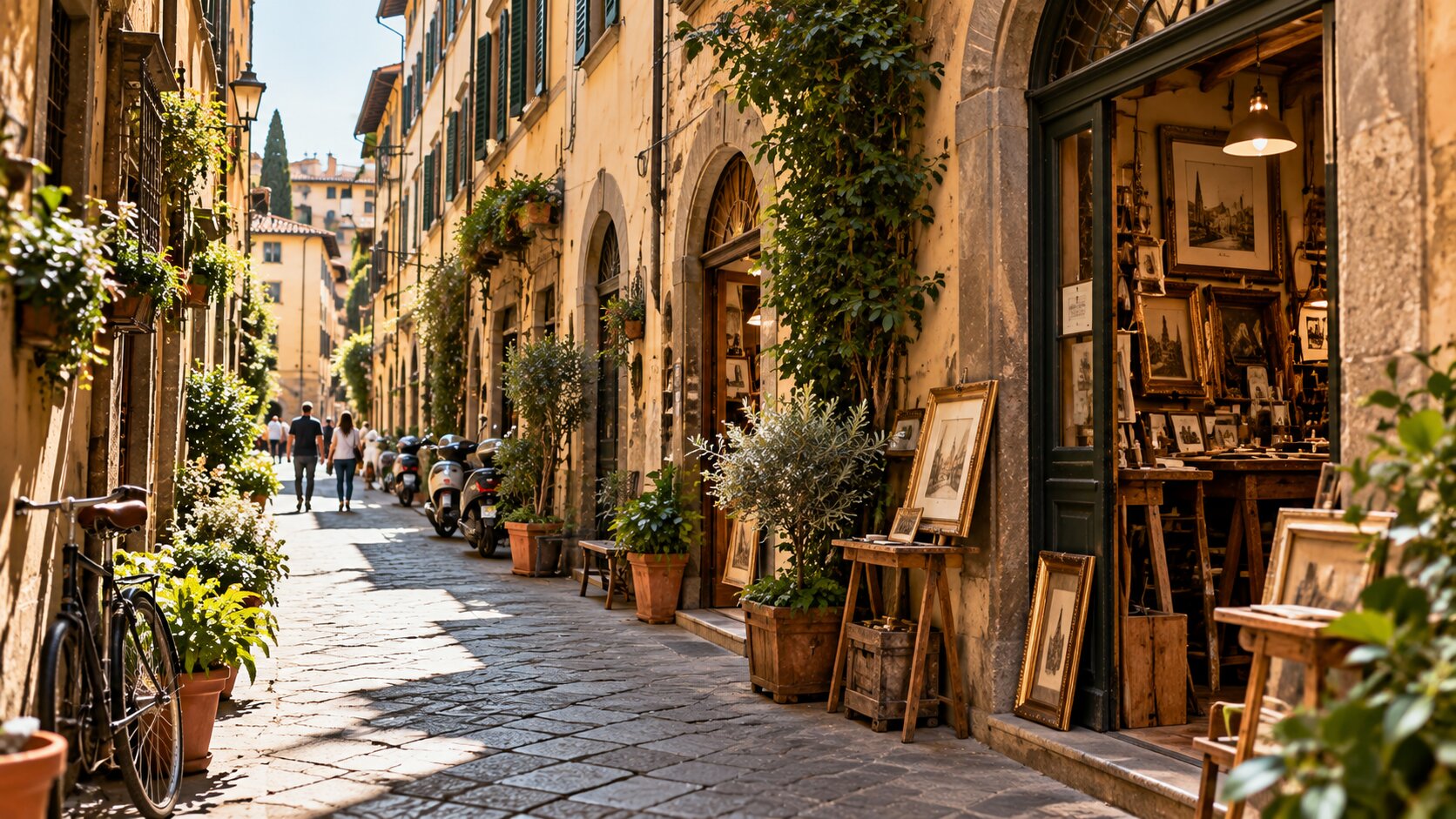
These workshops rarely announce themselves. A closed door, a small sign, sometimes just the sound of tools coming from inside. Knowing where to look changes the whole experience of the Oltrarno.
The Oltrarno: Florence's Working Quarter
Cross Ponte Vecchio and the atmosphere shifts almost immediately. Fewer crowds, narrower streets, and a neighborhood that still functions the way it has for centuries. It's a place where things actually get made, not just sold. Leatherworkers, framers, restorers, and jewelers all keep small workshops tucked between residential buildings.
This is a working district, not a museum exhibit. Many of these artisans learned their trade from a parent or grandparent who ran the same shop decades earlier.
What Makes a Workshop Worth Stopping At
Not every storefront in the Oltrarno holds the same value for a visitor. Some are essentially retail shops with a workbench in the back for appearances. Others are genuine working studios where the craft happens in full view, tools worn smooth from decades of use.
A private Florence tour with artisan workshops focuses on the second kind. These are places where a visitor can actually watch something being made, not just browse a finished product on a shelf.
Crafts That Have Survived Centuries
Bookbinding, leather tooling, gilding, and marble inlay all trace back to techniques practiced in Florence during the Renaissance itself. Many of these skills exist in only a handful of workshops citywide today. They're passed down through families rather than taught in formal schools.
Our guide to Florence sightseeing covers how these smaller, quieter corners of the city complement the major landmarks most visitors prioritize first. Artisan workshops rarely make it onto a first-time checklist. They often end up being what travelers remember most clearly, though.
Is This Different from a Regular Sightseeing Walk?
Considerably. A standard sightseeing route moves between landmarks, churches, piazzas, bridges. An artisan-focused walk moves between doorways instead, pausing at workshops rather than monuments. The pace slows down. The conversation shifts from historical dates to the actual mechanics of a craft.
This suits travelers who've already done the major landmarks on a previous trip. It also suits those who simply prefer a more textured, lived-in version of the city over a checklist of famous buildings.
Why These Workshops Stay Tucked Away
Many artisan studios in the Oltrarno operate with minimal signage on purpose. Word of mouth and repeat local customers have sustained these businesses for generations. They've never needed to compete for tourist foot traffic the way souvenir shops near major landmarks do.
This makes them genuinely easy to miss without local knowledge. A street that looks residential at first glance might hold three or four working studios behind unmarked doors, invisible to anyone walking past without knowing exactly where to look.
Watching Craft Happen, Not Just Reading About It
There's a real difference between reading about a centuries-old technique and watching someone practice it in front of you. Gold leaf applied by hand. Leather stamped with tools that haven't changed shape in generations. A book spine rebuilt stitch by stitch.
These moments rarely last long, a few minutes at most, but they tend to stick with travelers longer than an hour spent in a crowded gallery. Our guide to private Florence tours for repeat travelers touches on why this kind of detail-focused exploration suits visitors who've already covered the obvious landmarks and want something less familiar.
A Guide Who Knows Which Doors to Knock On
Finding these workshops independently is genuinely difficult. Many don't appear in guidebooks, and some artisans work irregular hours or close without notice. A private guide who already has relationships with specific workshop owners removes this uncertainty entirely.
This kind of access rarely exists for a fixed group tour moving on a set schedule. A private format allows the route to bend around whether a particular artisan happens to be working that morning, rather than committing to a stop that might turn out closed.
What a Morning Like This Actually Looks Like
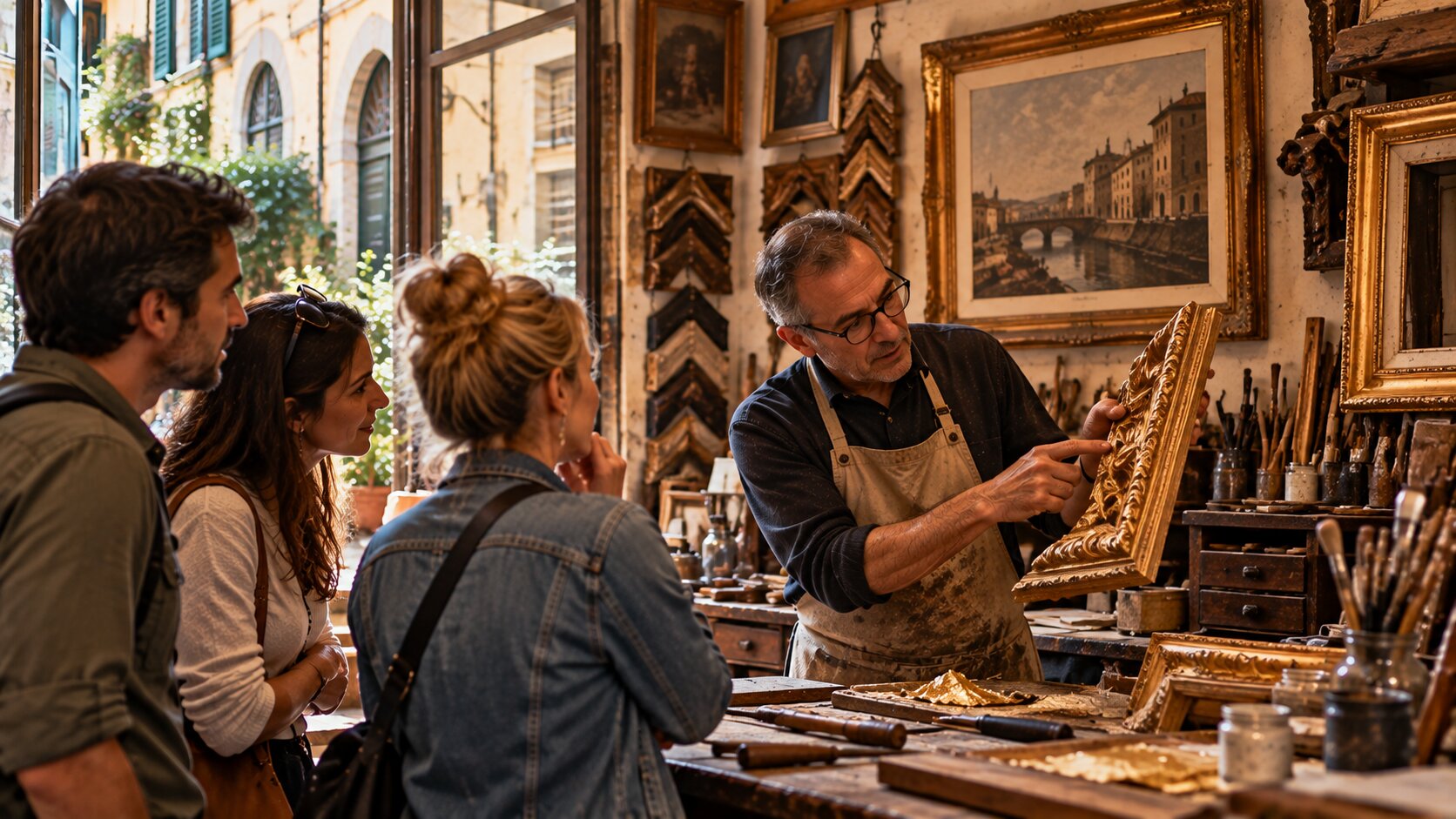
A typical route weaves between two or three workshops, with real time spent at each rather than a rushed glance through a window. Between stops, the walk passes through quieter streets and smaller piazzas that a standard sightseeing route often skips entirely.
The contrast with Florence's busier landmarks matters here. After the crowds around the Duomo or Ponte Vecchio, stepping into a quiet workshop where someone is focused entirely on their craft feels like an entirely different city.
Materials That Tell Their Own Story
Many of these workshops still source materials the same way their predecessors did. Leather tanned using traditional methods. Marble sourced from quarries that have supplied Florence for centuries. Gold leaf beaten thin by hand rather than machine-pressed. These details rarely get explained on a standard sightseeing route.
Understanding where the raw material comes from adds another layer to watching the finished technique. A piece of hand-tooled leather means something different once you've seen the tanning process it started from, even briefly described by the person doing the work.
Questions Worth Asking Along the Way
A good visit to a working studio isn't just watching in silence. Asking how long an artisan has practiced their craft, or how a technique has changed across generations, often leads to the kind of stories that never make it into a written history of the city.
A private guide can facilitate this naturally, translating where needed and knowing which questions a particular artisan enjoys answering. That kind of exchange rarely happens on a rushed, larger group visit.
Bringing Renaissance Florence Into the Present
A private Florence tour with artisan workshops connects the city's most famous history to something still happening today, not just preserved behind glass. Our Private Essential Florence Walking Tour with an Expert Local Guide already winds through the Oltrarno's tucked away artisan workshops as part of its route, alongside the Medici history and Renaissance architecture that define the rest of the walk.
A private guide can slow down exactly where a workshop catches your interest, rather than rushing past on a fixed schedule. Between Via Maggio's antique shops, the artisan quarter's working studios, and the crossing over Ponte Vecchio itself, the walk gives a fuller sense of Florence as a city that still makes things, not just one that displays what it made five hundred years ago.