In this post
- What Makes the Bargello Different from Florence's Other Museums
- Michelangelo Before David
- Donatello's Bronze David
- Why the Bargello Stays So Quiet
- Is the Bargello Worth Visiting If You've Already Seen the Accademia?
- The Building Itself
- What to Look for Beyond the Headline Sculptures
- A Museum Built for Comparison
- How Much Time to Set Aside
- Seeing the Bargello as Part of a Bigger Story
Most first-time visitors to Florence never make it inside the Bargello Museum. They see the Accademia, the Uffizi, maybe the Duomo, and assume that covers the city's essential sculpture. The Bargello quietly holds some of Michelangelo's earliest work, alongside pieces by Donatello that predate David by decades. Rooms here rarely see a crowd.
That combination, major art and minimal lines, makes it one of the better-kept secrets among Florence's museums.
Skipping it means missing a version of Florence's Renaissance story that the Accademia alone can't tell.
What Makes the Bargello Different from Florence's Other Museums
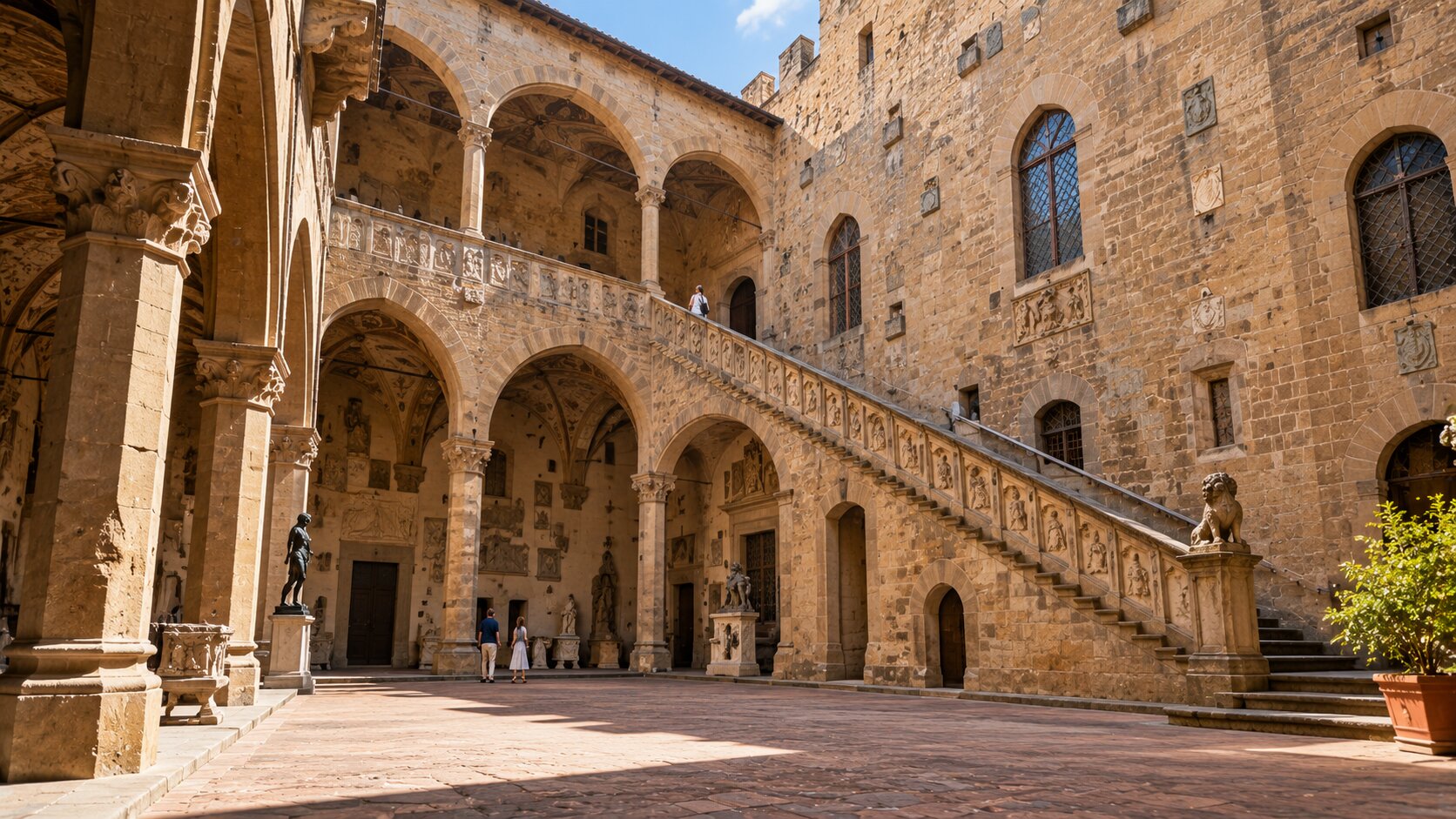
Originally built as a fortress and later used as a prison, the Bargello has a rougher feel. More austere than Florence's grander museum buildings. Stone walls, a central courtyard, and a general sense of weight fit its original purpose better than a gallery ever would.
That atmosphere changes how the art inside gets experienced. Sculptures here don't sit in a polished, purpose-built gallery. They occupy a building that has clearly lived several other lives first.
Michelangelo Before David
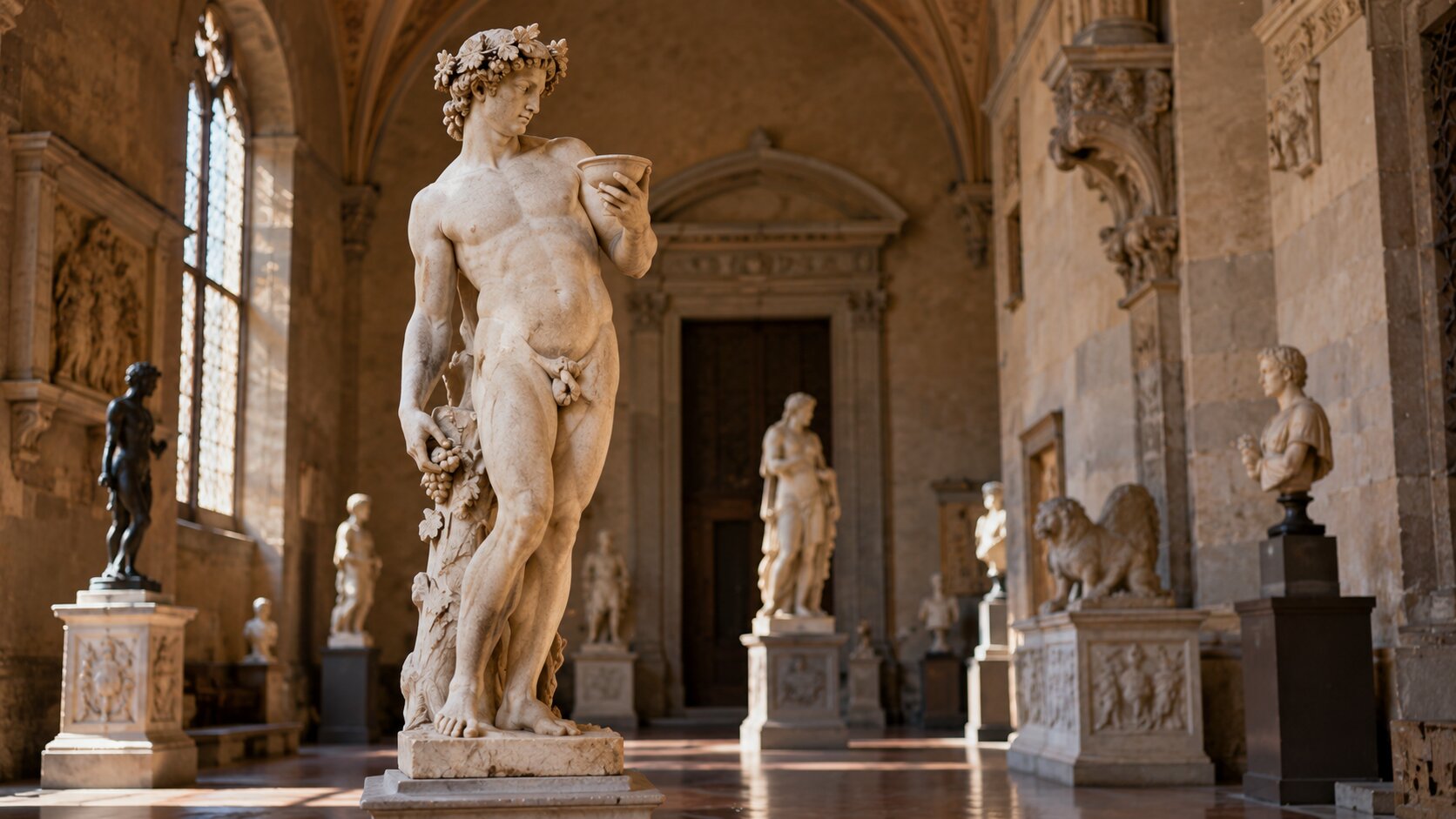
The Bargello holds Michelangelo's Bacchus, one of his earliest surviving sculptures, carved when the artist was still in his early twenties. Unlike the composed, idealized David that came later, Bacchus wobbles slightly, drunk and unsteady. It's a rare glimpse of Michelangelo experimenting before his style fully matured.
Brutus sits nearby, unfinished and left that way deliberately by the artist. Seeing an incomplete work up close reveals something the polished masterpieces rarely show. The actual marks of the chisel, the visible process behind the final result.
Donatello's Bronze David
Long before Michelangelo's version became the world's most famous David, Donatello sculpted his own, in bronze, nearly a century earlier. It's a smaller, quieter work. It's historically significant, too, as one of the first freestanding nude sculptures since antiquity.
Our guide to Michelangelo in Florence covers how earlier sculptors like Donatello shaped the artistic environment Michelangelo grew up in. That's useful context for understanding why the Bargello matters beyond its Michelangelo pieces alone.
Why the Bargello Stays So Quiet
Part of the reason comes down to marketing. David gets top billing in every guidebook and travel blog, while the Bargello rarely gets mentioned in the same breath. Most visitors simply don't know it exists, or assume it's a minor stop not worth the detour.
That's a mistake worth correcting. Fewer crowds mean more time actually looking at the sculptures. Less time navigating around other visitors, something increasingly rare at Florence's more famous sites.
Is the Bargello Worth Visiting If You've Already Seen the Accademia?
Genuinely, yes. The Accademia shows Michelangelo at his most accomplished. The Bargello shows him earlier, rougher, still finding his voice as an artist. Seeing both gives a much fuller picture of his development than either museum alone.
The contrast also works the other way. Visitors who see the Bargello first often approach David differently. A sharper sense of just how far the artist had come by the time he carved it.
The Building Itself
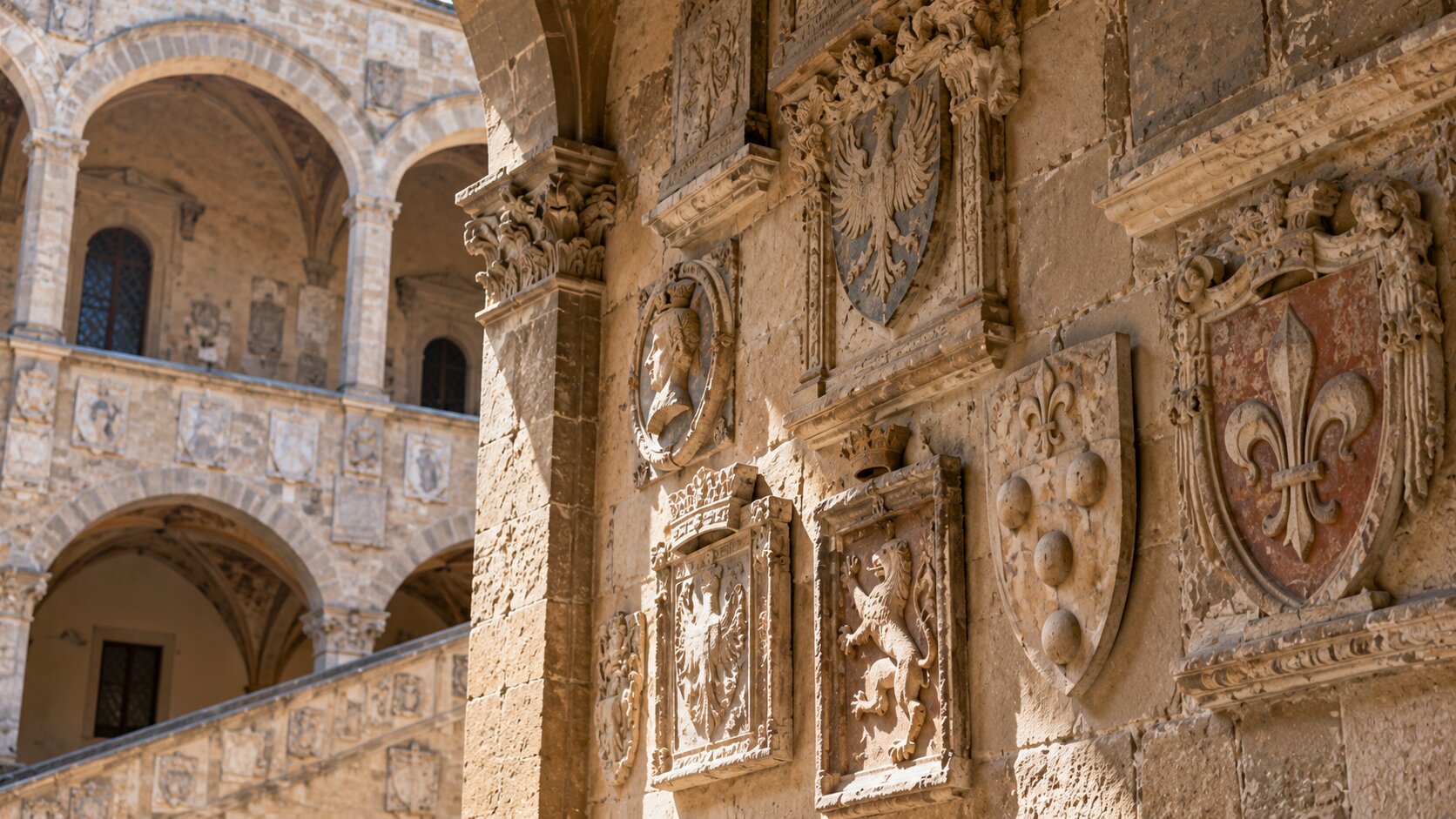
The Bargello's central courtyard, ringed with stone arches and a wide external staircase, is worth pausing in on its own merits. Coats of arms from former Florentine magistrates cover parts of the walls. They're a reminder of the building's centuries as a seat of civic and judicial power before it became a museum.
This architectural layer adds context that a purpose-built gallery space simply can't offer. The building's own history sits alongside the art it now displays.
Even visitors with only a passing interest in sculpture tend to find the courtyard itself worth the visit. It's one of the few spots in central Florence where the weight of the city's civic history feels this tangible, arches and stonework unchanged for centuries.
What to Look for Beyond the Headline Sculptures
Beyond Michelangelo and Donatello, the Bargello holds an extensive collection of decorative arts. Ivories, ceramics, and small bronzes that rarely get mentioned outside specialist circles. These smaller pieces reward visitors willing to slow down, rather than beeline straight for the famous names.
Our guide to Medici sites in Florence covers a related layer of the city's history. Several pieces in the Bargello's collection trace back to Medici patronage. A guide familiar with the collection can point toward which secondary pieces actually deserve attention. Not every room holds equal weight for a first visit.
A Museum Built for Comparison
Part of what makes the Bargello rewarding is the density of major names in a small space. Michelangelo, Donatello, and Verrocchio all sit within a few rooms of each other, making direct comparison easy in a way that larger, more spread-out museums rarely allow.
Standing in front of two different sculptors' takes on the same biblical figure, David, within minutes of each other says more about how artistic style evolved across generations than reading about it ever could. The building's compact layout makes this kind of comparison almost unavoidable, rather than something a visitor has to seek out deliberately.
How Much Time to Set Aside
A focused visit to the Bargello's highlights takes roughly forty-five minutes to an hour. That's considerably shorter than a full pass through the Accademia or Uffizi. That makes it easy to pair with another stop on the same morning without turning the day into a marathon of museums.
Visitors with a deeper interest in Renaissance sculpture can easily spend longer. The decorative arts collection alone could occupy an extra half hour for anyone genuinely curious.
Seeing the Bargello as Part of a Bigger Story
The Bargello Museum makes the most sense as one chapter in a longer story about Michelangelo's development. Not a standalone stop squeezed in as an afterthought. Our Private Michelangelo Sculpture Tour in Florence with Accademia Gallery, Medici Chapels, Bargello and Museum of the Duomo builds the museum into exactly that kind of narrative.
A private guide walks the route from Michelangelo's childhood streets through the Bargello's early works, the Medici Chapels, and finally the Accademia's David. Skip-the-line access covers all four sites along the way. Seeing Bacchus and Brutus before reaching David changes how the final sculpture lands. A single famous statue becomes the conclusion of a much longer artistic journey.
For anyone who wants more from Florence than a single, well-photographed statue, that longer journey tends to be exactly what makes the trip worth remembering.