In this post
- Piazza della Signoria and Other Essential Medici Sites in Florence
- Palazzo Vecchio: From Republic to Medici Rule
- The Vasari Corridor: A Private Route Through the City
- Ponte Vecchio: Commerce, Strategy, and Medici Control
- Palazzo Pitti: One of the Most Important Medici Sites in Florence
- The Boboli Gardens: Power Expressed Through Landscape
- San Lorenzo: The Medici Church
- The Medici Chapels: Dynasty and Memory
- Via Tornabuoni: Wealth, Palaces, and Urban Prestige
- Oltrarno: The Medici Across the Arno
- How to Connect the Main Medici Sites in Florence
- Seeing the Medici Family in Florence Today
The most important Medici sites in Florence reveal how one family transformed a medieval city into the cradle of the Renaissance.
The Medici family did not simply live in Florence.
They shaped it.
Across the historic center, their presence remains visible in palaces, churches, bridges, corridors, public squares, and works of art. Some traces are obvious. Others are more discreet, hidden in architectural details, family symbols, and the way certain spaces still organize the city today.
For visitors interested in the most important Medici sites in Florence, the experience is not only about following the story of a powerful family. It is about understanding how Florence became one of the defining cities of the Renaissance.
The Medici were bankers, patrons, rulers, collectors, and political strategists. Their influence extended far beyond private wealth. They transformed Florence into a stage where art, power, religion, and ambition constantly interacted.
To see their legacy today, it is worth looking beyond individual monuments. The most meaningful Medici places in Florence are connected by streets, squares, churches, and routes that reveal how the family moved through the city and how the city changed around them.
Piazza della Signoria and Other Essential Medici Sites in Florence
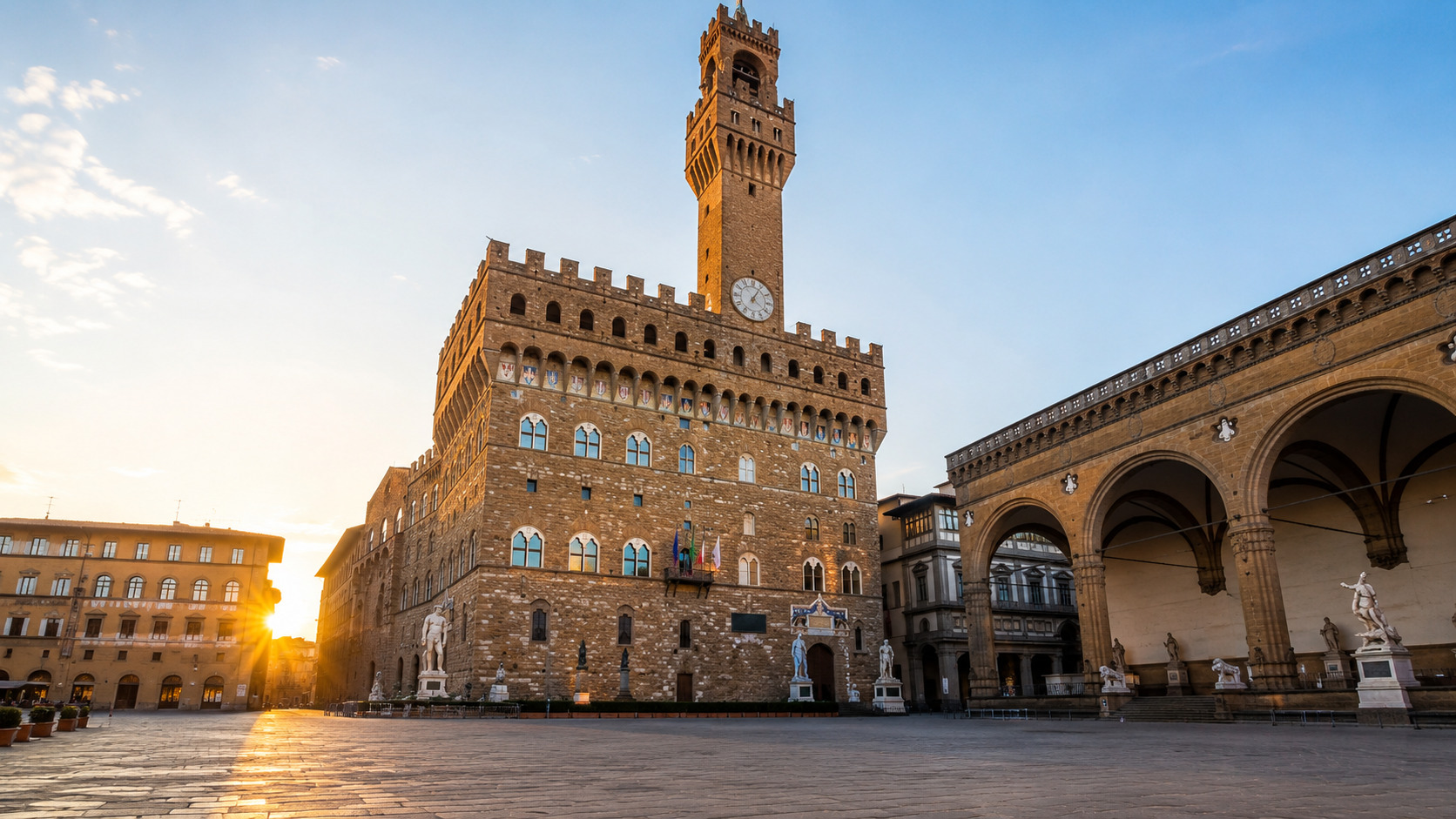
Piazza della Signoria is one of the most important places to begin understanding the Medici legacy in Florence.
The square was never just a beautiful public space. It was the political heart of the city, a place where authority had to be seen, performed, and defended.
Palazzo Vecchio dominates the square with its fortress-like presence. Long before the Medici became dukes, the building represented civic power. Later, when the family consolidated control over Florence, they understood the importance of occupying and reshaping spaces that already carried political meaning.
The statues around the square also contribute to this narrative. Art was never neutral in Renaissance Florence. Sculptures, façades, and public commissions communicated power, identity, and legitimacy.
For this reason, Piazza della Signoria remains one of the most essential Medici sites in Florence. It shows how political authority and artistic display became inseparable.
Palazzo Vecchio: From Republic to Medici Rule
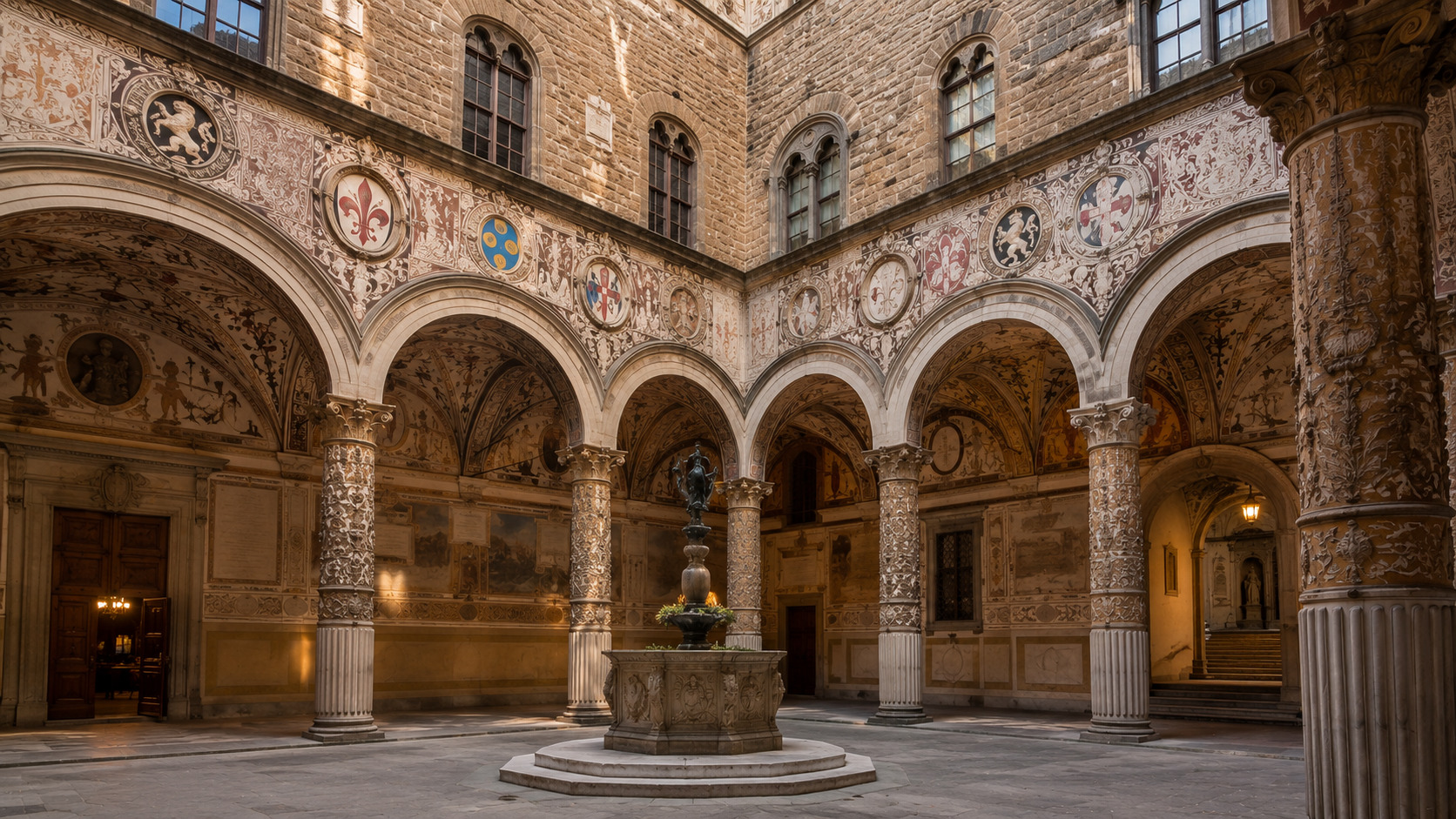
Palazzo Vecchio offers one of the clearest examples of how the Medici family adapted existing institutions to serve their own authority.
Originally built as the seat of the Florentine government, the palace later became closely associated with Cosimo I de’ Medici, who used it as his ducal residence before moving to Palazzo Pitti.
This transition matters.
It shows how the Medici did not erase Florence’s republican past. Instead, they absorbed it. By placing themselves inside the city’s most important civic building, they connected their rule to the established symbols of Florentine power.
Today, visitors can still read this layered history in the building’s architecture and decoration. The palace reflects both the ambitions of the medieval republic and the authority of the Medici court.
Among the Medici landmarks in Florence, Palazzo Vecchio is especially important because it reveals the family’s political intelligence. They understood that power depended not only on wealth, but also on place.
The Vasari Corridor: A Private Route Through the City
Few Medici places in Florence express power as elegantly as the Vasari Corridor.
Built under Cosimo I de’ Medici in the 16th century, the corridor created a private elevated passage connecting Palazzo Vecchio with Palazzo Pitti across the Arno River.
Its function was practical, but its meaning was symbolic.
The corridor allowed the ruling family to move through Florence without entering the public streets. It passed above shops, across Ponte Vecchio, and through the city’s dense urban fabric, turning Florence itself into a controlled route of power.
The idea is extraordinary: a private path suspended above public life.
Even when viewed from the outside, the Vasari Corridor helps visitors understand the Medici relationship with the city. They did not only commission buildings. They connected them. They shaped movement, visibility, and access.
Ponte Vecchio: Commerce, Strategy, and Medici Control
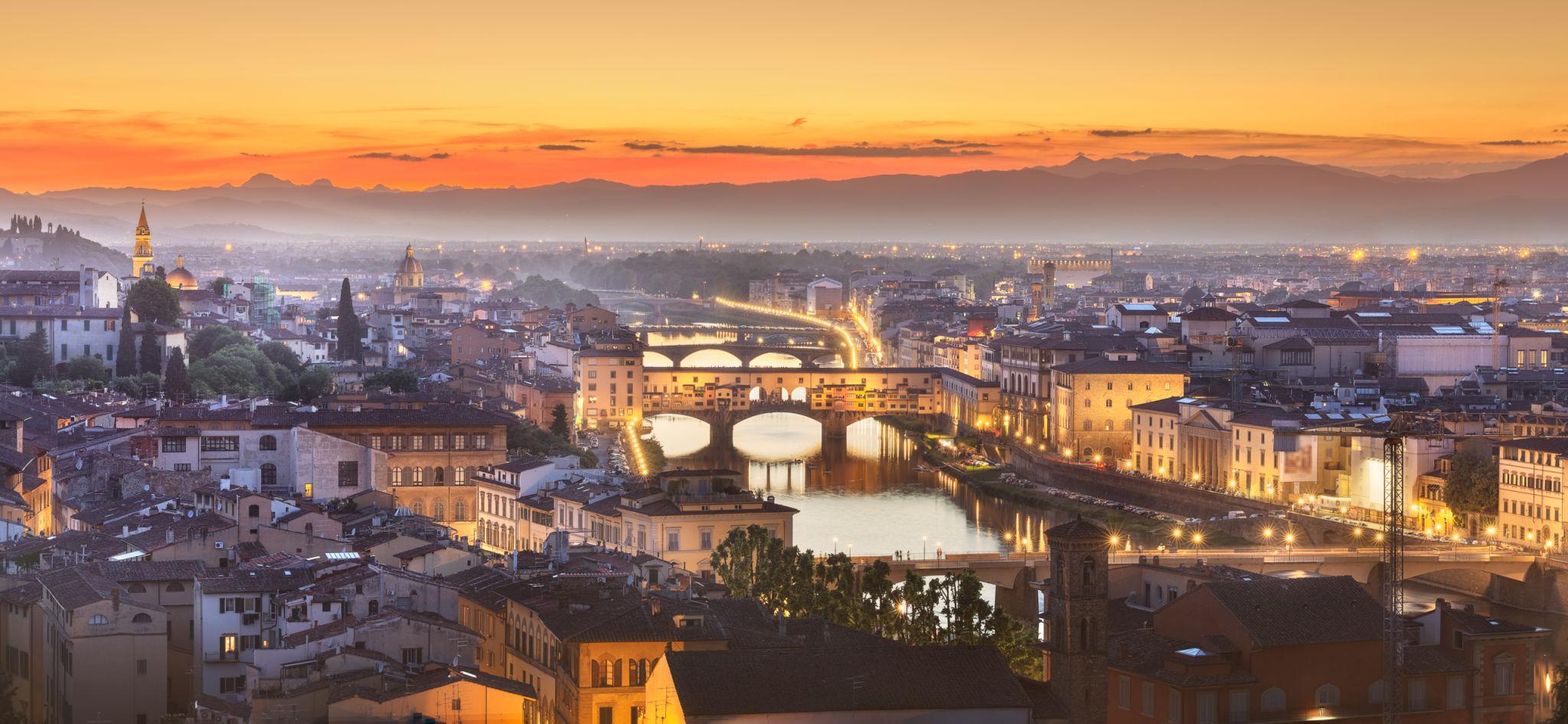
Ponte Vecchio is one of Florence’s most photographed landmarks, but it also belongs to the Medici story.
The bridge was already central to Florentine life before the family’s rise, yet the construction of the Vasari Corridor gave it a new role within the Medici urban system.
Walking across Ponte Vecchio today, it is easy to focus on the goldsmith shops and the view over the Arno. Looking upward, however, reveals another layer: the elevated passage that transformed the bridge into part of a private route between seats of power.
This is what makes Ponte Vecchio more than a scenic stop.
It shows how the Medici legacy in Florence often appears through adaptation. Existing structures gained new meanings when the family incorporated them into a wider vision of control, prestige, and movement.
Palazzo Pitti: One of the Most Important Medici Sites in Florence
Palazzo Pitti represents a different phase of Medici power.
Located on the Oltrarno side of the city, the palace became the main residence of the Medici dukes and later grand dukes. Its scale, position, and architectural severity communicate authority in a way that differs from the more compressed spaces of the historic center.
Moving from Palazzo Vecchio to Palazzo Pitti also marks a shift in how the family presented itself.
The Medici were no longer only powerful citizens within Florence. They had become rulers with a court, a residence, and a dynastic identity that extended beyond the earlier world of banking and political maneuvering.
For visitors tracing Medici sites in Florence, Palazzo Pitti is essential because it reveals the family’s evolution from influential patrons to formal sovereigns.
The Boboli Gardens: Power Expressed Through Landscape
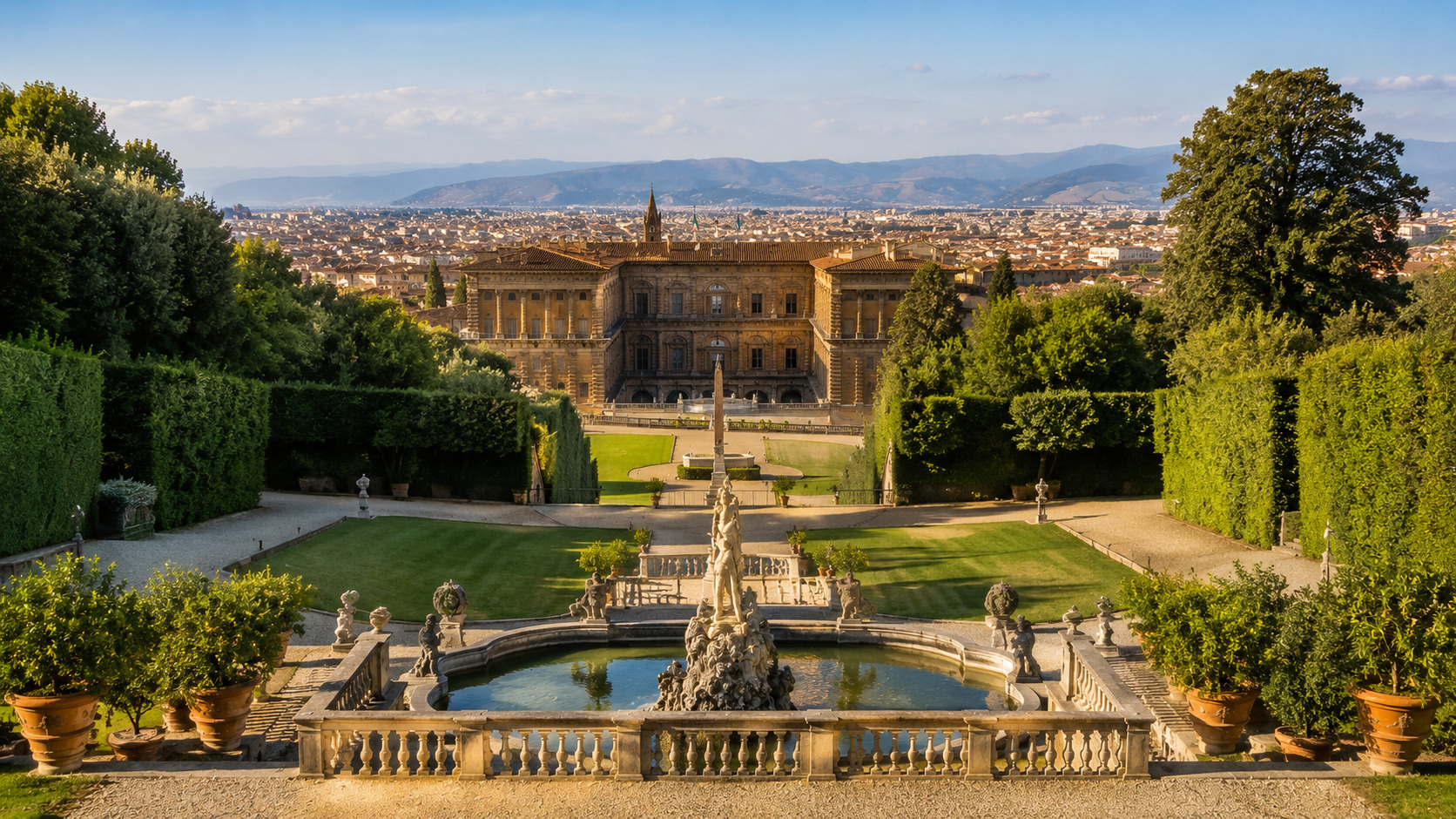
Behind Palazzo Pitti, the Boboli Gardens expand the Medici legacy into landscape design.
These gardens were not simply private green spaces. They expressed order, taste, and authority through geometry, perspective, sculpture, and controlled views.
In Renaissance and early modern Europe, gardens often served as political statements. They showed that nature itself could be arranged according to human design and princely power.
The Boboli Gardens reflect that idea clearly.
They connect architecture, landscape, and spectacle. They also show how the Medici vision extended beyond buildings into the wider environment of the city.
For travelers interested in Florence beyond museums and churches, Boboli offers another way to understand how power was displayed and experienced.
San Lorenzo: The Medici Church
The Basilica of San Lorenzo is one of the most important religious sites connected to the Medici family in Florence.
For generations, the family maintained close ties to this church. Its architectural and funerary spaces became deeply associated with Medici identity, patronage, and memory.
San Lorenzo also reflects the family’s relationship with some of the greatest artists and architects of the Renaissance. The complex includes spaces connected to Brunelleschi and Michelangelo, making it one of the clearest examples of how Medici patronage shaped Florence’s artistic development.
The church matters not only because of who is buried there or who worked there.
It matters because it shows how the Medici used sacred spaces to express continuity, legitimacy, and cultural refinement.
Among the most significant Medici landmarks in Florence, San Lorenzo stands at the intersection of faith, family, and art.
The Medici Chapels: Dynasty and Memory
The Medici Chapels make the family’s dynastic ambition impossible to miss.
Here, memory becomes architecture.
The chapels were designed to celebrate the family across generations, transforming burial space into a statement of permanence. Marble, sculpture, proportion, and symbolism all contribute to the sense that the Medici wanted their legacy to endure visibly within Florence.
Michelangelo’s New Sacristy adds another layer of meaning. His sculptural work does not simply decorate the space. It gives physical form to time, power, mortality, and remembrance.
For visitors seeking the Medici family in Florence, the chapels offer one of the most concentrated encounters with their self-image.
This is not the Medici as bankers or political operators. This is the Medici as dynasty.
Via Tornabuoni: Wealth, Palaces, and Urban Prestige
Via Tornabuoni is often associated today with luxury shopping, yet its elegance has deep historical roots.
The street has long been connected with noble families, palaces, and the refined urban identity of Florence. It reflects the world in which power was expressed not only through government buildings and churches, but also through residence, façade, and address.
For the Medici and the families connected to them, urban space carried meaning.
Where one lived, how a palace appeared, and how a street functioned all contributed to social and political identity.
Walking along Via Tornabuoni helps visitors understand the Florence of influence and prestige. It is less dramatic than Piazza della Signoria, but it reveals another side of power: the quiet authority of place, wealth, and visibility.
Oltrarno: The Medici Across the Arno
The Oltrarno district adds depth to the Medici story because it shows how the family’s influence crossed the river and reshaped the city’s geography.
With Palazzo Pitti, the Boboli Gardens, churches, artisan streets, and historic residences, this part of Florence offers a less compressed but equally important view of Medici power.
Oltrarno also helps balance the visitor’s understanding of the city.
The Medici legacy was not confined to the area between the Duomo and Palazzo Vecchio. It extended across bridges, into workshops, gardens, palaces, and neighborhoods where daily life and political authority existed side by side.
Exploring this side of Florence reveals how the family’s presence became woven into the city’s broader structure.
How to Connect the Main Medici Sites in Florence
The most important Medici sites in Florence are close enough to connect on foot, but they are not isolated stops.
Their meaning comes from the relationships between them.
Piazza della Signoria leads naturally to Palazzo Vecchio. Palazzo Vecchio connects conceptually and physically to the Vasari Corridor. The corridor crosses Ponte Vecchio toward Palazzo Pitti. San Lorenzo and the Medici Chapels reveal the family’s sacred and dynastic identity.
Seen separately, these places are impressive.
Seen together, they explain Florence.
This is why walking through the city remains one of the most effective ways to understand the Medici legacy. The distances are short, but the historical connections are dense.
For a deeper perspective on how Florence’s historic spaces can be interpreted through movement, architecture, and context, explore our guide to a private walking tour of Florence historic center.
Seeing the Medici Family in Florence Today
The Medici family no longer rules Florence, yet their presence remains everywhere.
It appears in grand palaces and narrow streets, in churches and corridors, in public squares and private routes, in art collections and urban design.
Their story is not confined to a single museum or monument.
It is distributed across the city.
That is what makes the Medici legacy so compelling today. To follow it is to understand Florence not as a collection of beautiful places, but as a city shaped by ambition, intelligence, rivalry, patronage, and power.
For visitors, the reward lies in learning to recognize these connections.
Once seen, the Medici legacy changes how Florence appears. Streets become more meaningful. Buildings begin to speak to one another. Public spaces reveal hidden intentions.
Florence remains beautiful at first glance.
Through the Medici, it becomes understandable.