In this post
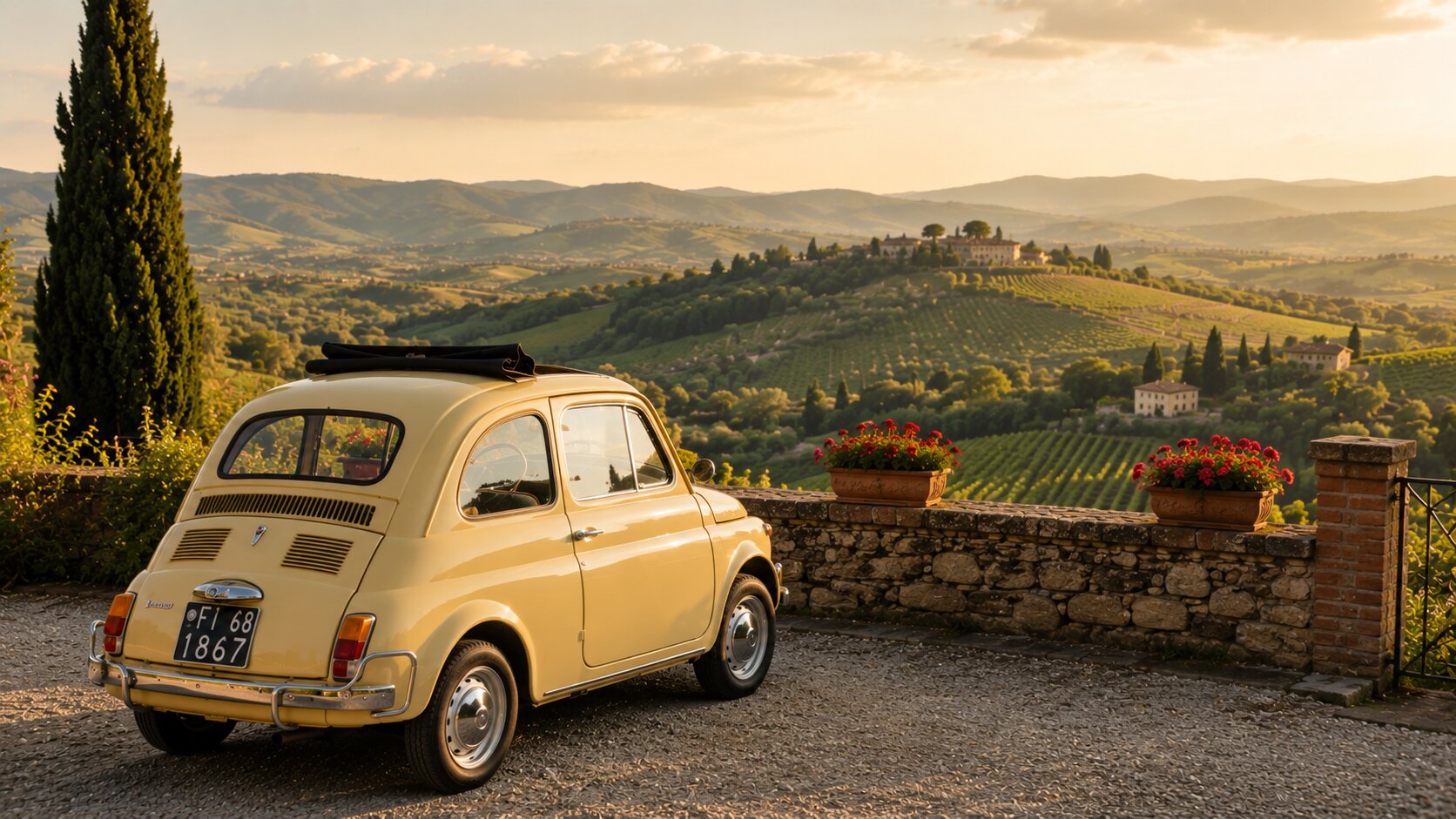
A Fiat 500 tour from Florence starts with a simple shift. One minute you're surrounded by stone façades and narrow medieval streets. A few minutes later, the city has fallen away behind you, and the road climbs into open hills. Few cities in Italy make that transition as quickly as Florence does.
Most travelers experience Tuscany from a bus window, on a fixed schedule with fixed stops. A vintage Fiat 500 offers a different kind of morning or afternoon. It's smaller, slower, and built around the drive itself rather than a checklist of towns.
Why Florence Is the Perfect Starting Point
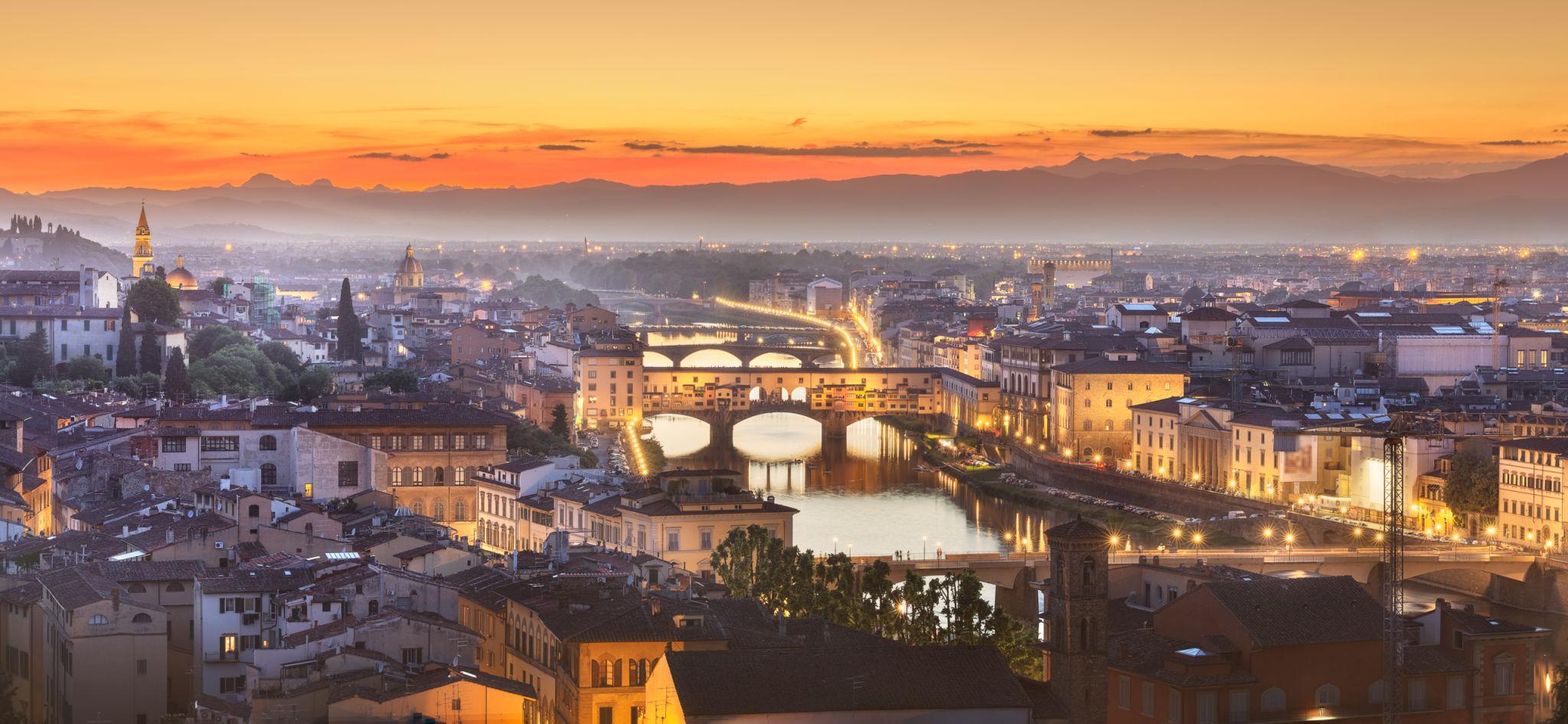
Florence's own hills make the case on their own. Architect Giuseppe Poggi designed the tree-lined Viale dei Colli in 1865. The boulevard climbs from Porta Romana up to Piazzale Michelangelo in about six kilometers. The road curves past cypress and pine trees, with the city dropping away below at every turn. Near the top sits the Romanesque basilica of San Miniato al Monte, its white-and-green marble façade dating back to 1013.
You don't need to drive far to feel the shift from city to countryside. That's the real advantage of starting in Florence. The hills begin almost at the edge of the historic center, so the atmosphere changes within minutes, not hours. Poggi finished Piazzale Michelangelo in 1873. From there, you can already see Fiesole's hills and the cypress-lined countryside beyond the city walls. The transition from stone streets to open landscape happens gradually. It comes one turn of Viale dei Colli at a time, rather than all at once.
Along the way, the Romanesque façade of San Miniato al Monte comes into view, its white and green marble dating back to construction that began in 1013. During the 1530 siege of Florence, Michelangelo himself reportedly had the church's bell tower wrapped in mattresses to protect it from cannon fire. It's the kind of detail that turns a scenic stop into something with real weight behind it, rather than just a photo opportunity.
The Appeal of Driving a Vintage Fiat 500
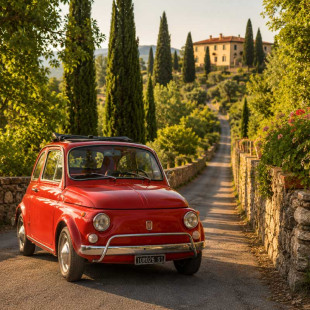
Fiat launched the Nuova 500 in July 1957. Engineer Dante Giacosa designed it around a rear-mounted, air-cooled 479cc two-cylinder engine, small enough to tuck under the trunk floor. The whole car measured under three meters long and weighed less than 500 kilograms. Its top speed reached about 85 km/h, and its earliest engines produced just 13 horsepower.
Those numbers explain the driving experience better than any description of its "unmistakable silhouette" could. A car this light and this slow doesn't take a curve so much as lean into it. You feel every rise and dip in the road that a modern car would simply smooth over.
In 1959, the Fiat 500 won a Compasso d'Oro industrial design award. It was the first time Italy's top design prize went to a carmaker, rather than an architect or product designer. Fiat went on to build more than 3.9 million examples of the 500 between 1957 and 1975. The two-cylinder engine barely changed over that entire run. Our history of the Fiat 500 goes deeper into how the car reshaped daily life across Italy after the war.
Why the Roads Matter as Much as the Destination
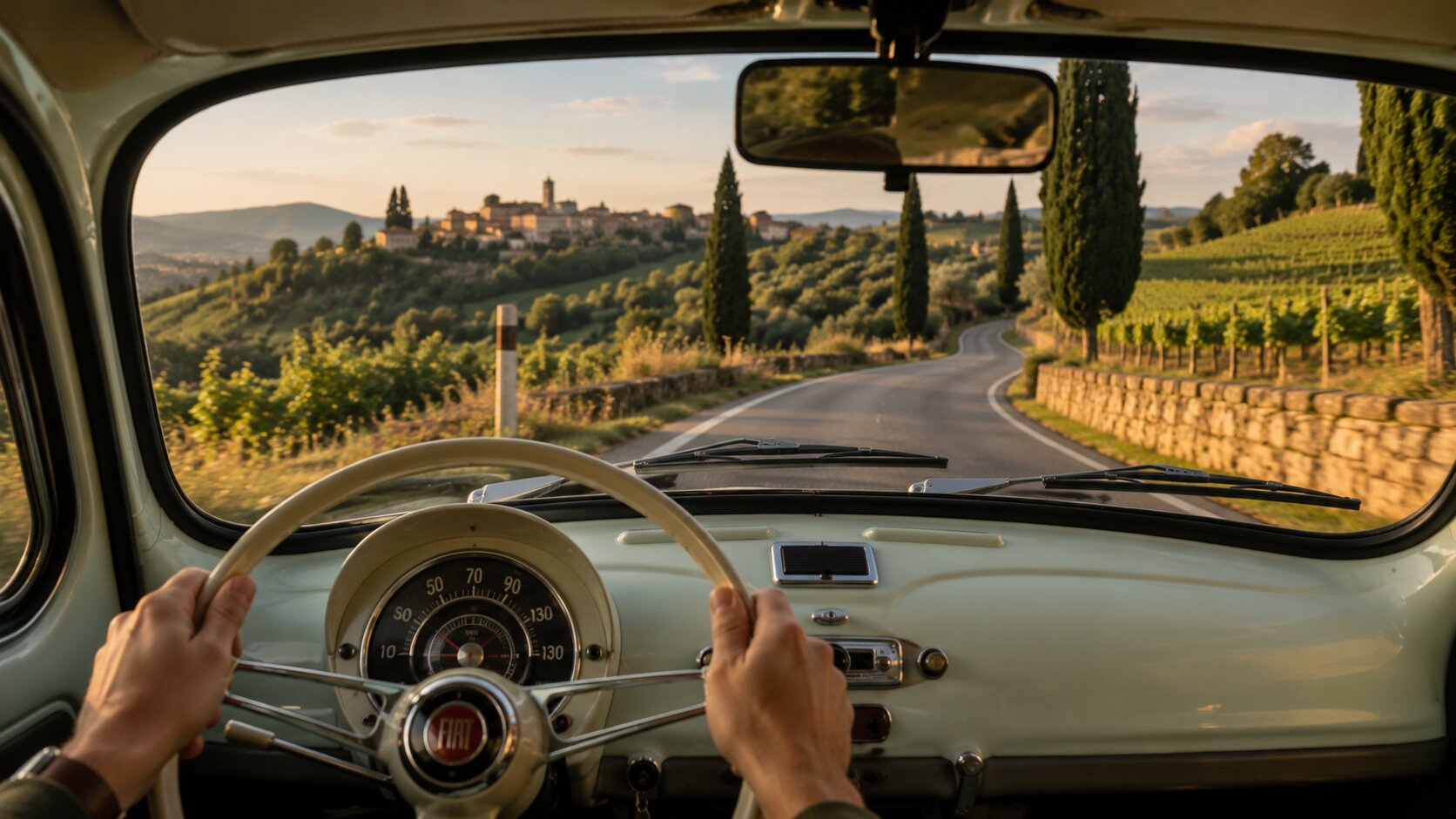
In the hills around Florence, the road rarely runs straight for long. It bends around an olive grove, climbs past a farmhouse, then opens onto a view of the valley below. A modern car smooths out these transitions. A Fiat 500 doesn't let you ignore them. Its steering has no power assist, and its four-speed gearbox isn't synchronized. Both demand a bit of attention on every curve. Power steering and automatic transmissions were built to eliminate exactly that kind of engagement — a Fiat 500 restores it.
Every gear change and every curve becomes part of the day. Neither is just a means of getting from one stop to the next. This is what separates a Fiat 500 tour from a standard scenic drive. The car keeps the road itself at the center of the experience. It doesn't treat the road as something to get through as quickly as possible.
How a Fiat 500 Tour Differs from Renting a Car
Renting a car in Tuscany solves a logistics problem. It gets you from a hotel to a winery, from one town to the next, as efficiently as possible. That's a perfectly reasonable way to travel. But it treats the car as a tool, rather than part of the experience. A rental agency will hand you a set of keys and a GPS unit, and from that point on, you're on your own for parking, fuel, and navigating unfamiliar road signs in Italian.
A vintage Fiat 500 tour flips that priority. The goal isn't covering the most ground in a day. It's enjoying the act of driving itself. The roads get chosen for how they feel, not for how quickly they connect two points. Navigation, unfamiliar signage, and parking in a tight medieval town center all become someone else's problem instead of yours.
This suits couples and small groups of friends well. It also suits travelers who've already covered Florence's major sights and want a different side of the region without straying far from the city. Instead of stacking up a long list of stops, the day centers on the drive itself. The curves, the views that open up gradually, the particular sound of a two-cylinder engine on a quiet country road — these carry the experience, not a checklist. It's a different kind of souvenir than a photo at a famous viewpoint. It's a memory built from movement rather than a single fixed image.
Why a Fiat 500 Tour from Florence Is Worth It
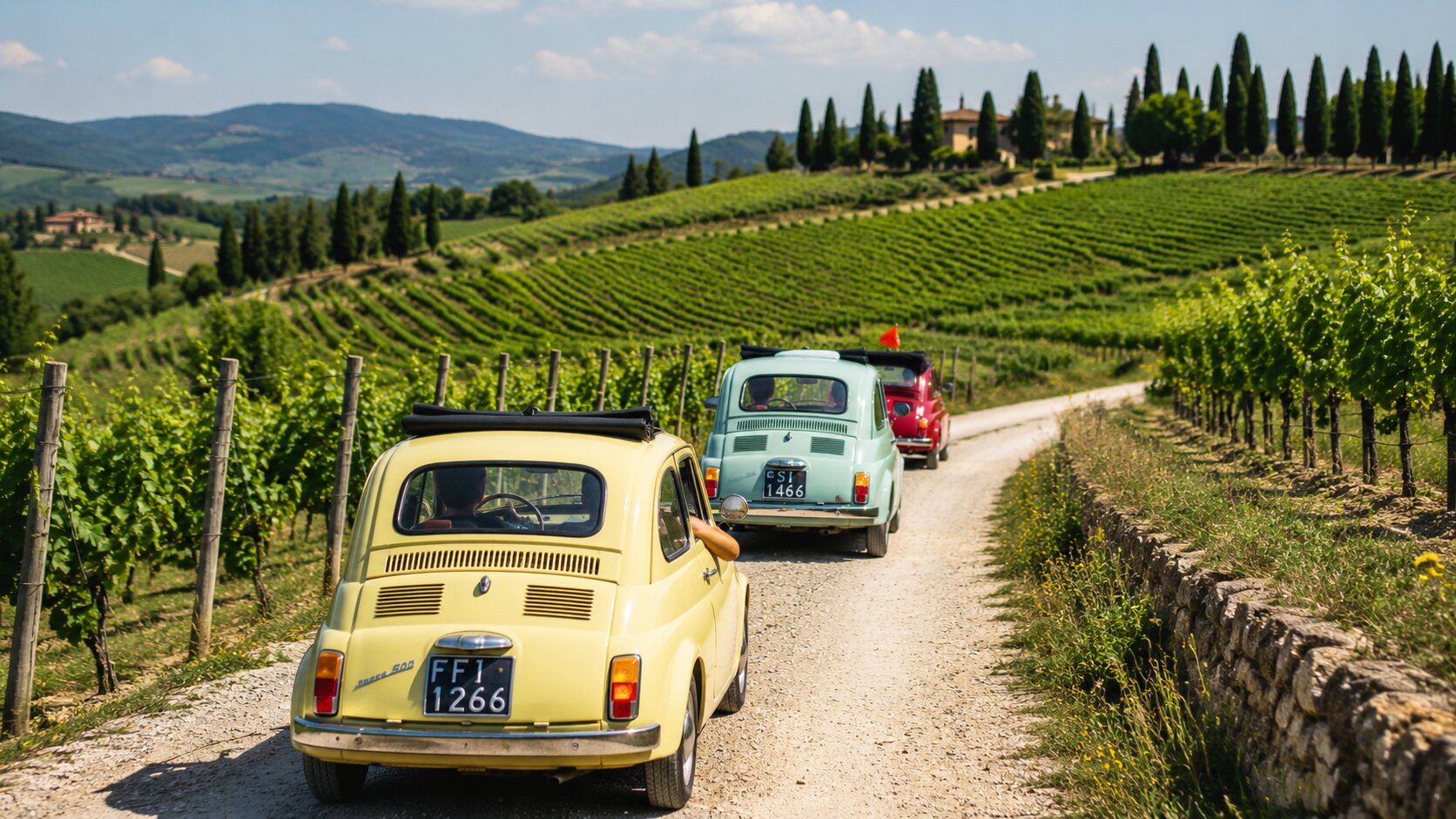
A Fiat 500 tour doesn't depend on reaching one specific monument or town. Its value comes from how the day unfolds, from the moment Florence's stone streets give way to open hillside. Florence supplies the historical backdrop: nine centuries of it, if you count from San Miniato al Monte's foundation to today. The countryside supplies the openness and change of pace. The Fiat 500 supplies the rest. It brings a slower rhythm, a bit of nostalgia, and a closer relationship with the road than any modern car can offer.
Put those three elements together, and the result feels distinctly Tuscan. It also feels distinctly Italian, in a way few other experiences manage at once. Some travelers want more than a view of the countryside from behind glass. For them, a vintage Fiat 500 turns the drive itself into part of what they'll remember about Florence.