In this post
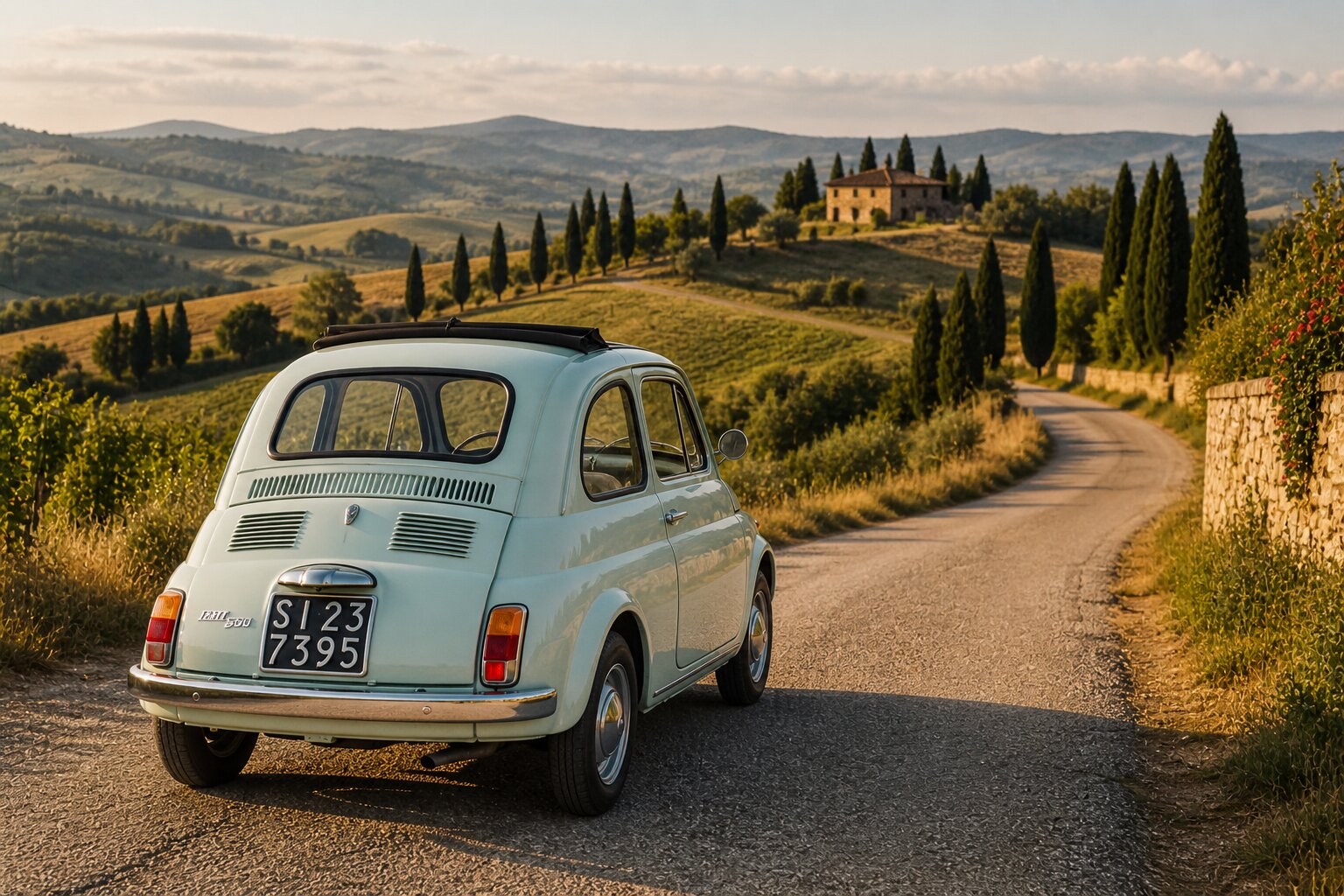
Few objects capture the spirit of Italy as instantly as the Fiat 500. The history of the Fiat 500 reflects a turning point, when design, mobility, and everyday life began to evolve together across the country.
Small, practical, and immediately recognizable, it became part of daily routines rather than a symbol reserved for a few. What appears simple today once represented a profound shift in how people moved, traveled, and experienced their surroundings.
To understand its significance, it helps to look beyond the car itself and into the context that shaped it a period defined by reconstruction, ambition, and a growing desire for independence.
Post-War Italy and the Need for Mobility
In the years following World War II, Italy was rebuilding. Cities were expanding, industries were recovering, and daily life was becoming more dynamic.
Mobility, however, remained limited. Owning a car was still out of reach for many families, and transportation options were often restrictive.
What was needed was something different: a vehicle that could be affordable, compact, and adaptable to both urban streets and rural roads.
Fiat responded to this need by rethinking what a car could be.
The Origins of the Fiat 500
The history of the Fiat 500 begins in 1957, when the model was introduced with a clear purpose: to make personal mobility accessible to a much wider population.
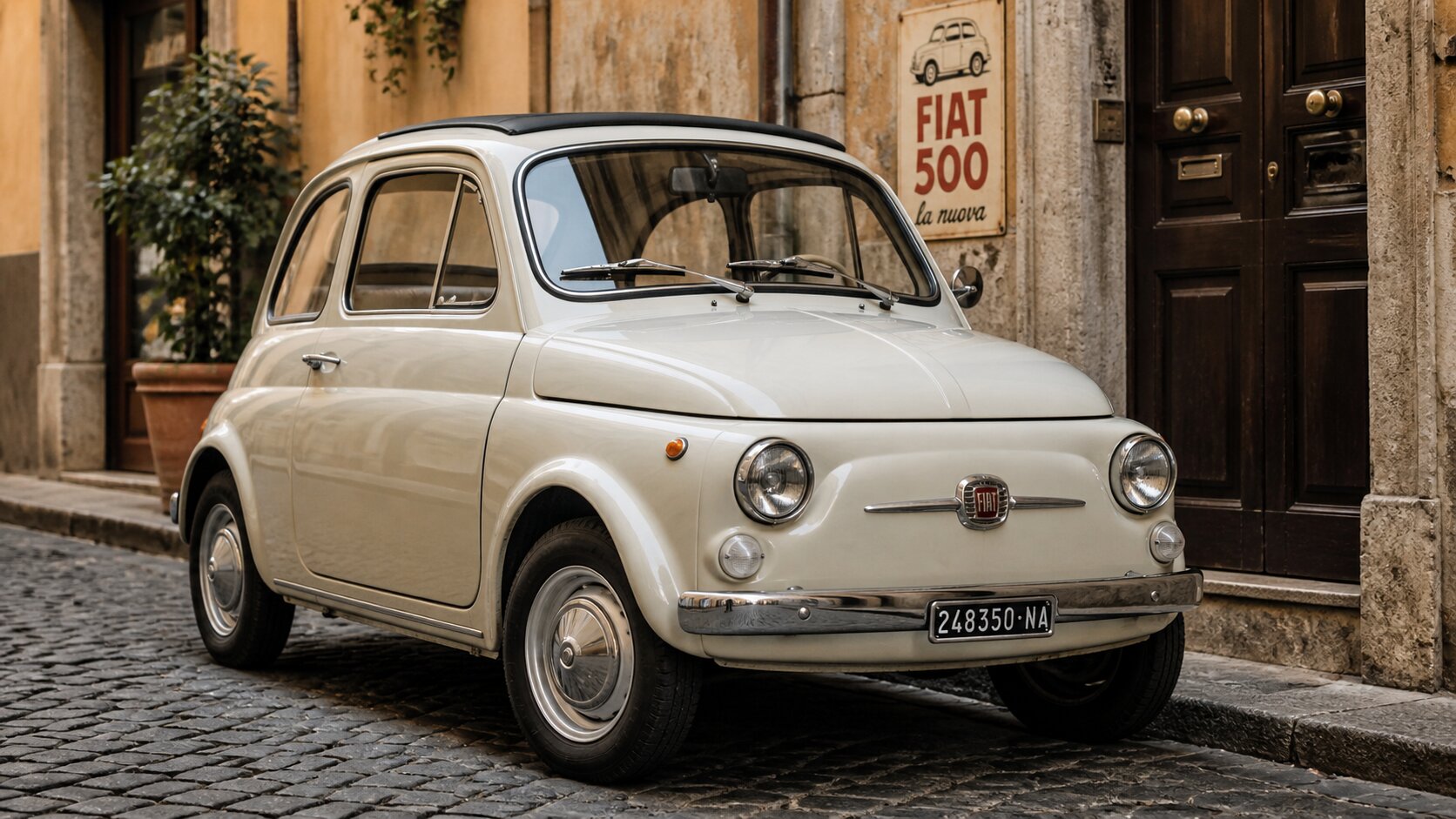
Designed by Dante Giacosa, the car combined simplicity with functionality. Its compact structure, lightweight build, and efficient engine made it unlike most vehicles of its time.
What might have seemed like a limitation quickly became an advantage.
The Fiat 500 moved easily through narrow streets, required minimal maintenance, and adapted naturally to different environments. From dense city centers to open countryside, it felt at home everywhere.
A Car That Reshaped Everyday Life
As the Fiat 500 spread across Italy, its impact extended far beyond transportation.
For many families, it marked the first real sense of independence. Travel became more flexible. Daily routines expanded. Weekends could include movement beyond the immediate neighborhood.
Distances began to feel shorter, not physically, but in terms of possibility.
Even today, the history of the Fiat 500 continues to influence how people experience Italy not just as a destination, but as a landscape meant to be explored.
Design That Became Identity
Part of the Fiat 500’s lasting appeal lies in its design.
Rounded forms, minimal lines, and carefully balanced proportions gave the car a distinct personality without relying on excess. It felt approachable, almost familiar, even to those encountering it for the first time.
Over time, this clarity of design became iconic.
The silhouette remains instantly recognizable, bridging decades without losing its character.
From Practical Object to Cultural Symbol
As Italy changed, so did the meaning of the Fiat 500.
It began appearing in films, photographs, and visual representations of everyday life. Gradually, it moved beyond its original role and became part of a broader cultural narrative.
The car came to represent more than movement. It suggested a way of living informal, adaptable, and closely tied to place.
In many ways, it mirrors the essence of Italian travel itself.
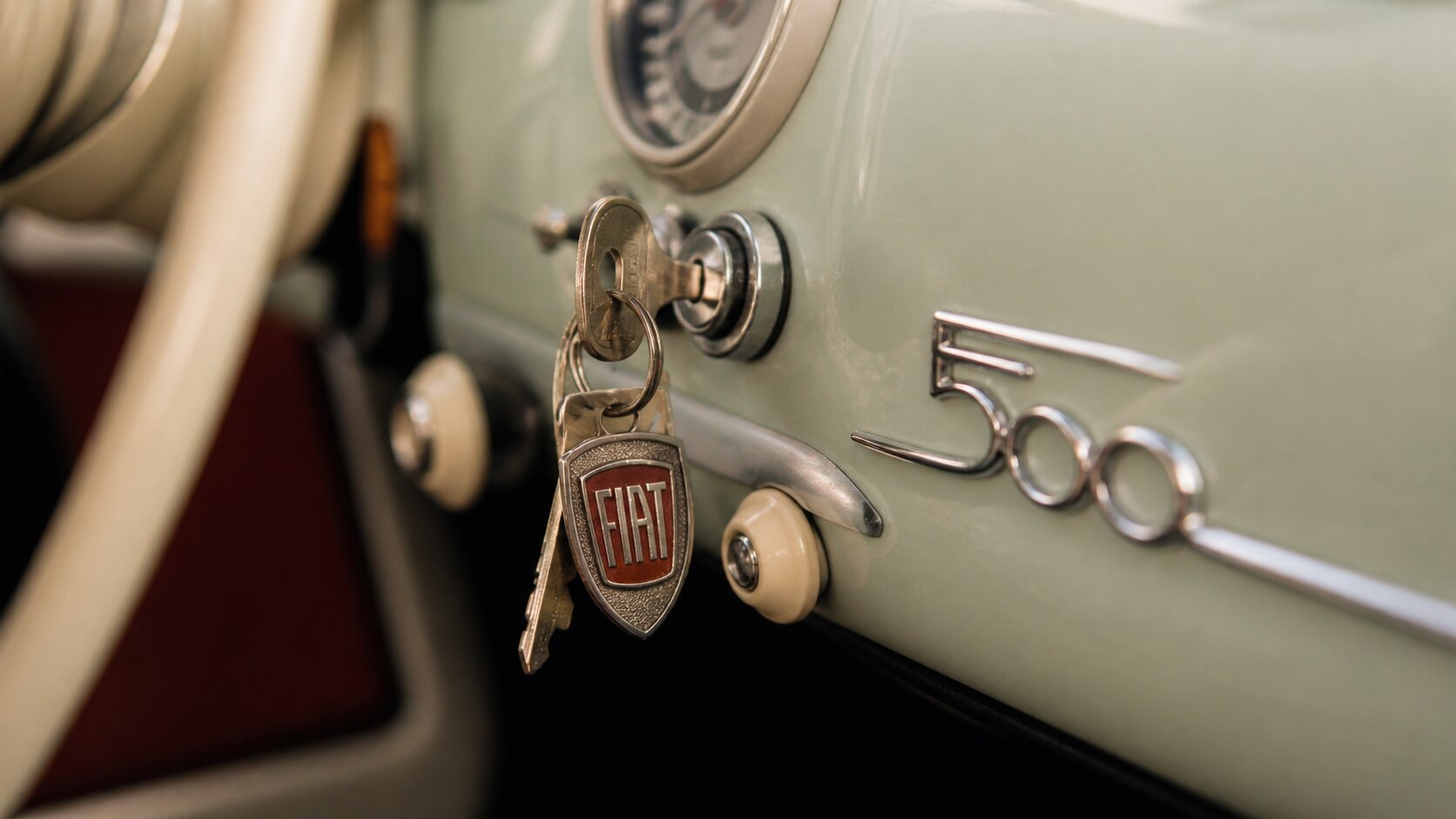
The Fiat 500 in Contemporary Italy
Today, the original Fiat 500 is no longer a common mode of daily transportation. Yet its presence remains visible and meaningful.
Restored vintage models appear across cities and countryside roads, often within curated travel experiences that reconnect the car to its original context.
Driving a Fiat 500 is not about efficiency or speed. It changes how the road is perceived.
The landscape feels closer. Movement becomes more deliberate. Even short distances gain texture and rhythm.
For a comparison between two of Italy’s most iconic driving experiences, you can explore: Fiat 500 Tours vs Vespa Tours in Tuscany.
A Slower Way to Experience Tuscany
Exploring Tuscany in a vintage Fiat 500 introduces a different pace.
The journey slows naturally. Roads become part of the experience rather than transitions between destinations. Small details light, curves, villages begin to stand out.
This approach reflects the original spirit of the car: movement not as speed, but as awareness.
For those interested in experiencing this perspective firsthand, you can explore: private vintage Fiat 500 tours from Florence with lunch.
A Legacy That Continues
The history of the Fiat 500 is not defined by engineering alone.
It is defined by how it reshaped everyday life, offering access to movement, exploration, and new ways of experiencing the world.