In this post
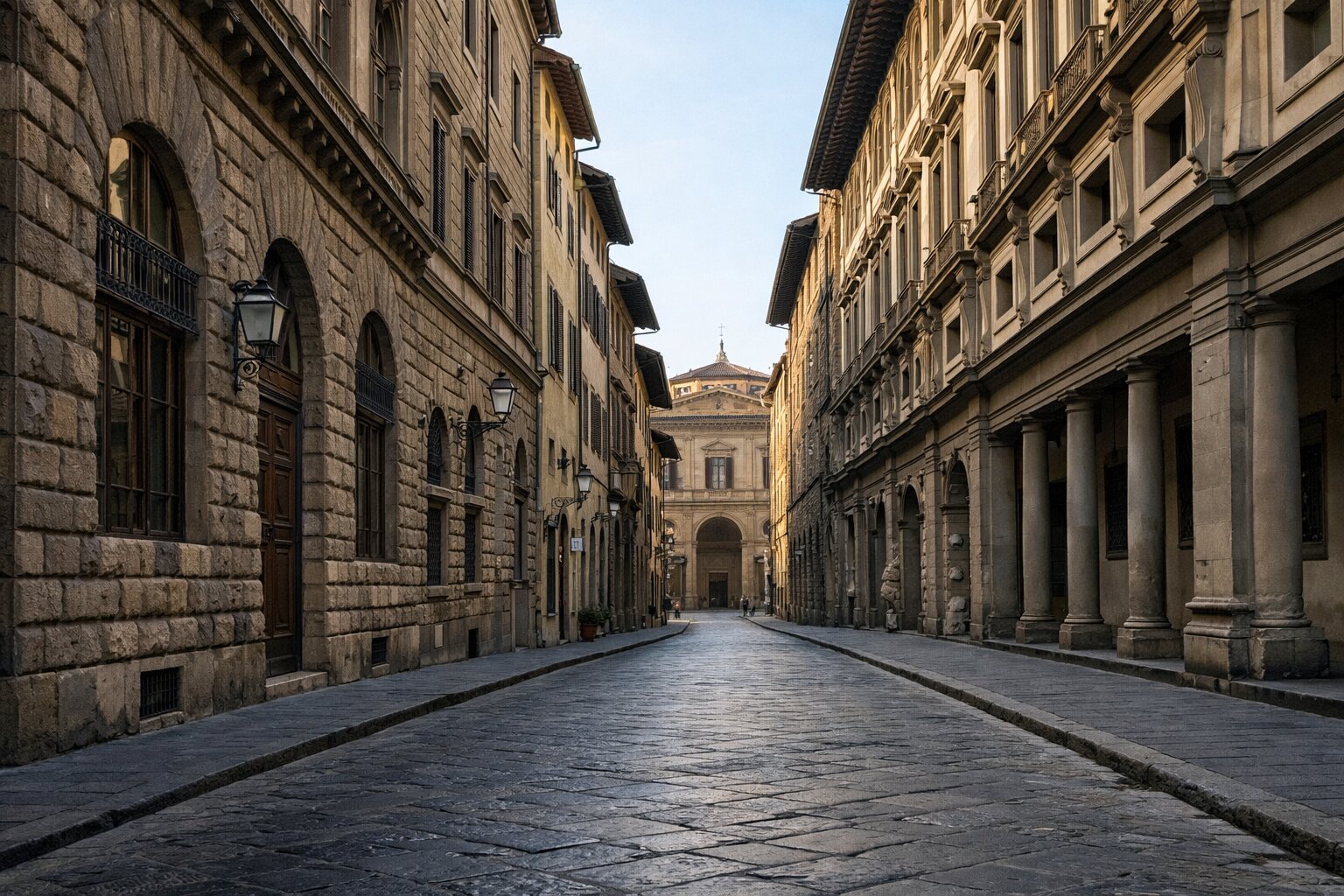
Florence gets called an open-air museum, but that framing undersells it. A museum arranges objects for viewing. Florence's historic center actually argues with itself. Medieval fortress architecture stands a few steps from Renaissance elegance. Religious buildings and civic ones compete for the same skyline. Walking it well means reading those arguments, not just photographing the buildings that are having them.
A Palace Built to Look Like a Threat
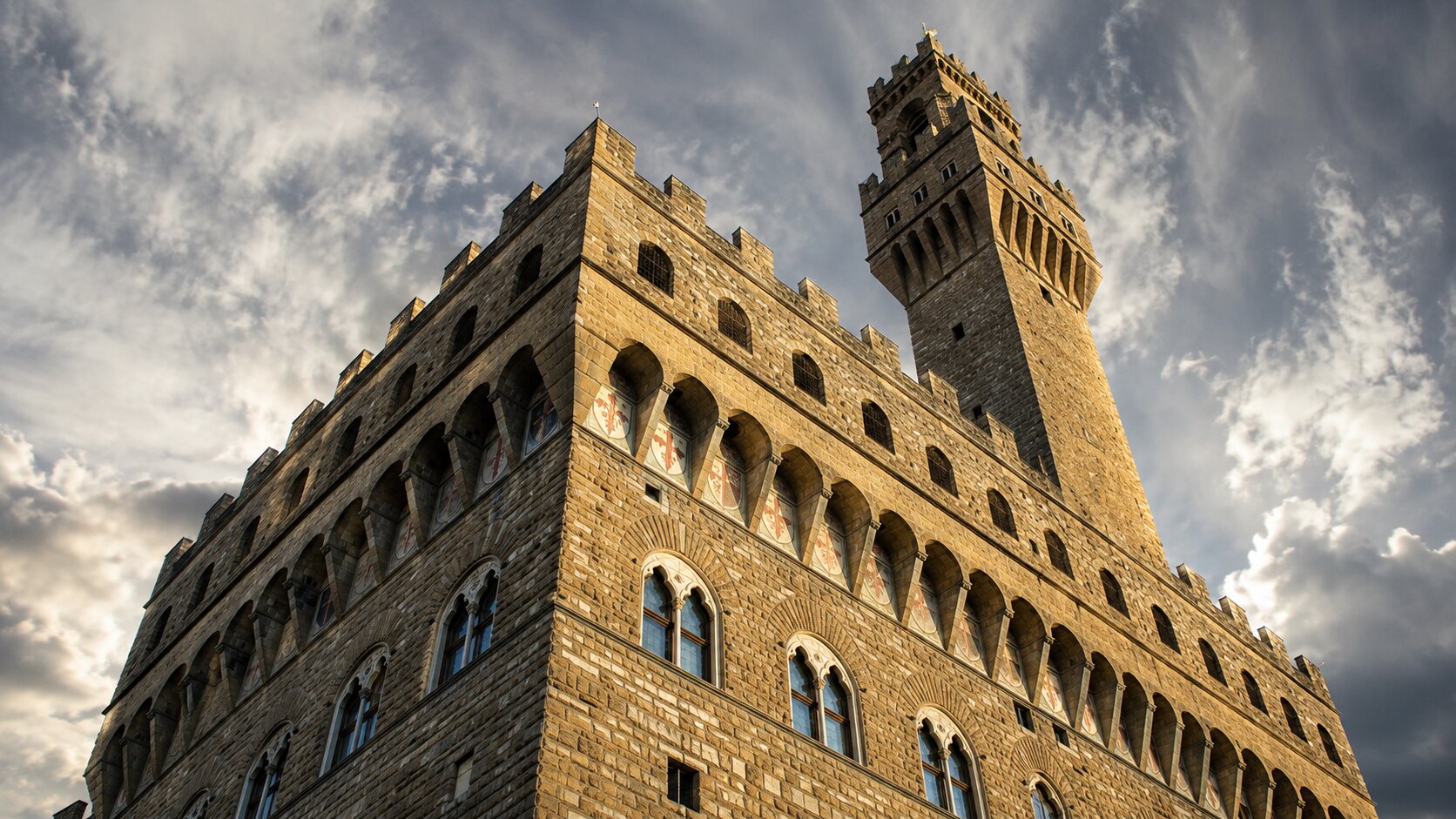
Palazzo Vecchio is the clearest example. Construction started in 1299, designed by Arnolfo di Cambio, the same architect behind the Duomo. He built it on the ruins of towers that had belonged to the Uberti family, exiled Ghibelline nobles on the losing side of Florence's medieval power struggles. The site itself was a political statement before a single wall went up. The rusticated stone, rough and heavy-looking on purpose, wasn't a style choice. It signaled fortress-level strength to anyone looking at it. Florentine factions genuinely needed to worry, back then, about who controlled which building.
Even the tower carries a scar from that history. Arnolfo incorporated an older tower, the Foraboschi family's "La Vacca," directly into his new construction. That's why the 94-meter tower doesn't sit centered on the façade the way you'd expect. The tower held two small prison cells over the centuries, and two very different Florentines passed through them: Cosimo de' Medici the Elder, briefly jailed there in 1433 just before his exile to Venice, and the preacher Girolamo Savonarola, imprisoned there in 1498 shortly before his execution in the piazza below. Same tower, two men on opposite ends of Florence's political and religious history, sixty-five years apart.
Across the square, the Loggia dei Lanzi holds Cellini's bronze Perseus, gripping Medusa's severed head, and Giambologna's Rape of the Sabine Women. These sculptures turned an open-air ceremonial space into one of the densest concentrations of Renaissance sculpture anywhere outside a museum.
A Grain Market That Became a Sculpture Gallery
A few streets over, Orsanmichele tells a completely different story with the same raw material: guild pride. It started in the 1330s as a covered loggia for the city's grain market, nothing more. The Black Death swept through in 1348. A miracle-working fresco of the Madonna on one of the building's support pillars drew enough devotion afterward that the whole structure got walled in and converted into a church.
Its exterior tells the real story, though. Florence's powerful trade guilds each received a niche on the building's four sides. Each one was meant to hold a statue of the guild's patron saint. Most guilds dragged their feet for years. In 1406, the city passed a decree forcing them to fill their niche within ten years, or lose the rights to it entirely. What followed was a burst of commissions to Donatello, Ghiberti, and Verrocchio. A former grain depot turned into an open catalog of who could afford the best sculptor in Florence.
The building still functions on two levels today. The ground floor holds the original church space, with a marble tabernacle by Andrea Orcagna sheltering the miracle fresco that started the whole transformation. The upper floors, once used as a civic grain store and later a Medici archive, now hold a small museum with the original guild statues, moved indoors over the years to protect them from weather and pollution. What stands outside in the niches today are careful copies.
Reading the City Instead of Photographing It
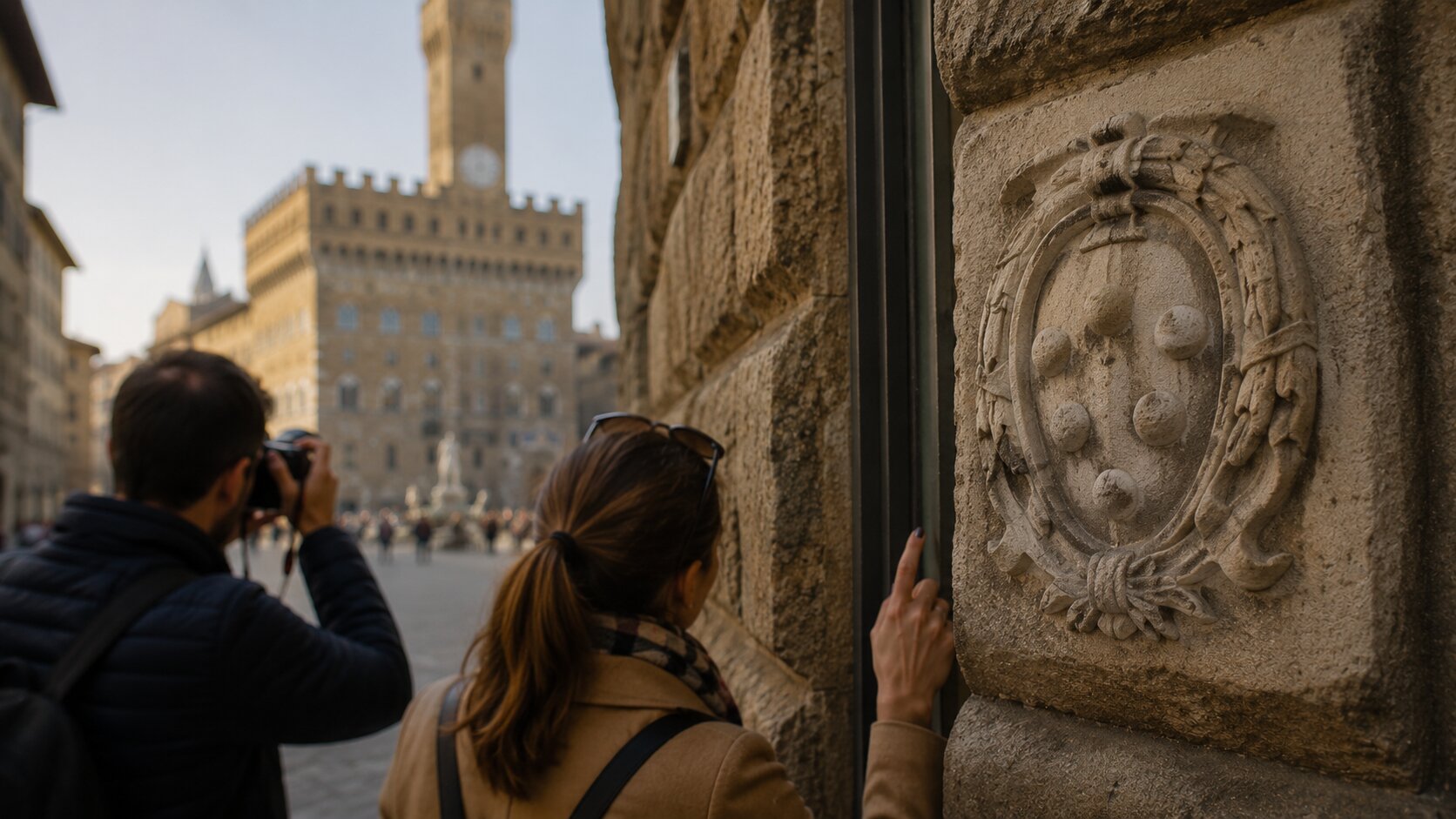
Details like these sit everywhere in the historic center, mostly unnoticed. Medici family symbols worked discreetly into façades. Narrow medieval streets suddenly open into monumental piazzas. Medieval planners used that contrast deliberately, to make the squares feel even grander by comparison. None of it announces itself. It rewards someone who already knows where to look.
Our guide to private Florence tours with local guides covers how that kind of context changes what a walk through the city actually gives you. Beyond what's visible at a glance.
Why Walking Pace Actually Matters Here
None of this comes across from a moving vehicle. The scale of these streets. The way buildings crowd close together. The gradual reveal of a piazza as you round a corner. All of it depends on moving at human speed. Rush through and the city reads as a sequence of Instagram backdrops. Slow down, and it reads as what it actually is. Centuries of political rivalry, guild competition, and religious ambition, all still visible in the stone if you know what you're looking at.
A private pace makes that possible in a way a fixed group schedule rarely does. There's room to stand in front of the Foraboschi tower's awkward angle a few extra minutes. Or duck into Orsanmichele's ground floor, instead of walking past it as background scenery.
Florence as Introduction and as Return
For a first visit, walking the historic center this way builds an actual framework. Not just a list of landmarks checked off. For anyone returning to Florence after an earlier trip, the same walk usually surfaces details that went unnoticed the first time. The asymmetric tower. The guild niches. The rustication that once meant something more specific than "old building."
Either way, the historic center stops reading as a sequence of famous stops. It starts reading as what it's always been. A city that spent centuries building its arguments directly into stone.
Ready to see the historic center this way? Explore our Florence walking tours and discover the city with a licensed local guide.