In this post
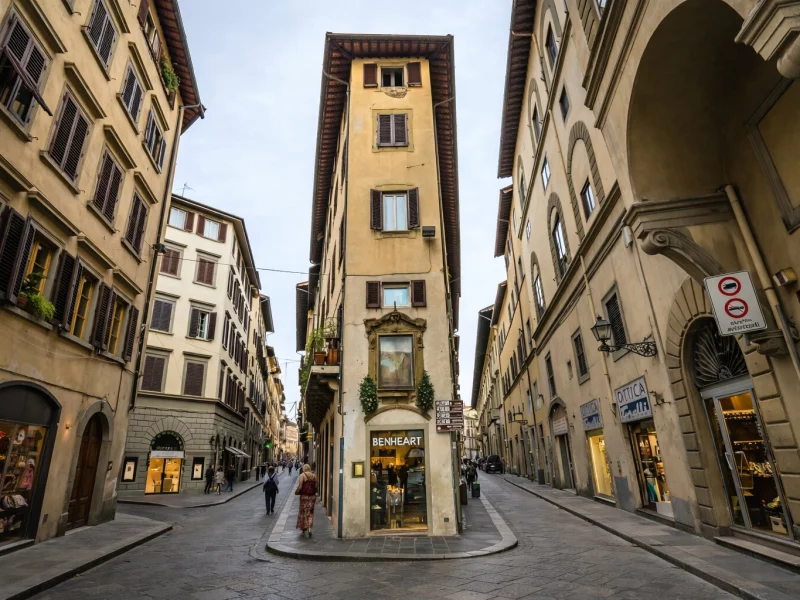
Most visitors sightsee Florence as a list: Duomo, Uffizi, Ponte Vecchio, check, check, check. That approach misses something the street grid itself is trying to tell you. This city was built in layers, and those layers are still legible if you know where to look.
More Than a List of Landmarks
Treating Florence as a set of isolated highlights flattens what's actually here. The Duomo and the Uffizi aren't just individually famous buildings. They sit inside a structure shaped by two thousand years of decisions. Where power, commerce, and religion should physically stand in relation to each other.
A City Built on a Roman Grid
Julius Caesar founded Florence in 59 BC as a colony for retired legionaries. He laid it out on the standard Roman military grid: a cardo running north-south, a decumanus running east-west, meeting at a central forum. That grid never actually disappeared. Via Roma and Via Calimala still trace the old cardo. Via degli Strozzi, Via degli Speziali, and Via del Corso still trace the decumanus. They meet at Piazza della Repubblica, which sits exactly where the Roman forum stood two thousand years ago.
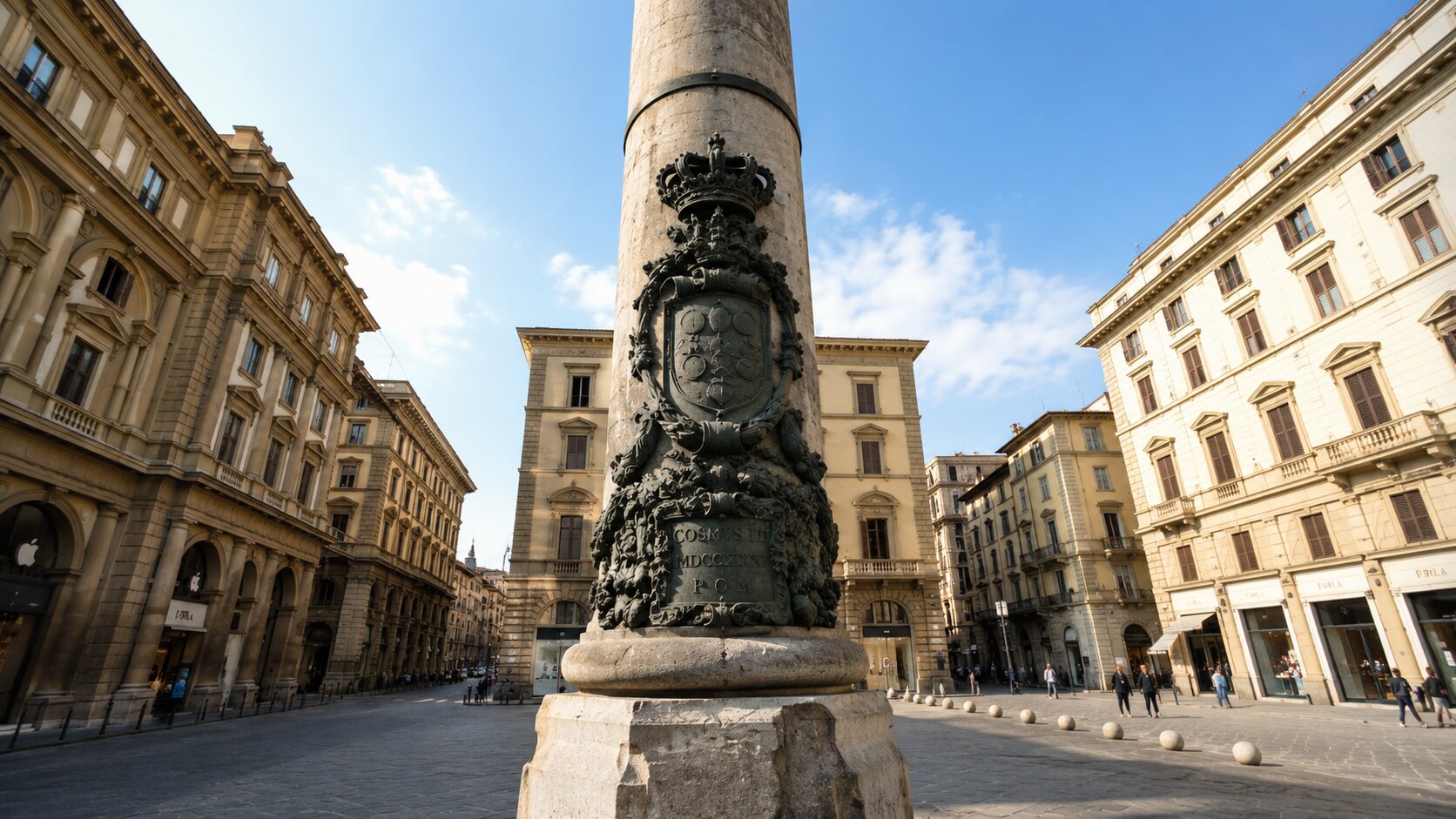
A column erected in 1431, the Colonna dell'Abbondanza, marks that exact intersection point today. Walk the main shopping streets of central Florence, and you're retracing roads laid down under the Caesars. That's true whether or not anything above ground still looks Roman.
Traces of that first city surface elsewhere too, usually a few steps below street level. A Roman theater sits beneath Palazzo Vecchio. Thermal baths and the remains of a textile workshop have turned up under Piazza della Signoria. None of it is visible from the surface, but it's still there, holding up everything that came after it.
A City That Cut Its Own Skyline Down
Medieval Florence looked almost nothing like it does now. By the 13th century, roughly 150 to 160 fortified tower houses punctured the skyline. Some reached 70 meters, built by rival noble families locked in a constant competition over height and visibility. Each family named its tower after itself, which is why some of these buildings still carry names like the Donati tower or the Ricci tower today. The taller your tower stood, the more clearly you'd announced your family's standing to the rest of the city. Then, in 1251, the new merchant government known as the Primo Popolo stepped in. A new law forced every tower in the city down to a maximum of 29 meters. The stone from the demolished upper floors got reused to build houses across the river in the Oltrarno.
Only a handful of towers survived close to their original form. Among them, the Torre della Castagna near Piazza San Martino. Everything else either got cropped or absorbed into later buildings. That's part of why civic and religious spaces in Florence feel so tightly wound together today. The medieval skyline of individual family fortresses got deliberately leveled. What opened up got filled instead with public piazzas and civic architecture. Our guide to a private walking tour of Florence's historic center covers more of what's still visible from that transition. If you know where to look for it.
The Role of Movement
None of this reads from a car window or a bus tour. The streets are too narrow. The transitions between Roman grid, medieval alley, and Renaissance piazza are too specific for any of it to register at speed. Walking isn't just the pleasant option here. It's the only way the layering actually becomes visible. The logic of the city reveals itself gradually, through repetition and contrast, not all at once.
When Sightseeing Slows Down
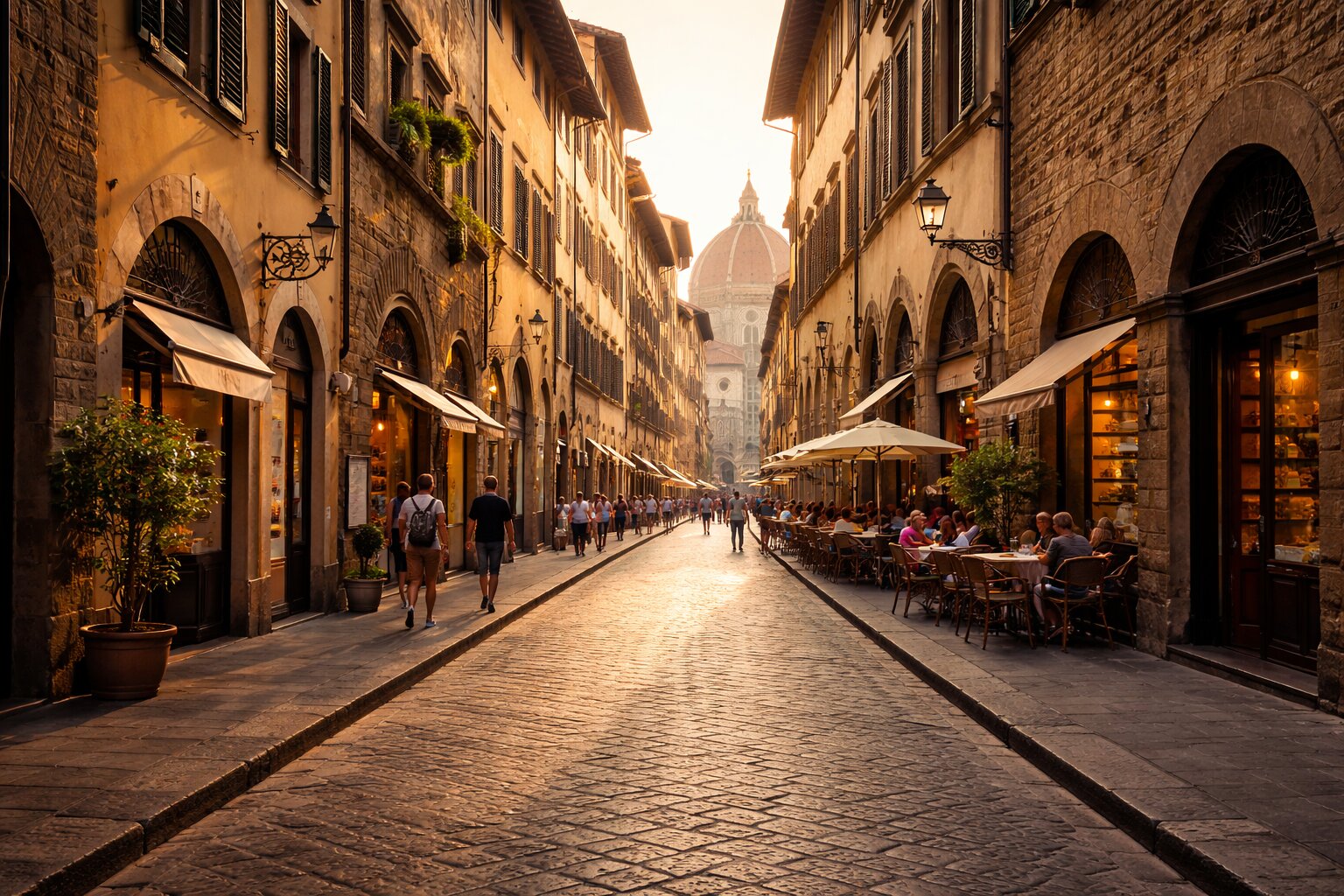
Usually a few hours in, the urge to "see everything" starts to fade on its own. That's when sightseeing actually gets interesting. Instead of moving from landmark to landmark, you start noticing how the spaces connect. A street that seemed random turns out to run in a dead straight line. It's still following a two-thousand-year-old Roman axis. A square that felt oddly formal makes more sense once you know why. A fortress tower used to stand there, before 1251 flattened it. The city stops feeling like a museum and starts feeling like a document you can actually read.
A Different Way to Experience Florence
Sightseeing in Florence doesn't need to be exhaustive to be worthwhile. Often the opposite works better. Fewer stops, each one given real attention, tend to leave a stronger impression than a long list rushed through in a single afternoon. The city rewards travelers who slow down enough to notice the Roman grid under their feet. The flattened towers overhead. Not just the famous names in between.
None of this requires specialist knowledge going in. It just requires the willingness to stop occasionally and ask why a street runs exactly straight, or why a square feels a certain shape. Most of the answers turn out to be sitting a few centuries deep, waiting for someone to actually ask the question.
Want to see these layers for yourself? Explore our Florence walking tours. Discover the city with a guide who reads it like a document, not a checklist.