In this post
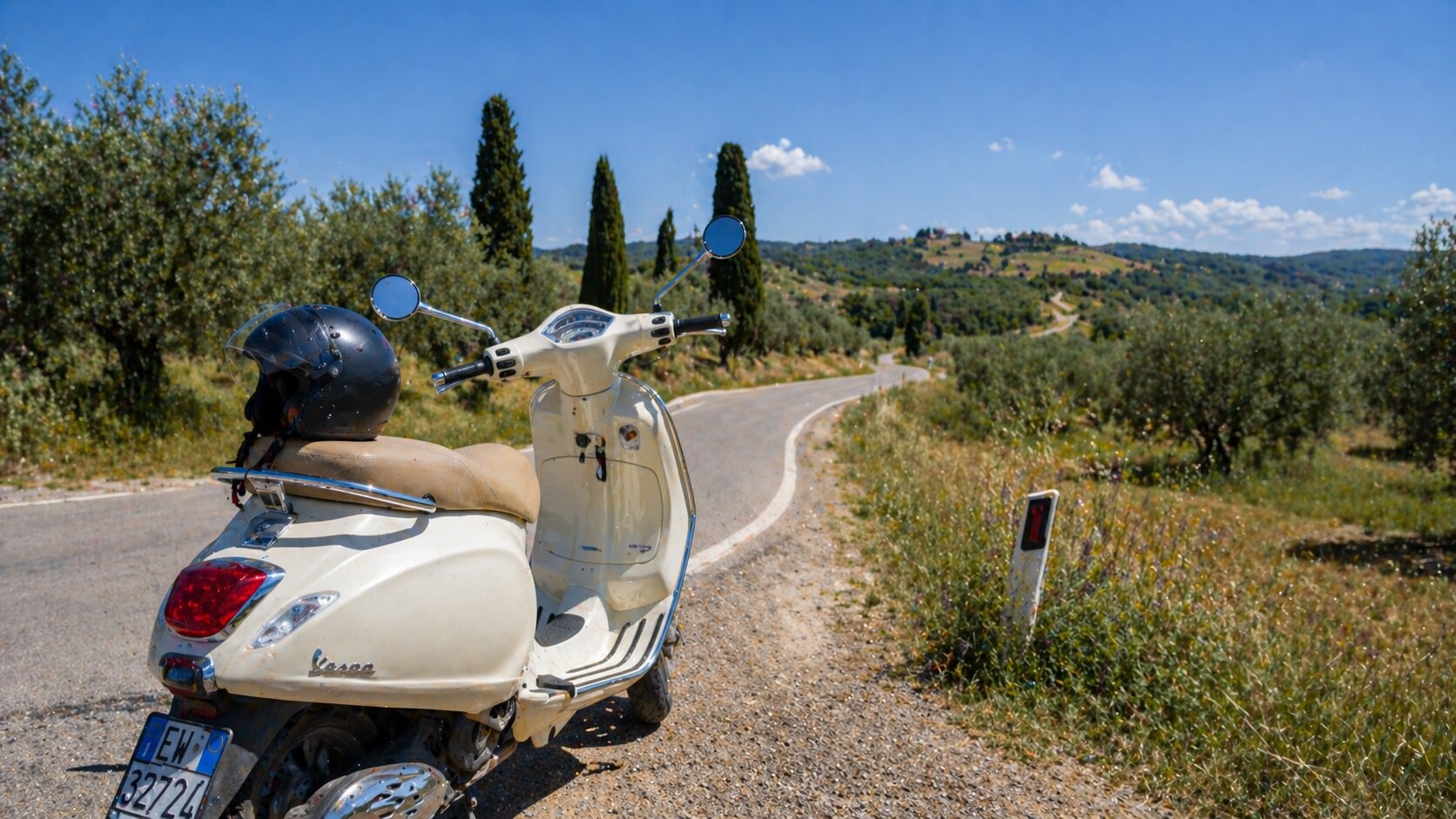
Riding a Vespa through the Tuscan countryside is often imagined as effortless: quiet roads, rolling hills, and a sense of freedom that unfolds naturally with each turn.
Yet behind this simplicity lies something less visible but equally important: awareness.
Understanding how to approach a Vespa tour safely does not diminish the experience. On the contrary, it allows it to unfold with greater confidence, clarity, and enjoyment.
Confidence Comes Before Movement
A Vespa is intuitive, but it is not automatic.
Before focusing on the route, it is essential to feel comfortable with the vehicle itself. Balance, braking, and acceleration should feel natural, not reactive.
This does not require advanced experience. However, it does require a moment of familiarity.
In well-structured tours, this phase is never rushed. It becomes part of the experience rather than a preliminary step.
Reading the Road, Not Just Following It
Tuscan roads are rarely linear.
They curve, rise, narrow, and open unexpectedly. What makes them beautiful also requires attention. Visibility changes. Surfaces vary. The landscape invites distraction.
For this reason, riding safely is less about speed and more about awareness.
Looking ahead, anticipating turns, and adapting naturally to the rhythm of the road transforms riding into something fluid rather than mechanical.
The Importance of Pace
Speed is rarely the defining element of a Vespa experience.
A slower pace allows more control, more time to react, and more space to appreciate the surroundings.
In this way, safety and enjoyment begin to align.
The experience becomes less about reaching a destination and more about moving through the landscape with intention.
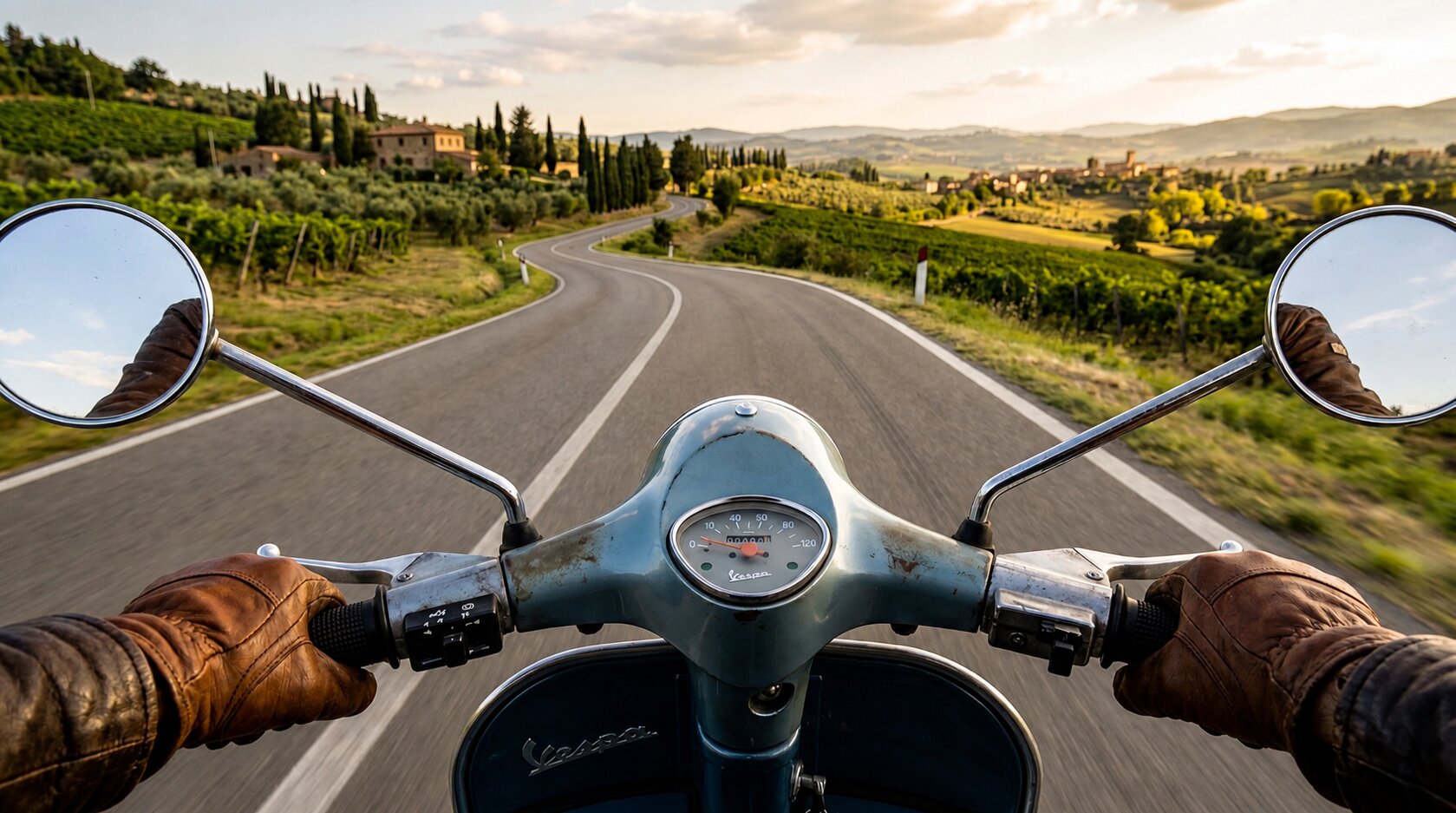
Equipment and Preparation
Proper equipment plays a quiet but essential role.
A well-fitted helmet, appropriate footwear, and comfortable clothing contribute to stability and focus. These elements are often overlooked, yet they influence how confidently you move.
Preparation, in this context, is not excessive. It is simply thoughtful.
Riding Alone vs Riding with Guidance
One of the most significant differences in Vespa experiences lies in how the route is navigated.
Riding independently can feel appealing. It offers autonomy and flexibility. However, it also requires constant decision-making: directions, road conditions, timing.
Guided experiences introduce a different dynamic.
The route is already understood. The pace is managed. The focus shifts away from logistics and toward the experience itself.
In this way, attention remains where it matters most: on the road, on the landscape, and on the moment.
For a closer look at how these experiences are structured, this perspective explores it in more detail: Private Vespa Tours in Tuscany.
Awareness Over Control
Safety on a Vespa is not defined by strict control, but by awareness.
Understanding your surroundings, your limits, and the rhythm of the road creates a sense of balance. Decisions become more intuitive. Movements feel more natural.
This is where confidence begins to emerge.
When Safety Becomes Part of the Experience
At a certain point, safety is no longer something you think about explicitly.
It becomes embedded in how you ride, how you observe, and how you respond to the environment.
The experience opens up.
The landscape feels closer. The movement feels smoother. The journey becomes less about managing risk and more about engaging with the surroundings.
Understanding safety, in this sense, is not a limitation.
It is what allows the experience to feel effortless.