In this post
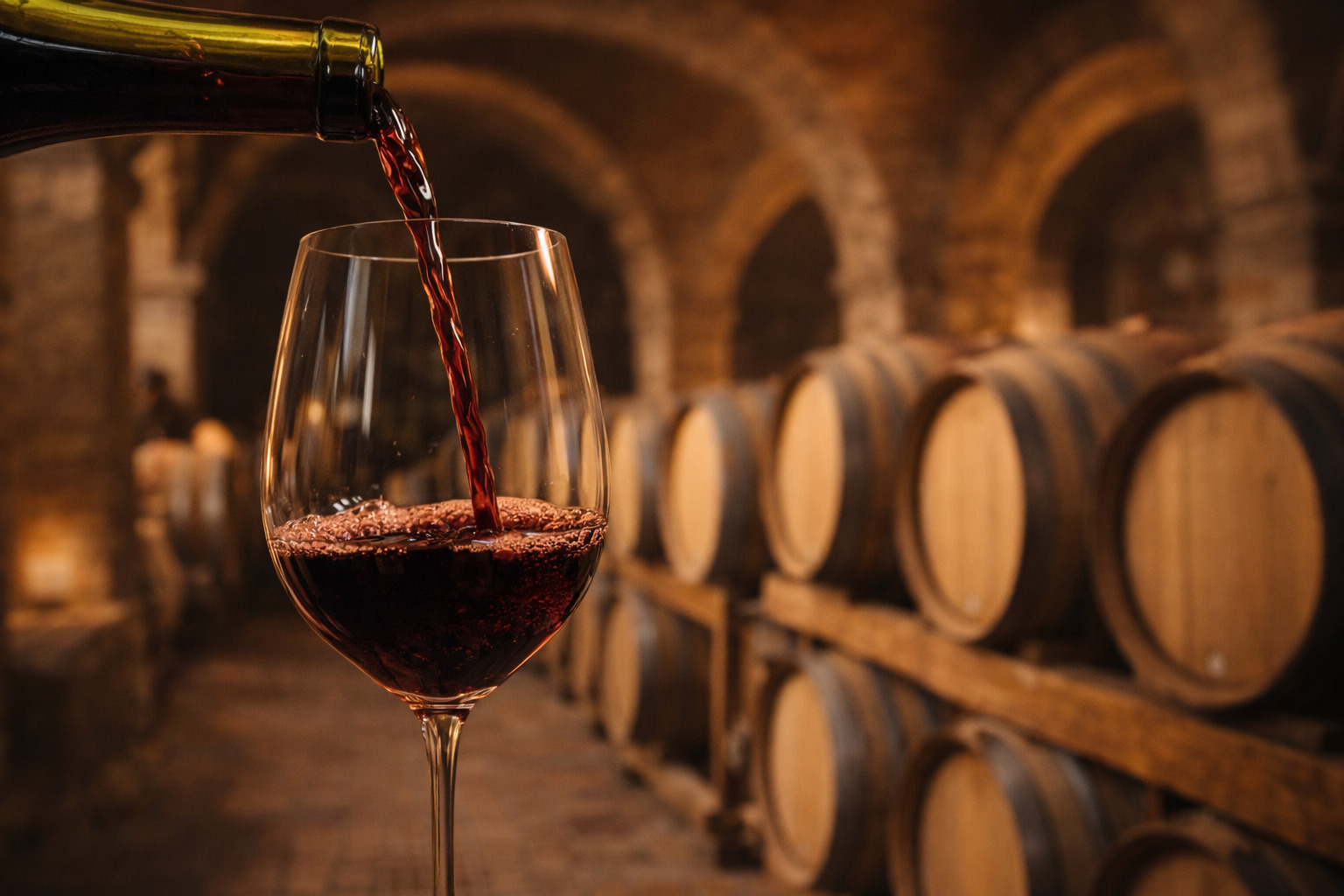
Chianti shows up on wine lists everywhere, often before anyone stops to ask what actually makes it Chianti. The short answer involves one grape and one stretch of hillside between Florence and Siena. It also involves about three centuries of rules written to protect both.
The Role of Sangiovese
Sangiovese sits at the center of every Chianti. Its name likely comes from the Latin sanguis Jovis, "blood of Jove." Wine historians still argue over whether that's the real origin or just a good story attached after the fact. A 2004 DNA study at Italy's Istituto Agrario di San Michele all'Adige traced its actual parentage instead. Two older varieties, Ciliegiolo and the nearly extinct Calabrese Montenuovo, turned out to be its true ancestors.
Whatever the name's true origin, the grape itself explains most of what Chianti tastes like. Sangiovese ripens late. It holds onto sharp acidity even through Tuscany's hot summers. And it rarely builds the heavy tannins you'd find in a Cabernet or Syrah. That combination produces a wine built for the table rather than sipping alone. Bright red cherry and dried herb, carried by acidity rather than sheer weight.
A Landscape That Shapes the Wine
Chianti isn't really one place. It's a stretch of hills between Florence and Siena, and the terrain shifts constantly across it. Two soil types dominate: galestro, a crumbly, limestone-rich shale, and alberese, a denser clay-limestone. Vineyards in the historic core sit anywhere between 250 and 600 meters above sea level. That swing in altitude alone can shift a wine's whole character.
A vineyard on one hillside might produce something firm and structured. Move a few kilometers over, onto different soil or a gentler slope, and the wine turns softer, more immediate. That variation isn't a flaw in the system. It's the whole point of treating Chianti as a place rather than a formula.
Climate plays its part too. The hills sit far enough inland to get real temperature swings between day and night, especially in late summer as the grapes ripen. Those swings help the fruit hold onto acidity even as sugar levels climb, which is a big part of why Chianti rarely tastes flat or overripe, even in particularly hot vintages.
Chianti and Chianti Classico
The confusion between Chianti and Chianti Classico is common, and understandable. The two designations share a name and a history, but not the same rules. The broader Chianti zone stretches across a much wider area. It only requires 70% Sangiovese, and up to 10% white grapes are still permitted in most subzones. Chianti Classico, the historic core between Florence and Siena, follows stricter rules. It needs a minimum of 80% Sangiovese, and no white grapes at all since 2000.
Both designations trace back to the same starting point. Grand Duke Cosimo III de' Medici issued an edict in 1716, delimiting the original Chianti production zone — one of the earliest legally protected wine regions anywhere. The entire region received DOC status in 1967. It was elevated to DOCG, Italy's highest quality classification, in 1984. But Chianti Classico didn't fully separate into its own independent DOCG until 1996. Producers had spent decades arguing that the historic core deserved its own identity, distinct from the wider zone surrounding it.
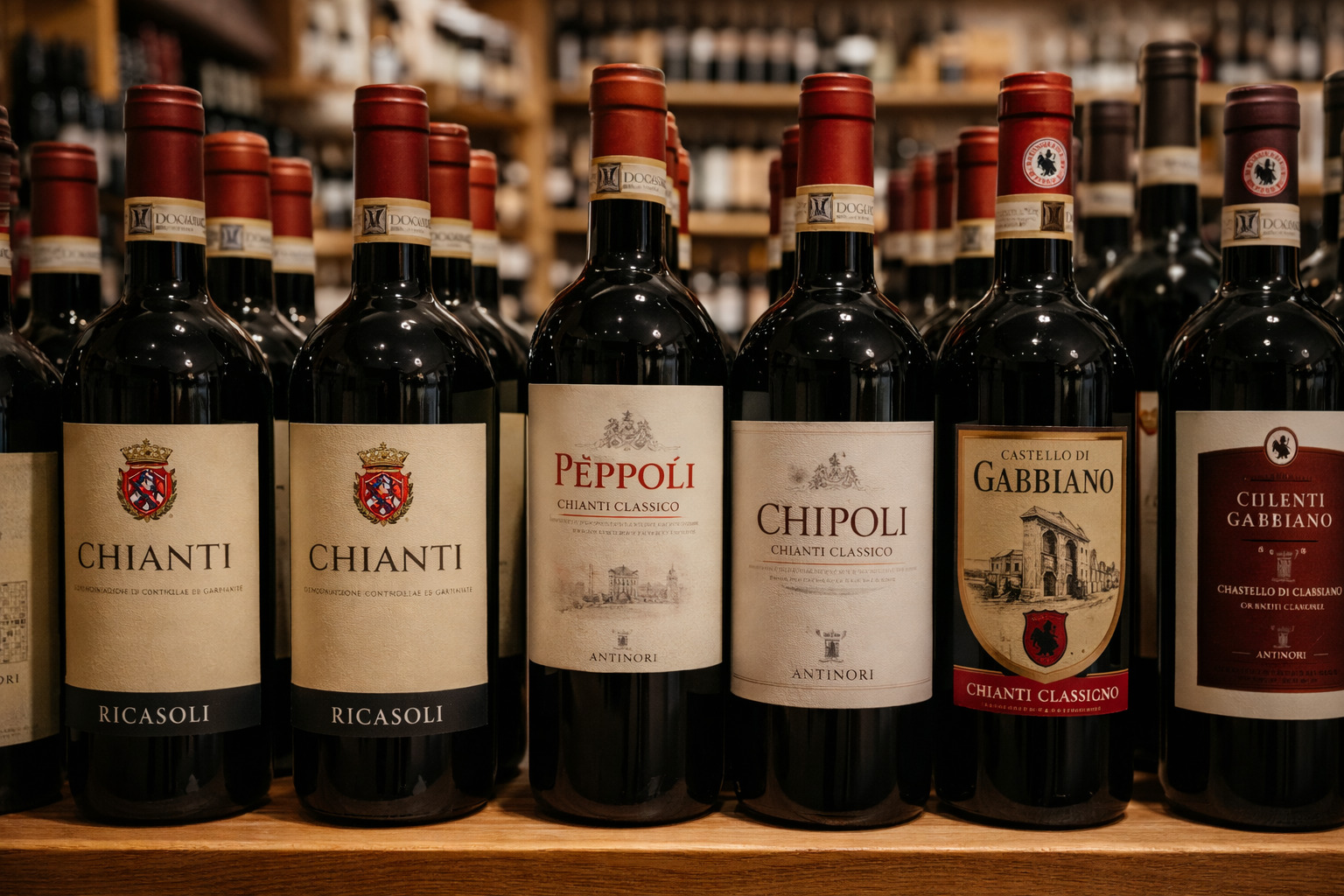
Bottles from that historic zone carry the Gallo Nero, a black rooster on a gold shield. The producers' consortium, founded in Radda in 1924, adopted it as Italy's first wine consortium trademark. Our guide to how to choose a winery in Chianti looks at how these distinctions play out winery by winery, and what separates a small family estate from a larger commercial producer.
Balance Over Power
What makes Chianti distinctive isn't any single trait. It's the balance between several. Sangiovese's natural acidity gives the wine energy. Moderate tannins add structure without weighing it down. Fruit stays present but rarely takes over, and any oak aging tends to support the wine rather than define it.
Compare that to a grape like Cabernet Sauvignon, which builds thick, gripping tannins almost by default, or Merlot, which tends toward soft, plush fruit with little acidity to cut through it. Sangiovese sits in neither camp. It leans lighter in body than people expect from a serious Italian red, closer in some ways to a Pinot Noir than to a big-bodied Bordeaux blend, but with an edge of acidity that Pinot Noir rarely matches.
That balance is exactly why Chianti pairs so easily with food. A wine built around acidity rather than raw power cuts through rich sauces and fatty cuts of meat instead of fighting them. That's a big part of why it became the default red on so many Tuscan tables in the first place.
Tradition and Evolution
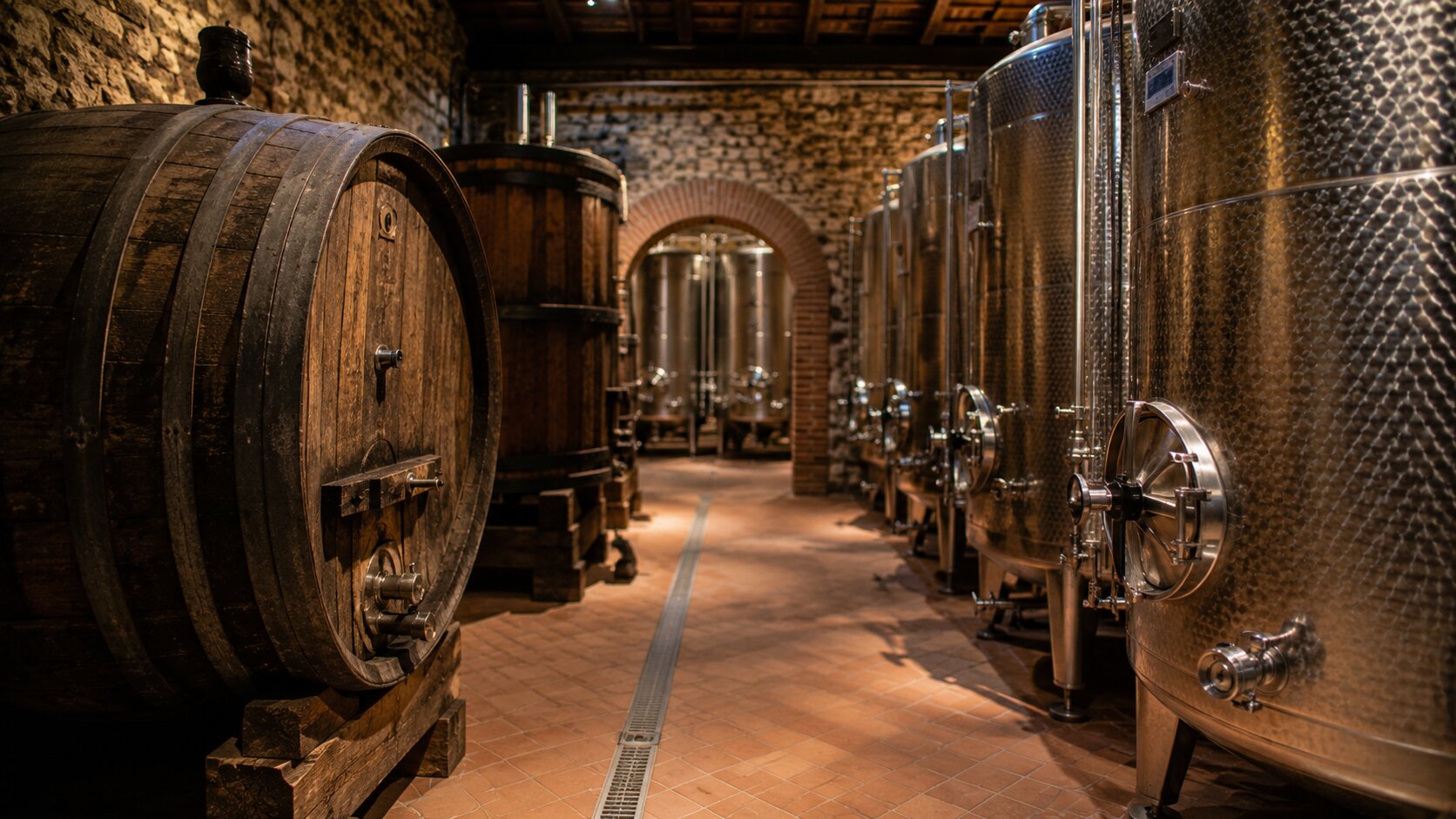
Chianti has changed more than its reputation for tradition might suggest. Baron Bettino Ricasoli worked at Castello di Brolio. In 1872, he wrote down his now-famous blend formula: roughly seven parts Sangiovese to two of Canaiolo, with a small amount of Malvasia rounding it out. That recipe shaped Chianti's rules for over a century.
By the late 1960s, some winemakers had grown frustrated with the Chianti DOC's restrictions, which at the time still required a share of white grapes even in red wine. In 1968, a producer in Bolgheri released Sassicaia, a Cabernet-based wine that ignored the traditional rules entirely. It got labeled as basic table wine as a result. Antinori followed in 1971 with Tignanello, a Sangiovese-Cabernet blend from inside Chianti Classico territory that broke the same rules on purpose. Both wines performed well enough to force the rules themselves to evolve. That's part of what paved the way for the more flexible regulations Chianti Classico uses today.
A Wine That Reflects Its Place
Tasting notes for Chianti tend to circle the same words: cherry, earth, a touch of spice. Useful shorthand, but it misses the larger point. What actually defines the wine is the specific hillside it came from. The soil under the vines. The altitude. The direction the slope faces. The choices a particular producer made about aging and blend.
Put together, those details make Chianti less a single flavor profile and more an ongoing conversation between grape and place. That conversation has been running since long before 1716, and it keeps shifting a little with every vintage.