In this post
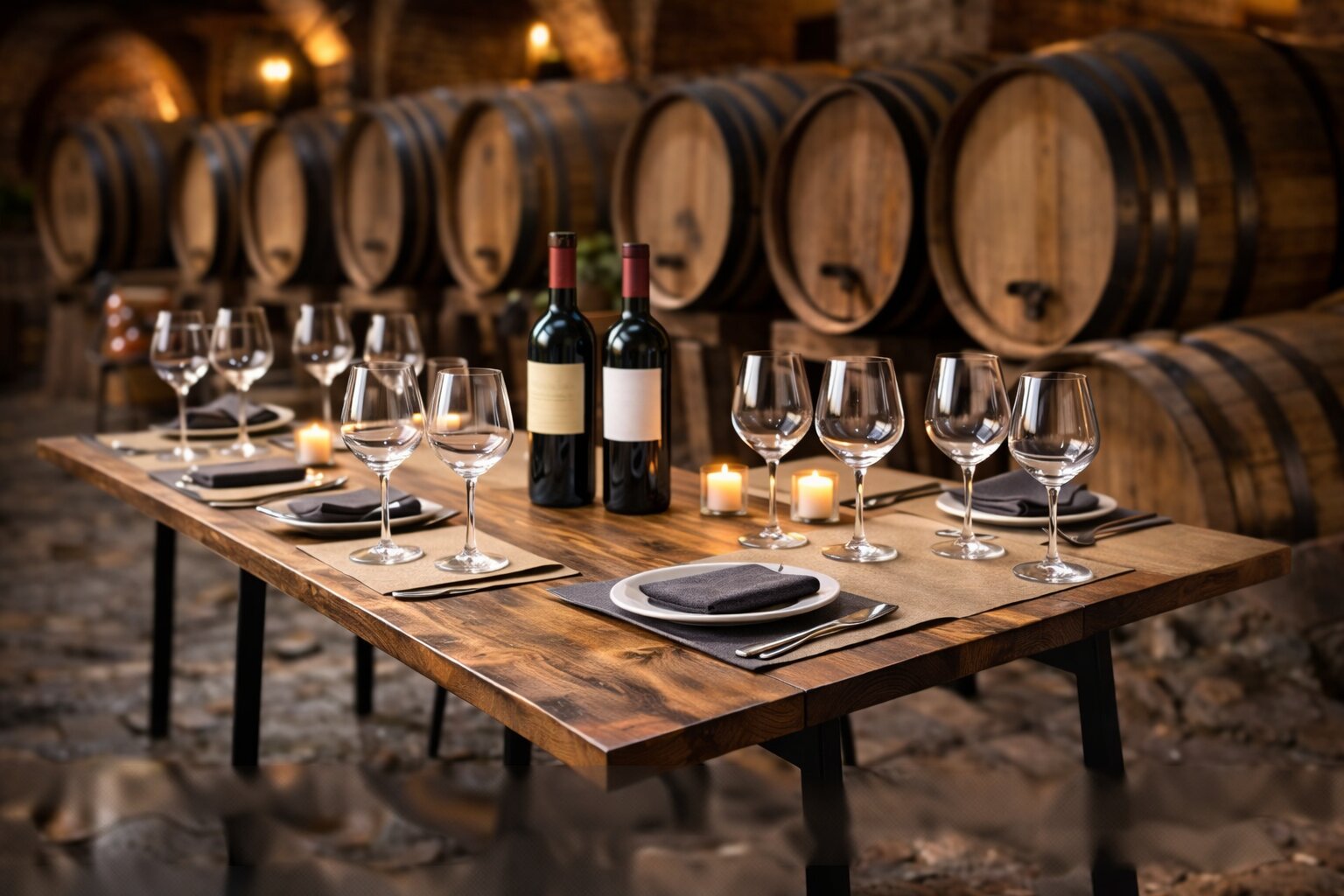
Most wine visits in Chianti start outside, with a view over the vines. Private cellar tours in Tuscany start a few steps lower, in rooms dug under farmhouses and villas centuries ago. It's cool down there, usually quiet, and most of what you see is wine that won't be bottled for another year or two.
A More Personal Way to Taste Wine
Tastings during private cellar tours in Tuscany tend to feel unhurried. There is time to notice differences, to revisit a wine, to ask questions without feeling part of a group dynamic.
Sometimes the conversation shifts away from wine entirely toward harvest seasons, family traditions, or how a certain year changed everything. None of that is planned.
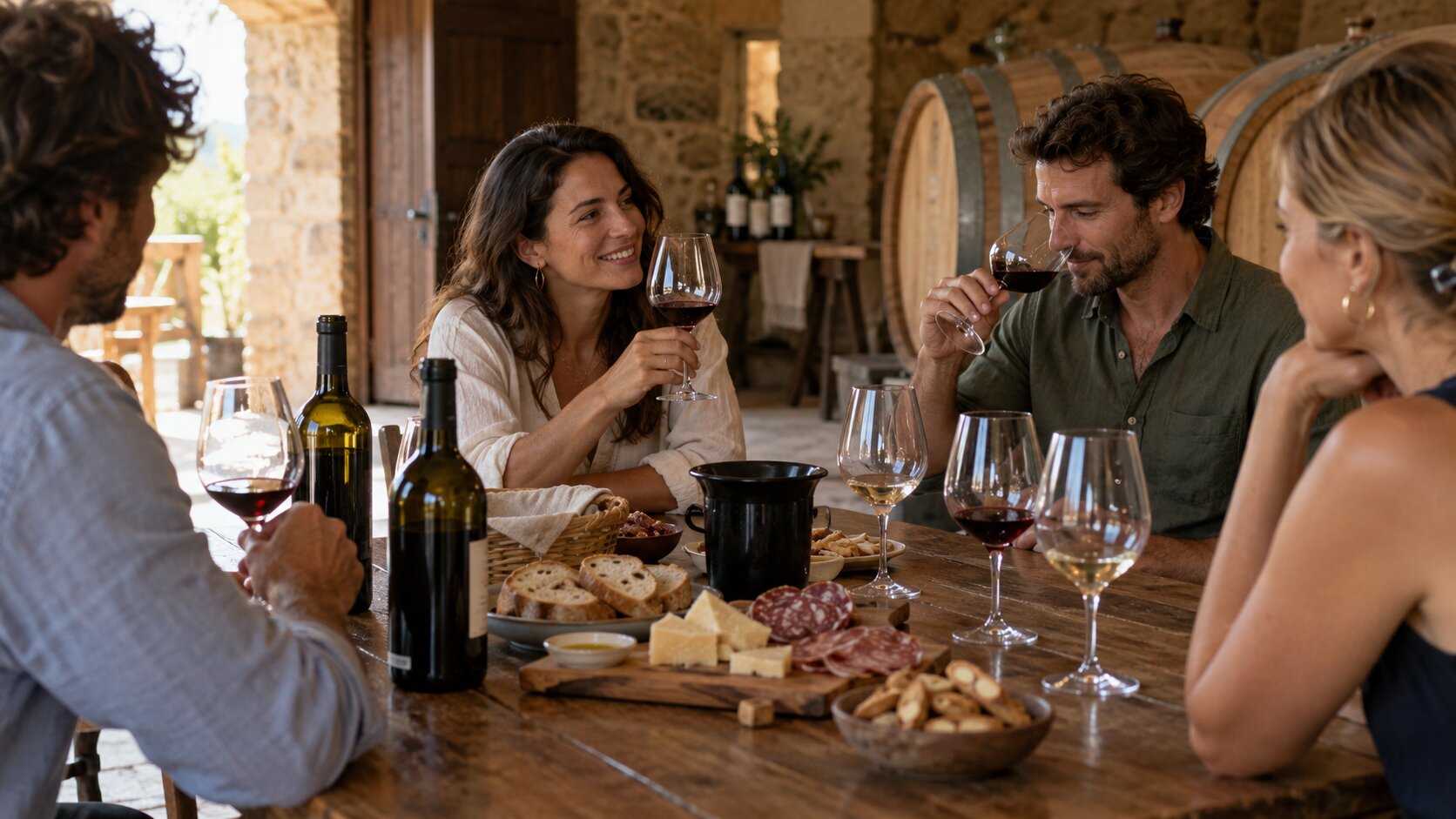
The table itself is usually simple. Bread, often the unsalted Tuscan kind, which happens to be good at clearing the palate between glasses. Some pecorino, a few slices of finocchiona or salami. Wines generally go from youngest to oldest, with vin santo at the end if the estate makes it. It usually comes with cantucci for dunking, although some producers will suggest you try a sip on its own first. There's normally a spittoon on the table and nobody minds if you use it.
Barrels, Vats and a Room Full of Drying Grapes
The first thing you notice is the temperature. Underground cellars in Chianti stay cool all year, so even in July bring something with sleeves. Floors are often stone or old brick, sometimes uneven, and there are usually a few steps on the way down. Flat shoes help.
Many of these cellars sit directly under the main house, and plenty of Chianti villas were built or rebuilt between the fifteenth and eighteenth centuries. Brick vaults are common. Some have been patched so often that half the bricks don't match.
Then the barrels. The big oak casks are called botti and can hold several thousand litres, and in Tuscany they are often made of Slavonian oak. The small barriques hold 225. Many producers use both. Ask which wine goes where, and why.
The steel and concrete tanks where fermentation happens are usually in a separate room, less photogenic and much louder at harvest time. If the estate makes vin santo there may also be a vinsantaia, a loft where grapes dry on mats or hang from the beams for months before pressing. The wine then sits for years in small sealed barrels called caratelli. And on the walls of the older cellars there's often a black fungus nobody bothers to clean off, because it's a sign the humidity is right.
Beyond the Vineyard View
The Tuscan countryside is often associated with sweeping views and postcard landscapes. Cellar tours spend most of their time indoors, under the house.
The connection between land and wine becomes more tangible here.
If you're planning a wine experience in the region, understanding how wineries differ can make a big difference. This guide can help you navigate your options: how to choose a winery in Chianti.
Small Producers, Distinct Stories
Many private cellar experiences take place in smaller wineries. Places where production is limited, and where the people involved are directly connected to every step of the process.
There is often a sense of continuity. Methods that evolve slowly, decisions made year by year, and families who have been working the same land for a long time.
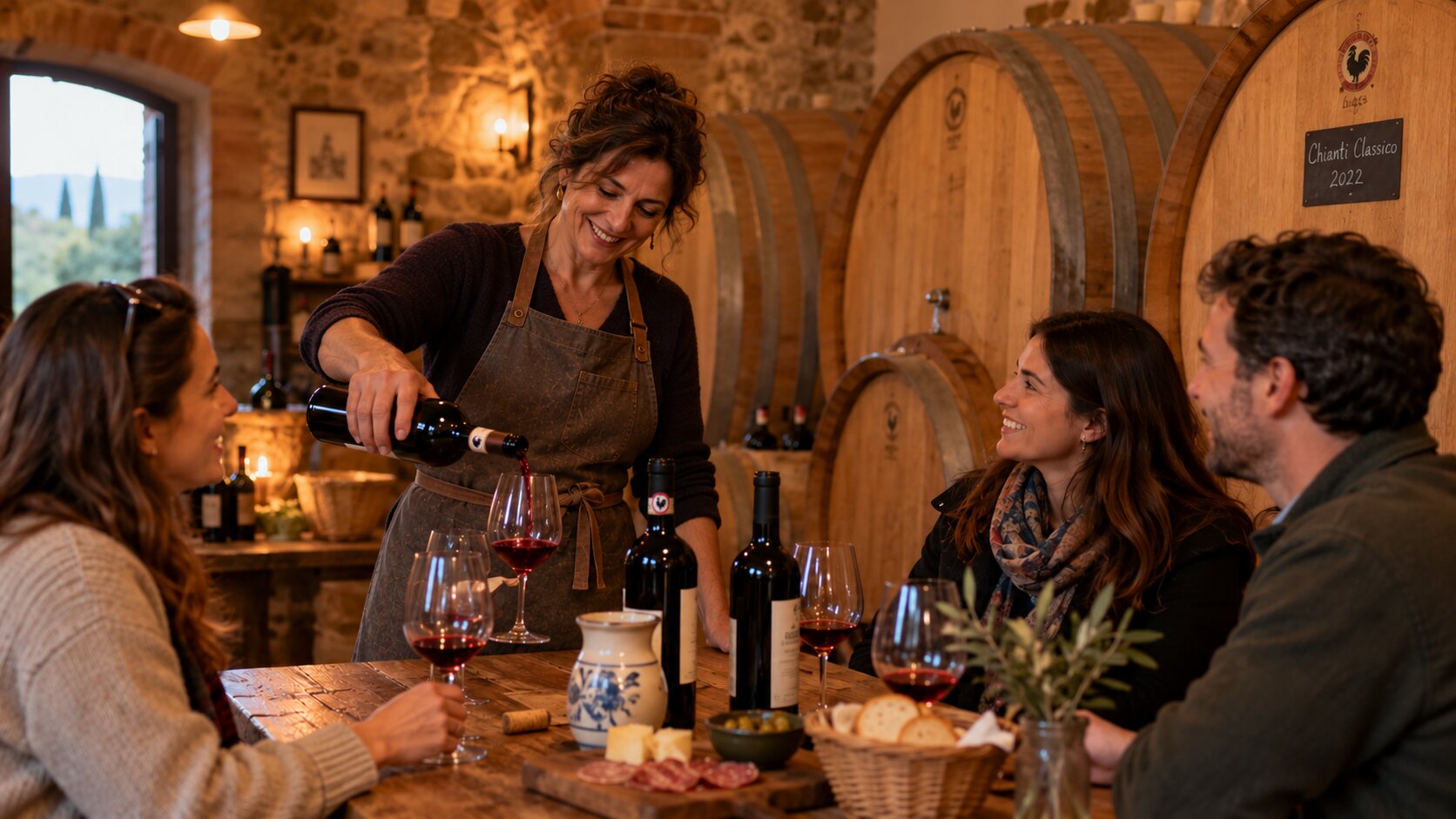
In a small cellar, the person pouring is sometimes the same person who decided when to pick. Ask why one vintage came out lighter, or what the chalk marks on a barrel head mean, and you'll get a straight answer. Same if you ask why there's no Riserva from a certain year. In Chianti Classico a Riserva needs at least 24 months of ageing, so some producers simply skip it when the harvest is weak. Quite a few of these estates are organic too; we've written about organic wineries in Tuscany separately.
Look at the neck of the bottles while you're there. A black rooster, the Gallo Nero, means Chianti Classico, from the historic zone between Florence and Siena. The local consortium has used it since 1924. A plain "Chianti" label can come from a much wider area, and the wine is often lighter.
Small estates usually sell bottles on site. If you're flying home with hand luggage only, ask about shipping before you fall in love with a case of Riserva. Not every producer offers it.
Harvest Season and the Quieter Months
Sangiovese ripens late. In Chianti the harvest usually runs from mid-September into October, and for a few weeks the cellar is a different place: full tanks, pumps running, the smell of fermenting must everywhere. Producers have less time to sit down and talk.
Late autumn is calmer. The new wine has just gone into wood, and if the producer is in the mood you might taste a sample straight from the barrel next to an older bottle. By November the attention moves to the olives. If the estate has its own mill you might be offered olio nuovo, bright green and peppery enough to catch the back of your throat.
In spring the work is mostly outside, pruning and then the first shoots. Some estates bottle around this time, so you may taste something that has only just come out of the barrel. Summer is hot and busier with visitors. The cellar is the coolest room on the property, which nobody complains about in August. In January and February some small estates close for a few weeks, so it's worth checking ahead.
A Different Kind of Experience
Private cellar tours in Tuscany are not defined by quantity. You may taste fewer wines and see fewer rooms than on a bigger tour, but you get more time with each one.
The experience unfolds at a quieter pace, leaving room for observation and conversation. It's perfectly normal to ask for a second pour of something you tried earlier, just to put it next to the Riserva and see what two extra years in wood have done.
Private Cellar Tours in Tuscany or a Small-Group Safari?
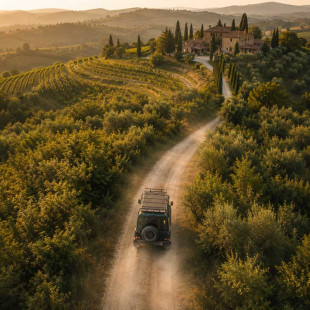
A fully private visit is one way in. A small group is another. Our Wine Safari works this way: it leaves Florence in a customised, air-conditioned four-wheel drive and heads into the Chianti Classico hills on farm tracks and private vineyard roads that a coach couldn't use. Depending on the option, the day lasts seven to nine hours, with stops at panoramic viewpoints between estates. Nobody expects you to know a botte from a barrique before you get in the car. Groups are small, and in the 4WD you sit close enough to ask the guide whatever comes to mind on the way.
The full-day version visits two wineries in historic Tuscan villas, with time in their old cellars and tastings of Chianti Classico DOCG with sheep's cheese and salumi. There's an extra virgin olive oil tasting too, and lunch at a winery restaurant with local appetizers and handmade pasta. The morning departure focuses on one family-owned estate and its organic methods. The afternoon one finishes with dinner outdoors at the winery.