In this post
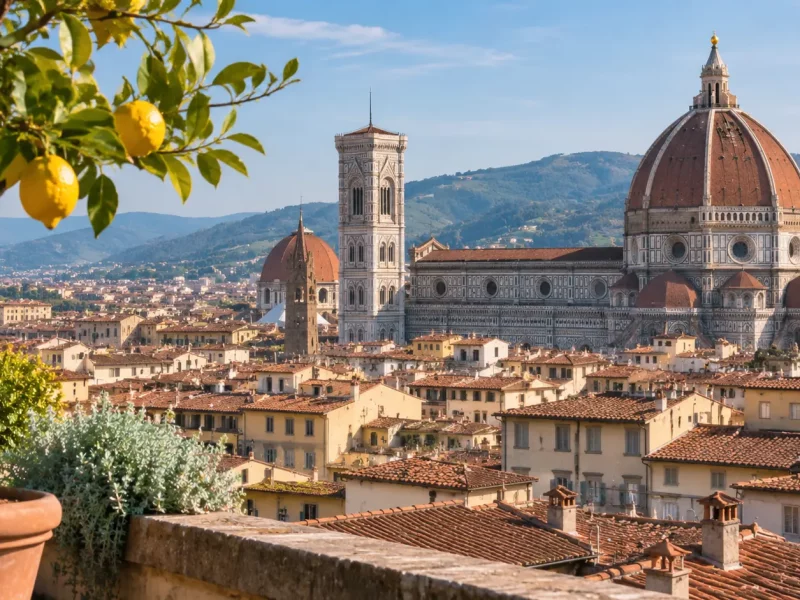
Two days in Florence is enough to see the city's major works properly: the Duomo and its dome, Michelangelo's David, the Uffizi, and an afternoon across the river in the Oltrarno. It won't cover everything, and if something has to go, we'd cut from day two first. The simplest split is by geography. Give day one to the cathedral end of town, and day two to the river and the south bank.
The historic centre is small, which helps. What shapes the two days more than distance is booking. The Uffizi, the Accademia and the dome climb all run on timed slots, and those slots will decide the order of your mornings. The cathedral itself is free and takes no bookings, so its queue is the one you can only beat by going early.
Day one, under the dome
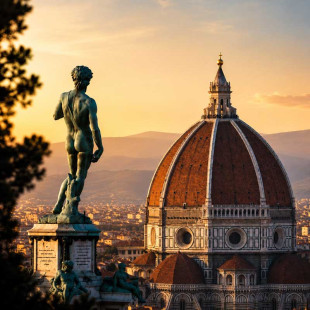
The cathedral complex takes a full morning, and longer if you climb. Brunelleschi's dome has 463 steps and no lift. The route runs between the inner and outer shells. About halfway up you walk a narrow gallery around the base of the dome, level with Vasari and Zuccari's Last Judgement. The frescoes cover more than 3,600 square metres. From the cathedral floor they read as a swirl of colour. From the gallery you can make out individual faces, including some very unpleasant demons on the lower band.
Dome tickets have been nominative since March 2025, so the name on the booking has to match the person climbing. In spring and summer the slots go weeks ahead. Backpacks and large bags aren't allowed inside. There is a free cloakroom at Piazza Duomo 38/r. Worth knowing if you arrive on a morning train and go straight to the cathedral.
Book the dome before anything else on the trip, and build day one around whatever slot you get. The cathedral, the museum and the Accademia can all move around it. If the only climb left is in the afternoon, swap the order and see David in the morning instead.
This is the morning we'd hand to a guide. On our private Duomo tour with the dome climb, the guide builds the visit around your climb slot, with the cathedral and the museum on either side of it. You also go up already knowing what you're looking at. Brunelleschi raised the dome without the wooden centring every builder of the time assumed was needed, and herringbone brickwork held it together while the mortar set. Once you know to look for it, you'll see the pattern in the walls of the stairway itself.
The Opera del Duomo Museum
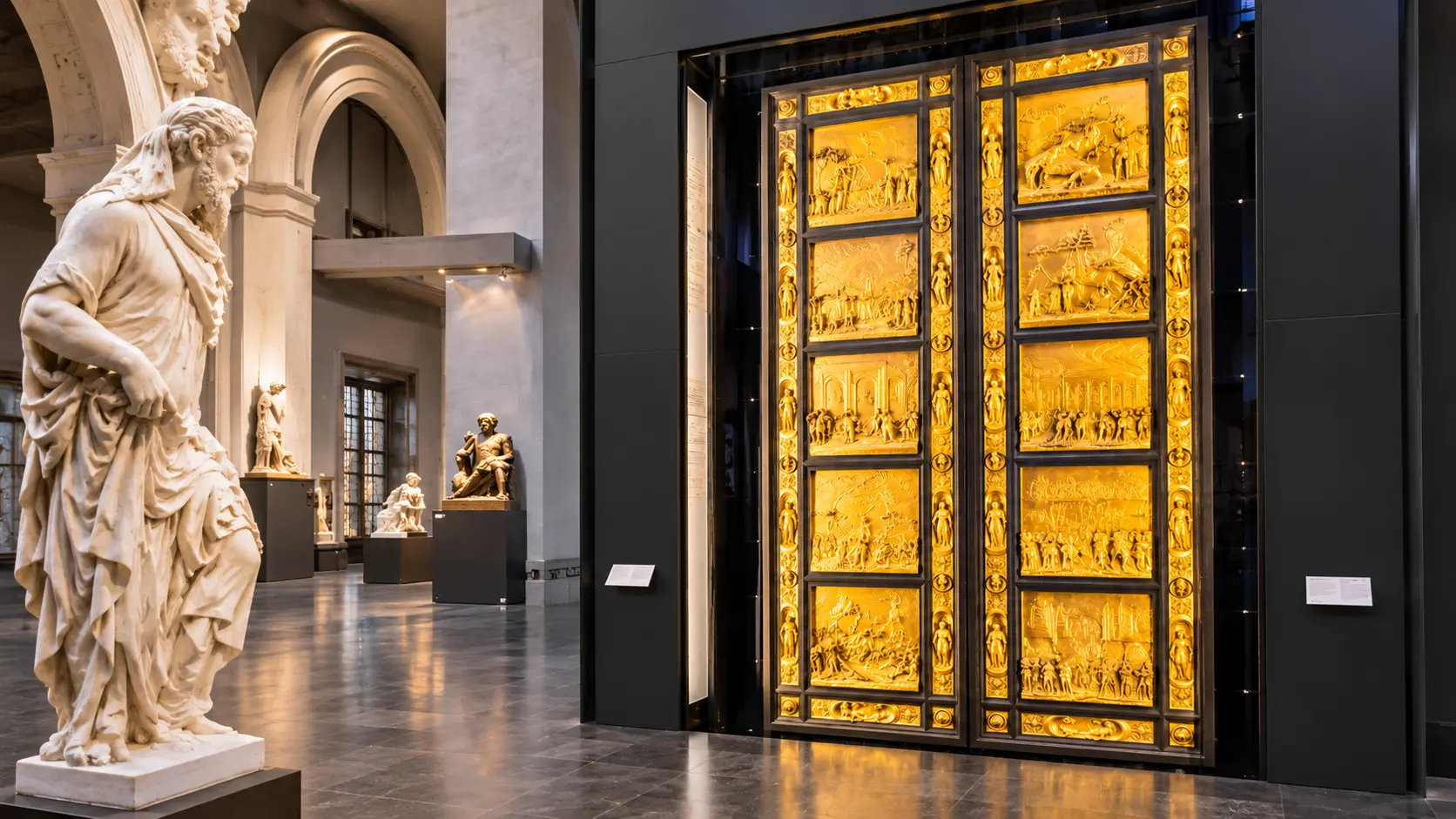
If one part of the complex has to go, don't let it be the Opera del Duomo Museum. The museum keeps the original panels of Ghiberti's doors out of the weather, while copies hang on the Baptistery. We've written separately about the Gates of Paradise and why they took Ghiberti 27 years. The same museum has Michelangelo's late Pietà, the one he took a hammer to and abandoned. A pupil finished it, and you can see where. We'd sooner drop Giotto's bell tower: it's another 414 steps, and two climbs in one morning is a lot.
Afternoon at the Accademia
After lunch, the Accademia. It is a short walk north and it is a small museum. David stands at the end of the Hall of the Prisoners, where the four unfinished figures Michelangelo left half inside their blocks line the walls. They are the best argument for seeing David in person, because they show the stage before. An hour here is usually plenty. David is the reason you booked, and the rest of the collection doesn't need the same time.
That leaves the late afternoon loose. San Lorenzo and the streets around the Mercato Centrale are close by. The market's ground floor still works as a food market in the morning, if day two starts early.
Mondays and first Sundays
The Uffizi and the Accademia are both closed on Mondays. If your two days in Florence include a Monday, give that day the Duomo and the Oltrarno and push both galleries to the other day. Sundays work the other way round for the cathedral end of town: the cathedral and the dome open to visitors only in the afternoon, after the services, so that isn't the day for the Duomo morning.
The first Sunday of the month adds another problem: state museums are free, and the queues show it.
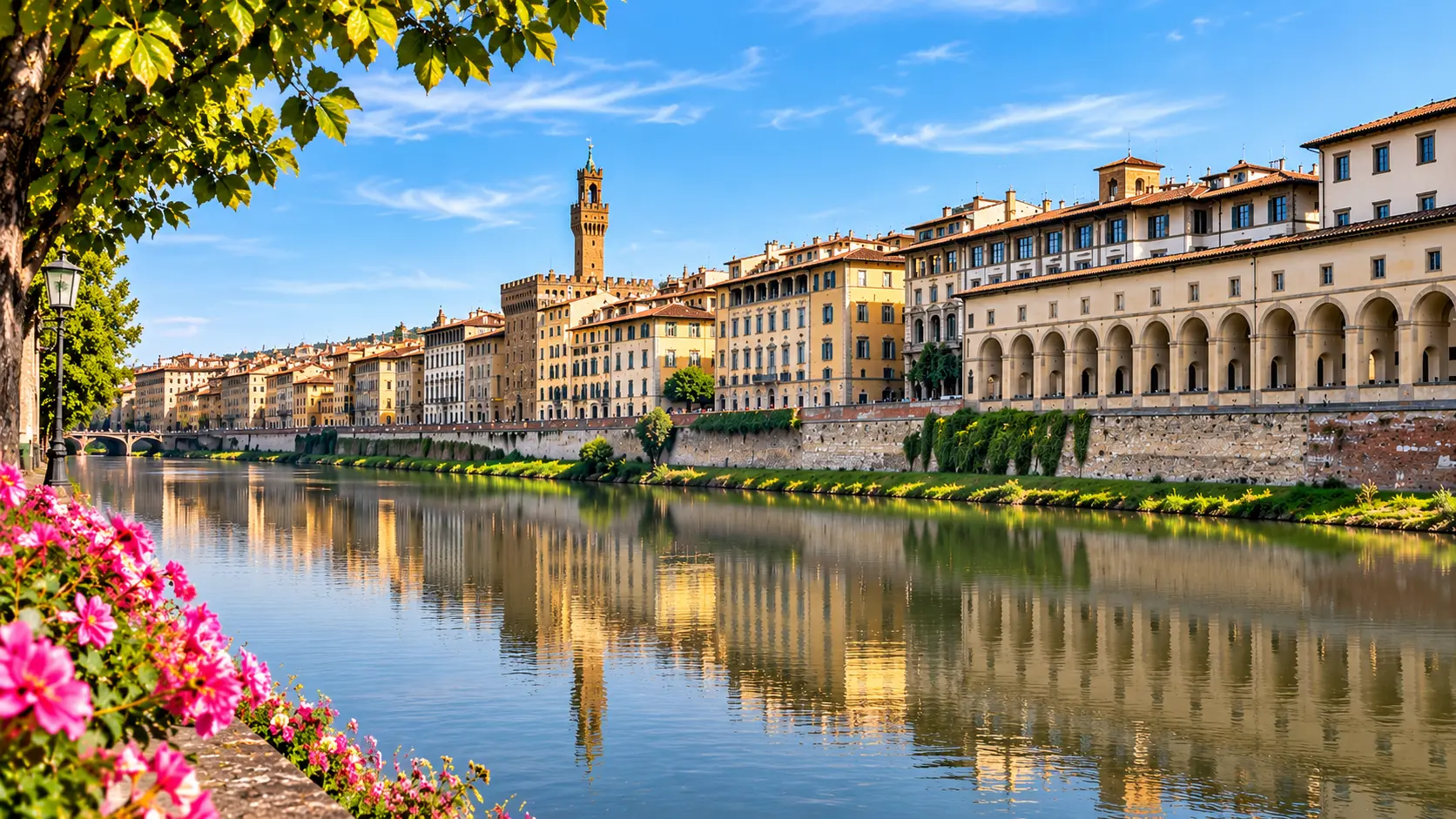
Day two, the river and the Oltrarno
Start at the Uffizi, as early as your entry allows. It is a big building and the rooms you'll want are spread out: Botticelli's Birth of Venus and Primavera, Leonardo's Annunciation, the Caravaggios near the end. Plan on most of the morning, and choose your rooms before you go in.
The Vasari Corridor reopened in December 2024 after years of work. It leaves the Uffizi, runs above the shops of Ponte Vecchio and comes out by the Boboli Gardens. You book visits separately, and only small numbers go through. Treat it as a bonus if you get a slot, not something to build the day on.
Santo Spirito and the workshops
Across the river the pace changes. Santo Spirito was Brunelleschi's last church. Its plain plastered façade was never finished, which makes the inside more of a surprise. In the sacristy there's a painted wooden crucifix carved by Michelangelo when he was about seventeen. The prior had let him study anatomy on bodies from the convent hospital, and most historians read the crucifix as his thank-you.
The Oltrarno is also where Florence still makes things by hand, from gilders and frame-makers to bookbinders and leather workers in small street-level workshops. If those are what bring you across the river, our piece on a private Florence tour with artisan workshops covers that side of the neighbourhood.
After a morning in the Uffizi, the afternoon has room for one of two things done properly: Santo Spirito and the workshops around it, or the walk up to San Miniato. If art is the point of your trip, stay down in the Oltrarno. If you'd rather end the day outdoors with the city below you, have a long lunch and head up the hill.
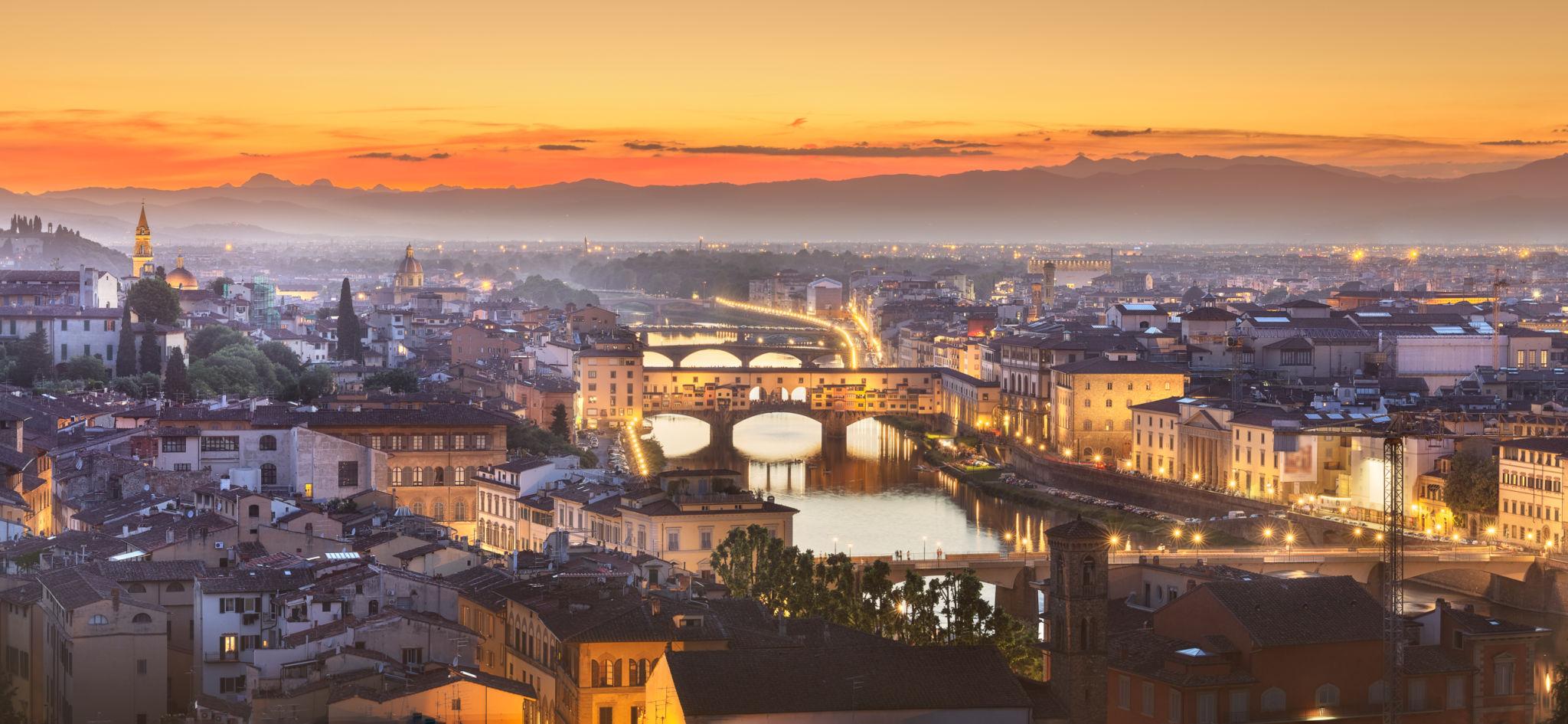
On the way up, Piazzale Michelangelo is the classic sunset stop and it is busy. San Miniato al Monte is ten minutes further up and looks over the same rooftops from the church steps. The Olivetan monks there still sing vespers in Gregorian chant. Times change through the year, so check with the abbey on the day.
Is two days in Florence enough?
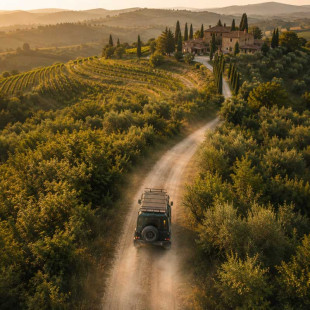
For a first visit, yes, as long as you accept what won't fit. The Bargello, the Medici Chapels, Palazzo Pitti and Boboli each need time of their own, and none of them is in the plan above. Neither is Tuscany. A day in Chianti, Siena or San Gimignano is a full day. Squeezing one into a two-day stay means giving up one of the two big galleries. With a third day, the plan above can stay as it is, and the extra day goes to the Bargello and the Medici Chapels, or out into Tuscany.
If you are arriving mid-morning or leaving after lunch, it's the Oltrarno afternoon that shrinks, not the Uffizi.