In this post
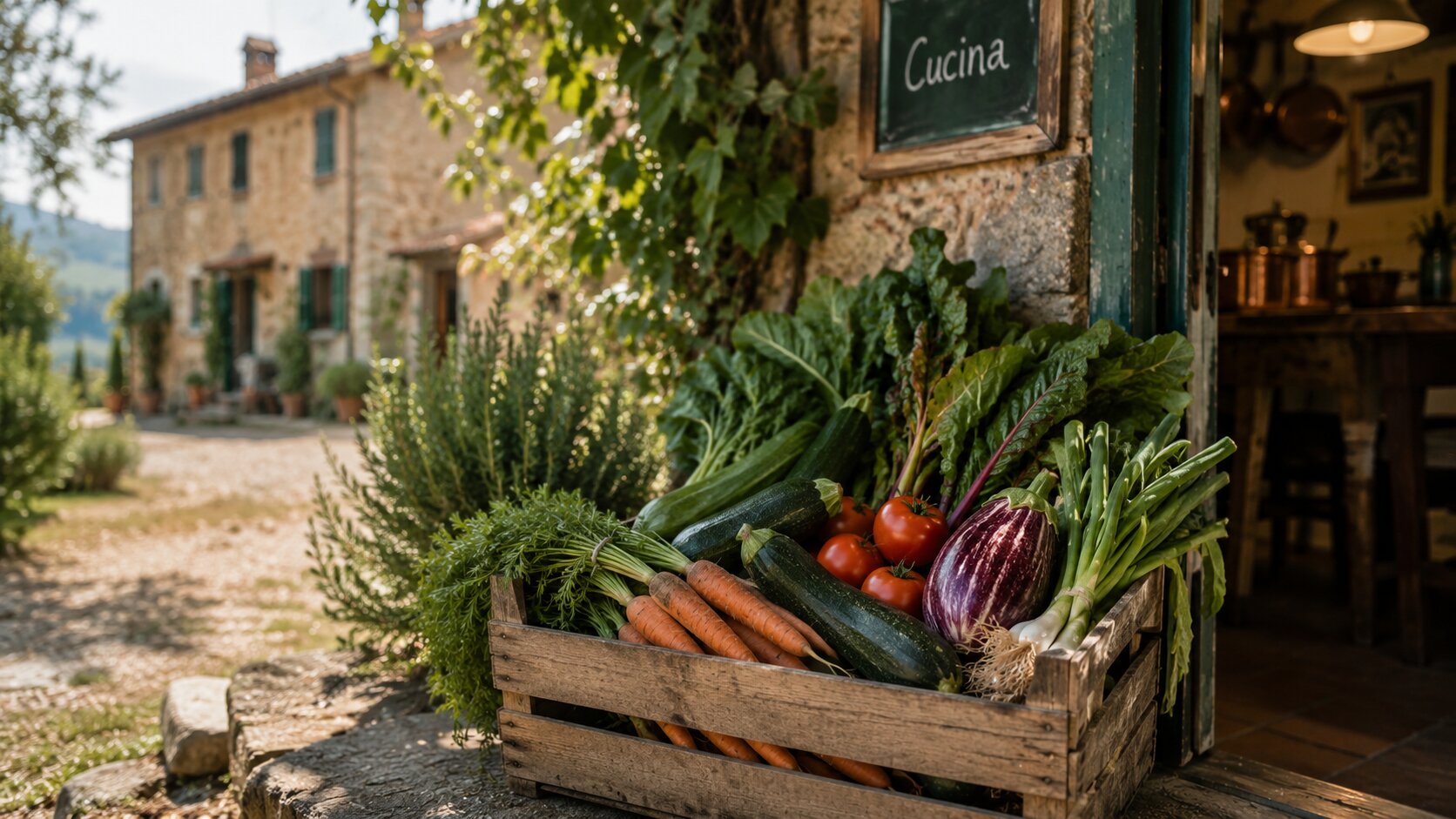
Most Tuscan farmhouses that host cooking classes aren't event spaces dressed up to look rustic. They're working farms. A law on the books since 1985 legally requires them to serve food they actually grow. That distinction shapes everything about what a private class in the countryside actually feels like.
What to Expect from a Private Class
A private class runs on conversation more than instruction. Techniques still get taught. But they also get adapted on the spot, based on what you're actually curious about, rather than a fixed curriculum. The chef explains not just how a step works, but why it's done that way in the first place. That turns the lesson into a dialogue, instead of a demonstration.
Why the Farm Itself Matters
The Italian word for these countryside properties, agriturismo, comes from a specific piece of legislation. After the Second World War, small farms across Italy emptied out fast, as families left the land for city jobs. By 1985, the government passed a law creating an official designation for working farms that also host guests. It legally requires most of the food served to actually come from the farm itself, not from a supplier down the road. Today there are close to 25,000 of these properties across the country. Tuscany is one of the regions where the concept took hold most strongly.
That's not just a licensing detail. It means the olive oil on the table came from trees on the same property. The vegetables in the sauce were likely picked that same morning. The setting isn't decoration. It's the actual supply chain, and the law exists specifically to keep it that way rather than letting agriturismo become a marketing label detached from real farming.
The properties themselves vary widely, from restored 18th-century farmhouses to more modest working operations, but the legal core stays consistent: this has to be a real farm first, a place to stay and eat second. That distinction is exactly why the food tends to taste the way it does.
From Harvest to Plate
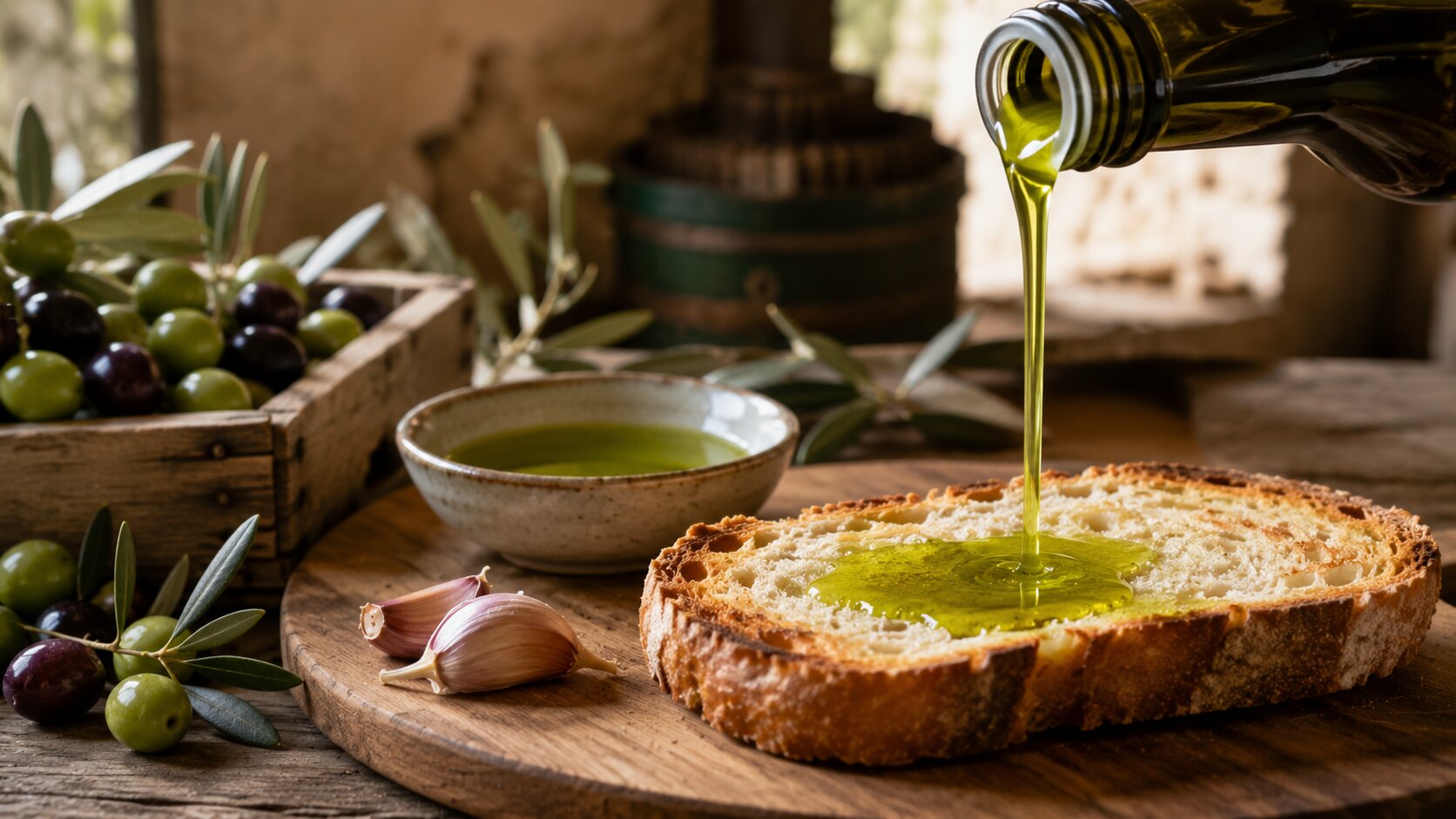
Some of the best private classes time themselves around what's actually happening on the farm that week. Nothing illustrates that better than olive harvest season. Between October and November, Tuscan groves fill with families hand-picking olives into nets spread beneath the trees. The varieties, Frantoio, Moraiolo, Leccino, Pendolino, have grown here for generations. The olives get pressed at the local frantoio within hours of picking, cold-extracted to protect the aroma. What comes out is a cloudy, intensely green oil called olio nuovo.
Fresh from the press, olio nuovo is sharp, peppery, and slightly bitter. Nothing like the milder oil that reaches supermarket shelves months later. The traditional way to taste it is embarrassingly simple. A piece of toasted bread, a little garlic, and the oil poured straight over the top. Locals treat the color as part of the show, too. Genuine olio nuovo often comes out of the press looking almost fluorescent green, cloudy and unfiltered rather than the clear golden liquid most people picture when they think of olive oil. That cloudiness isn't a flaw. It's a sign the oil hasn't been sitting around.
A class built around this ritual, even outside official harvest week, teaches something a written recipe never could. The direct, sensory link between a specific tree and what ends up on your plate an hour later.
Our guide to Tuscan cooking classes with local chefs covers more of what a hands-on lesson with a local instructor actually involves. Beyond the olive oil ritual specifically.
When Cooking Becomes Sharing
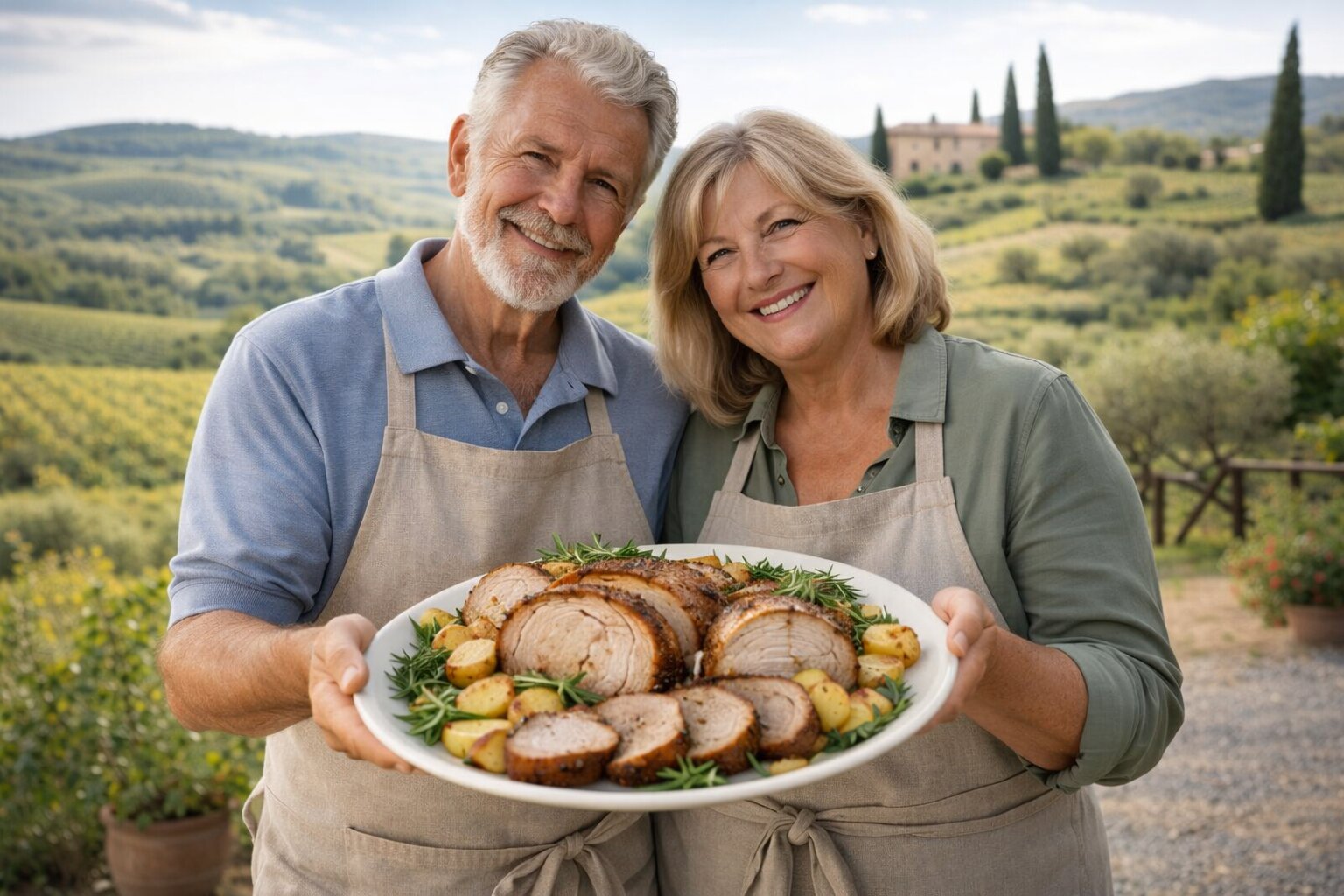
At some point in every good class, the mood shifts. Preparation stops being the focus and the meal itself takes over. Plates come together. The table gets set. What started as instruction turns into a shared lunch, usually with local wine and a conversation that keeps going long after the last dish is cleared. There's rarely a clean line between the lesson and the meal. One simply continues into the other.
This is where the private format earns its keep most clearly. A group class of fifteen strangers tends to fracture into smaller conversations once the food is ready, with no real center of gravity. A private class stays whole. The same handful of people who spent the morning kneading dough together sit down to eat what they made, usually with the chef joining the table rather than retreating to the kitchen.
A Different Way to Experience Tuscany
Private cooking classes in the countryside offer something a city-based class generally can't. Direct proximity to where the ingredients actually grow. That's a genuinely different experience from a class held in a Florence kitchen with produce brought in from outside. Our comparison of cooking classes in Florence versus the countryside breaks down what changes when the setting moves from city to farm.
What stays with people afterward usually isn't the recipe itself. It's the specific memory of where it came from. A tree. A garden. A frantoio a short walk from the kitchen table.