In this post
Florence has a reputation for bistecca, salumi and heavy meat sauces, and honestly, most of that reputation is earned. But being a vegetarian in Florence is a lot less complicated than the steakhouse menus and hanging prosciutto legs might suggest, once you know a bit of the city's food history and which dishes to look for.
A Cuisine That Wasn't Always About Meat
Simple Tuscan country cooking was, once upon a time, more vegetarian than carnivorous. Country women fed their families on what they could grow in their gardens and only introduced poultry or meat for special occasions.
Eating out was also for special occasions so meat tended to get top billing on the menu for those days. Since the Second World War, meat-eating has been a sign of prosperity and became a daily rather than occasional occurrence, pushing aside some of the traditional vegetarian dishes. Now you will find that Florentine cuisine is heavy on the meat side of things and that a "vegetarian Florentine" is a bit of an oxymoron.
Vegetarian Dishes Worth Ordering
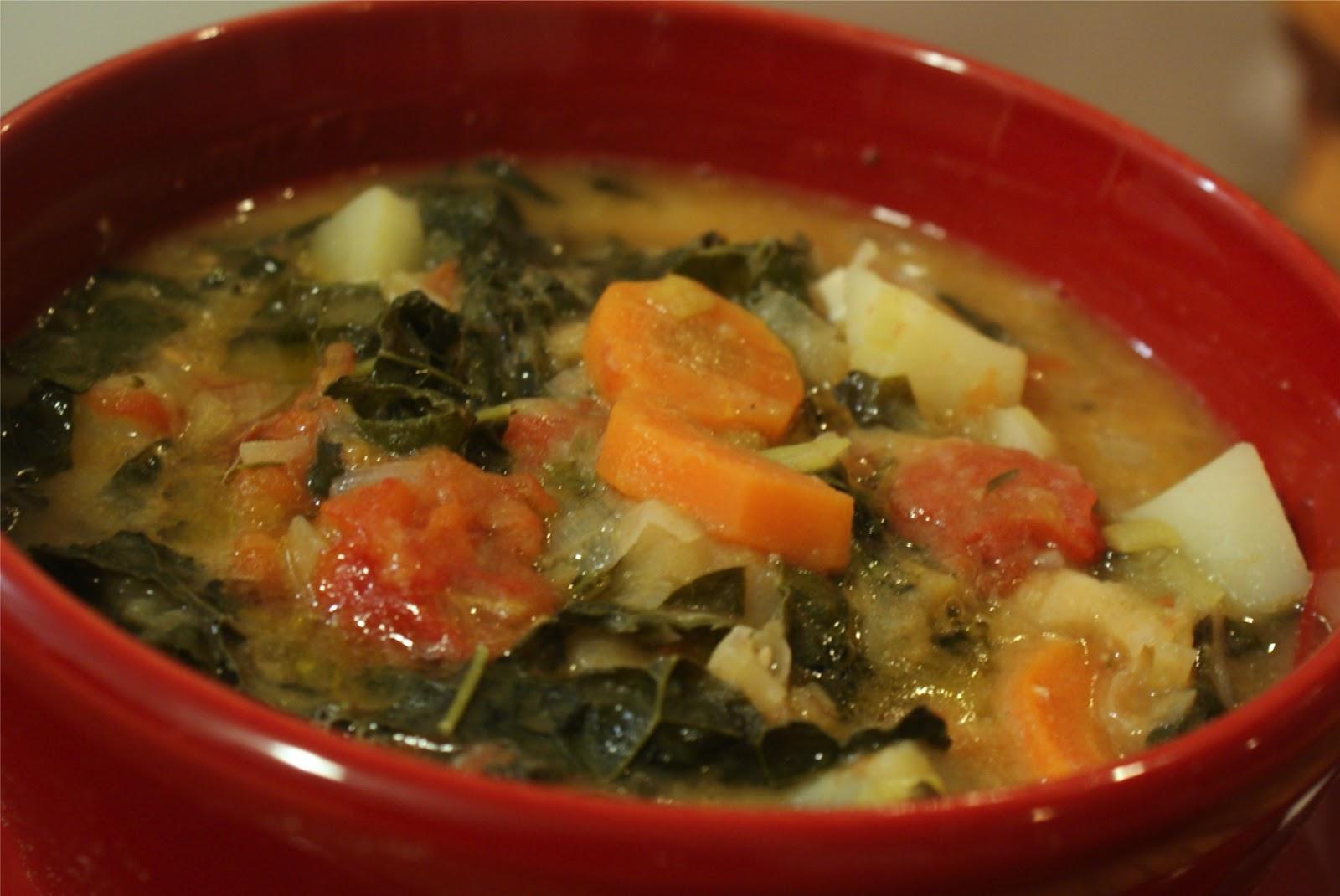
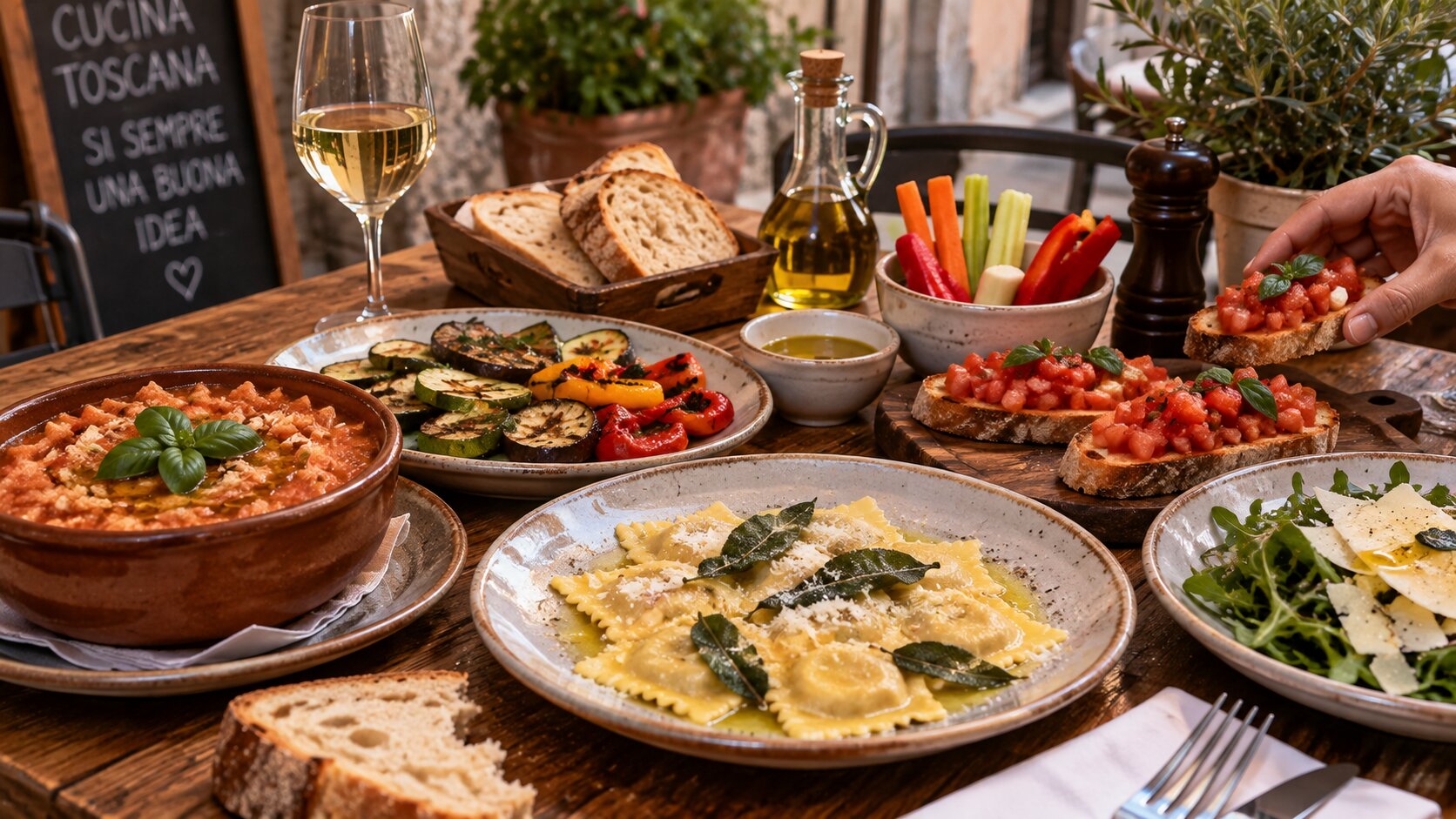
That being said, many first courses of pasta, soup or risotto are not made with meat, and many of the most traditional favourite dishes are vegetarian: ribollita, pappa al pomodoro, pasta con pomodoro, ravioli with butter and sage, bruschetta, as well as popular sandwich filling of mozzarella and tomato... although if you are a strict vegetarian you may want to check that any stock used is not animal-based. Many restaurants may not have a vegetarian choice on the menu for a main course but will be able to offer grilled or roasted vegetables, bean dishes for protein or salad and platters of cheese.
Look out for the freshest seasonal vegetables prepared as a carpaccio, thinly sliced and raw, served with a drizzle of extra virgin olive oil and perhaps a sprinkling of shaved parmesan, or as fritti, where they are battered and deep fried in olive oil or as pinzimonio, cut into sticks and served with olive oil and balsamic vinegar to dip into.
Ordering with Confidence
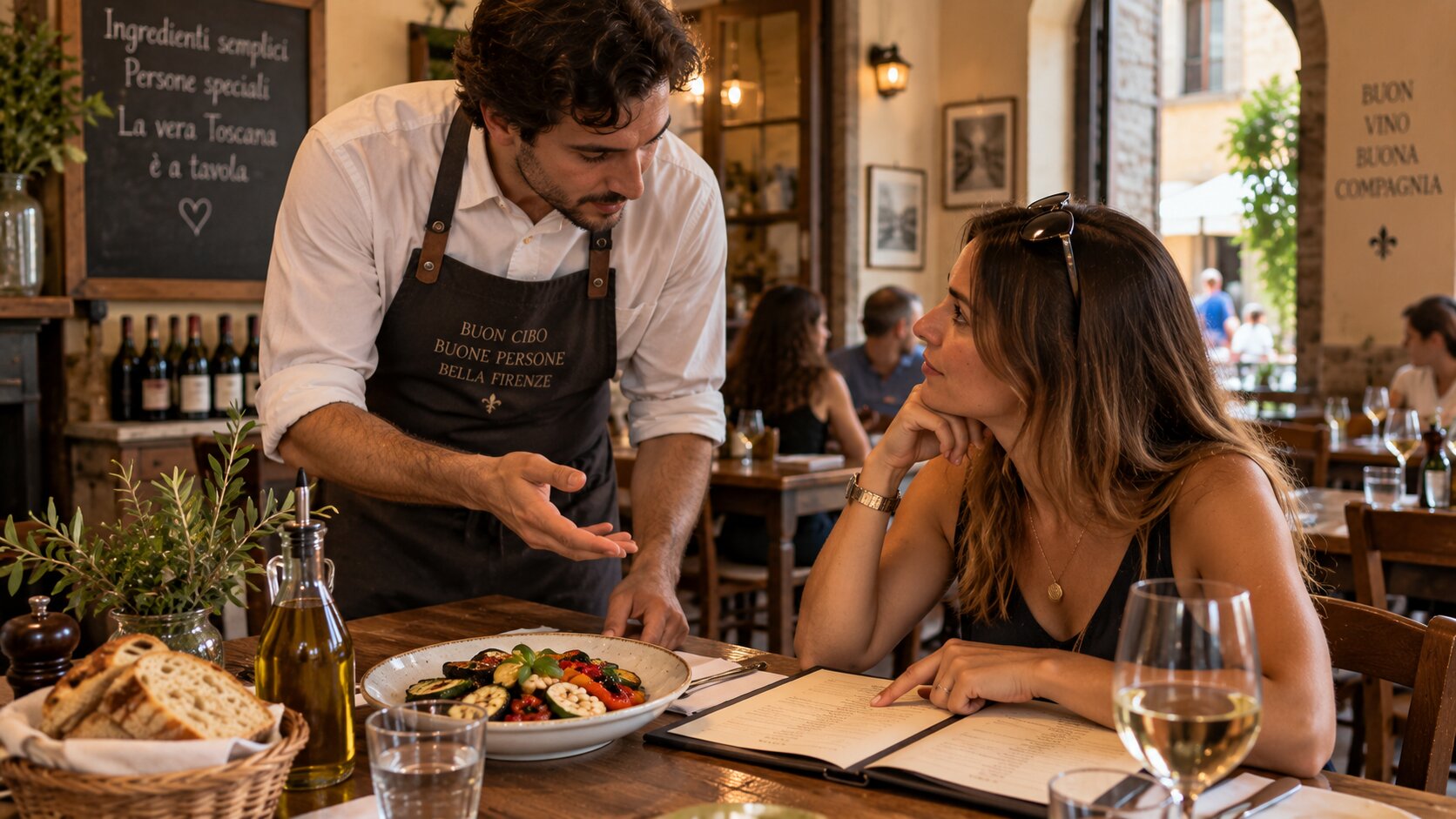
Learn the phrase "non mangio carne" or "sono vegetariano/a" (if you're male, vegetariano, if you're female, vegetariana) and you'll be sure to never go hungry.
It's worth going a step further than that phrase, though, particularly if there are ingredients you avoid entirely. Waiters here are generally happy to explain a dish if you ask directly, so a quick "c'è carne o brodo di carne?" (is there meat or meat stock in this?) before ordering a soup or risotto tends to clear things up fast. Menus rarely spell out every ingredient, and a dish that looks vegetarian on paper, a bean soup, a vegetable risotto, can quietly include a meat-based stock as its base. Asking isn't awkward here; it's expected, and most Florentine waiters would rather answer a direct question than watch a plate come back untouched.
Timing helps too. Lunch menus in particular tend to lean more vegetable-forward than dinner, since many trattorie serve a lighter midday crowd of office workers rather than the full, meat-centred spread reserved for evening. A vegetarian in Florence who plans the bigger meal of the day around lunch, rather than dinner, often finds the choices noticeably wider.
What About Vegans?
Vegetarians have it easier than vegans in Florence, and it's worth knowing the difference before you sit down. Traditional pasta is very often made with egg, cheese shows up as a garnish on almost everything from soups to vegetable dishes, and butter rather than oil is common in sauces like the sage and butter used on ravioli. A vegan traveller can absolutely eat well here, dishes like pasta con pomodoro made without cheese, grilled vegetables, and bean-based soups all work, but it usually takes an extra question or two at the table to confirm a dish is entirely plant-based rather than just meat-free.
Allergies add another layer worth mentioning while you're at it. Tuscan cooking leans heavily on wheat, in bread, pasta and the bread-based soups like ribollita and pappa al pomodoro, so a gluten intolerance combined with vegetarianism narrows the menu considerably more than either restriction would alone. Being specific about what you can and can't eat, rather than relying on a single label, tends to get better results than trusting the word "vegetarian" to cover everything.
Markets and Restaurants Worth Seeking Out
Florence's covered markets are some of the best places to see how vegetable-forward the city's food culture can be, even if the trattorie around them lean carnivorous. Mercato Centrale and Mercato di Sant'Ambrogio both have stalls piled with whatever's in season, artichokes and fava beans in spring, tomatoes and peppers through summer, cavolo nero and squash once autumn arrives. Wandering either market gives a much better sense of Tuscan vegetarian cooking than any menu does, since so many of the dishes above start exactly here.
On the restaurant side, look for smaller, family-run trattorie over the tourist-facing spots near the main sights. They're generally more willing to adjust a dish or point you toward something built around vegetables in the first place, since serving what's fresh that day has always mattered more to them than sticking to a fixed menu.
Seasonality matters more here than in most cities, too. A vegetarian in Florence eating in November will find a very different set of dishes on offer than one visiting in June, since so much of the traditional repertoire, ribollita especially, was built around whatever the garden happened to produce that month. Winter leans toward hearty soups thick with cavolo nero and beans; summer shifts toward lighter things, caprese, panzanella made with stale bread and ripe tomatoes, and simple plates of grilled or raw vegetables dressed with good olive oil. Neither season leaves a vegetarian short of options, they just look quite different from one another.
Get Hands-On with Tuscan Vegetables
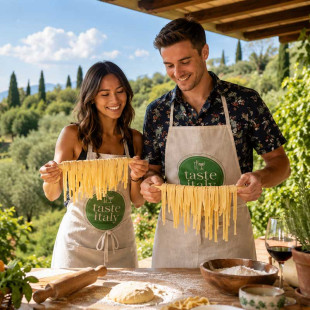
If you'd rather learn to make these dishes than just order them, a hands-on class is the most direct route into Tuscan vegetarian cooking. Our Tuscan cooking class experience usually includes at least one vegetable-based course from scratch, and it's easy to ask your host in advance to lean the menu vegetarian if that's what you and your group need. Pair that with a wander through one of the markets above beforehand, and you'll come away with a much better answer than "oxymoron" the next time someone asks whether Florence does vegetarian food well. For a broader sense of what else lands on Tuscan tables, our guide to traditional Tuscan food covers the rest of the menu, meat included, so you know exactly what you're navigating around.
Being a vegetarian in Florence takes a little more attention than it would somewhere with a lighter culinary tradition, but it rewards that attention generously. The dishes are there, rooted in the same farmhouse cooking that shaped everything else on the Tuscan table, you just need to know where to look and which two words to say when the menu doesn't make it obvious. Come with a little curiosity rather than a strict checklist, and you'll likely leave with a handful of new favourite dishes rather than a list of things you had to avoid.