In this post

There are gelato counters on almost every corner of the historic centre. The longest queue is not always outside the best one, though. These are some of the places for gelato in Florence that are worth a detour.
Italians are famous the world over as the best makers of ice cream so while you are visiting Florence here are a few places where you can sample some of the best.
Chocolate and gelato from Santa Croce to the Uffizi
Not far from the church of Santa Croce in the interesting shopping street called Borgo degli Albizi is a piece of chocolate heaven called Vestri. If you are a chocolate fan you have to make time to visit Vestri whatever happens, but if you are a chocolate and an ice cream fan, then you may have trouble leaving this shop! The ice cream is made on the premises and every stage of production is watched over by the Vestri family from growing their own cocoa in Santo Domingo to serving the finished product to us here in Florence.
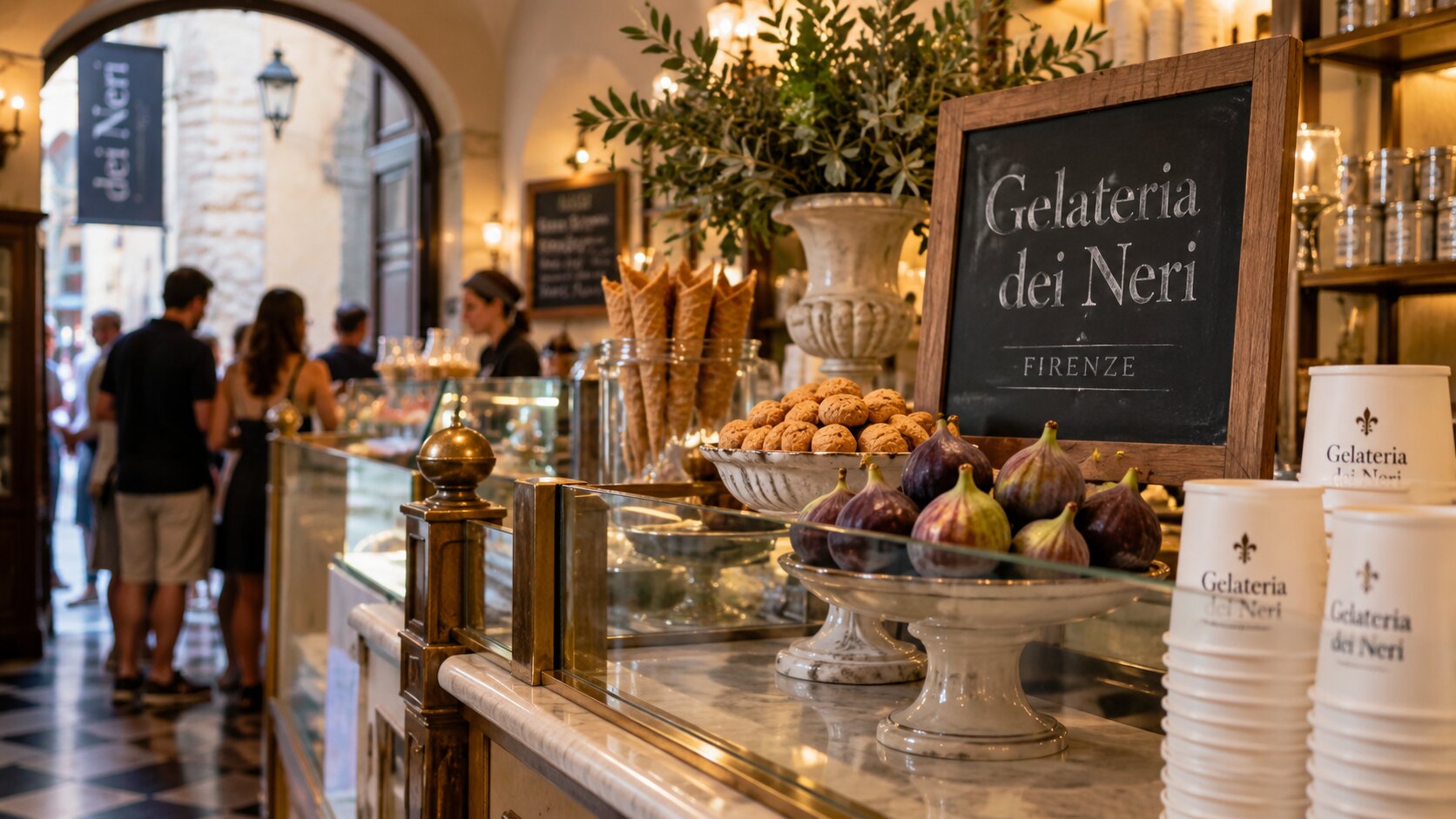
Close to the Uffizi gallery in the street called Via dei Neri is the Gelateria dei Neri with a great range of gelato all made on the premises. Try one of the more unusual flavours such as ricotta with figs, or peaches with amaretti. If you prefer the classics, try the vanilla, the lemon or one of the many varieties of chocolate. They also make wonderful semi-freddi here, concoctions of whipped creams and custards, if you haven't tried one before, this is a great place to start!
Near the cathedral and the Accademia
Right next to the cathedral you will find the gelateria called Grom. If you have trouble deciding where to start with all the flavours here, just check out the board that suggests which flavours are 'harmonious matches'. You can't go wrong with the fruit flavours, organically grown rare varieties that they grow, harvest and make into gelato themselves. Check out the nut flavours of bacio, nocciola or torroncino, all made with a named variety of hazelnut.
After a visit to Michelangelo's David, walking towards the cathedral, call in at Carabe in Via Ricasoli. Some ice cream enthusiasts say you can tell that the ice cream here is Sicilian and not Florentine, but for most of us, we just know it is very, very good! Here you should try the rich, creamy and smooth almond ice cream but don't miss the granita and cremolata. The difference is that a granita is made with fruit juice, sugar and crushed ice to make a granular sorbet and the cremolata is made with thick fruit puree which is chilled more like an ice cream.
Two old-timers between Santa Croce and the Signoria
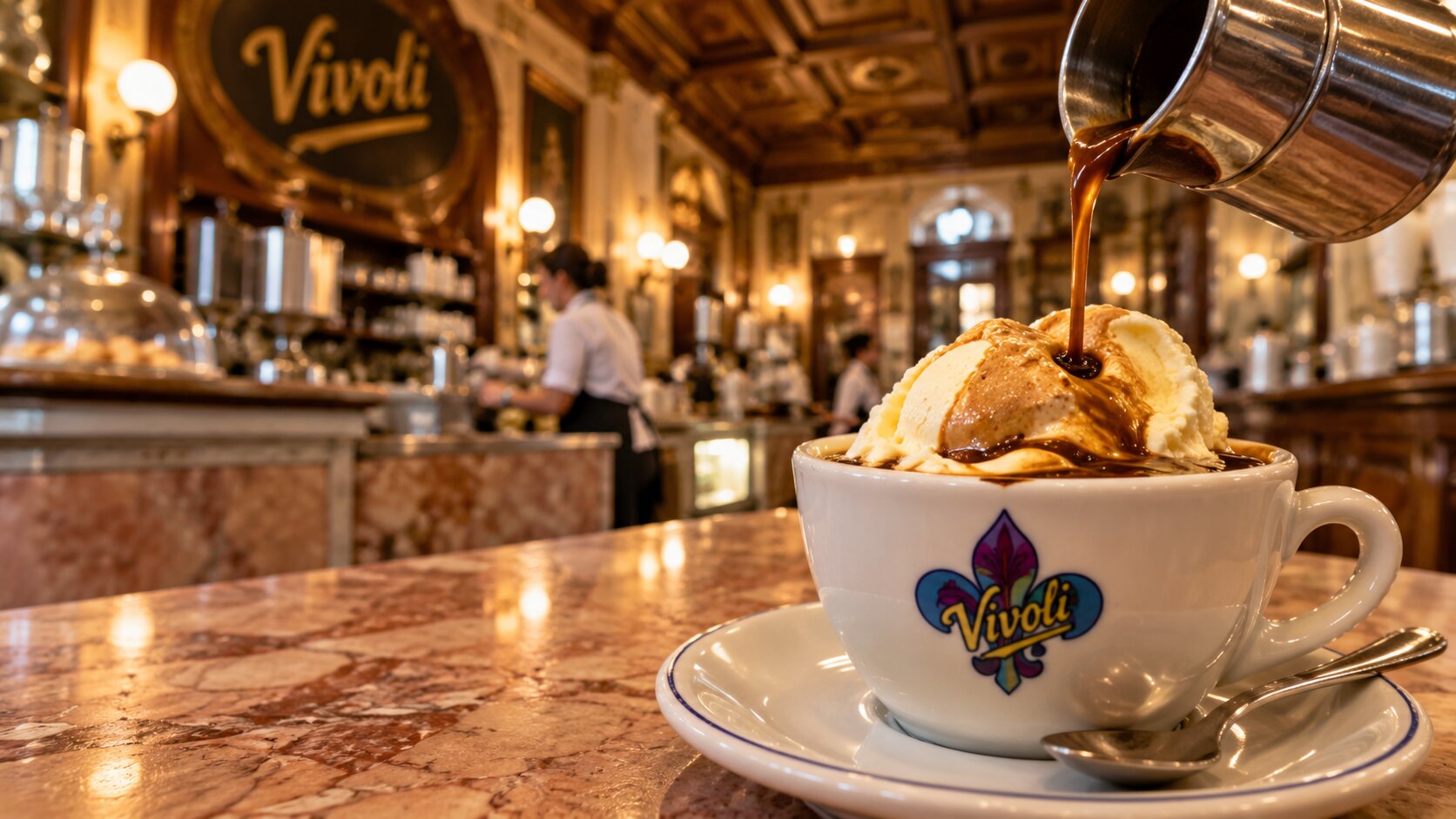
Down Via dell'Isola delle Stinche, a narrow lane behind the Bargello, is Vivoli. Serafino Vivoli opened a latteria here in 1929. He sold milk, coffee and whipped cream for the Sunday lunch table. By the early 1930s he and his brother Raffaello were making gelato, and the family is still behind the counter today. Look up at the wooden coffered ceiling and the pink marble on the counters. Don't ask for a cone, there aren't any, everything comes in a cup. The gelato is seasonal, so the fruit flavours change through the year. You have to try the Gran Crema! It's a scoop of their custard gelato, drowned in hot espresso and served in a cappuccino cup at the bar. A video of it went round the world in 2023. In 2025 the family opened a small affogato bar next door to cope with the queue. If you go, remember it's closed on Mondays.
Perché No! is a few minutes' walk away on Via dei Tavolini, a short side street off Via dei Calzaiuoli. It has been open since 1939. During the war ingredients were scarce and the electricity kept failing. The story goes that the shop started making whipped, mousse-like desserts that didn't need constant freezing, and that is where its semifreddi come from. Another local story says that in 1946 it was one of the first gelaterie to show its tubs behind glass. Today the gelato sits in lidded steel wells, so you won't see big bright mountains of colour in the window. Try the semifreddo of course, but the classic flavours are very good here too.
Is there a Florentine flavour?
There is, and it's called Buontalenti. It takes its name from Bernardo Buontalenti, the Medici court architect. According to legend, he served a frozen cream at a court banquet in the sixteenth century. Florentines will happily tell you this makes their city the home of gelato! The flavour is a smooth, pale custard of cream, milk and egg yolks. Plenty of places selling gelato in Florence have it on the board. If you only try one new flavour while you are here, make it this one. The gelateria most famous for it is Badiani, on Viale dei Mille out near the football stadium. If you are staying a few days, it really is worth the trip.
Gelato in Florence on the other side of the Arno
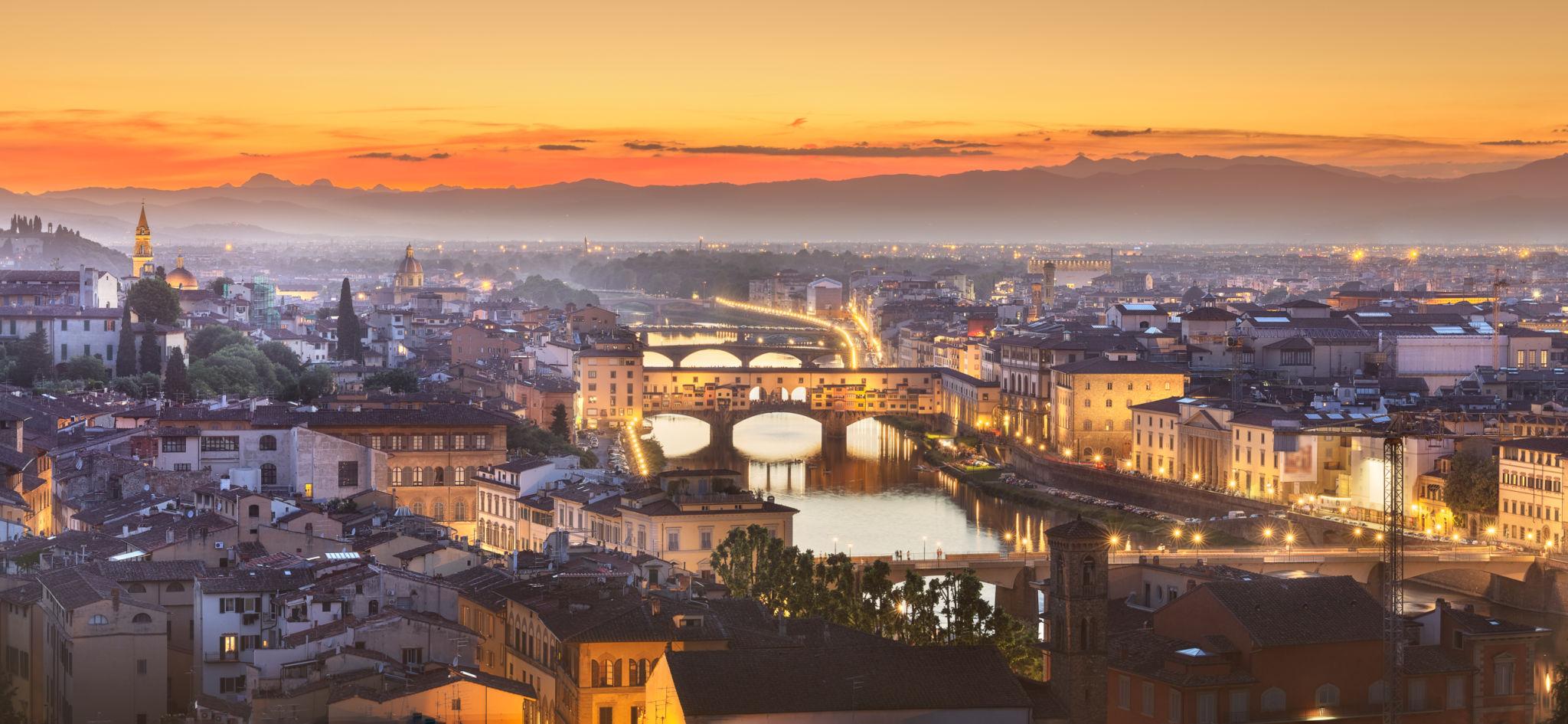
Across the river the queues get shorter. Gelateria della Passera faces Piazza della Passera, a tiny square between the Ponte Vecchio and Santo Spirito. The counter is small and the list changes with the season. There is nowhere to sit, so you eat it standing in the square. The Pitti Palace and the Boboli Gardens are just around the corner, so it's a good reward after a morning of walking. It also makes an easy stop if you are spending the afternoon among the workshops of Florence's artisan quarter. Further west, La Sorbettiera on Piazza Tasso is a real neighbourhood gelateria. Sbrino, on Via dei Serragli in San Frediano, is newer but already very popular with Florentines.
In many of the older places you pay at the till first. Then you hand your receipt over at the counter and choose your flavours. Two flavours in even the smallest cup is normal. You can always ask to taste one first on the little plastic spoon. Watch out for the neon-green pistachio! Our piece on Tuscan desserts has a couple of simple ways to tell real artisan gelato from the factory kind. It also covers the cakes and biscuits you will find in the pasticcerie.
Making your own gelato
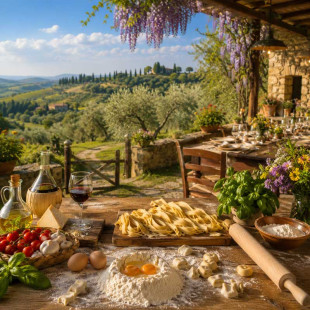
All this tasting might make you want to have a go yourself. Gelato is part of our cooking class at a farmhouse in the Tuscan hills, just outside Florence. It is actually the first thing you make. You choose your flavours and put together your own mixture, then leave it to freeze. Then it's on to pizza or fresh pasta. Pizza makers pick their toppings from the vegetables in the estate garden and bake them in the wood oven. The pasta makers prepare two kinds of fresh pasta with Tuscan sauces like ragù alla salsiccia and burro e salvia. The gelato comes back at the end, when the chefs finish it with liquid nitrogen. Then everyone sits down to eat together with wine and beer. We take you there and back from Florence. There's an appetiser and a glass of wine when you arrive, and you take the recipes home with you.