
In this post
- What an Audio Guide Actually Gives You
- What a Local Guide Adds That a Recording Can't
- The Question an Audio Guide Can Never Answer
- Do Audio Guides Save Money in the Long Run?
- When an Audio Guide Is Genuinely the Right Choice
- Reading the Room, Literally
- Stories That Change Based on Who's Listening
- The Group Effect Audio Guides Can't Replicate
- Choosing Between the Two
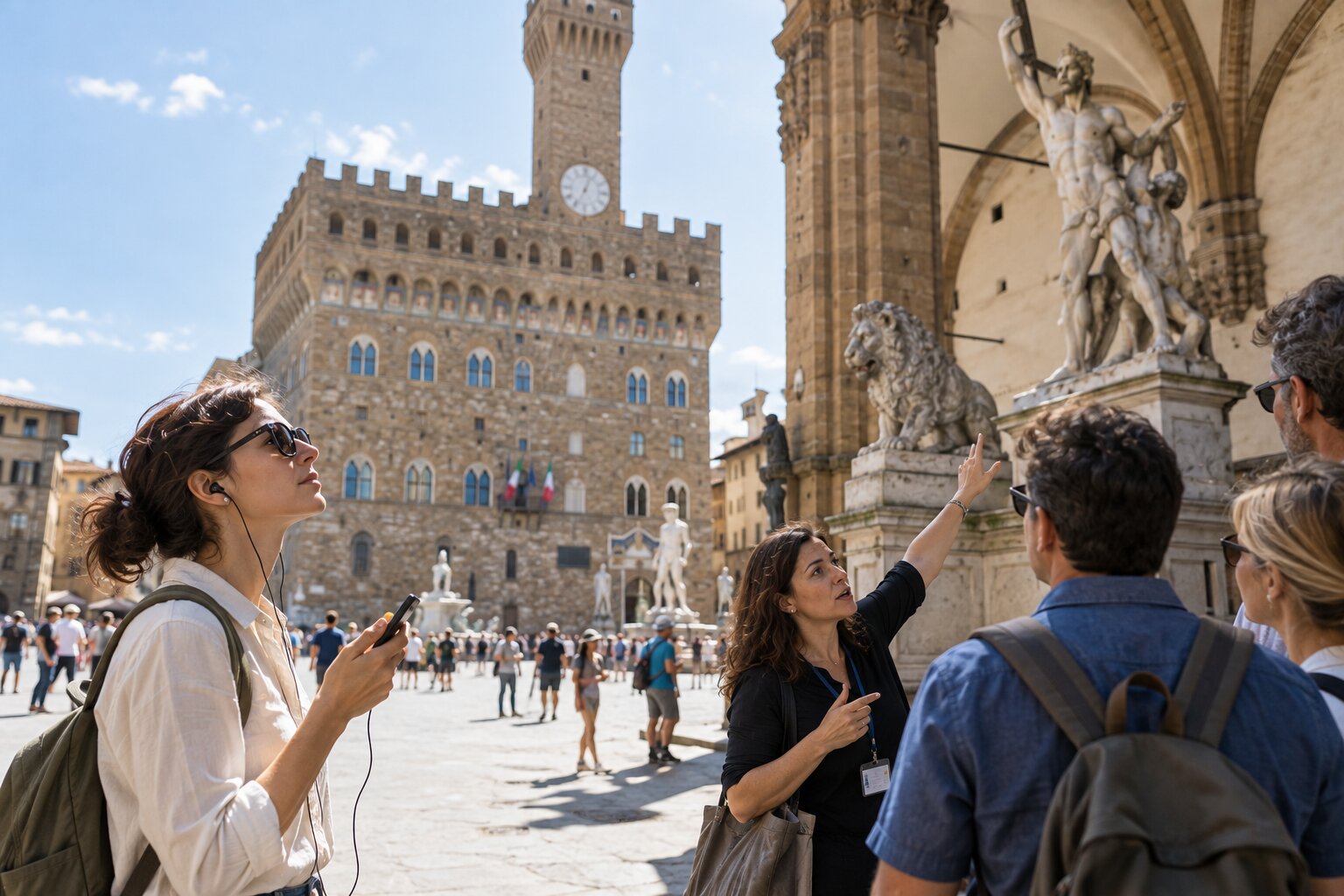
Standing outside a museum or a piazza in Italy, travelers usually face the same choice. Rent an audio guide, follow a recorded voice through a fixed script, or book a real person who can actually answer a question. The local guides vs audio guides in Italy decision seems minor at first. It ends up shaping the whole tone of a visit.
Both options exist for a reason, and neither is wrong outright. But they solve different problems, and understanding that difference makes the choice a lot easier.
Cost isn't really the deciding factor here, even though it often gets treated as one. The real question is what kind of experience actually helps you understand what you're looking at.
What an Audio Guide Actually Gives You
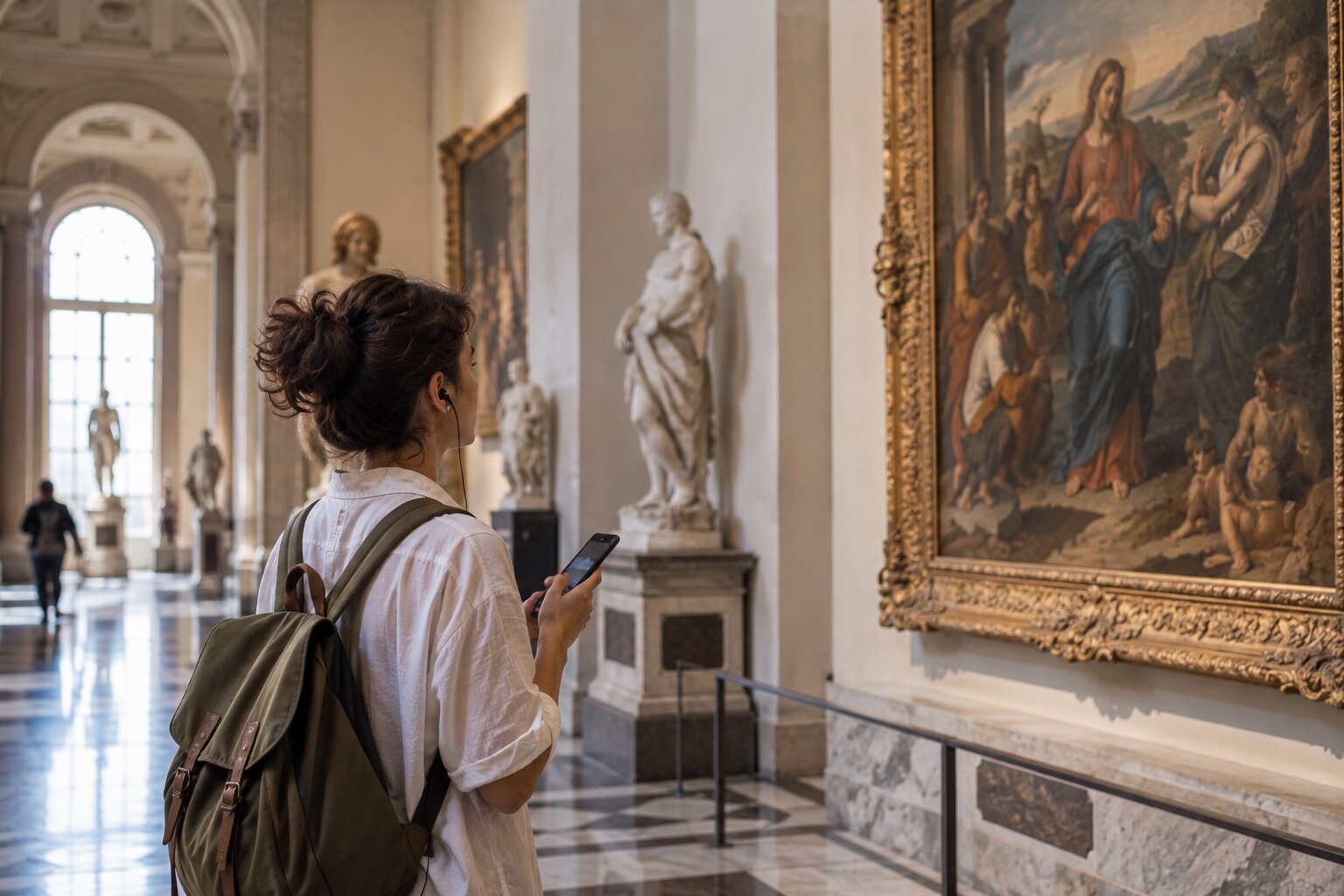
An audio guide delivers consistent, pre-recorded information at your own pace. Press play, walk where the numbers tell you to, and listen. It's affordable, available whenever you want it, and doesn't require coordinating a meeting time with anyone else.
That consistency is genuinely useful in some settings. A quiet museum gallery, a self-paced visit with no time pressure, a traveler who prefers solitude over conversation. In these situations, an audio guide does exactly what it promises.
It also removes the social pressure some travelers feel joining a group tour. No small talk required, no waiting on slower members of a group. Just a set of headphones and a fixed script moving entirely at your own pace.
What a Local Guide Adds That a Recording Can't
A recording can't see you. It doesn't know if you're confused, bored, or fascinated by something it already moved past two minutes ago. A local guide reads the room in real time, slowing down at what catches your attention and skipping past what doesn't.
Our guide to how to choose a private tour in Italycovers this responsiveness in more depth, including why it matters even in a small group setting, not just a fully private one.
The Question an Audio Guide Can Never Answer
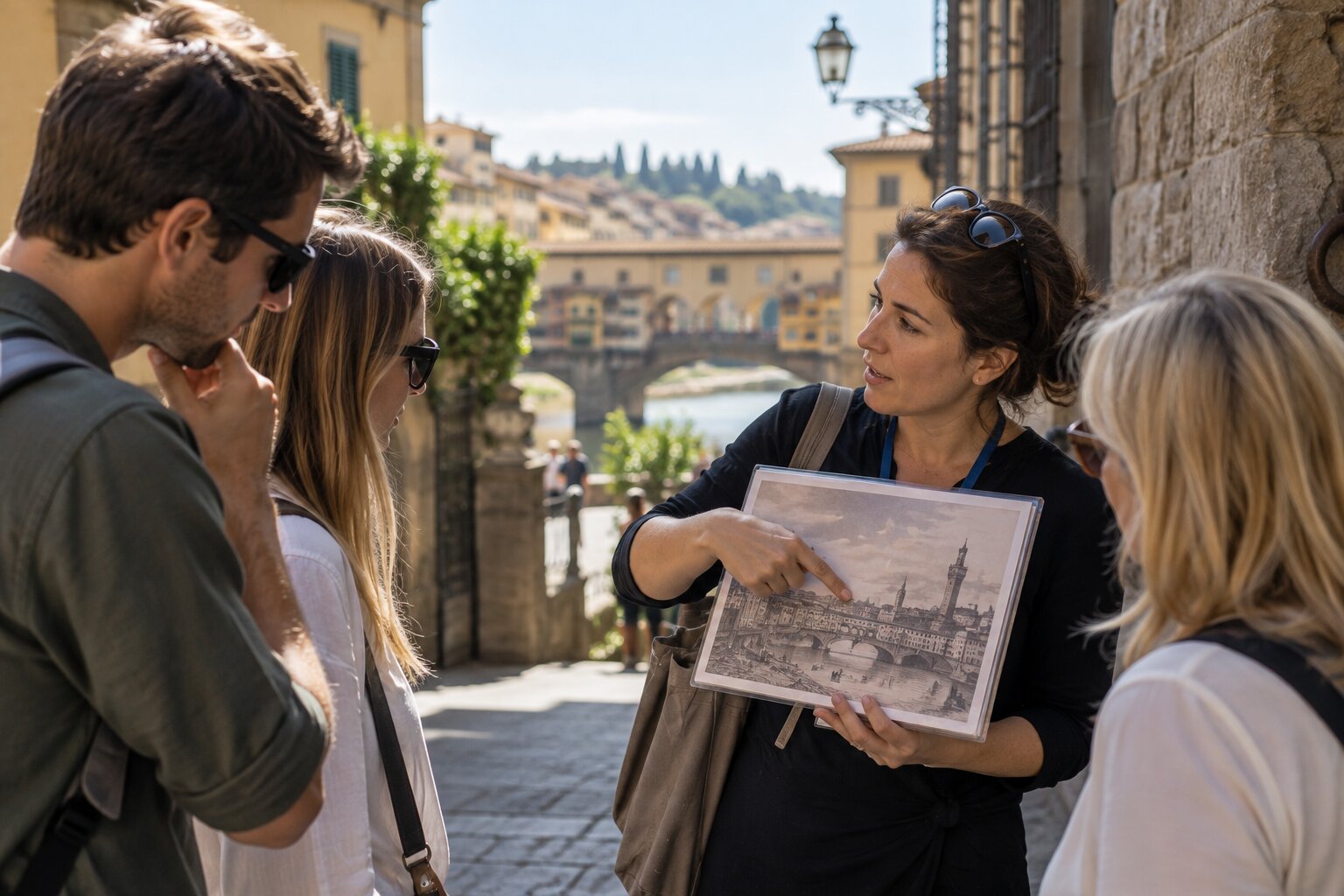
This is the clearest practical difference. An audio guide script gets recorded once and stays fixed, no matter how many questions a curious traveler might have standing in front of a fresco or a statue. A local guide handles a genuine question the moment it comes up, then folds the answer back into the story naturally.
This matters more than it sounds. The best moments on a guided walk often come from an unplanned question, not the scripted stops. An audio guide has no mechanism for that kind of detour at all.
Do Audio Guides Save Money in the Long Run?
On paper, yes, an audio guide usually costs less upfront than a guided walk. But the comparison gets murkier once you factor in what's actually delivered. A guided tour bundles storytelling, navigation, and local context into one price. An audio guide only covers the narration, leaving the rest of the logistics, where to stand, what to skip, how much time to spend, entirely up to the traveler.
For travelers with limited time in a city, that logistics gap costs more than the audio guide saves. Wrong turns and missed context add up fast on a trip that only lasts a few days.
There's also the cost of missing something entirely. An audio guide only covers what its script was written for. A local guide notices unexpected details along the route too, a closed alley worth a detour, a smaller church worth a quick look, things a fixed recording was never built to mention.
When an Audio Guide Is Genuinely the Right Choice
Solo travelers who prefer to move at their own pace, without small talk or a fixed group schedule, often do better with an audio guide. So do repeat visitors who already know the basics and just want a refresher on specific details inside a museum they've seen before.
Our guide to avoiding tourist traps in Tuscany touches on a related point here, since an audio guide can sometimes route travelers straight into the busiest, most obvious stops without the local perspective a guide would naturally offer instead.
Reading the Room, Literally
A local guide adjusts pace based on energy, not just a script. If a group is tired, a good guide shortens the next stop. If everyone's engaged and asking questions, the guide extends it instead. That kind of real-time pacing simply doesn't exist with a recording playing on a fixed timer.
This flexibility extends to weather, crowds, and unexpected closures too. An audio guide can't reroute itself around a closed piazza or a sudden downpour. A human guide adjusts within seconds.
Stories That Change Based on Who's Listening
A good guide tailors the story to the audience without even thinking about it. The version told to a group of history buffs differs from the one told to a family with young kids, even standing in the exact same spot. An audio guide delivers the identical script to everyone, regardless of who's actually listening.
This adaptability is easy to underestimate until you've experienced both. A recorded voice can't tell that a joke landed well, or that a detail needs more explanation. A person can, and adjusts on the spot.
The Group Effect Audio Guides Can't Replicate
Walking with other people, even strangers on a small-group tour, changes the experience in ways an audio guide can't touch. A shared reaction to a good story, a quick exchange with someone else in the group, the sense of discovering something together rather than alone with a recording. That social layer is invisible until it's missing.
This matters even for travelers who initially think they'd prefer a solo, self-paced visit. Plenty of people who expect to enjoy the independence of an audio guide end up wishing, halfway through, that there was someone to actually talk to about what they just saw.
Choosing Between the Two
Local guides vs audio guides in Italy really comes down to what kind of experience you're after. An audio guide suits independence and a fixed budget. A local guide suits curiosity, questions, and a story that actually responds to the people hearing it.
Our Essential Florence Walking Tour puts a real local guide in front of your group for three hours through Piazza della Repubblica, Dante's neighborhood, the Duomo, and across Ponte Vecchio into the Oltrarno. Questions get answered as they come up, the pace adjusts to the group, and the stories shift depending on what actually interests the people walking that day, something no recorded script could ever manage.