In this post
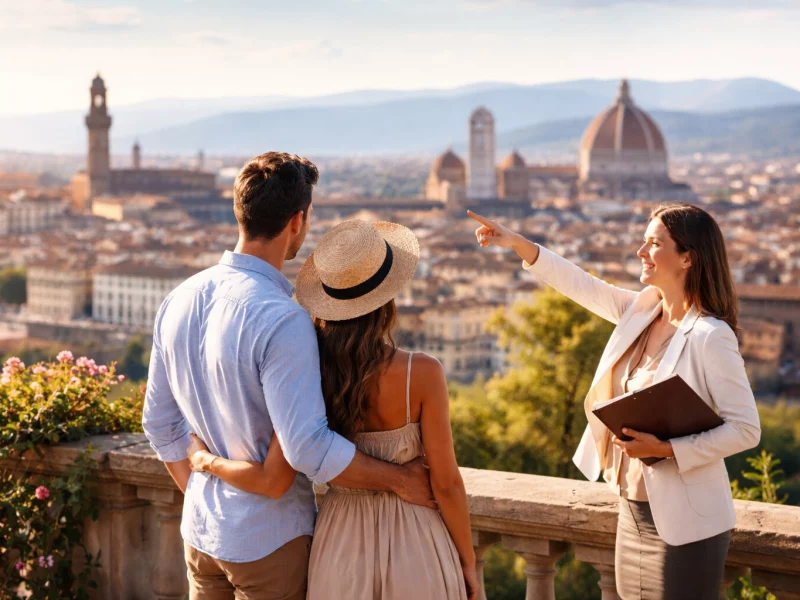
Search "private tour Florence" and you'll get hundreds of results within seconds. Most of them look similar on the surface: a guide, a small group, a flexible schedule. What separates a forgettable afternoon from a genuinely memorable one usually comes down to a handful of details. None of them show up in the listing photos.
What "Private" Really Means
"Private" technically just means nobody else joins your booking. That's a low bar. A private tour can still run on a fixed script. It can hit the same six stops as every group tour that day, and leave at the exact minute the itinerary says it should. Nothing about that is actually personal.
A genuinely private experience works differently. If you linger at a stall in the market longer than planned, the guide adjusts rather than rushing you along. If you ask a question that has nothing to do with the planned stop, the guide follows it. The booking might say "private" either way. Only one version actually behaves like it.
From Itinerary to Experience
Most travelers start by comparing itineraries: how many stops, how many hours, how many landmarks fit into the day. That's a reasonable place to start, but it's the wrong measure of quality. A tour that crams in eight stops into six hours does the math against itself. Five minutes per stop leaves no real time to look at anything.
A well-built private tour does the opposite. It picks fewer stops and gives each one room to breathe. Twenty unhurried minutes in front of one fresco usually beats ninety rushed seconds in front of six.
The Role of the Guide
In November 2024, Florence's city council banned tour guides from using amplifiers and loudspeakers in the historic center. It was part of a wider push against overtourism, after the city recorded 7.8 million visitors in the first nine months of that year alone. Large groups still move through the Uffizi and the Accademia every day. But without the loudspeaker, a guide leading twenty or more people has to talk louder, move faster, and keep the group tight. That leaves even less room for a real conversation about what's actually on the wall.
A private guide doesn't have that problem. Say you stop in front of Botticelli's Primavera and ask why the figures' feet barely touch the ground. A good private guide can actually answer it, for as long as the question deserves, instead of moving the group along on schedule. That's the real value a guide adds. Not more facts recited faster. Room to follow a question wherever it leads.
Pace, Flexibility, and Flow
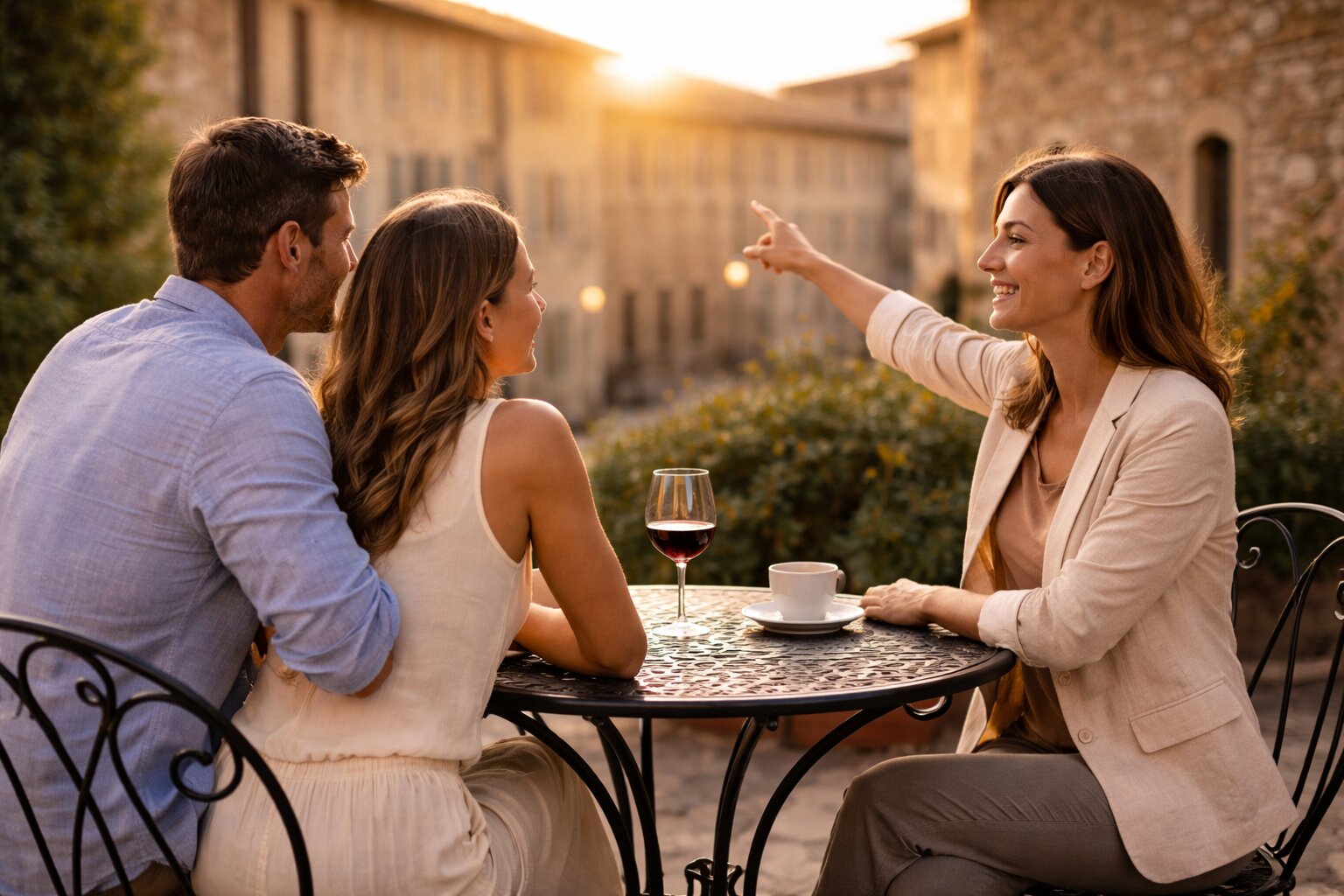
Flexibility sounds like a given with a private tour, but it doesn't happen automatically. A guide still needs a plan. The difference is that the plan bends without breaking. Say a market stall pulls your attention for ten extra minutes. A good guide trims something else later, rather than cutting your moment short.
This matters most on the days that don't go as expected. Rain moves a walking route indoors. A museum room closes for restoration without warning. A group tour usually just absorbs the disruption and moves on, because the schedule can't bend for one person's preference. A private guide, working with just you or your group, can rework the rest of the day on the spot, swapping a closed courtyard for an open one nearby instead of simply crossing it off the list.
Some parts of a day call for standing still. A courtyard. A view. A quiet church nobody else has wandered into yet. Other parts call for movement. Knowing which is which, and adjusting in real time, separates two very different things. One is a private tour that merely avoids a bus group. The other actually feels shaped around you.
Customization as a Form of Design
Customization gets treated as a menu: pick more stops, add an extra hour, request a specific neighborhood. Real customization works more like editing than adding. A good guide leaves things out just as deliberately as they put things in. That's what makes the day hold together, instead of turning into a checklist stitched from your requests.
Most of these preferences take shape earlier than people expect. They often form during the dreaming stage of planning a trip to Italy, long before anyone books a specific tour. Pay attention to what actually draws your interest at that early stage. It makes a private tour that's genuinely built around you much easier to spot, instead of one that just has your name on the confirmation email.
Private vs Group Tours
Group tours aren't a bad option. They're just a different one, built for efficiency rather than depth. Venice capped tour groups at 25 people and banned megaphones there in 2024. The reasoning was straightforward: large groups moving as one unit put real strain on narrow streets and historic sites. Florence's own loudspeaker ban points at the same underlying issue. Big groups need artificial volume to function, because by nature they can't gather close enough for a normal conversation.
A private tour sidesteps that problem entirely. There's no crowd to manage, no headset system needed, no risk of losing half the group at a crosswalk. The guide can speak normally and walk at your pace. They can adapt the route around whatever's happening that day, like a street closed for a local event or a museum room that's unexpectedly quiet.
Choosing Based on Travel Style
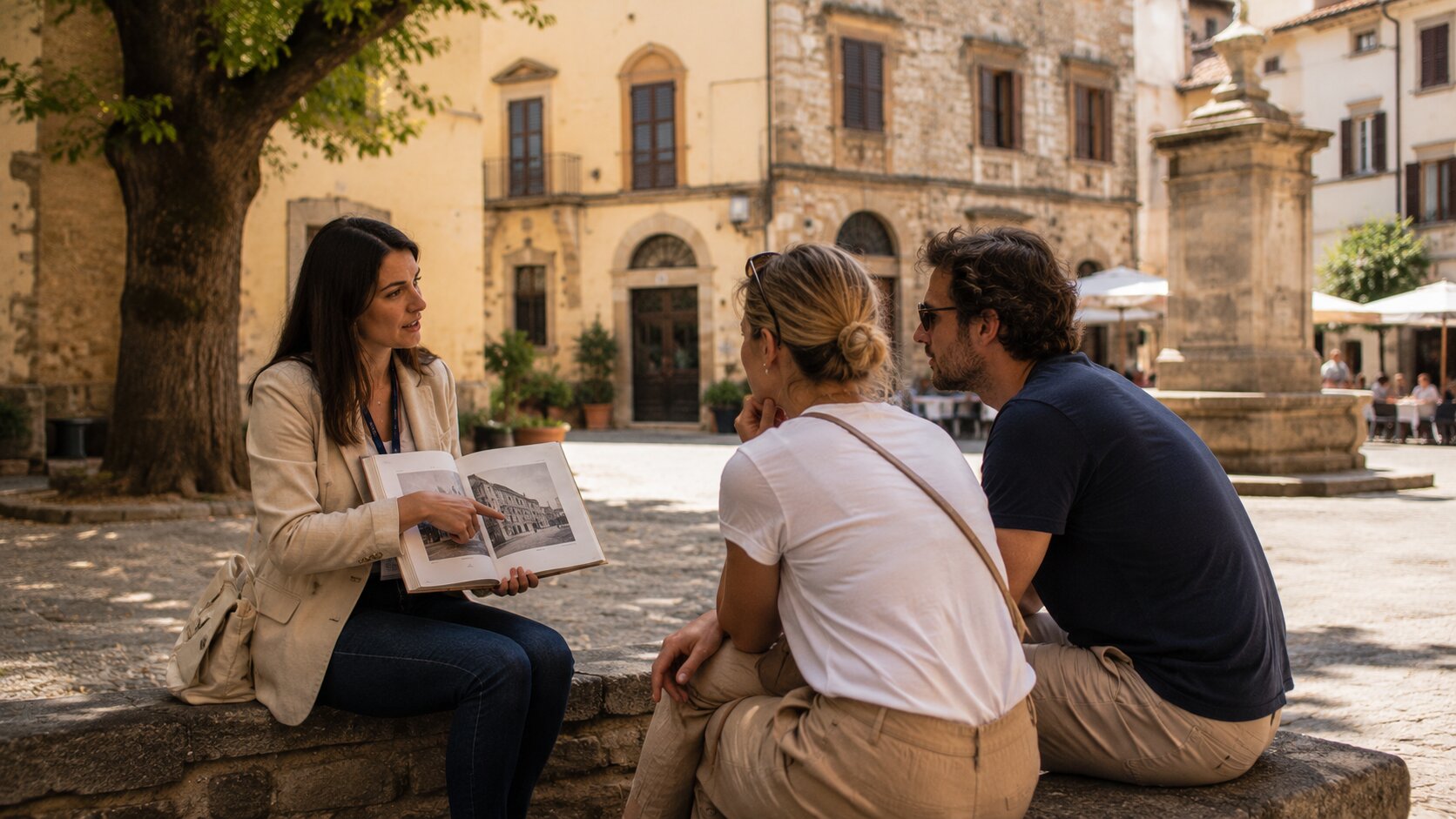
The right private tour depends entirely on what you're actually looking for. Someone chasing Renaissance art and architectural history needs a different guide, and a different pace, than someone who wants an afternoon of food markets and side streets with no fixed agenda. Neither approach is more "authentic" than the other.
What matters is whether the structure of the tour actually matches what you want out of the day. A tour built for art history buffs will frustrate someone who just wants to eat well and get lost in back alleys. The reverse is just as true. Getting that match right, before booking, saves a lot of disappointment later.
A More Thoughtful Way to Explore Italy
Choosing a private tour really comes down to three things. Know what you want. Find a guide who can read the room and adjust. Pick a structure loose enough to bend without falling apart. Get those right, and the day stops feeling like a sequence of stops on a map. It starts feeling like something that actually happened to you, specifically, rather than to whoever booked the same tour last Tuesday.
Travelers who want that kind of experience can explore private tours in Florence. They're built around exactly this kind of flexibility, with guides who know when to talk and when to simply let a place speak for itself.