In this post
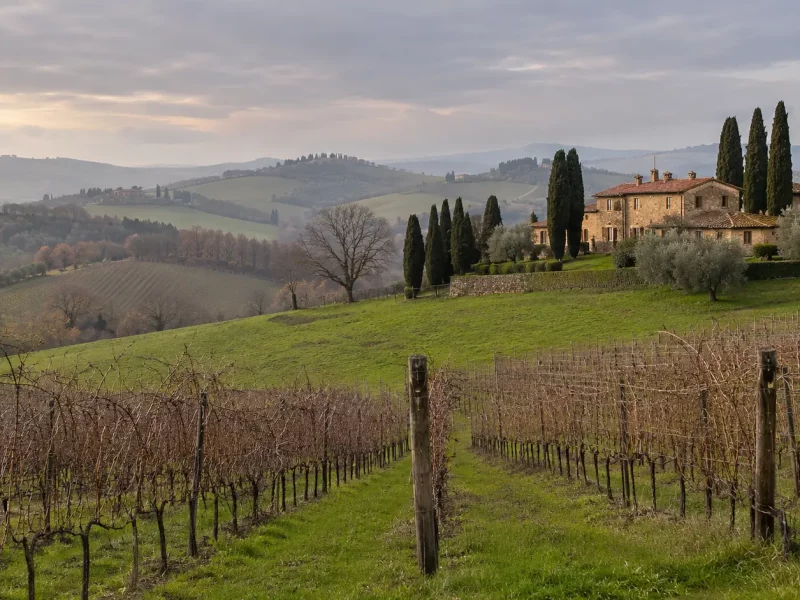
Tuscany in winter is worth visiting if you can live with short days and the odd wet morning. Between November and February the hill towns are at their quietest, the new olive oil is on every table, and you can cross Piazza del Campo without steering around tour groups. What you give up is warmth and daylight: in midwinter the sun goes down before 5pm.
If you're already in Florence for the museums or for the holidays, a day out in the countryside still makes sense. It needs to be planned around the light, and around a few things that close or change once the season ends.
What's the weather like in Tuscany in winter?
Mild by northern European or New England standards, but not warm. In Florence, January afternoons usually reach about 10°C (50°F) and nights drop close to freezing. November is normally the wettest month of the year, with grey spells that can last several days. December and January are often drier and colder.
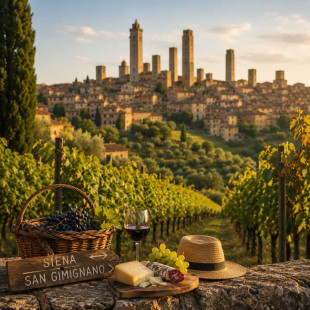
Siena and San Gimignano sit on hilltops at roughly 300 metres, so they feel a few degrees cooler than Florence and the wind comes down the narrow streets. On still mornings the valleys fill with mist, and from the road you sometimes see San Gimignano's towers standing above it.
Snow in the towns is rare, though some years it does fall. Pack layers and shoes with grip, because Siena's streets are steep and paved in stone and brick and they get slippery in the rain.
Where you notice the missing crowds
In Pisa, Piazza dei Miracoli in summer is a long line of people holding up the tower with one hand for a photo. In January you can take the same picture without waiting for a gap.
San Gimignano changes even more. The town is small and gets most of its visitors from day-trip coaches, which thin out a lot after the autumn, and Via San Giovanni, the main street up from the gate, is quiet enough to actually look in the shop windows. A few shops and restaurants close for a couple of weeks after Epiphany while the owners take their own holidays. If San Gimignano is the town you care most about, our article on the best time to visit San Gimignano has more on how it changes through the year.
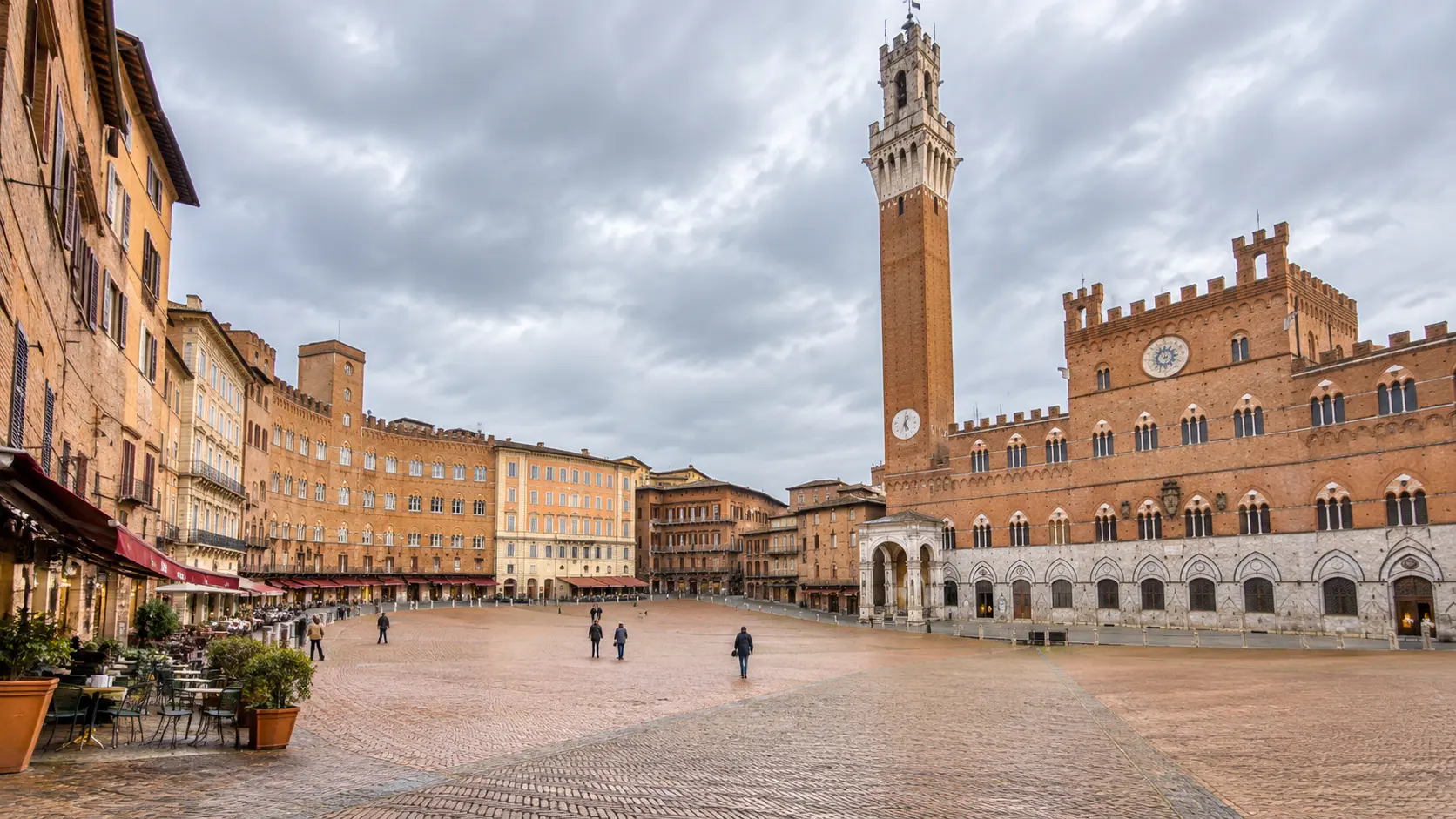
Siena stays lived-in all year, since it's a university city and a working one. You see the difference mainly in the Duomo and in the Campo.
Our Private Tuscany Tour in One Day to Pisa, Siena and San Gimignano covers all three towns, with lunch at a family-owned Chianti estate in between. Your guide picks you up at your accommodation in Florence and brings you back there in the evening. In winter, having one person in charge of the day helps, because plans shift with the weather: if it's pouring in San Gimignano you spend less time in the street, and nothing has to be rebooked. Around Christmas the Siena Duomo also hosts more services, and when it's closed for one the guide takes you to the Santa Maria della Scala museum across the square instead.
Planning a day around the light
Around the winter solstice you get roughly nine hours of daylight, and sunset in Pisa falls before a quarter to five. That affects the day more than the cold does.
The tour visits Siena in the morning, has lunch in Chianti, continues to San Gimignano and ends in Pisa. In December and January this means reaching Piazza dei Miracoli in the late afternoon, sometimes after dark, when the square is floodlit. If climbing the Leaning Tower is important to you, say so when you book. The guide can arrange a skip-the-line ticket for the climb, but the tower closes earlier in winter than in summer, so the timing is tighter and worth discussing on the morning of the trip. Also from mid-November to mid-April many Tuscan roads require winter tyres or snow chains on board, which is one less thing to think about when someone else is driving.
If you have more than one day, it's easier to spread things out and let the weather choose. Our article on how many days in Tuscany you really need helps with that. With shorter daylight, it can be worth adding a day in winter, depending on what you want to fit in.
Christmas, New Year and the January lull
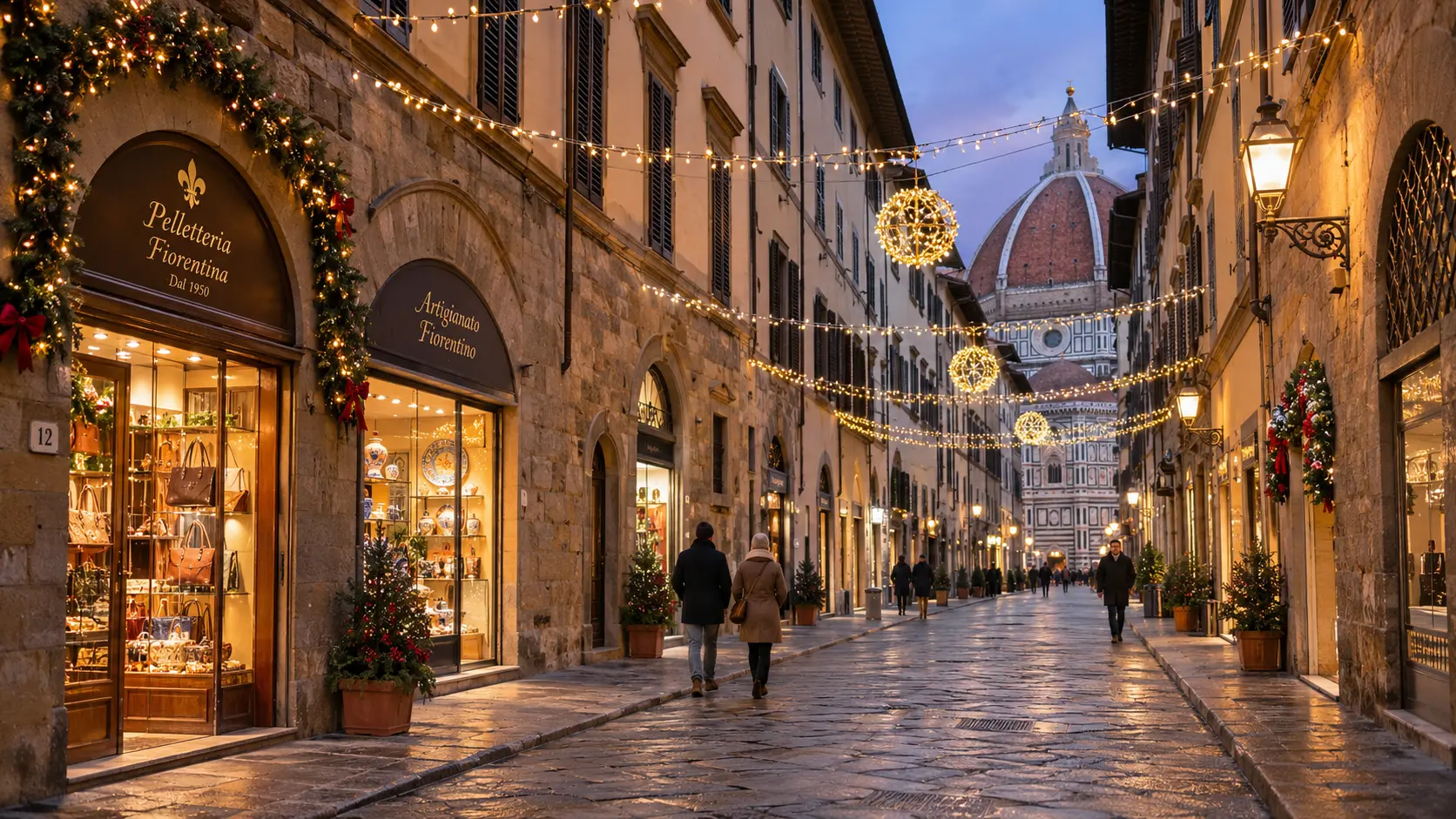
On 25 December and 1 January many sites close or open for reduced hours. The 8th and 26th of December and the 6th of January are public holidays too, and Italians use them for their own day trips, so towns are busier on those days, not quieter. Siena has held a Christmas market in the Campo in early December in recent years; dates change, so check the city's calendar.
After Epiphany it stays quiet until Carnival in February, when Viareggio on the coast near Pisa holds its parades. Hotel prices in Florence drop in this stretch. In the countryside, on the other hand, a lot of agriturismi and smaller country hotels close between November and March, which is one practical reason to stay in the city and go out for the day rather than book a farmhouse for the week.
Many attractions have shorter opening hours in winter. Siena's Torre del Mangia, for example, closes at 4pm from mid-October to the end of February, with the last tickets sold at 3:15. Worth knowing if you plan to come back to Siena on your own on another day and want to climb it, since it isn't part of the tour. On a wet day, it helps that some of the main stops are indoors anyway, starting with the Siena Duomo.
Olive oil and winter food
The olive harvest runs from late October into December, and for a few weeks the new oil, olio nuovo, is what everyone wants you to taste. It's bright green, slightly cloudy and peppery, and locals pour it over grilled bread rubbed with garlic, which they call fettunta.
Cavolo nero, the dark Tuscan kale, is said to be at its best after the first frost, and it goes into ribollita, the thick bread and bean soup that's reheated and eaten again the next day. Chestnut flour turns up in castagnaccio, a flat dense cake with rosemary and pine nuts. Some visitors love it and some really don't. You'll also see roast chestnuts sold from street stalls in Florence through the colder months, and in the hill towns at weekend fairs.
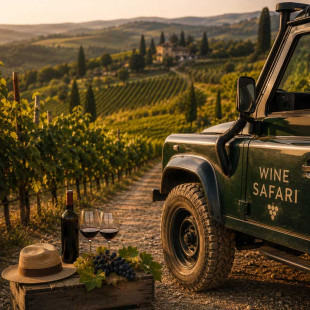
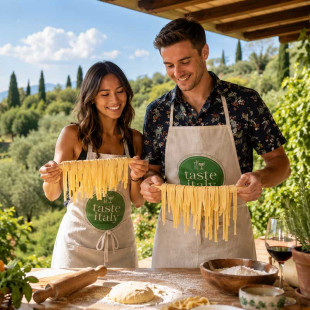
The lunch on the tour is at a Chianti farmhouse: homemade pasta, cured meats, local cheeses and Tuscan biscotti, with a tasting of Chianti, Vernaccia and Vin Santo.
On November weekends San Miniato, the hill town on the road between Florence and Pisa, holds its white truffle fair. Check the dates if truffles are part of the reason for your trip.
For a single day out of Florence in the off-season, Siena in the morning, a long lunch in Chianti, San Gimignano in the afternoon and Pisa at dusk is a good way to see Tuscany in winter. Doing it privately means the pace can change when the rain does.