In this post
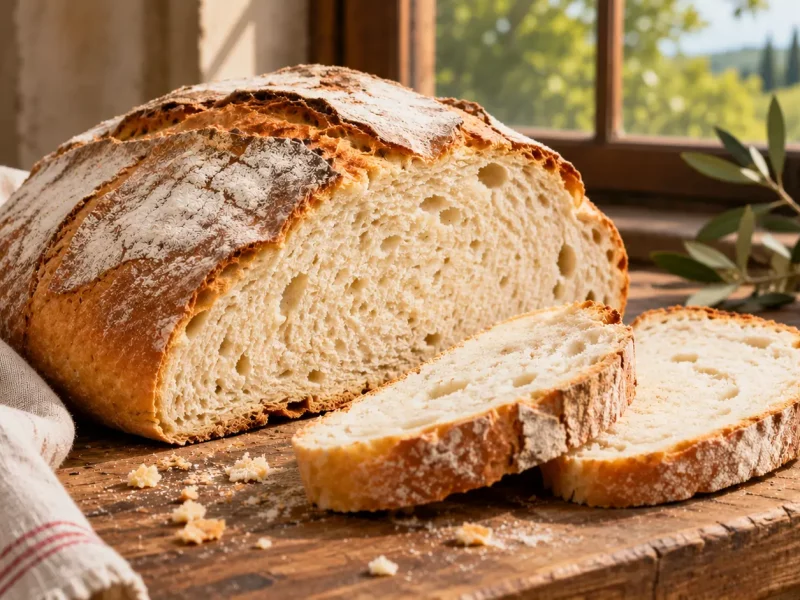
Tuscan bread is baked without salt, and it's supposed to taste plain. Locals call it pane sciocco, which in Tuscany refers to bread made without salt, while in standard Italian the word usually means silly. Tuscans mostly eat it alongside salty cured meats and pecorino, soups and sauces. A couple of days later, what remains of the loaf becomes the base of some of the region's best-known dishes.
Most visitors find this out in their first trattoria, reaching for a slice from the basket and wondering if the baker forgot something. Florence has been eating its bread this way for centuries, and people here will defend it with some heat.
Why is Tuscan bread made without salt?
There's no single documented answer, only a few stories that get repeated.
The version you'll hear most often goes back to the 1100s and the long rivalry with Pisa. Pisa was a sea power and controlled much of the salt coming into Tuscany. During one of their disputes, the story says, the Pisans blocked the supply or pushed the price up so far that Florentine bakers simply stopped using it. Another version moves the blame to salt taxes, which were heavy and long-lasting across Italy. The director of the Pane Toscano consortium, Daniele Pardini, tells it as a tax story: Florence decided it would no longer pay, and bread without salt became the habit.
Another explanation has to do with the food itself. Tuscan food is salty. Finocchiona, prosciutto toscano and aged pecorino all carry a lot of it, and a bread with no salt of its own balances the plate. Historians at the consortium point out that in the 1800s unsalted bread was central to the diet of Tuscan sharecroppers, the mezzadri, who couldn't afford to waste anything, salt included.
Florentines also like to bring Dante into it. Writing in exile, he has an ancestor warn him that he'll learn "come sa di sale lo pane altrui", how salty other people's bread tastes. He meant the bitterness of living on someone else's charity. Still, it's hard to read the line in Florence without thinking he'd noticed the difference at the table too.
What counts as pane toscano
Since 2016 Pane Toscano has been a protected designation (DOP), and the rules are short. Soft wheat flour that keeps the wheat germ, water and a natural sourdough starter. No salt at all. The wheat, the flour and the baking all have to come from Tuscany. A proper loaf has a thick, crackly crust and a pale, slightly chewy crumb, and the official description even mentions a smell of toasted hazelnut.
You'll mostly see two shapes in a forno, the long filone and the round bozza. Not every unsalted loaf in Florence carries the DOP stamp, and that's fine. Asking for pane toscano or pane sciocco gets you the right thing.
Tuscany isn't completely united on this. Around Lucca and up towards Massa and Carrara, bakers have traditionally salted their bread, and they don't appreciate being lumped in with Florence.

How to eat it at the table
In a Florentine restaurant the bread basket comes with nothing. No butter, no little dish of oil and balsamic vinegar to dip into, which isn't a Florentine habit. The bread is there to go with the food: a slice with the affettato misto, a piece to push pasta onto your fork, and at the end a scarpetta, mopping the last of the sauce off the plate. In a trattoria nobody will mind, though in a smarter restaurant people tend to be more discreet about it. You'll usually find bread charged as part of the coperto on the bill, so you may as well use it.
Then there's fettunta, which is just a thick slice of Tuscan bread grilled over embers, rubbed with garlic, soaked in olive oil and finished with salt. It's best from late October into November, when the olive harvest is on and the new oil is green and peppery enough to catch the back of your throat. Restaurants put it on the menu as soon as the first olio nuovo arrives from the mill. Crostini neri, toasted bread spread with a chicken liver pâté, are another classic starter, especially at Sunday lunches and family gatherings.
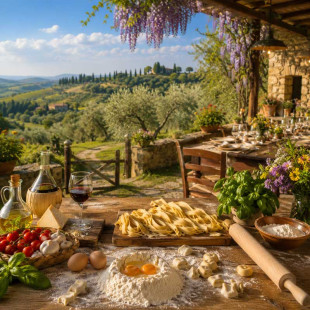
At our farmhouse cooking class, bruschetta is one of the first things guests prepare. It's made with the estate's own olive oil and eaten with a glass of Chianti while the kitchen gets organised.
Yesterday's loaf, today's lunch
With its thick crust and dense crumb, a Tuscan loaf dries out slowly over a few days. In farming households, the hard ends went straight into cooking. Bread was too valuable to throw away, and whole dishes grew up around the habit of using it.
Ribollita is the famous one. It's a thick soup of cannellini beans, cavolo nero and other winter vegetables, layered with stale bread and, as the name says, boiled again the next day. Many Florentines will tell you it's better on day two or three and that the cavolo nero is sweeter after the first frost. By the time it reaches the table it's closer to a stew than a soup. Some places finish it with a raw slice of onion and a thread of oil on top.
Pappa al pomodoro is the summer equivalent: ripe tomatoes, garlic, basil and bread cooked down until it collapses into something you eat with a spoon. In summer it's often served warm or at room temperature.
Panzanella is served cold. Stale bread is soaked in water, squeezed out and crumbled with tomatoes, red onion, cucumber and basil, then dressed with oil and vinegar. Older versions had no tomato at all, since it only became common in Tuscan kitchens much later. Further south in the Maremma, acquacotta works along similar lines, a vegetable broth poured over bread, often with an egg cracked in.
All of these need bread that soaks things up and holds together without adding salt of its own. A salted loaf changes the seasoning of the whole pot, so the cook has to compensate somewhere else. If you want the rest of the region's classics, from bistecca to the bean dishes, our guide to traditional Tuscan food has them.
Schiacciata, Florence's salted bread
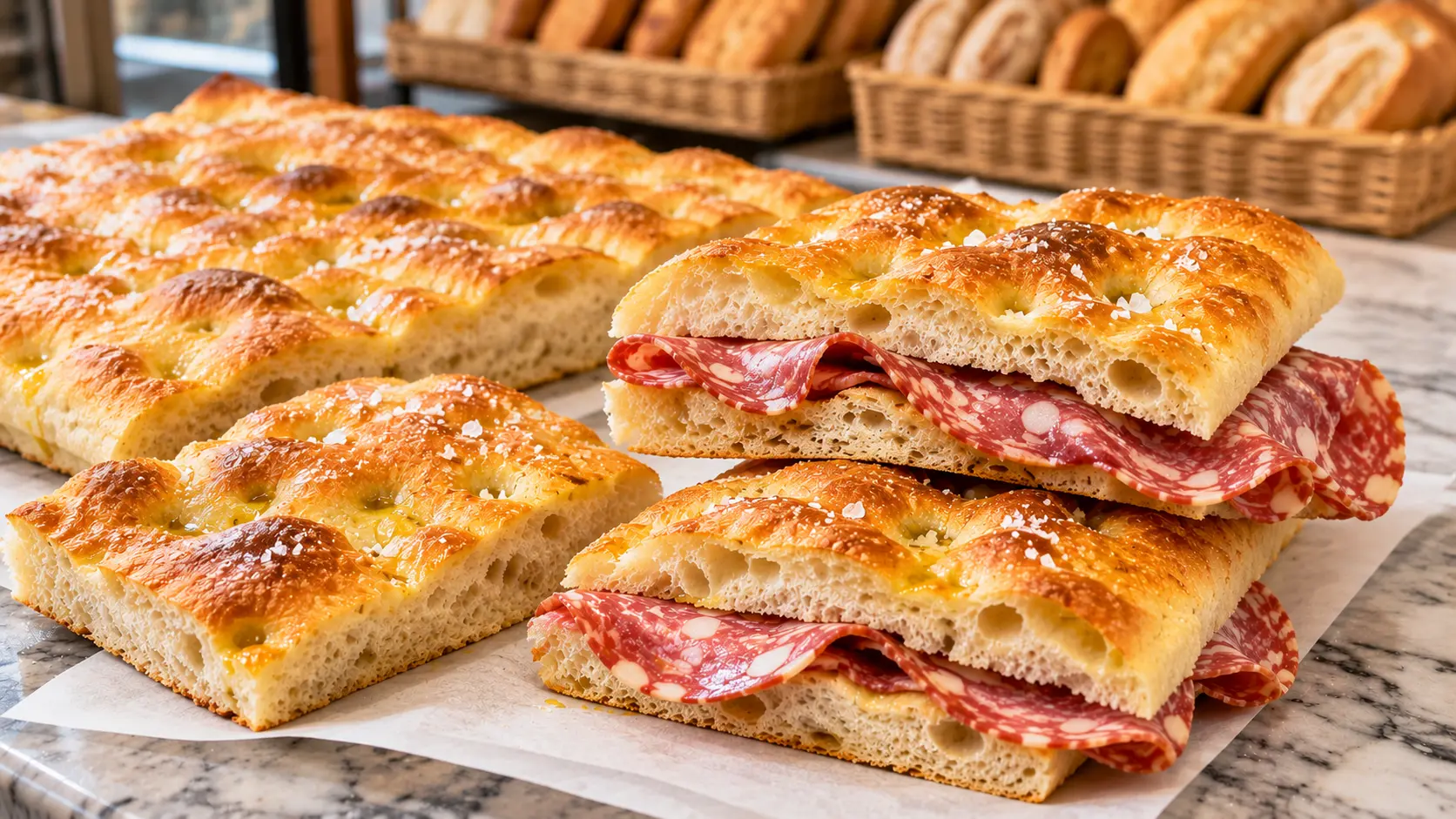
The city's flat oven bread is the opposite of pane toscano, glossy with olive oil and scattered with coarse salt. It's what Florentines buy for a mid-morning snack, split and filled with salami, and what most of the sandwich counters in the centre use. If you're working your way through the city's bakeries and food stalls, the Tuscan street food guide covers schiacciata, lampredotto and the other things eaten standing up.
Tasting it where it belongs
Bread is easy to overlook on a trip to Florence because it's on every table and never the main event. It's worth paying attention to anyway. Once you've had it with a slice of finocchiona or under a ladle of ribollita, the plainness makes sense.
The farmhouse cooking class is a good way to taste that properly. The morning starts, if you choose the market option, with a walk through a historic Florence market, where you meet bakers, butchers and farmers and try cheese, cured meats and olives. Then a short drive takes you to a private estate in the hills. There you make fresh egg pasta by hand, a Tuscan sausage ragù and pesto, and finish with tiramisù, before sitting down to eat it all with regional wine.