In this post
- Food in San Gimignano Is Rooted in the Countryside
- Vernaccia: The Wine That Defines San Gimignano
- Don't Overlook Local Saffron
- Traditional Tuscan Antipasti
- Olive Oil Is More Than a Condiment
- Bread Soups That Define Tuscany
- Fresh Pasta and Wild Boar
- Pecorino and Local Cured Meats
- Leave Room for Gelato
- How to Choose a Restaurant in San Gimignano
- A Simple Meal Often Says More Than a Complicated One
- Understanding San Gimignano Through Food
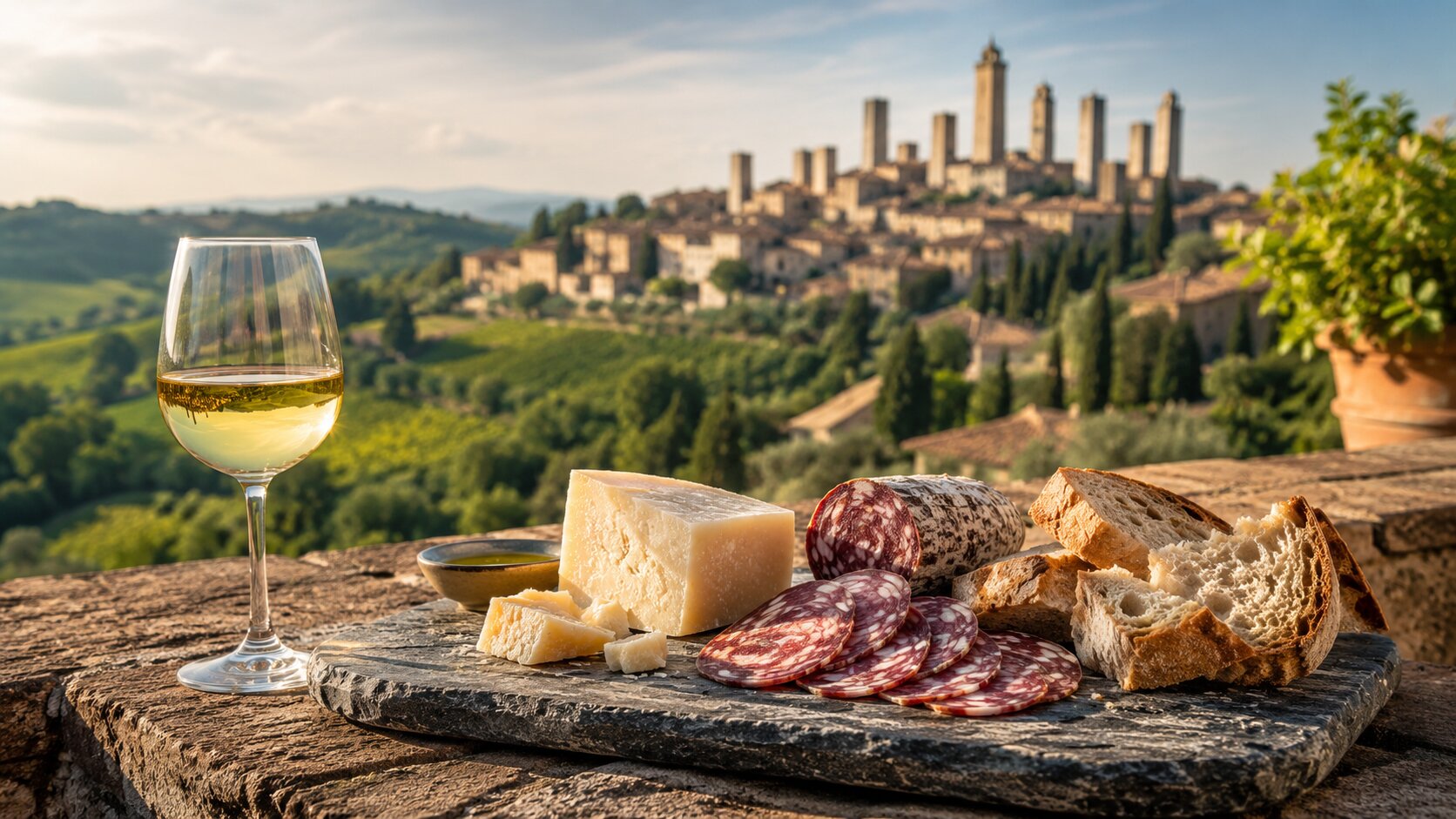
A San Gimignano food guide should begin with the landscape rather than the menu.
The medieval towers may define the town's skyline, but its culinary identity was shaped by the countryside surrounding its walls. Vineyards, olive groves, grain fields, sheep farms, and centuries of agricultural tradition have influenced what appears on local tables far more than tourism ever has.
Visitors sometimes arrive expecting a completely unique cuisine that exists only within the walls of San Gimignano. The reality is both simpler and more interesting.
Like many Tuscan hill towns, San Gimignano shares much of its culinary heritage with the wider region. What distinguishes it is not an entirely different collection of recipes, but the quality of its local ingredients and the close relationship between food, wine, and landscape.
Understanding what to eat here therefore means looking beyond the most obvious restaurant menus and discovering the products that genuinely belong to this corner of Tuscany.
Food in San Gimignano Is Rooted in the Countryside
The first thing to understand is that San Gimignano has always depended on the land around it.
Although the town became prosperous during the Middle Ages thanks to trade along the Via Francigena, its economy also relied heavily on farming, vineyards, olive cultivation, and livestock.
That connection still defines the local food culture today.
Rather than searching for elaborate dishes created exclusively for visitors, the most rewarding meals are usually based on seasonal ingredients that have been prepared with restraint. Olive oil replaces heavy sauces, herbs add fragrance rather than intensity, and simple cooking techniques allow individual ingredients to remain recognisable.
This balance is one of the reasons Tuscan cuisine continues to feel remarkably contemporary despite its long history.
Vernaccia: The Wine That Defines San Gimignano
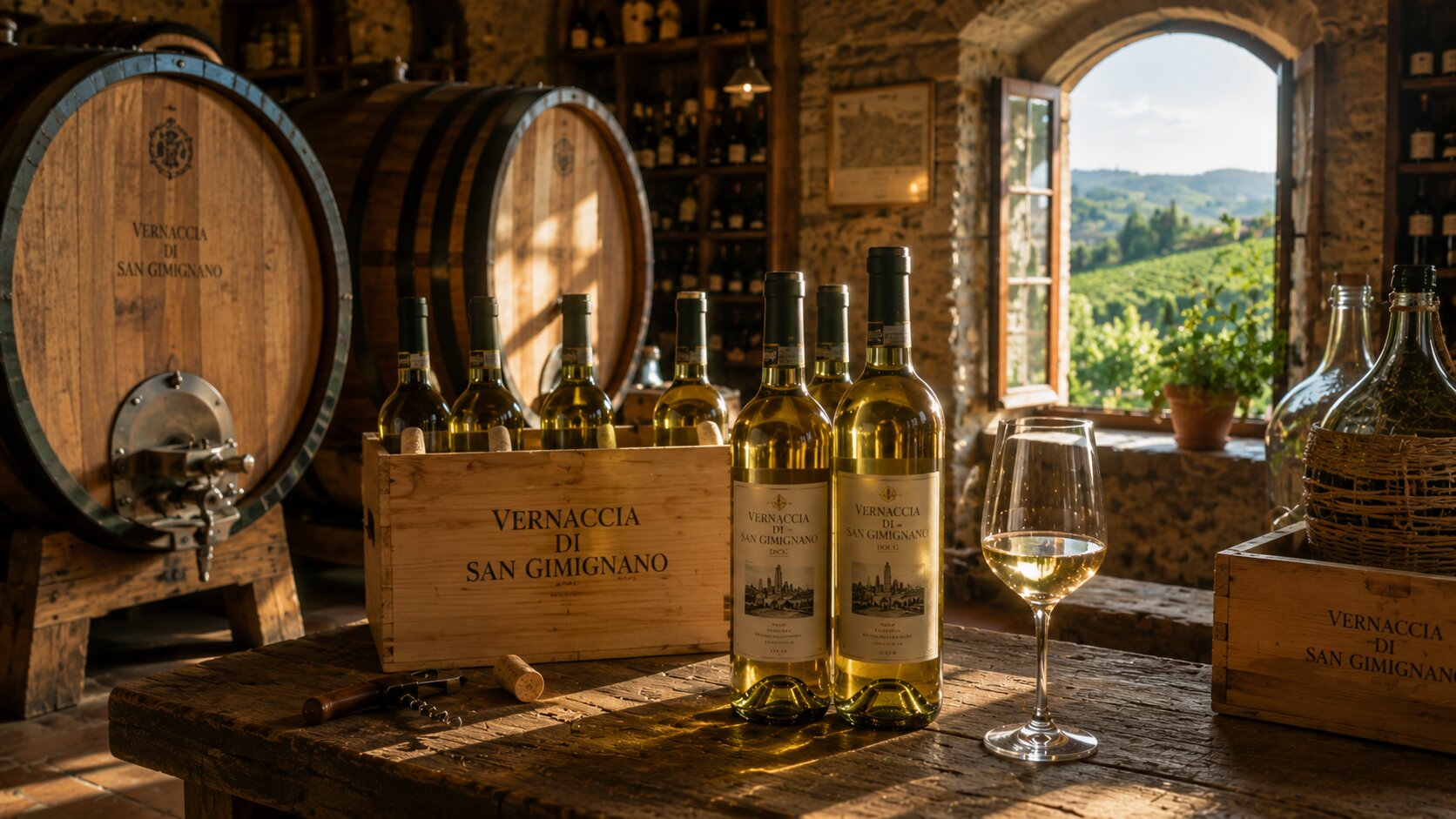
No ingredient is more closely associated with San Gimignano than Vernaccia.
This historic white wine has been produced around the town for centuries and remains one of Tuscany's most distinctive wines. Long before modern wine tourism developed, Vernaccia had already established an international reputation thanks to its freshness, structure, and ability to accompany food.
Unlike many Tuscan wines that immediately evoke powerful reds, Vernaccia offers something different. Its mineral character, crisp acidity, and elegant finish make it particularly suitable alongside vegetables, fresh cheeses, fish, white meats, and lighter pasta dishes.
The vineyards themselves also contribute to the experience. Looking out across the countryside from San Gimignano, visitors quickly understand that the wine and the landscape are inseparable.
If you would like to explore its history, production, and distinctive character in greater depth, our guide to Vernaccia Wine of San Gimignano Explained provides a complete introduction.
Don't Overlook Local Saffron
Many travelers are surprised to discover that saffron has been cultivated around San Gimignano since medieval times.
Today it remains one of the town's most distinctive agricultural products.
Unlike saffron used simply to colour food, high-quality local saffron contributes delicate floral aromas and subtle earthy notes. It may appear in fresh pasta, risotto, soups, sauces, cheeses, or even desserts.
Its value has always extended beyond cooking.
During the Middle Ages, saffron represented an important commercial product that helped support the local economy. Tasting it today therefore offers another connection between San Gimignano's history and its present-day food culture.
Traditional Tuscan Antipasti
A typical meal often begins with simple antipasti that showcase the quality of local ingredients.
Cured meats, pecorino cheese, crostini, olives, and fresh bread rarely attempt to impress through complexity. Instead, each ingredient contributes its own character.
Tuscan bread deserves particular attention.
Unlike many breads found elsewhere in Italy, it contains very little salt. This characteristic developed historically when salt was heavily taxed and has remained part of regional tradition ever since.
The result is bread that complements rather than competes with stronger flavours. It pairs naturally with salumi, olive oil, cheeses, pâtés, and vegetables preserved in oil.
Rather than ordering the largest sharing platter available, consider choosing a smaller selection of carefully sourced products. Quality almost always proves more memorable than quantity.
Olive Oil Is More Than a Condiment
The olive groves surrounding San Gimignano produce extra virgin olive oil that plays a central role in local cooking.
It appears throughout the meal, sometimes almost unnoticed.
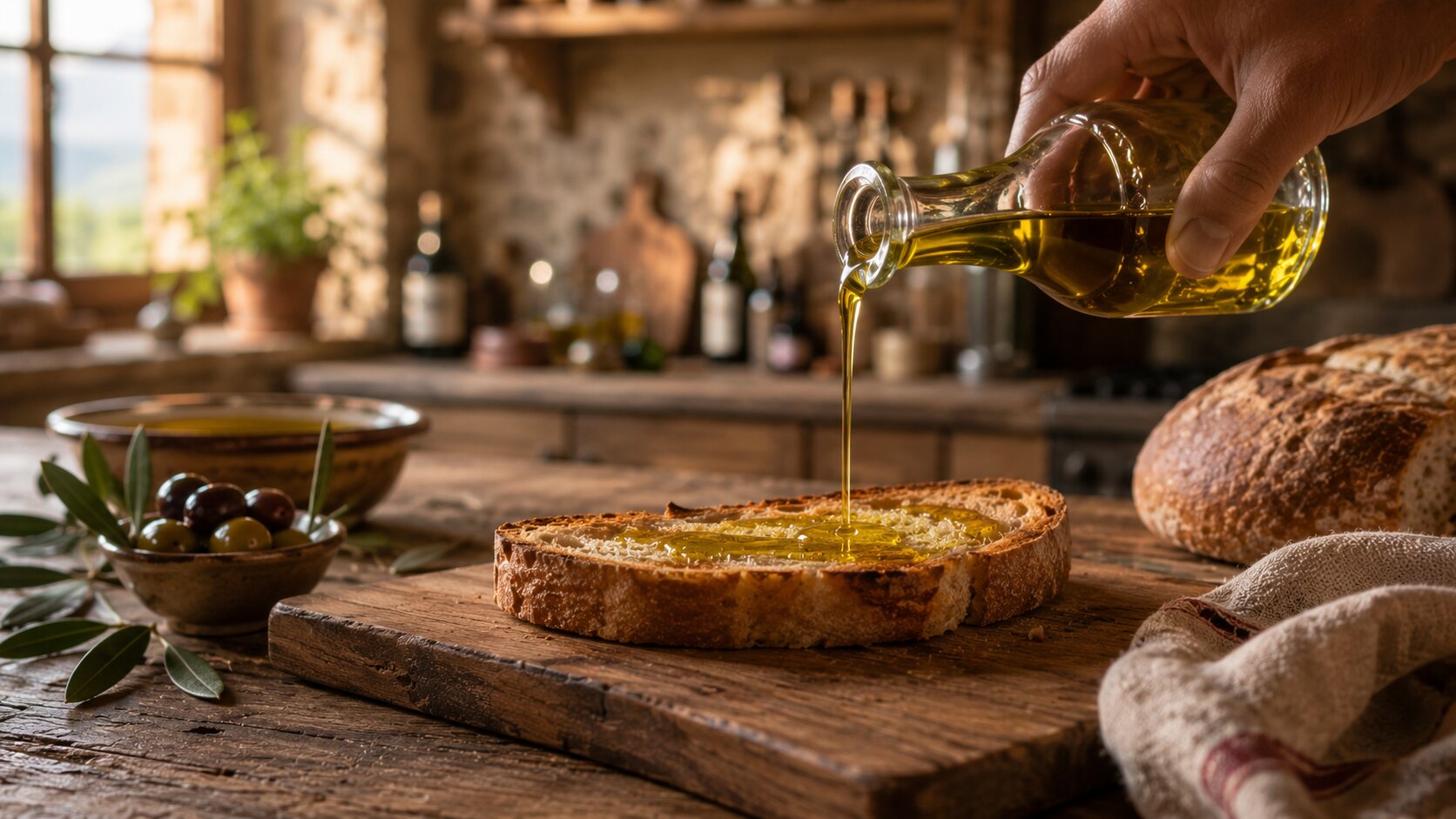
Fresh oil may finish soups, season vegetables, dress salads, accompany grilled meat, or simply be poured over toasted bread.
Good Tuscan olive oil often displays grassy aromas followed by a pleasantly peppery finish. These characteristics are signs of freshness rather than defects.
One of the defining principles of Tuscan cuisine is that exceptional ingredients rarely require elaborate preparation. Bread, olive oil, ripe tomatoes, herbs, and seasonal vegetables can create dishes of remarkable depth precisely because nothing unnecessary has been added.
Bread Soups That Define Tuscany
Some of Tuscany's most representative dishes were created not from abundance but from practicality.
Recipes such as ribollita and pappa al pomodoro transformed stale bread into nourishing meals by combining it with vegetables, beans, tomatoes, herbs, and olive oil.
Although these soups are found throughout the region rather than exclusively in San Gimignano, they remain entirely appropriate here because they reflect the same agricultural traditions that shaped the surrounding countryside.
They also demonstrate an important aspect of Tuscan cooking: respect for ingredients.
Nothing was wasted unnecessarily, and many recipes that are now celebrated began as practical solutions within farming communities.
Fresh Pasta and Wild Boar
Fresh pasta occupies an important place on many menus in San Gimignano, particularly when paired with ingredients that reflect the surrounding countryside.
Among the best-known combinations is pappardelle with wild boar ragù. The wide ribbons of pasta hold the slow-cooked sauce beautifully, while the game brings an earthy flavour that has long been associated with inland Tuscany.
Wild boar is not served simply because it has become popular with visitors. It reflects the wooded landscapes that surround many parts of the region and a culinary tradition that has always made use of local resources.
Other fresh pasta dishes may feature mushrooms, seasonal vegetables, local sausage, or saffron. The specific recipe matters less than the quality of the ingredients and the balance of the preparation.
Choosing dishes based on what is in season often leads to a more authentic experience than looking only for the most famous names on the menu.
Pecorino and Local Cured Meats
Cheese and cured meats remain central to the food culture of San Gimignano.
Pecorino, produced from sheep's milk, appears in different stages of ageing, each offering its own character. Younger cheeses are softer and more delicate, while mature pecorino develops a firmer texture and a more pronounced flavour.
It is often served alongside local honey, fruit preserves, or simply with fresh bread and a glass of Vernaccia.
Regional salumi such as finocchiona, prosciutto, and Tuscan salami also form part of many traditional antipasti. Their richness is balanced naturally by the unsalted bread that has become one of Tuscany's defining characteristics.
Together, these products illustrate an important principle of Tuscan cuisine: excellent raw ingredients require very little embellishment.
Leave Room for Gelato
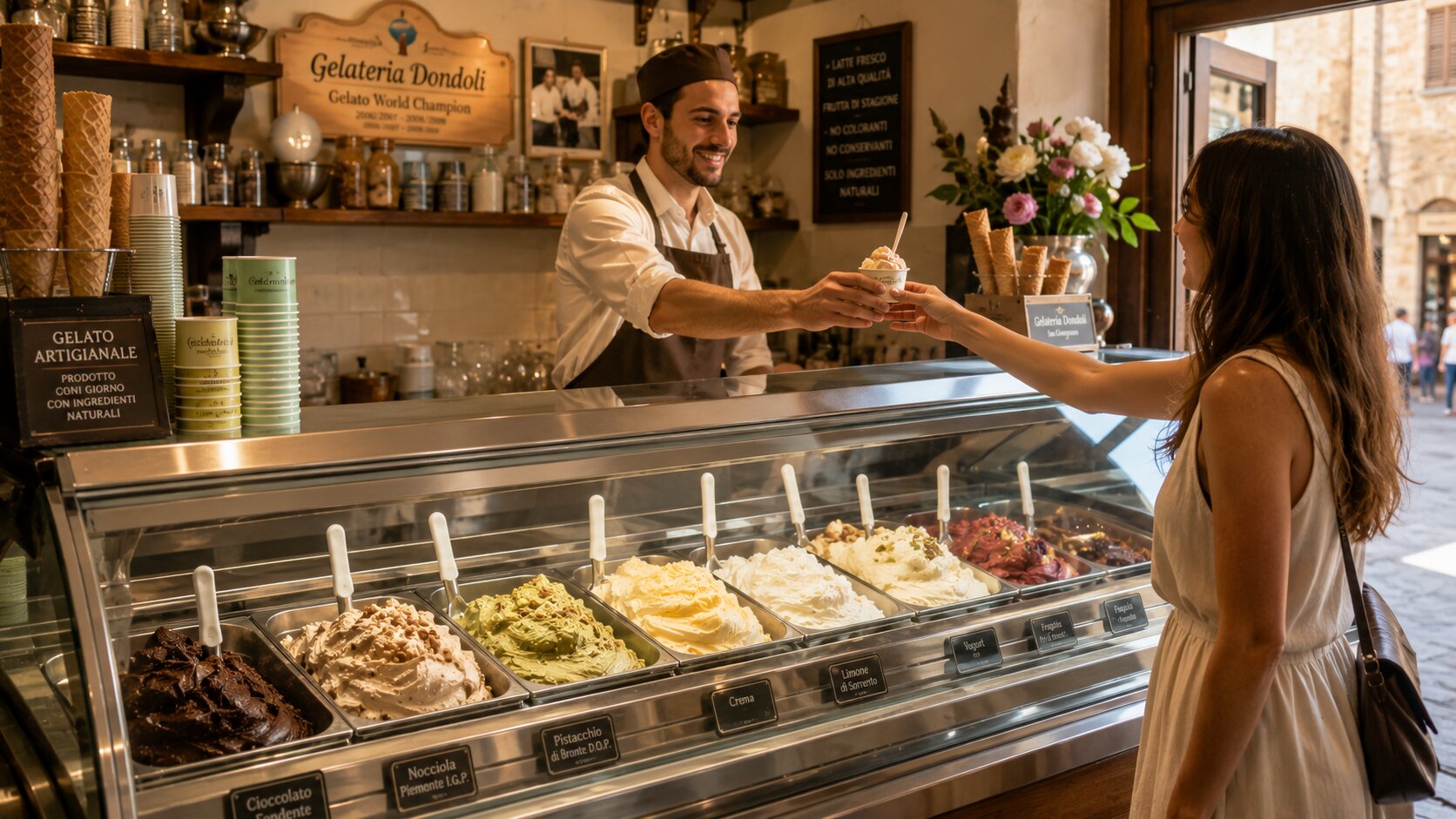
San Gimignano has become well known for its gelato, and many visitors naturally include it during their walk through the historic centre.
Although gelato is not the defining element of the town's culinary identity, it can still be a worthwhile part of the experience when chosen thoughtfully.
Rather than focusing on dramatic displays or unusually bright colours, look for shops that emphasise seasonal ingredients, natural flavours, and careful preparation.
Classic flavours such as pistachio, hazelnut, chocolate, cream, or fruit often reveal more about the quality of the gelato than elaborate combinations designed primarily to attract attention.
It makes an enjoyable pause before continuing to explore the town's streets and viewpoints.
How to Choose a Restaurant in San Gimignano
Finding a good restaurant is often less about location than about philosophy.
Restaurants with very long menus sometimes attempt to satisfy every possible visitor. By contrast, establishments offering a smaller number of seasonal dishes frequently demonstrate greater confidence in the quality of their ingredients.
Look for menus that change with the seasons and highlight products from the surrounding countryside. Local wines, fresh olive oil, handmade pasta, vegetables, cheeses, and regional meats usually indicate a stronger connection with the territory.
It is also worth slowing down.
A memorable meal in San Gimignano is rarely the quickest one. Taking time to enjoy the food, the wine, and the atmosphere reflects the rhythm that defines both the town and the Tuscan countryside beyond its walls.
A Simple Meal Often Says More Than a Complicated One
Visitors sometimes arrive expecting rich sauces, generous portions, and elaborate presentations.
Traditional Tuscan cooking follows a different philosophy.
Its strength lies in restraint.
Good olive oil enhances rather than dominates. Herbs bring freshness instead of intensity. Bread supports other ingredients instead of competing with them. Even meat rarely overshadows the rest of the plate.
This balance explains why the cuisine of San Gimignano feels timeless. It values seasonality, local production, and respect for ingredients rather than unnecessary complexity.
Those interested in understanding these broader principles can continue with our guide to Tuscan Cuisine Explained, which explores the traditions shared across the region.
Understanding San Gimignano Through Food
The towers may be what first attract visitors to San Gimignano, but its food reveals another side of the town.
Every glass of Vernaccia, every drizzle of olive oil, every piece of pecorino, and every bowl of rustic soup reflects a landscape that has supported local communities for centuries.
This is why eating well in San Gimignano is not about finding one famous dish.
It is about recognising how the town and the countryside have always belonged together. Vineyards, farms, olive groves, and medieval streets form a single cultural landscape, and the food is one of its clearest expressions.
The most rewarding meals are therefore not necessarily the most elaborate. They are the ones that remain faithful to the ingredients, traditions, and rhythms of this remarkable corner of Tuscany.