In this post
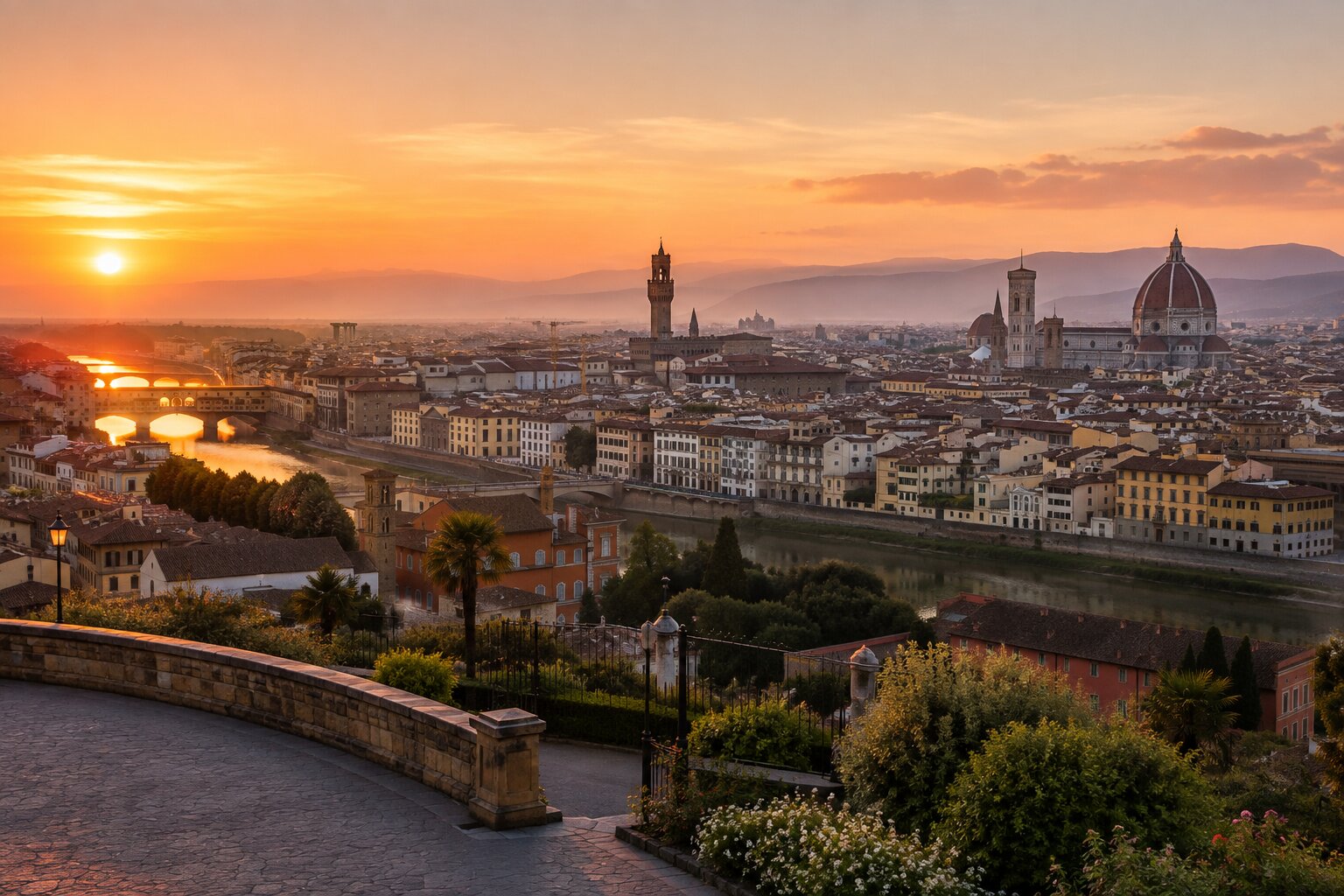
Three days changes how Florence feels. A single day forces hard choices. Two days start to relax the pace. By the third, the pressure to see everything mostly disappears, and the city stops feeling like a checklist. A good Florence three days itinerary isn't about cramming in more sights. It's about spreading the right ones across enough time to actually enjoy them.
The trick is sequencing. Landmarks first, while energy is high. Neighborhoods and detail next, once the map already makes sense. Something slower last, once the city feels familiar enough to wander without a plan.
This structure isn't rigid. Some travelers move faster through landmarks and want more neighborhood time. Others prefer the opposite. What matters is having a rough shape for the three days. Treating each morning as a blank page to fill from scratch rarely works as well.
It also helps to remember that Florence is small. The historic center covers only a few square kilometers, and most major sights sit within a fifteen-minute walk of each other. That compactness is exactly what makes three days feel generous rather than rushed, once the days are structured with intention.
Day One: The City's Greatest Hits
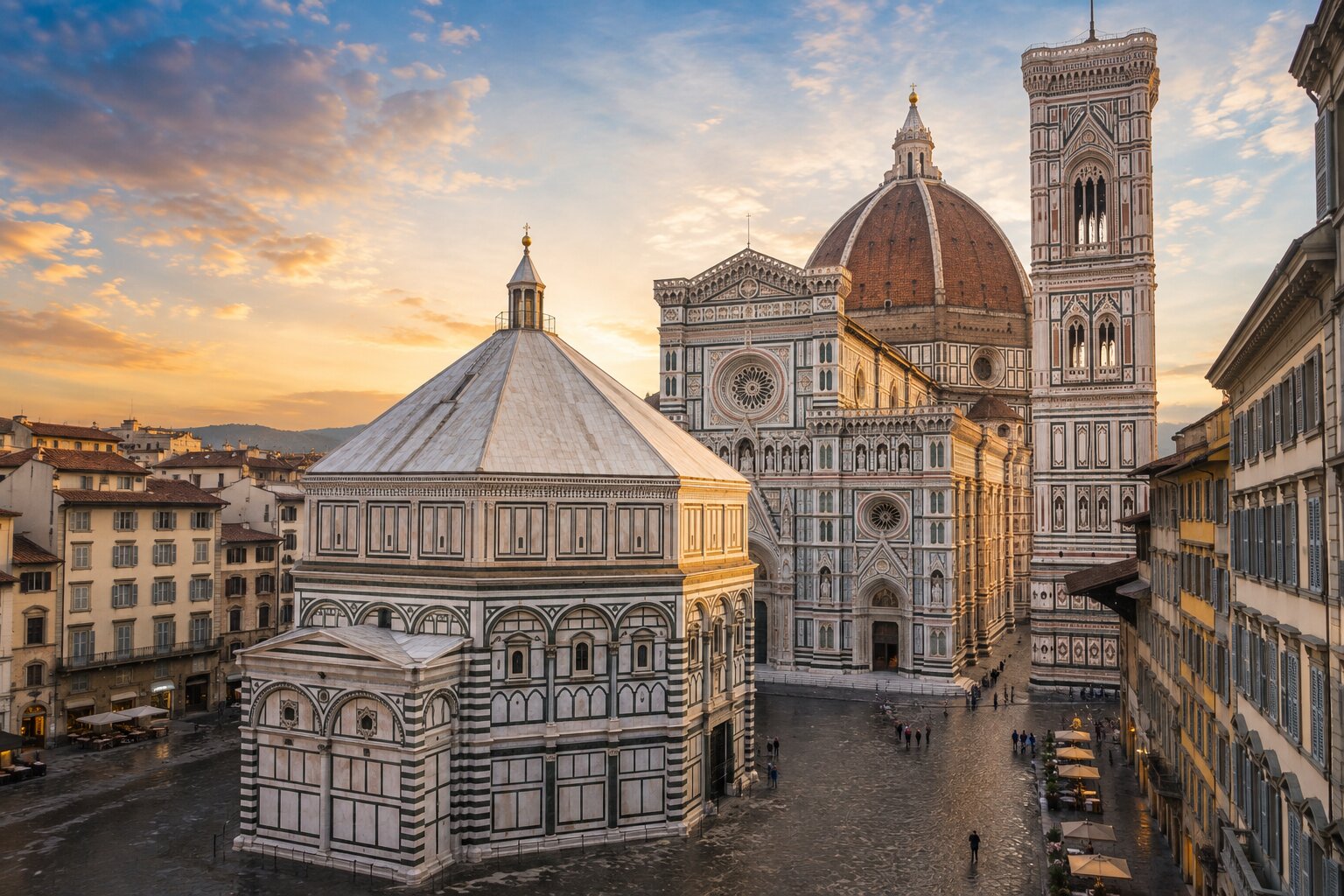
The first day works best around Florence's most recognizable core. Piazza della Repubblica, the Duomo, Piazza della Signoria, and Ponte Vecchio all sit close together. String them into a single, unhurried walk. This is the Florence most travelers picture before they arrive, and it earns that reputation.
Save real time for at least one major interior visit. The Duomo's exterior is free to admire. The dome, the Baptistery, and the surrounding religious complex reward a longer, unrushed look. Trying to fit two major museums into day one usually means doing neither justice. Pick one, and let the rest of the day build around it.
By evening, the goal isn't exhaustion. It's a working mental map of the city center. Solid enough that day two doesn't require constantly checking a phone for directions.
Day Two: Art, Artisans, and the Oltrarno
With the essentials covered, the second day can move at a different pace. This is the moment to cross Ponte Vecchio properly, not just walk over it. Spend real time in the Oltrarno. The quieter district on the far side of the river holds artisan workshops and Via Maggio's antique shops. The rhythm here is noticeably slower than the historic center.
Day two is also where a second major sight fits naturally, whether that's the Accademia, the Bargello, or Palazzo Pitti. Spreading these across two days leaves a stronger impression than racing through both on day one. Travelers on their first visit often find our guide to a private Florence tour for first-time visitors useful for deciding which sights to prioritize now and which can wait for a return trip.
The Oltrarno itself deserves more than a quick crossing. Its workshops still practice trades that have shaped Florence for centuries. The pace here is naturally slower than the busier squares across the river. An unhurried hour or two here often explains the city's character better than another hour inside a crowded museum.
Is a Third Day Really Necessary?
By this point, the obvious landmarks are usually behind you. That's exactly what makes a third day valuable. Rather than adding pressure, it removes it. There's no must-see list left driving the schedule. That opens space for whatever actually interests you personally.
Our guide to how many days you need in Florence goes deeper into what changes at each stage. From a single focused day up through a longer stay. It's worth a look if you're still deciding how much time to set aside in the first place.
Day Three: Slowing Down
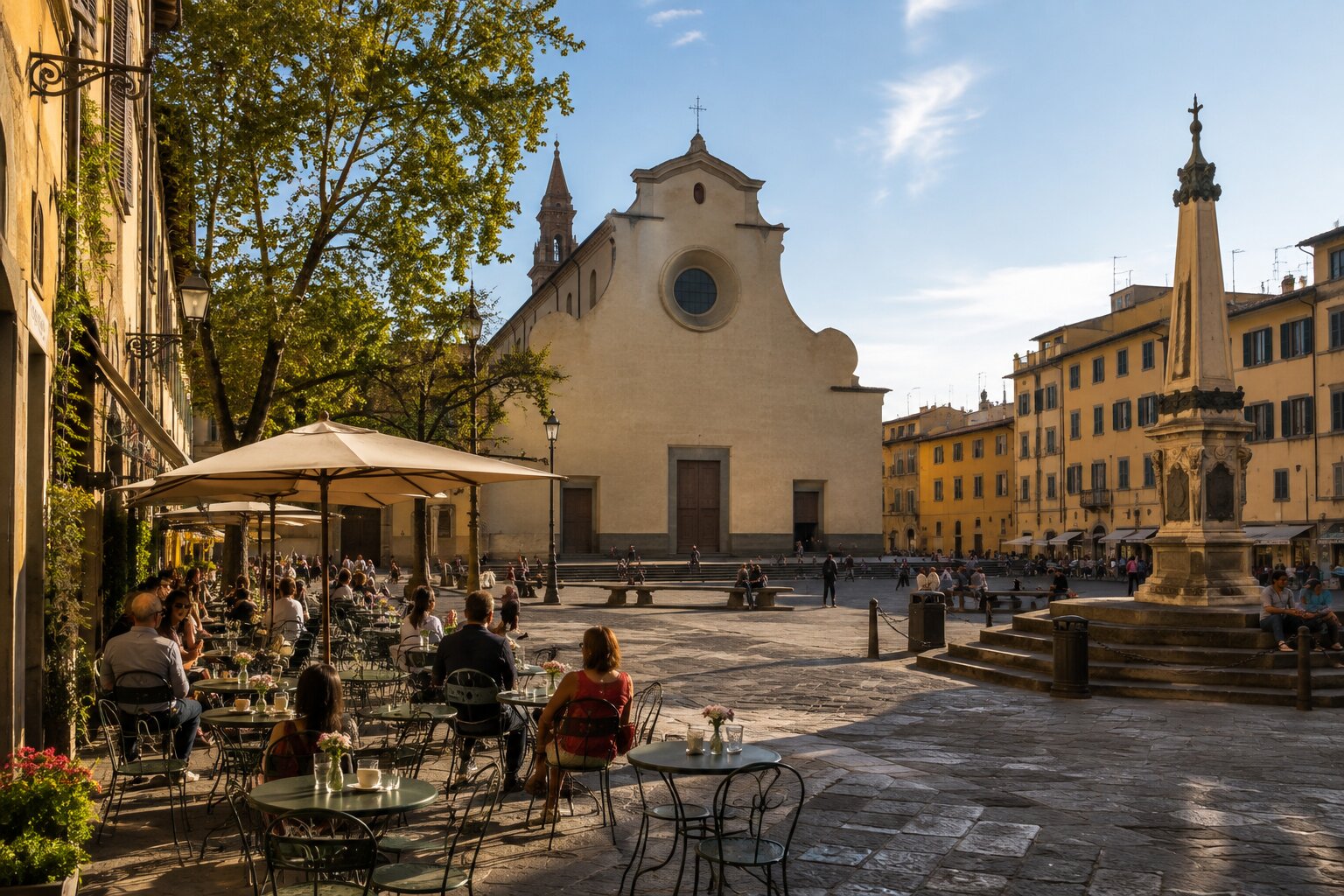
The third day of a Florence itinerary works best without a fixed plan. Revisit a favorite piazza at a quieter hour. Spend a full morning inside a museum you rushed through the first time. Wander Santo Spirito's square without a destination in mind.
This is also a natural point to consider a half-day outside the city. Florence sits close to Chianti, Siena, and other parts of Tuscany. Whether day three stays inside the city or reaches slightly beyond it depends on what's pulling at your curiosity by then.
There's no wrong answer here. A third day spent entirely within the historic center, moving slowly and without an agenda, can feel just as complete as one that ventures into the countryside.
Why Order Matters in a Florence Three Days Itinerary
Sequencing the days this way isn't arbitrary. Landmarks first, neighborhoods second, unstructured time last. Landmarks are easiest to appreciate with fresh energy. They also require the least local knowledge to enjoy. Neighborhoods reward context that builds gradually, once the map of the city already makes sense.
Slower time works best once there's nothing left to prove to yourself about "seeing enough." Reversing that order rarely works as well. Starting with unstructured wandering before you've built a mental map usually leads to more backtracking than discovery.
Leaving Room for the Unexpected
Even across three days, the temptation to overplan is real. A schedule filled to the minute leaves no room for the things that actually make a trip memorable. A street musician. An open workshop door. A coffee stop that runs long. Building in slack, especially on day three, tends to produce a trip people remember fondly. More fondly than one executed perfectly on paper.
Adjusting the Pace to Your Travel Style
Not every traveler wants the same rhythm across three days. Some prefer front-loading the landmarks and slowing down early, by day two rather than day three. Others want to ease in gently instead. They save the busiest sightseeing for the middle of the trip, once they've adjusted to the time zone and the city's pace.
Families traveling with children often benefit from splitting each day into a shorter morning block followed by real downtime. That works better than trying to match an adult pace across a full day. The three-day structure still holds. What changes is how much ground gets covered within each day, not the overall shape of the trip.
Making the Most of Three Days
A Florence three days itinerary works best when each day has its own character. Landmarks, then neighborhoods, then whatever draws your attention once the city starts to feel familiar, rather than repeating the same pattern three times over.
Having a guide for at least part of the trip tends to make that structure easier to pull off. Our Private Essential Florence Walking Tour with an Expert Local Guide covers the city's core story in a single private morning. It weaves together the Medici family, Dante's Florence, and the walk across Ponte Vecchio into the Oltrarno. There's plenty of local anecdotes along the way, plus a gelato stop. Starting the trip with that guided introduction on day one often makes the neighborhoods and quieter moments of days two and three easier to appreciate on your own.