In this post
After meal drinks are a small ritual in Italy. In Tuscany you'll get one at the end of most long lunches and dinners.
A digestivo comes at the opposite end of a meal to the aperitivo, and as the name implies, it is intended to help you to digest.
In Florence it usually starts when the plates have gone. The waiter comes back and asks "caffè?" After meal drinks arrive with the espresso or just after it. And no, this isn't the moment for a cappuccino. You can order one, but you'll get a look. In a family-run trattoria the owner sometimes just brings a bottle of grappa and a few little glasses. That's offerto dalla casa, on the house. One glass is the custom. It's fine to say "no, grazie" if you still have the Uffizi to see this afternoon.
Sunday is another story. Lunch in Tuscany can easily go on until four. Once the bottles come out, nobody is in a hurry to leave. The whole family sits at one long table and the coffee goes round twice. In restaurants used to tourists you'll often get limoncello instead. It's lovely, but it really belongs to the Amalfi Coast, not Tuscany.
Grappa with your coffee
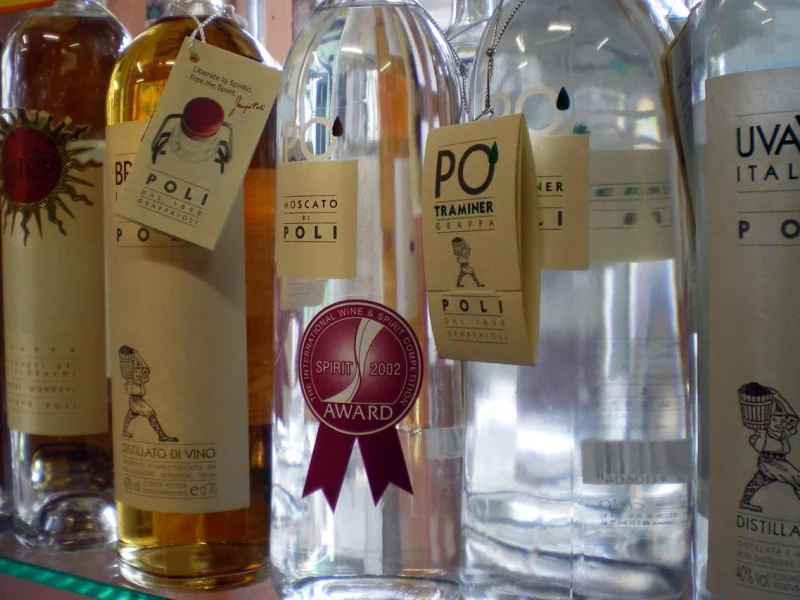
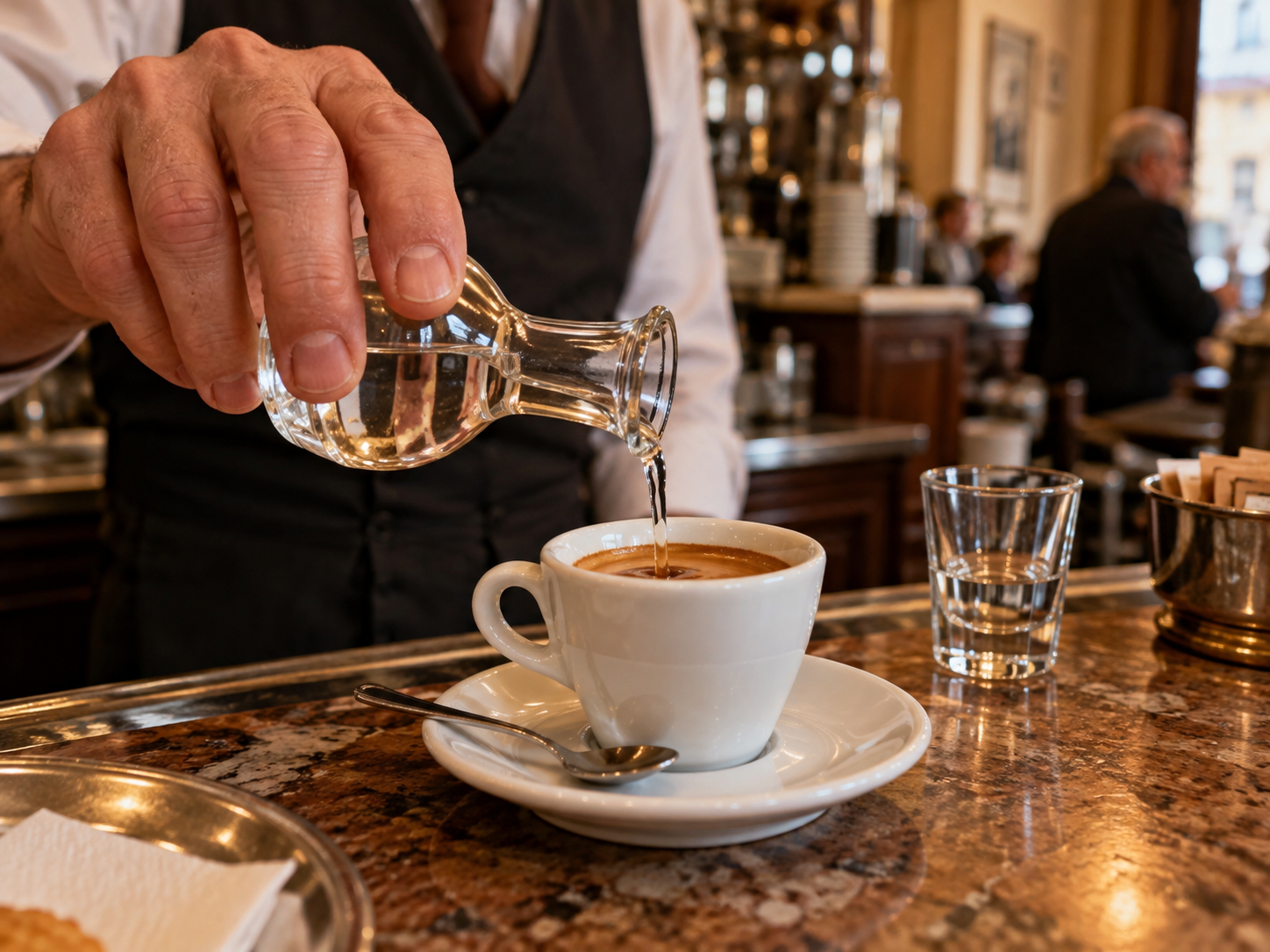
A popular digestivo in Italy that you may be offered in a restaurant is grappa, a clear spirit made from crushed grape skins, pips and stalks left over from winemaking. Grappa is often sipped alongside a coffee after a meal and can actually be added to the coffee to make a caffè corretto, or drunk as a chaser to an espresso which is called an ammazzacaffè.
For centuries grappa was a drink of the people, inexpensively produced as a by product of winemaking, and just right for keeping the cold out in the winter. However, during the last fifty years, distillers realised that the quality could be improved by using different grape varieties, modern distilling techniques and cask conditioning in wooden barrels. Now we can find a vast range of grappas from the colourless young grappa giovane to the light honey-coloured, wood-matured grappa invecchiata and many are produced using a single named grape variety.
Walk into any neighbourhood bar in Florence at ten in the morning. You'll probably hear someone at the counter ask for "un corretto". It isn't only an after dinner thing, and nobody thinks it strange.
The bottles in our photo come from Poli, a family of grappaioli in Schiavon, near Bassano del Grappa. They have been distilling since 1898, and most grappa still comes from up there, in the cold north-east. Tuscany has its own though. Plenty of Chianti and Montalcino wineries send their pomace to a distiller and sell the grappa under their own name. It's a nice way to finish a meal with the same grapes you started it with. Just don't knock it back like a shot. A good one smells of the grapes before you've even tasted it. If it smells like nail polish, leave it.
And what's an amaro?
Among the many digestivi there is a particular group called amari which are herbal infusions with their origins lost in time and their digestive powers commanding reverence and respect. Don't confuse amari with the well known sweet liqueur called Amaretto; amari can be made with juniper, aniseed, fennel or even ginger and they have a quite different complex bitter sweet taste.
The ancient Romans knew that herbs and honey in wine helped the digestion and later in history it was monks who perfected these cordials claiming all kinds of medicinal properties. Still today many monasteries use herbs and roots they grow themselves to produce these liquors from recipes handed down in secrecy through the centuries. Home made versions also developed in every part of Italy using local common herbs in varying proportions which have resulted in a wide range of nationally known brands. Look out for Amaro Lucano, Montenegro, Averna, or China-Martini. The alcohol levels of these drinks vary from about 16% to 35% and some even higher, so although easy to drink, they can interfere with your sightseeing plans!
Ask for "un amaro" in a Florentine bar and the barman will usually just nod at the bottles behind him. Then he waits for you to choose. Of all the after meal drinks on that shelf, Fernet-Branca is the most bitter. Most first-timers pull a face after the first sip. Montenegro is a gentler place to start. In summer people drink it on ice with a slice of orange.
Then there's the bistecca alla fiorentina. In most trattorias that means well over a kilo of meat on the bone, shared between two. It comes rare, and most places won't ask how you'd like it cooked. After one of those, something to help you digest stops sounding like folklore.
The most Tuscan of after meal drinks
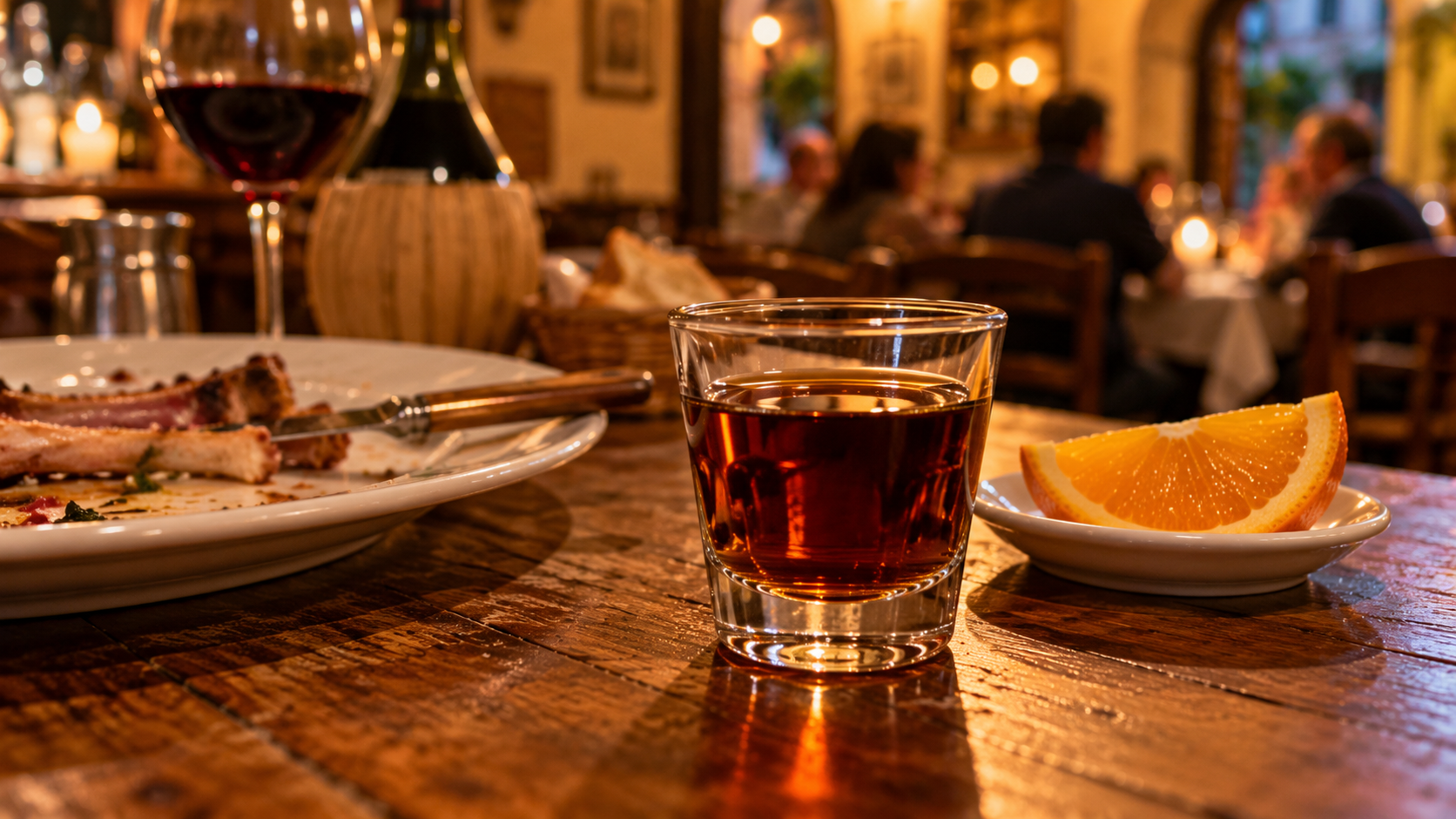
Another way to finish your meal in Tuscany is with the sweet amber wine called Vin Santo. This well known wine is usually served in small glasses with cantuccini, quite hard almond biscuits also known as biscotti di Prato, which are softened by dipping them into the wine. Bunches of white Trebbiano and Malvasia grapes are hung up on racks for several weeks and sometimes months before pressing to allow them to lose moisture and to allow their natural sugars to become concentrated. The resulting wine is aged in wood for at least three years before it is bottled and sold.
In the countryside Vin Santo was the wine you offered to guests. Almost every farm made a little in small barrels up under the roof. The summer heat and the winter cold did the rest. Many Chianti estates still make it. In the smaller trattorias it sometimes comes in a bottle with a handwritten label. The owner's family made it, or a farmer they know.
The trouble is that the name covers a lot. A good Vin Santo is amber and nutty, sometimes almost dry. It isn't cheap, because years in the barrel leave very little wine behind. Some tourist menus pour a sweet fortified wine with "vino liquoroso" on the label, which only borrows the idea. So it's worth asking what they're pouring. With a really good bottle, some Tuscans will tell you it's a shame to dunk biscuits in it at all!
Cantuccini from Prato
The cantuccini come from Prato, twenty kilometres up the road. Antonio Mattei has baked them there since 1858, and they still come in the blue paper bags. They make a good present to take home and survive a suitcase better than most things.
Our own favourite way to end a meal in Florence? A couple of cantuccini with a small glass of Vin Santo, then the espresso. After that, a slow walk along the Arno before doing anything else.
If you'd rather taste these things where they're made, try our Chianti Wine Safari. It goes off road in a four wheel drive through the vineyards to family estates outside Florence. You taste their wine and olive oil with a guide who explains what's in the glass. Lunch is at the winery. Nobody has to drive home afterwards, which is handy after a long Tuscan lunch.