In this post
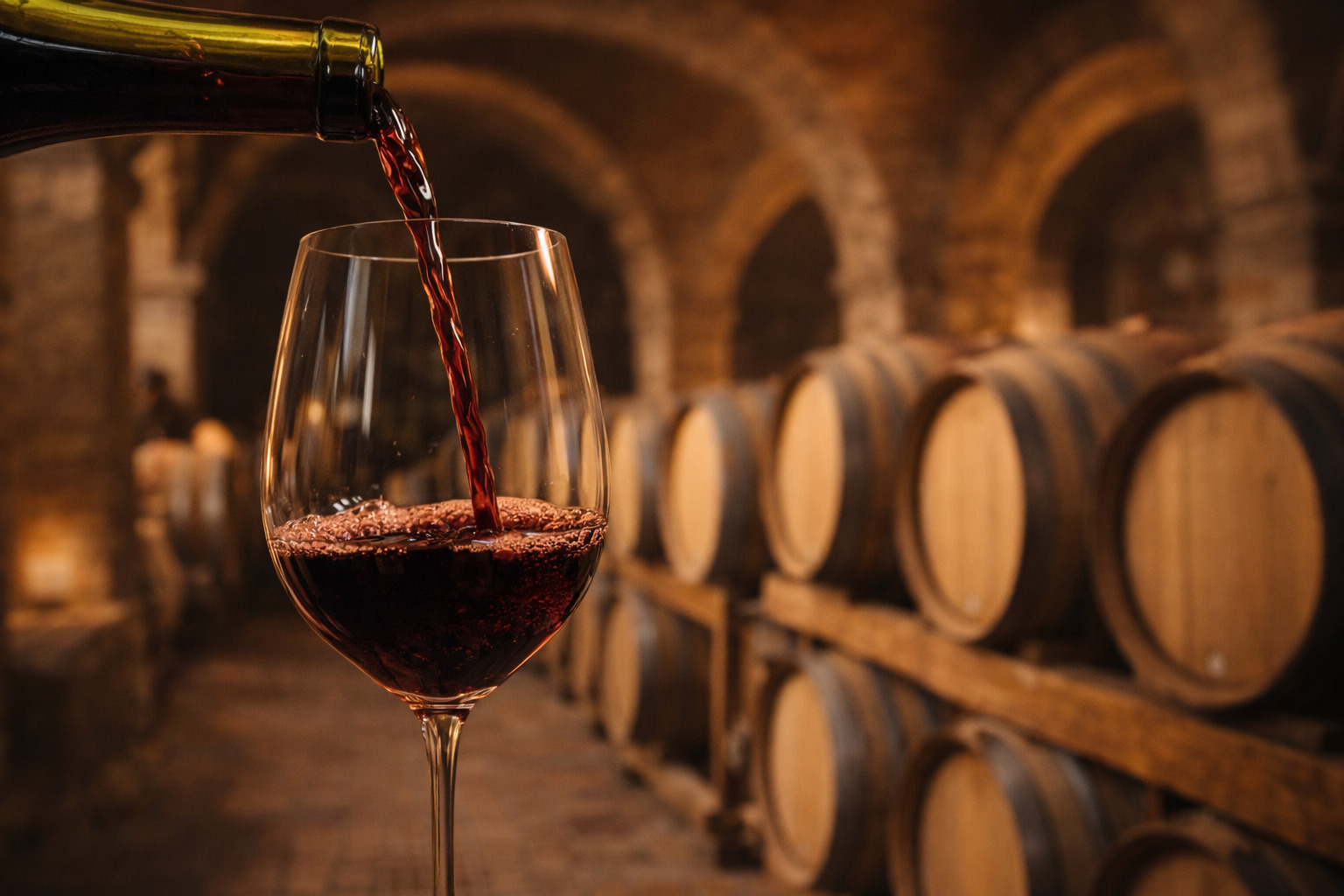
Chianti is one of those names that feels familiar long before it is fully understood.
You see it on wine lists, in restaurants, on bottles with distinctive labels. Yet what Chianti actually is and what makes it different often remains less clear.
Understanding Chianti wine means looking beyond the name and into the elements that shape it: grape, territory, and tradition.
The Role of Sangiovese
At the center of Chianti wine is a single grape: Sangiovese.
It defines the structure, the acidity, and much of the character of the wine. Unlike heavier red wines, Chianti tends to be more vibrant than dense, with a profile that leans toward freshness rather than intensity.
This balance is what makes it particularly suited to food. It does not overpower, but interacts.
A Landscape That Shapes the Wine
Chianti is not just a wine style it is a place.
The hills between Florence and Siena form a landscape where elevation, soil composition, and exposure to sunlight vary significantly from one vineyard to another. These differences are subtle, but they matter.
A wine produced on one hillside may feel structured and firm. Another, just a few kilometers away, may be softer, more open, more immediate.
This variability is part of what defines Chianti. It resists uniformity.
Chianti and Chianti Classico
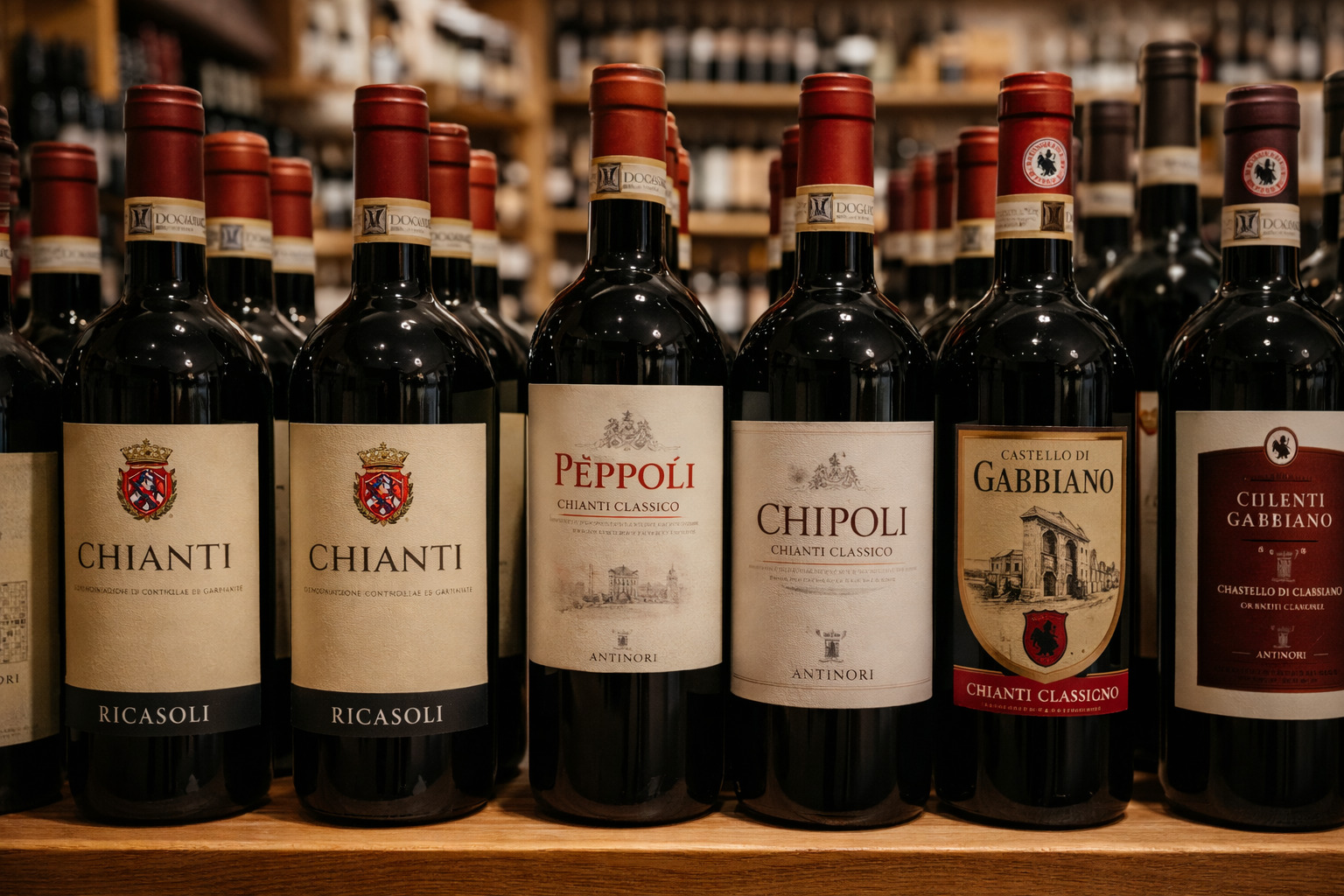
One of the most common points of confusion lies in the distinction between Chianti and Chianti Classico.
Chianti refers to a broader wine-producing area. Chianti Classico, by contrast, identifies wines produced within the historical core of the region, following stricter production standards.
These wines are often recognized by the black rooster symbol on the bottle a mark that signals both origin and tradition.
While both belong to the same broader identity, they can express it differently.
Balance Over Power
What makes Chianti unique is not a single characteristic, but a combination of elements held in balance.
Acidity gives it energy. Tannins provide structure. Fruit remains present but rarely dominant. Oak, when used, tends to support rather than define the wine.
The result is a wine that feels composed rather than exaggerated.
This is why Chianti is often described as versatile. It adapts easily to different contexts, from casual meals to more structured tastings.
Tradition and Evolution
Chianti has never been static.
Over time, production methods have evolved. Regulations have changed. Winemakers have experimented with both traditional and modern techniques.
And yet, the identity of the wine remains recognizable.
This continuity comes from the relationship between grape and territory. While methods may shift, the foundation stays consistent.
For those interested in how these differences appear across wineries and experiences, this perspective offers further insight: how to choose a winery in Chianti.
A Wine That Reflects Its Place
Chianti is often described through tasting notes cherry, earth, spice. These are useful, but incomplete.
What truly defines the wine is its connection to place. The hills, the soil, the climate, and the people who work the vineyards all contribute to what ends up in the glass.
In this sense, Chianti is less about flavor and more about expression.
It is not simply a style of wine. It is a reflection of Tuscany itself.