In this post
- If You Only Have One Day to Visit Tuscany
- Why Chianti Often Becomes the Highlight
- Should You Choose Siena or San Gimignano?
- Where Pisa Fits Into a Tuscany Itinerary
- Why Two Days Change the Experience
- Three Days: When Tuscany Feels More Complete
- Experiencing Tuscany Through the Road
- The Most Common Mistake When Planning Tuscany
- The Best Way to Visit Tuscany from Florence
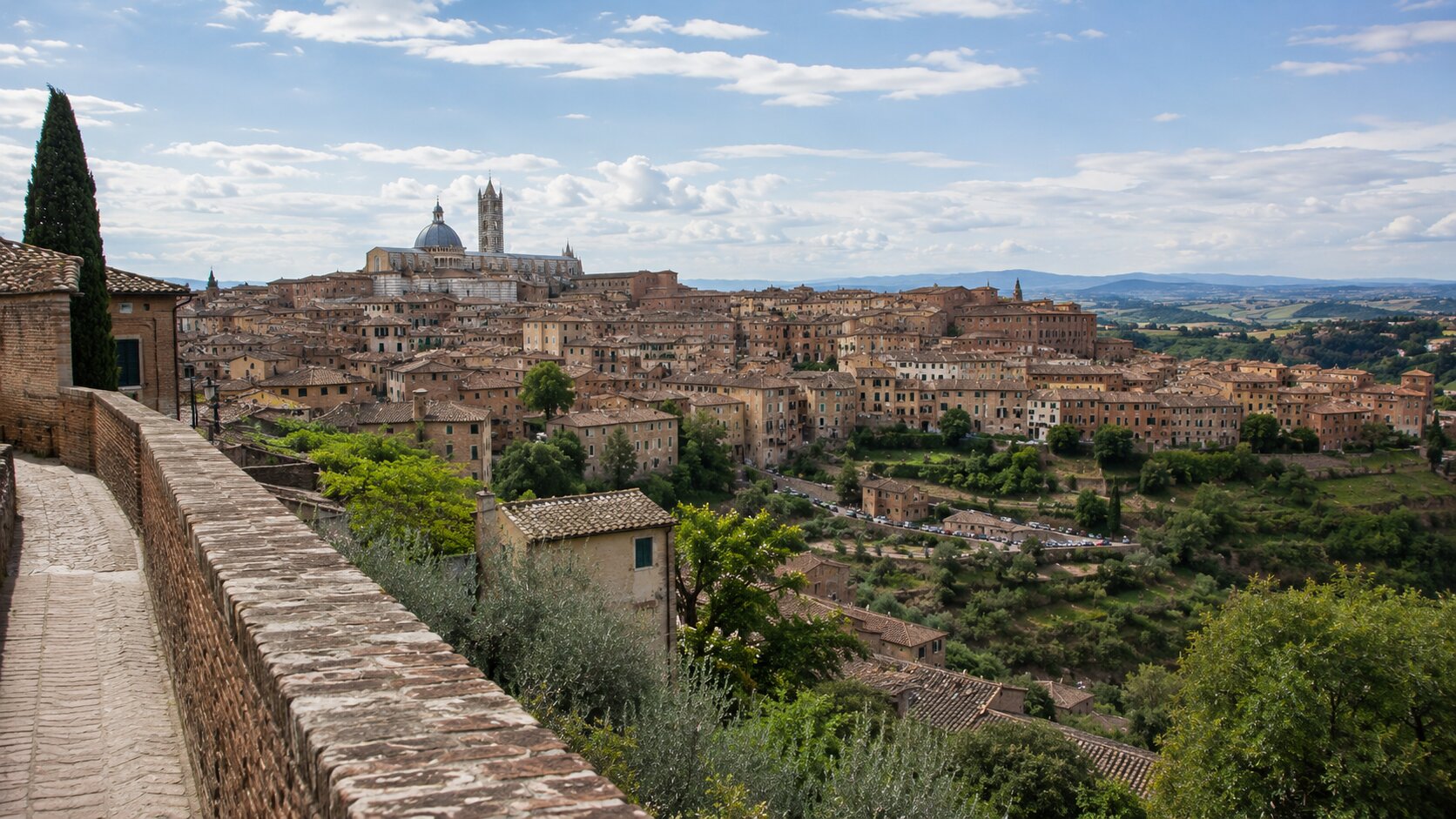
Most people ask "when should I visit Tuscany" and expect a season for an answer. But the season matters less than most guides suggest. What actually shapes the experience is how much time you give the region and how you use it. One day, two days, three days — each changes what Tuscany can show you. That's true almost regardless of the month on the calendar.
If You Only Have One Day to Visit Tuscany
One day is tight. It's still enough to get a real feel for the region, as long as you don't try to cram in too much. Florence sits close enough to Siena, San Gimignano, and Pisa that the drive itself rarely eats up the day — provided the route and pacing are handled by someone who does this daily, rather than pieced together on the fly.
The mistake most travelers make is trying to string all three towns together in a single day. That leaves maybe 90 minutes per stop once you factor in the driving. A better plan picks one clear focus. Chianti and a winery lunch. Siena paired with San Gimignano. Or a broader loop that adds Pisa to the mix. Pick a lane and the day feels complete. Try to do everything and it feels like you spent most of it in the car.
Why Chianti Often Becomes the Highlight
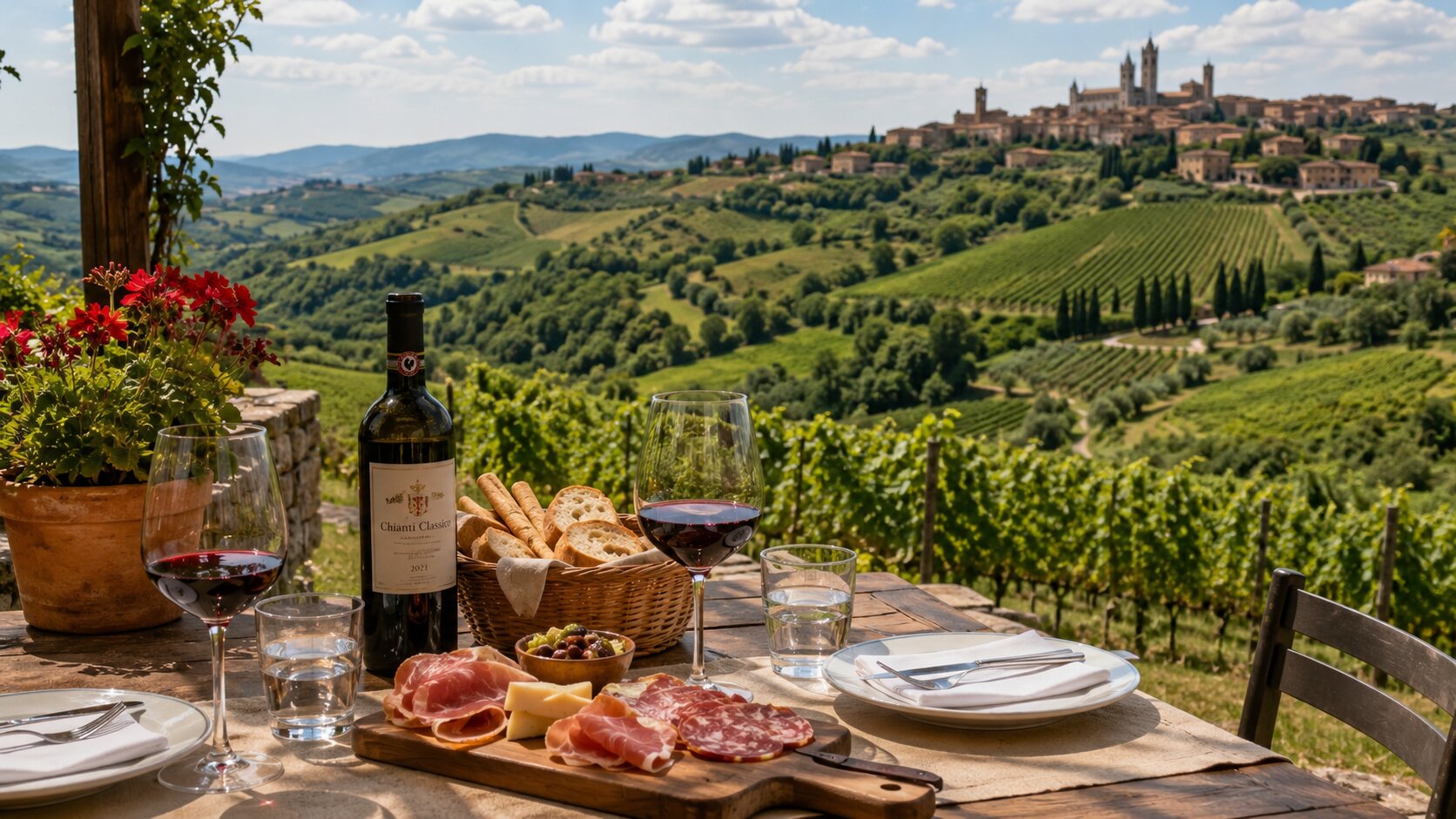
Florence, Siena, and Pisa all have a single unmissable landmark. Chianti doesn't work that way. There's no equivalent of the Leaning Tower here. What sticks with people instead is the shape of the whole afternoon. Vineyards on one side of the road. Olive groves on the other. Small stone villages that show up without warning around a bend.
The zone most visitors picture as "Chianti" is the historic core between Florence and Siena. It got its boundaries in 1716, when Grand Duke Cosimo III de' Medici issued the edict that first defined it. Historians consider it one of the earliest legally protected wine regions anywhere. Every bottle from inside that zone has to be at least 80% Sangiovese. Bottles also carry the Gallo Nero, a black rooster trademark the local producers adopted back in 1924. Knowing that history changes what a winery stop actually is. It stops being a quick tasting. It starts being a look at three centuries of decisions about how this specific land should be farmed. Our guide to a private Chianti wine tasting tour covers how to turn that into an actual afternoon plan.
Should You Choose Siena or San Gimignano?
These two towns get compared constantly, but they're not really competing for the same slot. Siena spreads across three hills. At its center sits Piazza del Campo, the shell-shaped square that hosts the Palio horse race twice a year. Walking Siena means walking a real medieval city. It once rivaled Florence for power, and it still carries that scale in its streets and squares.
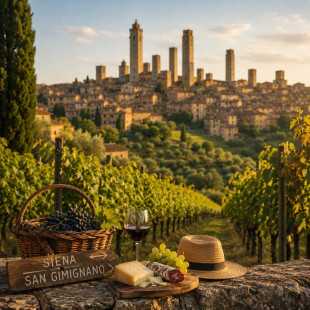
San Gimignano is a different kind of place entirely. In the Middle Ages the town had as many as 72 defensive towers. Only 14 survive today, but they're enough to give the skyline its famous, unmistakable silhouette from miles away. You can cross the whole historic center on foot in about 20 minutes. That makes it feel less like a city and more like one dense, single architectural statement.
Visit both in one day and you get two very different versions of medieval Tuscany. One built at city scale. One built as a compact fortress town. Timing matters more for San Gimignano specifically, since its small size means it fills up fast with day-trip buses. Our guide to the best time to visit San Gimignano covers how to plan around the crowds.
Where Pisa Fits Into a Tuscany Itinerary
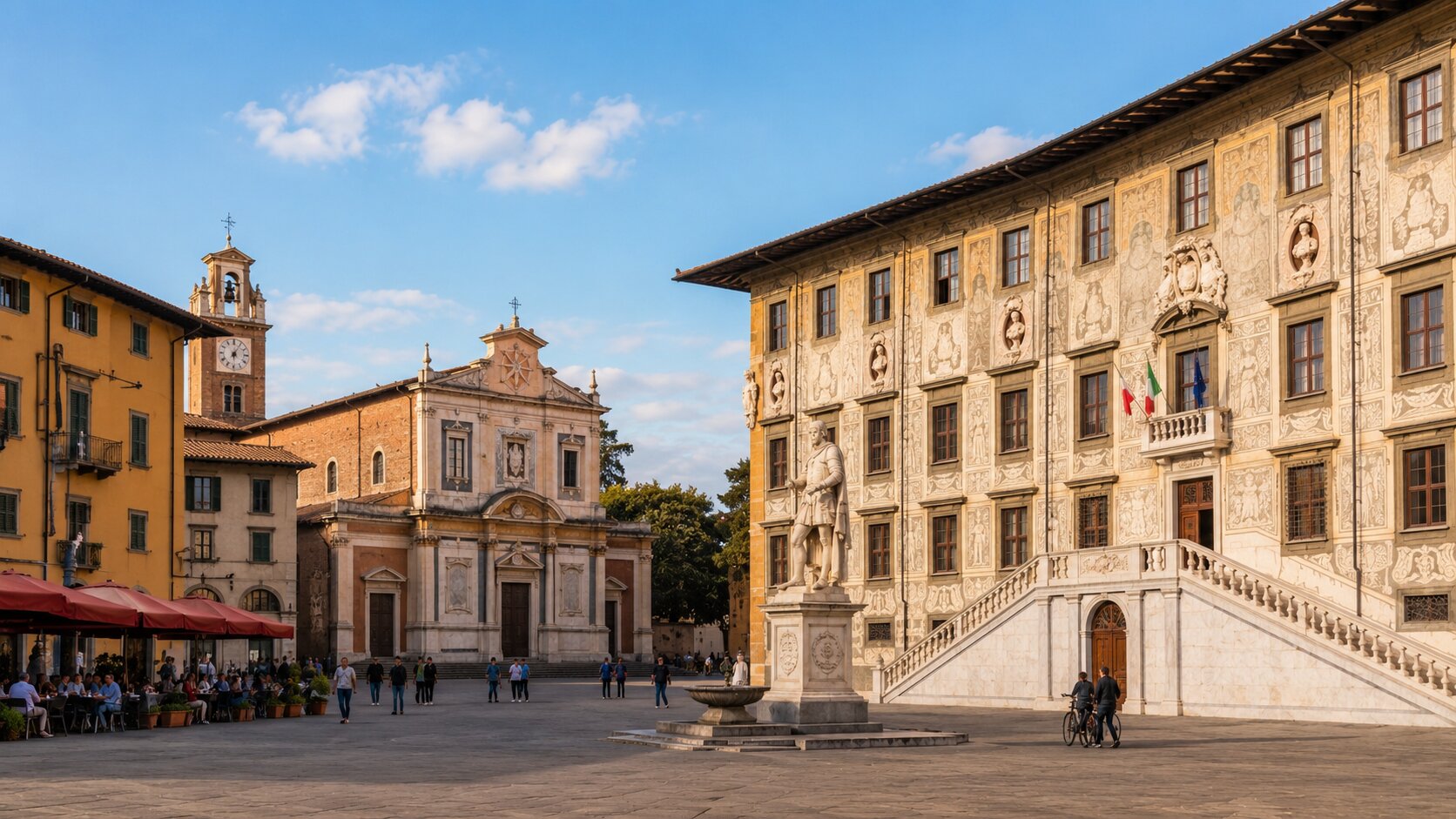
Nearly everyone knows the Leaning Tower before they know anything else about Pisa. That's part of why the city gets underrated as a stop. The tower currently leans about 3.9 degrees, down from nearly 5.5 degrees before engineers finished stabilization work in 2001. But Piazza dei Miracoli holds more than just the tower. The Baptistery next to it is the largest in Italy. The whole square reads as one coherent architectural composition, not a single monument with buildings scattered around it.
Pisa works best folded into a bigger day rather than treated as the only stop. On its own, a couple of hours covers the highlights. Paired with Siena or San Gimignano, it adds a completely different texture to the day. Maritime history and Romanesque architecture, instead of hill towns and vineyards.
Why Two Days Change the Experience
A second day removes the pressure that shapes almost every one-day itinerary. Instead of squeezing Chianti and a hill town into the same afternoon, you can give each its own day. Wine tastings stop competing with historic sites for time. Lunch turns into an actual meal instead of something eaten standing up between stops.
That extra day usually changes how people describe the trip afterward, too. A single day tends to produce a list of places visited. Two days tend to produce descriptions of how those places connected to each other. That difference says a lot about how the extra time actually gets used.
Three Days: When Tuscany Feels More Complete
By day three, the pressure to hit every highlight has mostly faded. A common structure splits the time cleanly. Florence on day one. Chianti and its wineries on day two. Then Siena, San Gimignano, or Pisa on day three, depending on what actually interests you rather than what's supposedly essential.
Three days also leaves enough slack to build a day around the drive itself. The landmark at the end of it becomes almost secondary.
Experiencing Tuscany Through the Road
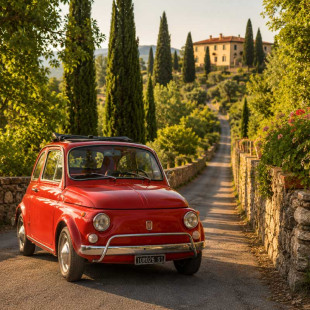
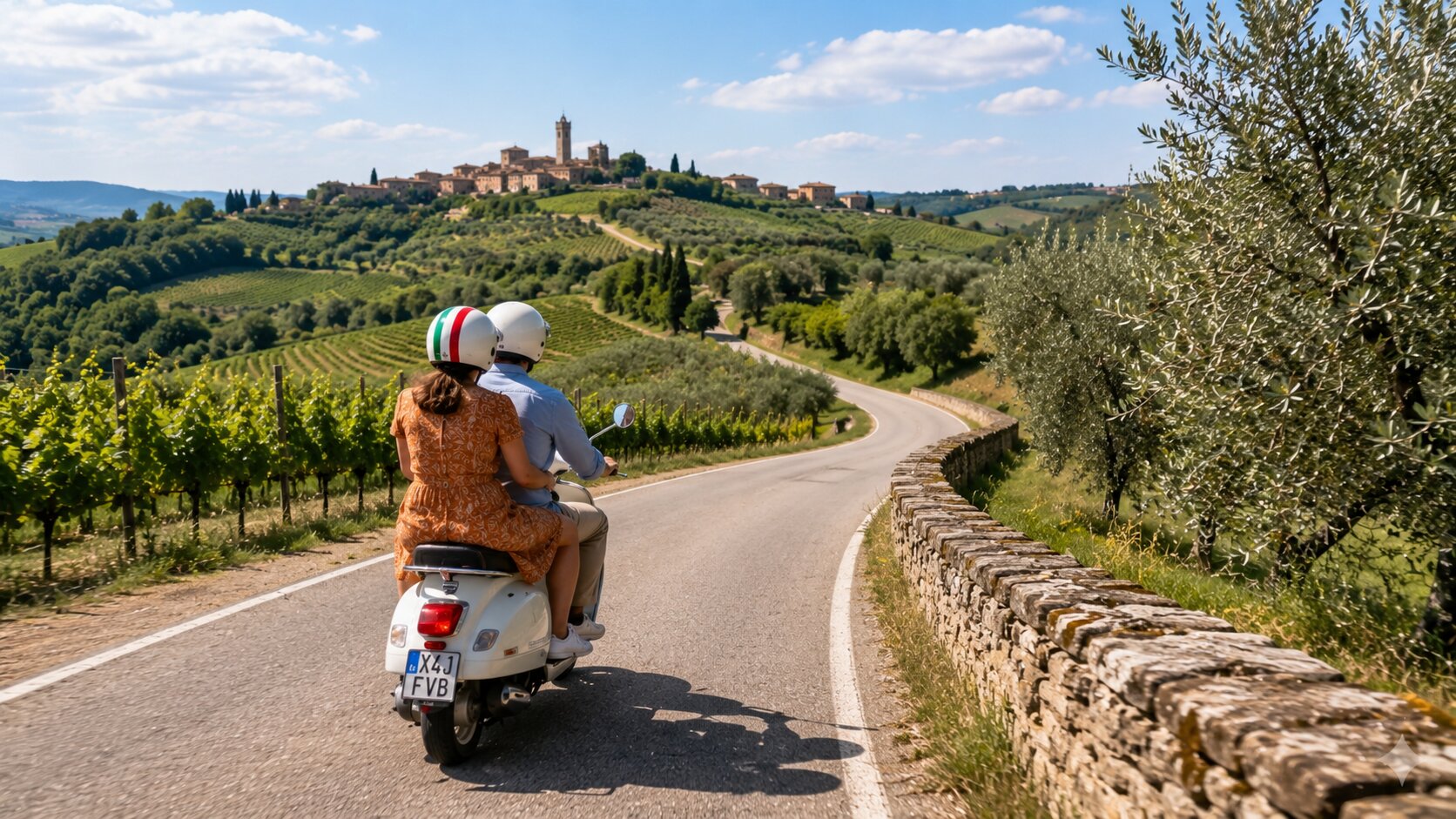
The stretch between towns in Tuscany is rarely just a way to get from one place to the next. Vineyards, olive groves, and cypress-lined roads make the drive itself part of the experience. That's exactly why Vespa tours and vintage Fiat 500 tours have become so popular around Chianti.
Piaggio patented the Vespa's design on April 23, 1946, engineered by Corradino D'Ascanio using techniques borrowed from aircraft construction. Fiat launched the 500 eleven years later, in 1957. Dante Giacosa designed it around a tiny rear-mounted engine that topped out around 85 km/h. Neither vehicle was built for speed. Both force a slower pace through curves a car would take without a second thought. That turns the road itself into the main event, not something to get through quickly.
The Most Common Mistake When Planning Tuscany
The mistake almost every first-time visitor makes is assuming more stops means a better trip. In practice, it usually means less of everything. Shorter visits. Rushed lunches. Towns that blur together because nobody had time to actually look at any of them.
An unhurried lunch at one winery usually leaves a stronger impression than a rushed stop at three. A slow afternoon in Siena beats a quick pass through Siena, San Gimignano, and Pisa on the same day. Tuscany rewards fewer stops and more attention at each one. That's nearly the opposite of how most people plan a first visit.
The Best Way to Visit Tuscany from Florence
How much time you have matters more than which month you book. One day gives a real introduction, as long as you pick a clear focus instead of trying to cover everything. Two days add breathing room. Three days let the trip settle into something closer to understanding the region than just seeing it.
The strongest itineraries connect Florence's art and history to Chianti's vineyards, Siena's civic grandeur, San Gimignano's medieval skyline, and Pisa's architecture. The roads tying it all together are worth experiencing in their own right, not just endured between stops.