In this post
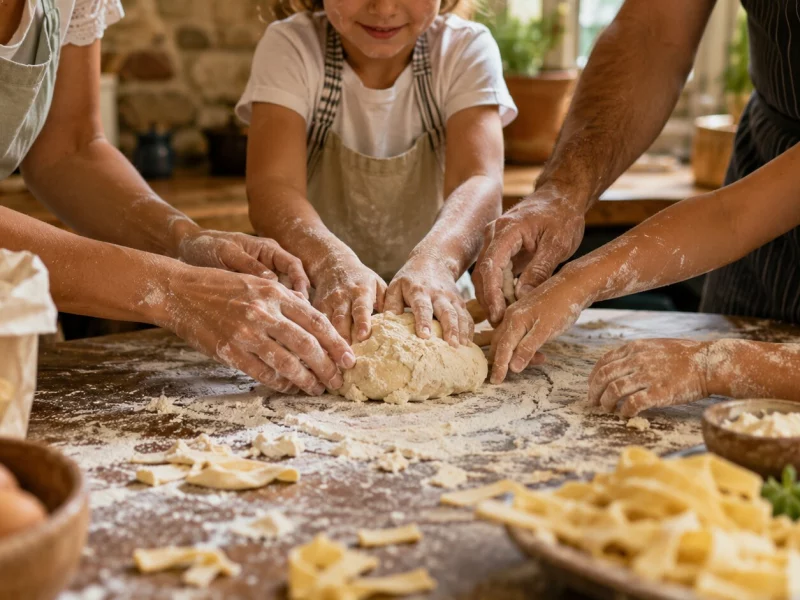
A family cooking class Florence style puts kids to work rather than asking them to sit and watch. That changes how the day goes more than the setting or the menu does. The class we run out of Florence splits into two hands-on stages. Gelato first, then a choice between pizza and pasta. Each one is built around actually making something, not watching a chef do it.
The Part Before the Cooking Starts
An appetiser and a glass of wine greet the group on arrival, before anyone touches dough. For parents, it's a genuine moment to sit down before the day gets hands-on. For kids, it's usually just a snack while they wait to get started, though the high-tech estate kitchen itself tends to catch their attention before the food does.
The Gelato Stage
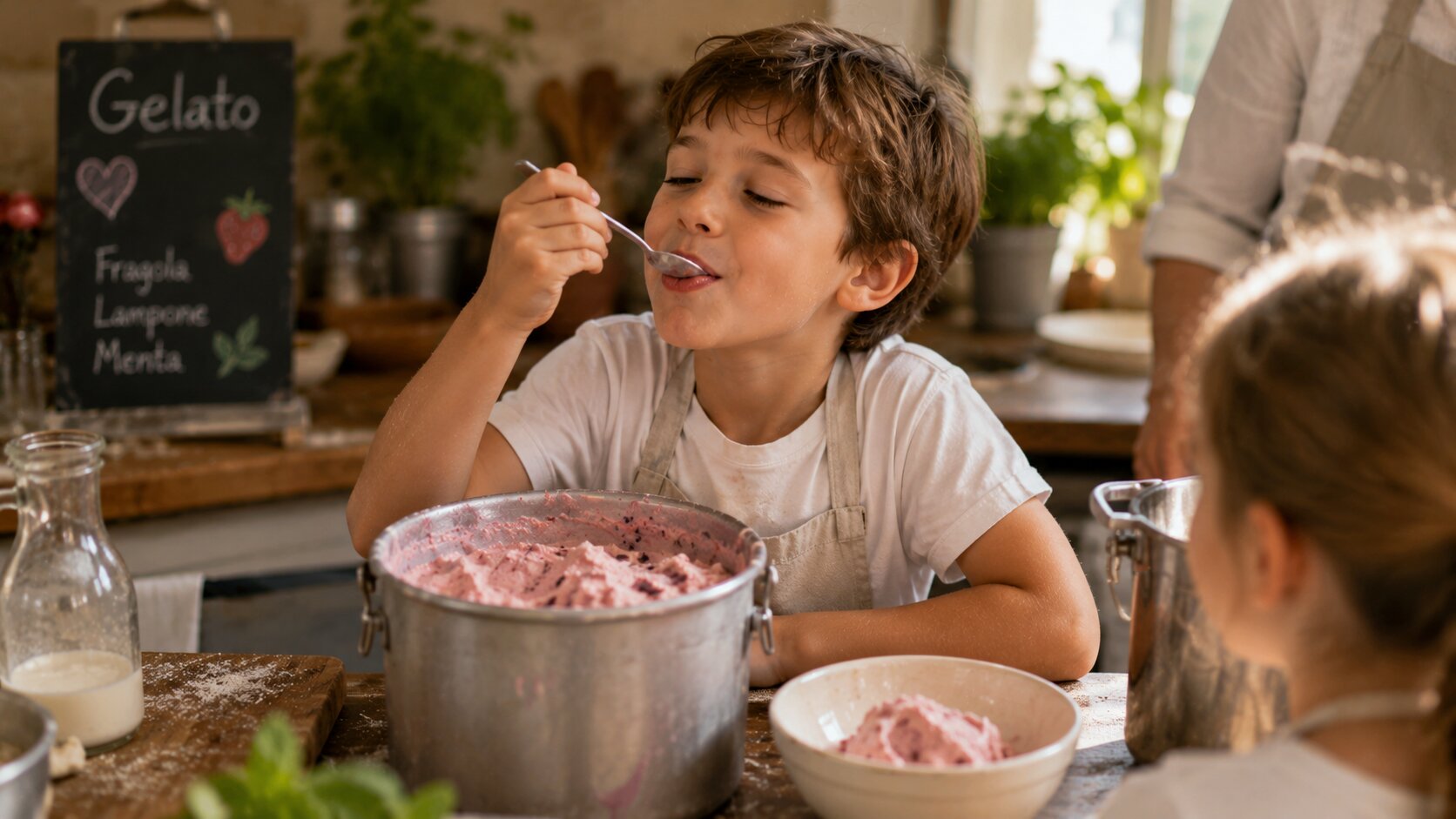
The day starts with gelato, not dessert at the end. Each guest picks their own flavors and mixes a personal batch. It goes into the freezer while the rest of the lesson continues. Kids old enough to hold a spoon steady can manage this part on their own. They pick combinations an adult might never think to put together.
The gelato reappears later with a liquid nitrogen demonstration. The chef finishes it off in front of the group, rather than pulling pre-made tubs from a freezer. Watching something freeze instantly in a cloud of vapor is genuinely unusual to see up close, whatever age you are.
Pizza or Pasta, Made From Scratch
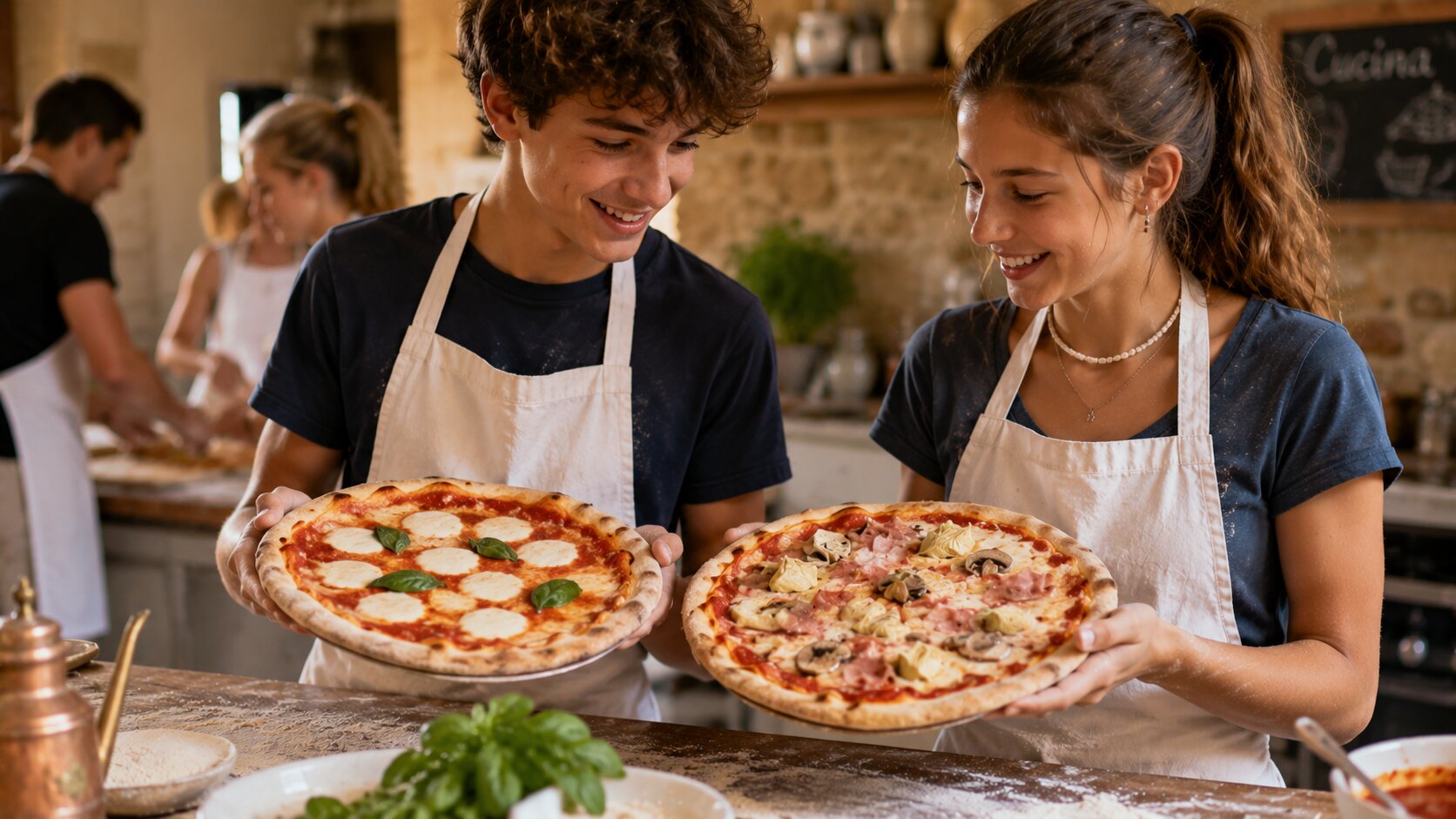
After the gelato goes in to freeze, the group moves on to pizza or pasta, chosen at booking. Pizza makers shape their own dough. They pick toppings from vegetables harvested straight from the estate garden, before the pie goes into a wood-fired oven. Pasta makers roll two different types by hand. They build two classic sauces from scratch, Ragù alla Salsiccia and Burro e Salvia.
Both options put a kid's hands directly in the dough, rather than watching a chef demonstrate the technique once. Choosing real vegetables for toppings, not picking from a pre-set list, is the part that usually lands best with younger guests.
How the Age Range Actually Plays Out
A five-hour class covers a lot of ground, and different ages engage with different parts of it. Mixing and choosing gelato flavors requires less fine motor control than shaping pasta dough by hand, which is part of why the gelato stage tends to work well for younger kids. Pizza suits this age group too. Pressing dough into a rough circle forgives an uneven result in a way pasta rolling doesn't.
Older kids and teenagers get more out of the pasta option specifically. Making two sauces from scratch and rolling dough to a consistent thickness rewards patience and repetition, in a way a younger sibling might find tedious. The wood oven and the liquid nitrogen demonstration both land well across the whole age range. Neither depends on manual skill to enjoy watching.
Siblings of different ages don't need to pick the same dish. One can work the pizza station while another tackles pasta. Both converge at the gelato stage and the shared meal at the end.
What Happens If Someone Gets Tired
The class runs five to seven hours depending on the session, longer than most single activities on a family itinerary. The structure builds in natural breaks on its own. Freezing time for the gelato. Waiting for dough to rest. The oven doing its work while the group isn't actively cooking. A tired child gets real pauses during the day, not one long unbroken stretch of instruction.
The Meal at the End
Everyone sits down together once the pizza or pasta is ready and the gelato is finished. Wine and beer come with the meal for the adults. Our guide to cooking classes in Florence vs the countryside covers how a farmhouse setting like this one changes the pace of a class, compared to one held inside the city.
What Parents Get Out of the Day Too
A chef runs the actual instruction for five to seven hours. That means parents aren't the ones keeping a child occupied and entertained the entire time. Our fresh pasta making classes in Tuscany, built for adults, follow a similar hands-on structure. Just without the gelato stage built specifically for younger guests.
What Goes Home With the Family
Recipes come with the class, covering both the pizza or pasta dish and the gelato base, so a kid who got hooked on mixing their own flavor combination has something to try again once you're back home. It's a small detail, but it's the part that turns a single afternoon into something a family might actually repeat months later in their own kitchen.
Choosing This Class for Your Family
A family cooking class Florence families actually enjoy comes down to how much of the day involves kids doing something with their own hands, not watching someone else do it. Our Florence Pizza or Pasta Cooking Class with Gelato Making at a Farmhouse in Tuscany is built around exactly this. Personal gelato flavors, mixed and later finished with liquid nitrogen. A choice between pizza with garden-picked toppings or two types of pasta made from scratch. A shared meal that closes out a day where every stage gave kids something real to do.