In this post

Florence was pouring wine across a counter long before anyone called it a wine bar. The old vinaio was a narrow room with a marble counter. You had a glass of red and a slice of bread, then went back to work. A few of the best wine bars in Florence still feel like that. Others have grown into serious cellars. We like both kinds, and you'll find a mix of them below.
Wine Bars in Florence's Oltrarno
Right opposite the main entrance to the Palazzo Pitti on the south side of the river is the enoteca called Pitti Gola e Cantina. There is a good choice of wines by the glass, including exquisite dessert wines, and a daunting list of wines by the bottle, displayed on shelves from floor to vaulted ceiling. You can see by the attention they give to decanting the wine that the expert owners care that you enjoy your visit here, so whether you have a glass of wine on a high stool at the bar or share a bottle at one of the marble topped tables, you know you are in good hands.
Edoardo Fioravanti, Zeno Fioravanti and Manuele Giovanelli opened it in 2008. Their list leans towards small producers. Over the years it has become more of a restaurant, with handmade pasta and a tasting menu. In the evening, book.
Le Volpi e l'Uva, Behind Santa Felicita
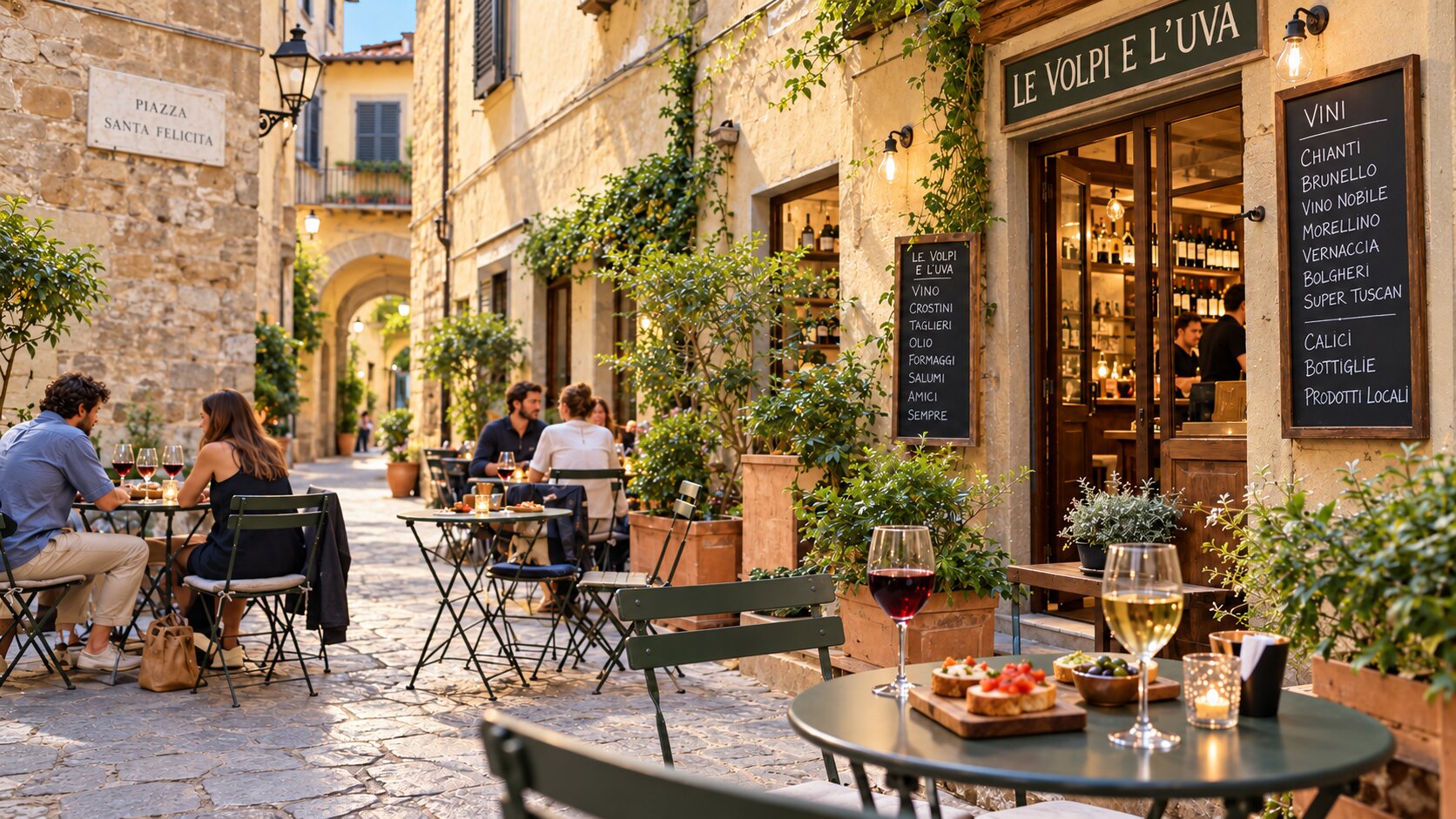
Still on the south side of the river there is the ever popular Le Volpi e l'Uva, just a few metres from the Ponte Vecchio. The wide range of wines by the glass are chalked up on boards above the bar and the book length wine list is available for you to peruse if you want to make more serious selections. If you discover a wine that you can't get at home, just ask about shipping and they will be glad to help. There are stools at the bar so you can take in the atmosphere and enjoy watching the staff prepare delicious snacks or in the summer months you can sit outside on the terrace in the peaceful piazza.
The name means "the foxes and the grape". Emilio Monechi, Riccardo Comparini and Ciro Beligni opened it in 1992. They wanted a place to drink good wine from small, independent growers at fair prices. In Florence, back then, that was quite a new idea. The list still works that way. French bottles sit among the Italian ones, and French cheeses beside the pecorino. Order the hot crostini.
One practical thing. They take a few bookings for the outside tables, by phone or in person, never by email. Nobody can reserve a bar stool. If you want one, turn up early and hope. Piazza dei Rossi is surprisingly easy to miss, even though half the city walks past it on the way to the Pitti.
Where Do Florentines Stop for a Glass at Lunchtime?
When you are near the central market in the San Lorenzo area, stop off at the Casa del Vino for a glass of wine and a snack. Several wines are available by the glass in this tiny bottega at reasonable prices, but if you are looking for something more special to take home, they have many prestigious wines in the original nineteenth century display cabinets. Some exquisite snacks are available here to go with your glass of wine, for example a sandwich of schiacciata bread with sweet cherry tomatoes, fresh anchovies and burrata, the creamier, fresher version of mozzarella. Look out for the tiny buttered bread rolls filled with tartufo or truffle paste, a traditional Florentine treat.
If we had to send you to just one place on this page for lunch, it would probably be this one. Gianni Migliorini runs it. He is a sommelier, and his family has had the bottega since the early twentieth century. Ask him what is open today. The wines by the glass change often, and many come from small artisan estates. Quite a few are natural wines.
Then there are the panini, which go well beyond the burrata. Finocchiona with hard-boiled egg. Cold tripe salad with capers and garlic. Smoked herring with butter and raw vegetables. The salumi come from farmers in Chianti. Don't expect comfort, though. There are hardly any seats and no bathroom. Around one o'clock the market traders stand three deep at the counter. In the daytime the doorway on Via dell'Ariento disappears behind the stalls. That is all part of it.
I Fratellini, Near Orsanmichele
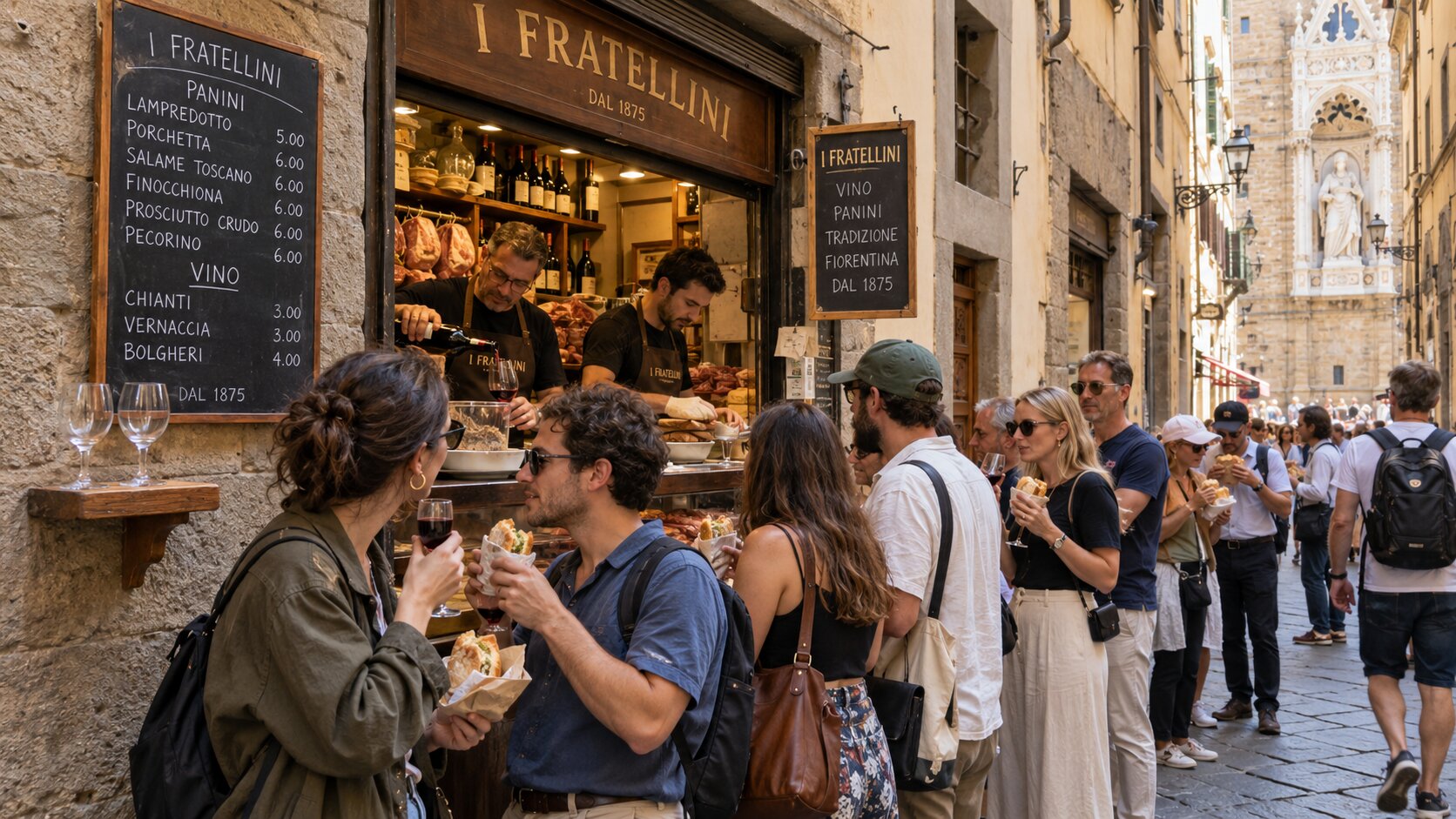
I Fratellini is the same idea in an even smaller space. It has been a hole in the wall on Via dei Cimatori since 1875. There is usually a queue, but it moves fast. One brother pours, the other makes the sandwiches. Around twenty wines are open by the glass, and they rotate. You eat in the street and leave your glass on the little wooden shelves on the the wall when you're done.
What Are Florence's Wine Windows?
Look low down on the walls of old palaces. Every so often you'll see a small arched opening, sometimes with a wooden door, sometimes bricked in. These are buchette del vino. Each one is just big enough for a straw-covered flask. From the sixteenth century, noble families with country estates sold their own wine through them, straight onto the street.
In the plague years of the 1630s the system turned out to be very handy. The seller passed the flask out and took payment back on a metal paddle. Then he dropped the coins into vinegar.
The Buchette del Vino Association started in 2015 and has counted 181 inside the old city walls. Most are closed for good. Babae, on Via Santo Spirito, opened its window again in 2019. A few months later, lockdown suddenly made contactless wine look very sensible. Stanley Tucci stopped there for his 2021 series Searching for Italy. You knock, the little door opens, a glass comes out.
Reading the Board Above the Bar
Most of the boards in wine bars in Florence are heavily Tuscan, which is no bad thing. Chianti Classico is the obvious red. Producers make it mostly from Sangiovese, in the hills between Florence and Siena. It isn't the same as plain Chianti, and Chianti wine explained covers the rules behind the difference. A young bottle can taste sharp straight after opening. Give it a few minutes in the glass. There is more on that in our wine tasting in Chianti FAQ.
Don't skip the whites, either. Vernaccia di San Gimignano is dry, fresh and slightly bitter at the end. Brunello di Montalcino and Vino Nobile di Montepulciano usually cost a lot more by the glass. After dinner, Vin Santo with a couple of cantucci to dip is hard to beat.
Chianti, Vernaccia and Vin Santo are also the three wines you taste on our Best of Tuscany day trip. The stop is an organic, family-run estate, between the walking tour of Siena and the afternoon in San Gimignano. Pisa comes last. The coach is back in Florence around half past eight, so there is still time for a last glass somewhere on this list.