In this post

Walk from the Duomo up to the San Lorenzo market and you'll pass thousands of souvenirs. There are David aprons, Ponte Vecchio magnets and "Florence leather" bags stacked three deep outside the stalls. With most of it, there's no telling where it was made.
The best gift shops in Florence work the other way round. They are small family businesses. Someone made the thing you buy in the back room, or someone who has been doing the choosing for decades picked it for you.
So we've split this list that way: the workshops first, then the shops where somebody else has already done the hard part.
Gift shops for silver, paper and parchment
Pampaloni – silversmiths in Florence since 1902, with a sense of humour. Think egg cups shaped like cracked eggs, geometric cake trays and pitchers, plus a jewellery line of chunky rings and simple necklaces. Via Porta Rossa 99r.
The family still makes the pieces in its own workshop south of the river. The shop moved into the old Libreria Baccani, a few steps from Via Tornabuoni. Look at the window. One Valentine's Day it held a real heart pierced by a silver arrow.
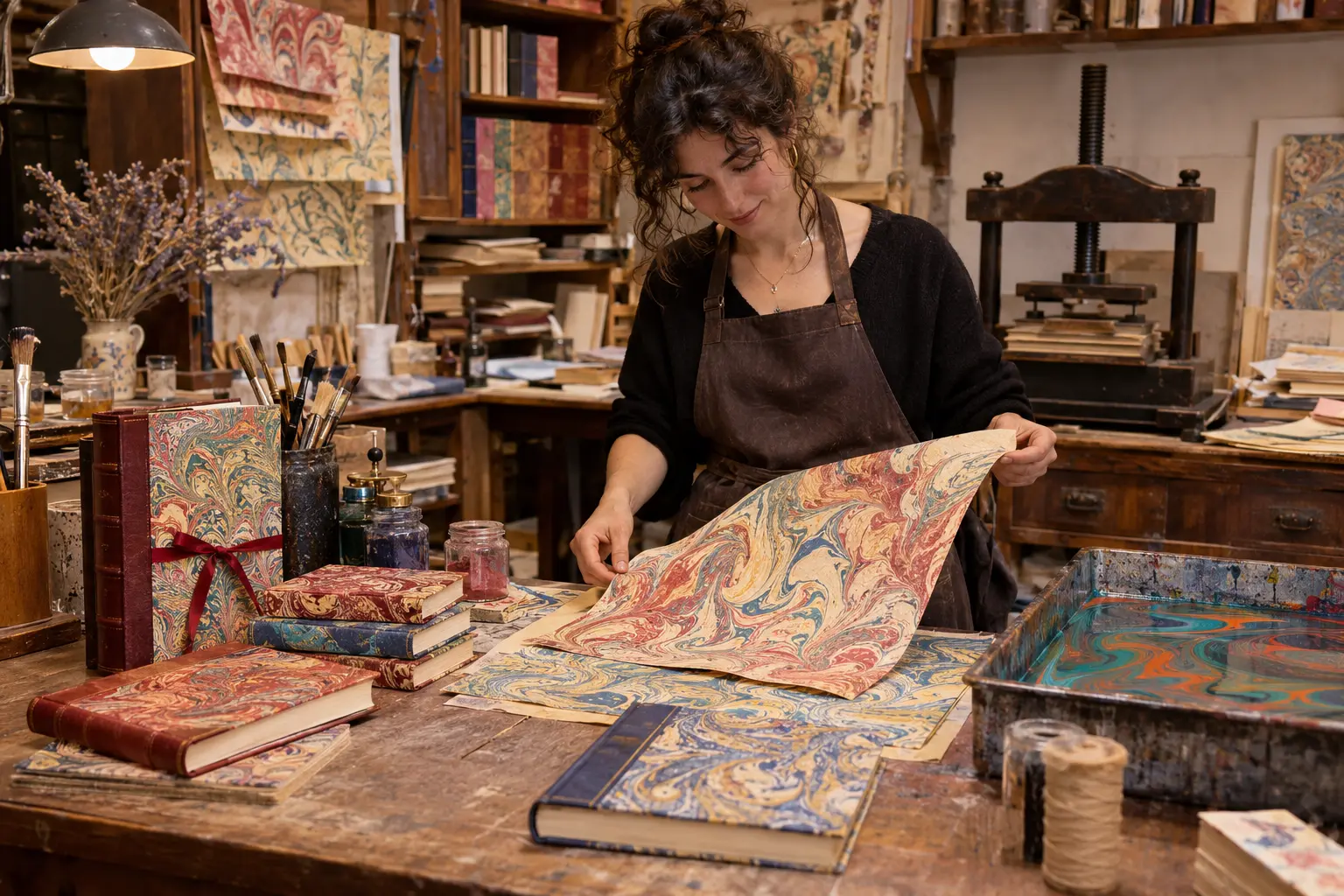
Abacus – A bookbinding husband and wife team, Rita and Fernando, run this atelier, and they also happen to be book restorers. It is the place to find beautifully bound journals or photo albums of all forms. They also sell one of a kind sheets of colourful, swirling handmade marbled paper. They've been binding books since 1985, and the shop is at Via Gino Capponi 22r, behind Santissima Annunziata. Ask for a name on the cover and they'll engrave it while you wait.
Parchment boxes off Santa Croce
Paolo Carandini – Boxes, bookmarks and trays, all handmade in leather, vellum and linen. He uses old bookbinding techniques on things you'd keep on a desk. Borgo Allegri 7r, closed Sunday.
He started out in a bookbinder's workshop and for years worked almost only in leather. That's why he still turns up in guides to leather in Florence. Around 2008 he switched to parchment, and the boxes are what he's known for now. The base is wood. Over it goes a printed image, and over that a skin of goat or kid parchment. It's thin enough that the picture comes through blurred and warm, as if lit from behind. A lot of them are commissions. You bring him a person, a house, a dog or a book they loved, and he builds the box around it. Some of the animals come from the drawings of his grandfather Federico, a painter and sculptor. It's a quiet street off Santa Croce, and the shop keeps workshop hours: 9:30 to 12:30 and 3:30 to 6:30. Don't turn up at two o'clock.
Jewellery and biscuits
Fiori del Tempo – Silver and gold-plated jewellery, a lot of it modelled on Renaissance and antique pieces. You'll find brooches, earrings and necklaces, next to things as plain as a single freshwater pearl earring. The shop is tiny and the prices are low for handmade work. Francesco Deidda opened it in 1985. Years earlier, he paid for goldsmith school in Valenza by selling his pieces on the Ponte Vecchio at weekends. The family still makes everything. If you'd rather have a different stone in a necklace, they will often change it on the spot. Via de' Ginori 27r.
Il Cantuccio di San Lorenzo – It's easy to walk straight past this tiny shop but it's worth staking out. They sell mostly one thing: cantuccini, the Tuscan almond biscuits. You dunk them in coffee or, after dinner, in vin santo, a sweet wine. The recipe came from Migliana, a village in the hills above Prato. Theirs are bigger than most, and besides plain almond there's chocolate, dried apricot and fig, all sold by weight. Via Sant'Antonino 23r, Monday to Saturday. Mid-morning is when they slice the warm logs before the second bake. The rest of the story, vin santo included, is in our piece on Tuscan desserts.
What does a 400-year-old pharmacy sell?
Officina Profumo-Farmaceutica di Santa Maria Novella – The Dominican friars arrived here in 1221 and soon began growing herbs for their remedies. The Officina opened to the public in 1612. It still makes perfumes, soaps, candles, liqueurs and creams from the old formulas. Via della Scala 16, open daily 9am-8pm, and free to walk around.
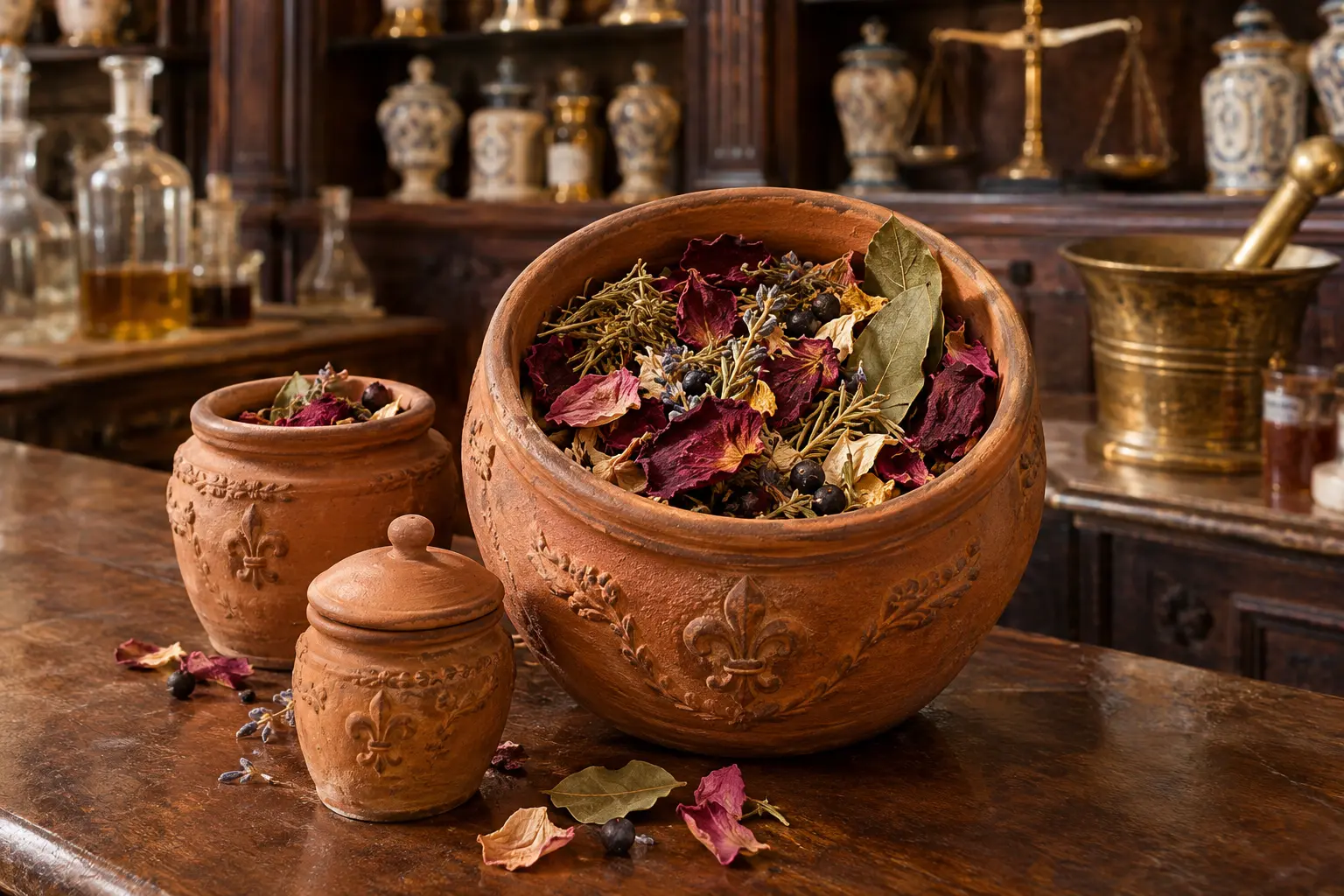
The pot-pourri is what you smell first. The Officina leaves petals, leaves and berries from the hills around Florence in big terracotta jars for months, sealed with wax. You can take some home in a small copy of the same jar.
Across the river
The Oltrarno still has a good number of working artisans, often behind doors with no sign at all. Our small-group Essential Florence Walking Tour crosses Ponte Santa Trinita into this side of town. It passes the antique dealers of Via Maggio and the artisan workshops before reaching Palazzo Pitti. The tour finishes around midday, so you can go back on your own in the afternoon knowing which doors to push.
Giulio Giannini e Figlio – This family has faced Palazzo Pitti since 1856. They made Florentine marbled paper known far beyond the city. Notebooks, desk sets, pencil boxes and loose sheets fill the shop, and the paper still comes out of the workshop upstairs. Piazza Pitti 37r.
Where someone else does the choosing
Pegna – An old grocery behind the Duomo, open since 1860. Local oil and pasta sit on one shelf, and things you'd never expect to find in Italy on the next. For a gift, look for Martelli pasta in its yellow paper packet. One family makes it in Lari, near Pisa. They dry it for about fifty hours, where an industrial plant takes a few. The yellow copies the paper that used to line the pasta bins at the market. Or take a bottle of Laudemio, the oil of a group of twenty-one Tuscan estates. Each has its own label but they all use the same bottle, so it's easy to find on the shelf. Via dello Studio 8.
Zanobini – A small, busy wine shop in San Lorenzo. A family of winemakers runs it, with plenty of Tuscan bottles at fair prices. Mario or Simone can help you choose. Or try some for yourself from the daily wines on offer by the glass. They are cousins, and took the shop over from their fathers, the original fratelli. Via S. Antonino 47r, closed Sundays.
It is the same street as Il Cantuccio, a few doors up. Buy the biscuits first, then ask for the vin santo to go with them. That's a very Florentine ten minutes.
One for after the Uffizi
Uffizi bookstore – no doubt you'll be visiting the Uffizi gallery while you're in Florence. Save a bit of energy for a browse through the bookshop at the end of the visit. Renaissance paintings turn up on a vast array of trinkets and postcards. Alongside them is an excellent selection of art books, worthy of a serious art lover's coffee table.
A last practical thing: the best gift shops in Florence keep Italian shop hours. Many close for lunch and most close on Sundays. A few take Monday morning off as well, so late morning and late afternoon are the safe times.