In this post
he Accademia Gallery in Florence is widely associated with a single name: David.
Michelangelo’s masterpiece undeniably dominates the space, both physically and symbolically. Yet to experience the Accademia only through David is to overlook a deeper narrative one that reveals Florence’s artistic ambition, spiritual intensity, and sculptural innovation.
Understanding the Accademia Gallery explained beyond David transforms a brief visit into a layered cultural encounter.
The Hall of the Prisoners: Sculpting the Human Struggle
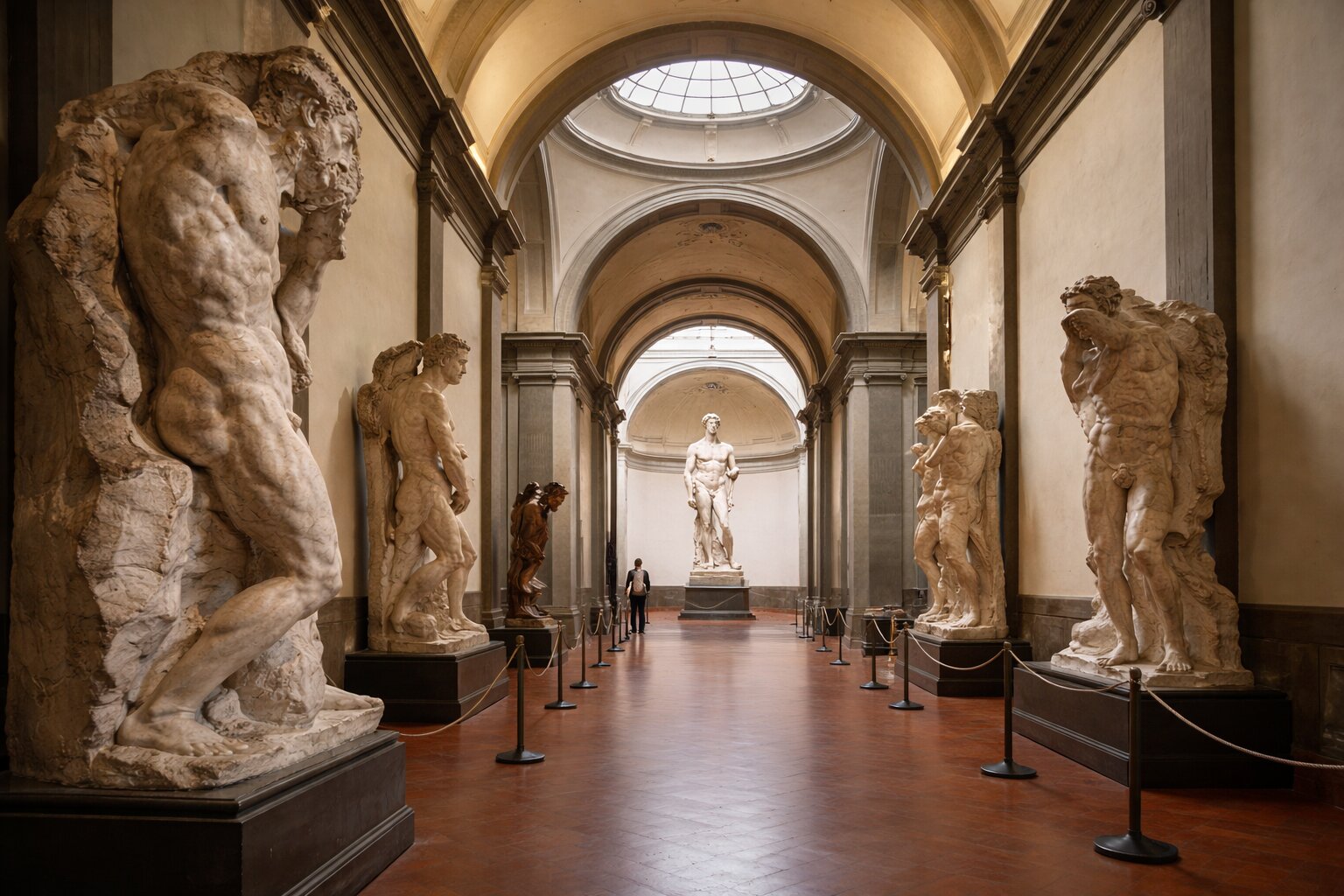
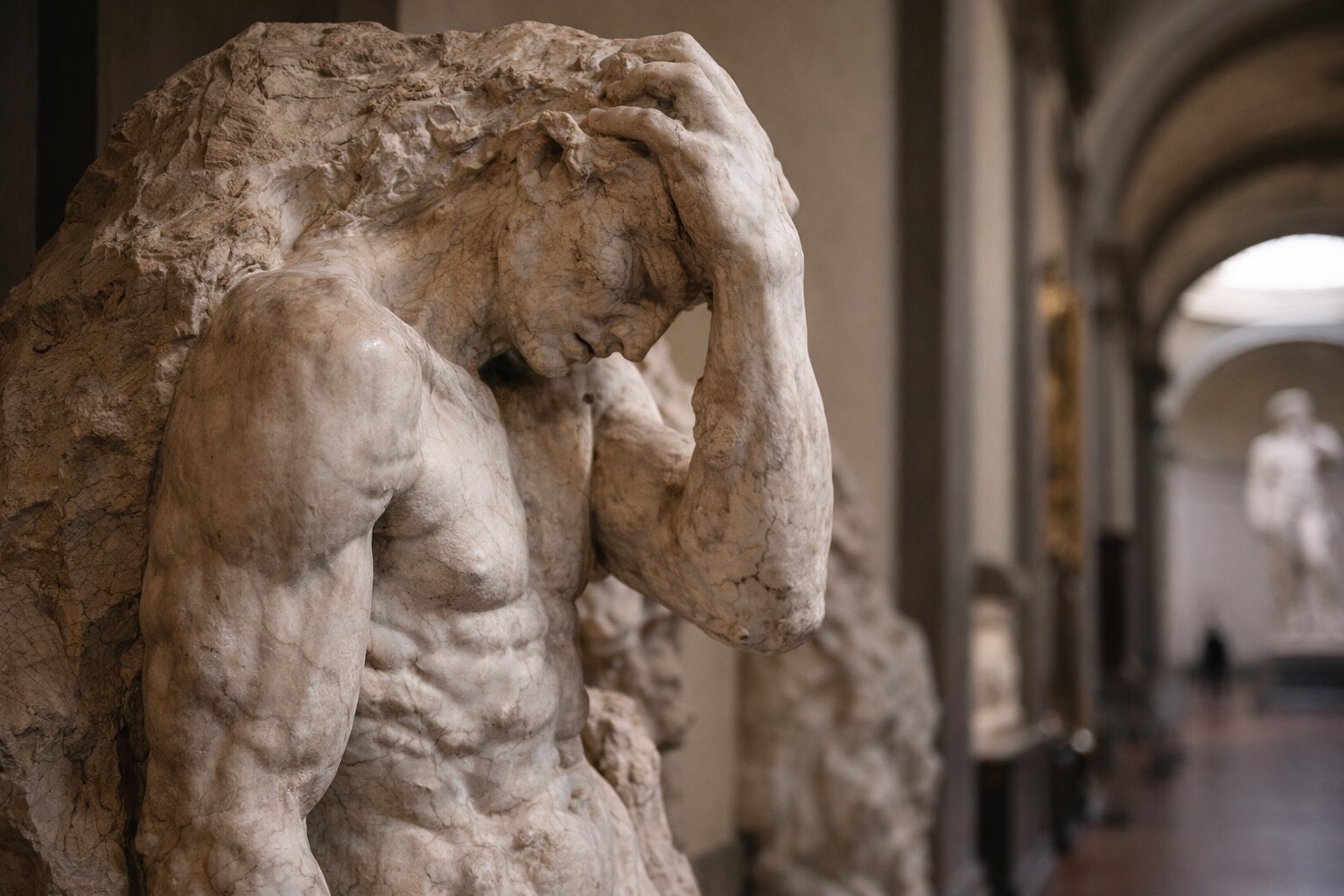
Before reaching David, visitors pass through a dramatic corridor lined with Michelangelo’s unfinished sculptures, known as the Prisoners or Slaves.
These figures appear to emerge from the marble itself. Limbs twist. Torsos strain. Faces remain partially trapped within stone.
They are not incomplete in a casual sense. They embody Michelangelo’s philosophy of sculpture the idea that the figure already exists within the block, waiting to be liberated.
Walking through this space becomes a meditation on tension: between potential and completion, matter and spirit, confinement and release.
Seen in this context, David is no longer an isolated triumph. He becomes the culmination of a sculptural journey.
David in Context: Civic Symbol, Not Just Masterpiece
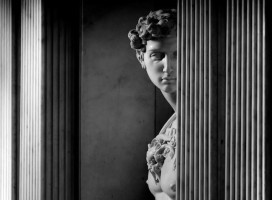
David is often photographed as an aesthetic ideal. In Florence, however, he was originally conceived as a political statement.
Installed in front of Palazzo Vecchio in 1504, David represented the vigilance and independence of the Florentine Republic. His gaze was not abstract—it was directional, facing Rome.
Inside the Accademia today, the sculpture’s meaning shifts from public symbol to artistic achievement. Yet understanding its civic origins restores its intensity.
David is not only anatomical perfection. He is defiance carved in marble.
Florentine Painting in the 13th and 14th Centuries
Many visitors move quickly past the early Renaissance painting rooms. Yet these galleries reveal something essential: how Florence learned to see.
Large gold-ground altarpieces by artists such as Giotto and his contemporaries show a transition from Byzantine flatness to spatial experimentation. Figures begin to occupy space. Emotion becomes more human.
These works may appear stylistically distant from Michelangelo, but they form the foundation of the Renaissance worldview.
Without this shift in visual language, the sculptural revolution would not have been possible.
The Museum of Musical Instruments
One of the Accademia’s most overlooked sections is the Museum of Musical Instruments.
Here, violins, harpsichords, and early keyboards some linked to the Medici court reveal another dimension of Florentine refinement.
Renaissance Florence was not only a city of sculpture and painting. It was also a city of sound.
This quieter section offers balance after the intensity of David, reminding visitors that cultural identity is built across disciplines.
Why a Deeper Visit Changes the Experience
Rushing to David, taking a photograph, and leaving may check a box. Slowing down reframes the visit.
Understanding the unfinished sculptures before him, the political meaning behind him, and the artistic traditions surrounding him allows David to exist within a broader narrative.
Those wishing to explore the museum with greater historical and artistic context may consider an Accademia Gallery tour, where interpretation and pacing are shaped around meaningful engagement rather than crowd movement.
In this way, the Accademia becomes more than a stop. It becomes an experience.
The Accademia as a Study in Becoming
Perhaps the most powerful thread running through the Accademia is the idea of becoming.
The Prisoners becoming human.
Florentine painting becoming Renaissance.
A city becoming a cultural capital.
A block of marble becoming David.
To move beyond David is not to diminish him. It is to see him more clearly as the summit of a long and deliberate ascent.