In this post

The giants of Florentine fashion are Gucci, Emilio Pucci, Roberto Cavalli and Salvatore Ferragamo. Gucci and Cavalli were born in the city, and Pucci came from one of its oldest noble families. Ferragamo arrived from the south in 1927. All four houses grew up within a few streets of each other.
Florence is not, and has never been, shy about fashion. Florentines love dressing up. They put a lot of effort in and will make any excuse to put on their best outfits. From grandmothers to granddaughters, you will see a mix of styles and tastes out there, from floor length fur coats and pearls to the tightest skinny jeans and stilettos. But there's no doubt about it, the Florentines love fashion.
Perhaps it found its way into the culture through the roaring trade of fine wool and silk in the Middle Ages, the best that Europe could offer. Or maybe it came a century later with the Renaissance Medici rulers, who loved to surround themselves with beautiful things. Lorenzo the Magnificent was the one who supposedly made wearing black utterly fashionable. Eleonora di Toledo, Duke Cosimo I's wife, made opulent dressing an art form. Either way, more recent times have seen local Florentines take centre stage amongst the biggest of international fashionistas.
Gucci
Guccio Gucci got his big idea in London, of all places. As a young man he worked at the Savoy Hotel, carrying the bags of very rich guests, and he paid a lot more attention to their luggage than to them. He came home and opened his own business in 1921. It all started out as a small leather shop on Via della Vigna Nuova, selling luggage and saddlery to travellers.
As the business took off, so did the designs. The bamboo handle bag of 1947 (still one of the most popular items) and the horsebit loafers of 1953 became trademarks. Then Audrey Hepburn, Grace Kelly and Jackie O made Gucci the “pinnacle of chic”, as Vanity Fair put it, and there was no turning back.
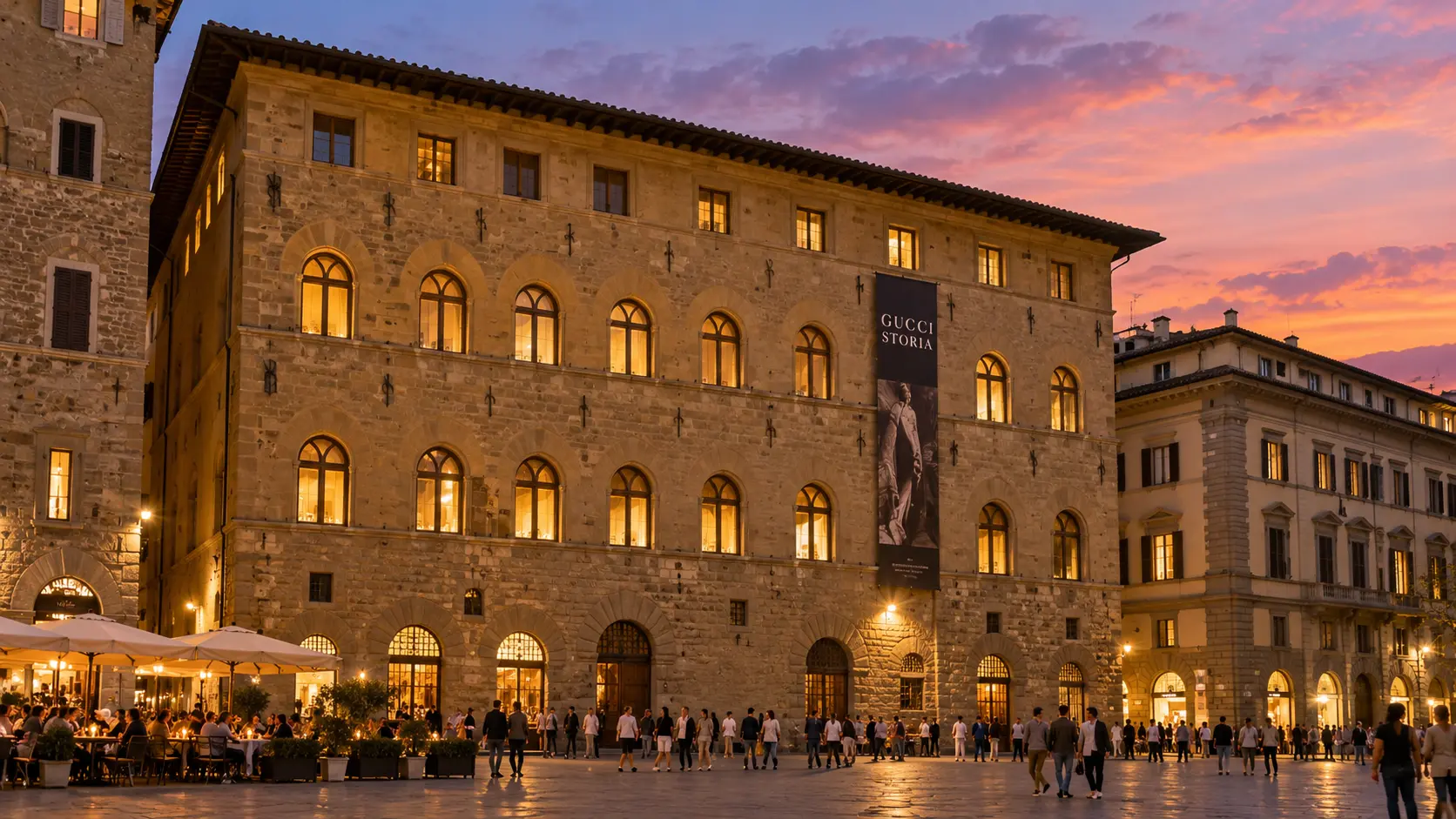
And Gucci never really left home. The first shop is only a few minutes from today's store on Via de' Tornabuoni. The company archive is over in the Oltrarno, in Palazzo Settimanni, which Gucci bought back in 1953. That's still the part of town for artisan workshops, by the way. Right on Piazza della Signoria there's Palazzo Gucci too, inside the old Palazzo della Mercanzia. This is where the medieval guilds, wool and silk included, went to settle their quarrels. It reopened in April 2026 with a new exhibition, Gucci Storia, and Massimo Bottura's Gucci Osteria is still downstairs.
Pucci
Emilio Pucci came from one of Florence's oldest noble families. He began his fashion career with a uniform for his college skiing team. Knowing how to do a thing or two with stretch fabrics, he made sleek no-wrinkle printed dresses, scarves and swimwear. They caused a sensation in the 50s and his career took off. He became known world-wide for his bold, colourful swirling and geometric patterns. Seeing Sophia Loren and Jackie Onassis in his dresses only made them more famous.
That ski team was at Reed College in Oregon. In the 30s the college gave him a scholarship on the condition that he set one up! And it was skiwear again that got him noticed after the war. In December 1948 Harper's Bazaar printed photos of his ski clothes, taken on the slopes at Zermatt.
Where Florentine fashion first hit the catwalk
In fact, Italian fashion shows as we know them started right here. On 12 February 1951 a businessman from Lucca, Giovanni Battista Giorgini, invited a group of American buyers to his home. This was Villa Torrigiani, in the Oltrarno, and a handful of Italian designers showed their clothes there, Pucci among them. It went so well that by 1952 the shows had moved to Palazzo Pitti. They were held in the Sala Bianca, the white ballroom that's now part of the Palatine Gallery.
Florence still has its big fashion fair. Pitti Uomo takes over the Fortezza da Basso every January and June. The first edition was in 1972, and the Pitti name is a nod to those early shows in the palace. You'll notice when it's on, because the area around the station suddenly fills up with very well-dressed men.
Roberto Cavalli
Roberto Cavalli was born into an artist family in Florence, so it was almost natural for him to study textile print at the local art institute. Talent ran in the family. His grandfather, Giuseppe Rossi, was one of the Macchiaioli painters, and his work hangs in the Uffizi Galleries. Roberto opened his own collection in the 70s and made a name for himself with sand-blasted jeans and wild prints. The label now boasts men's and women's lines, eyewear, underwear, accessories, perfume and beachwear in boutiques all over the world. Sadly, Roberto himself died at his home in Florence in April 2024, at 83.
Florence once had something that no one else had, though – Cavalli's first cafe-store on Via de' Tornabuoni. It was decked out in his animal print and stingray-leather walls, with the historic Caffè Giacosa inside. Both closed in the summer of 2017.
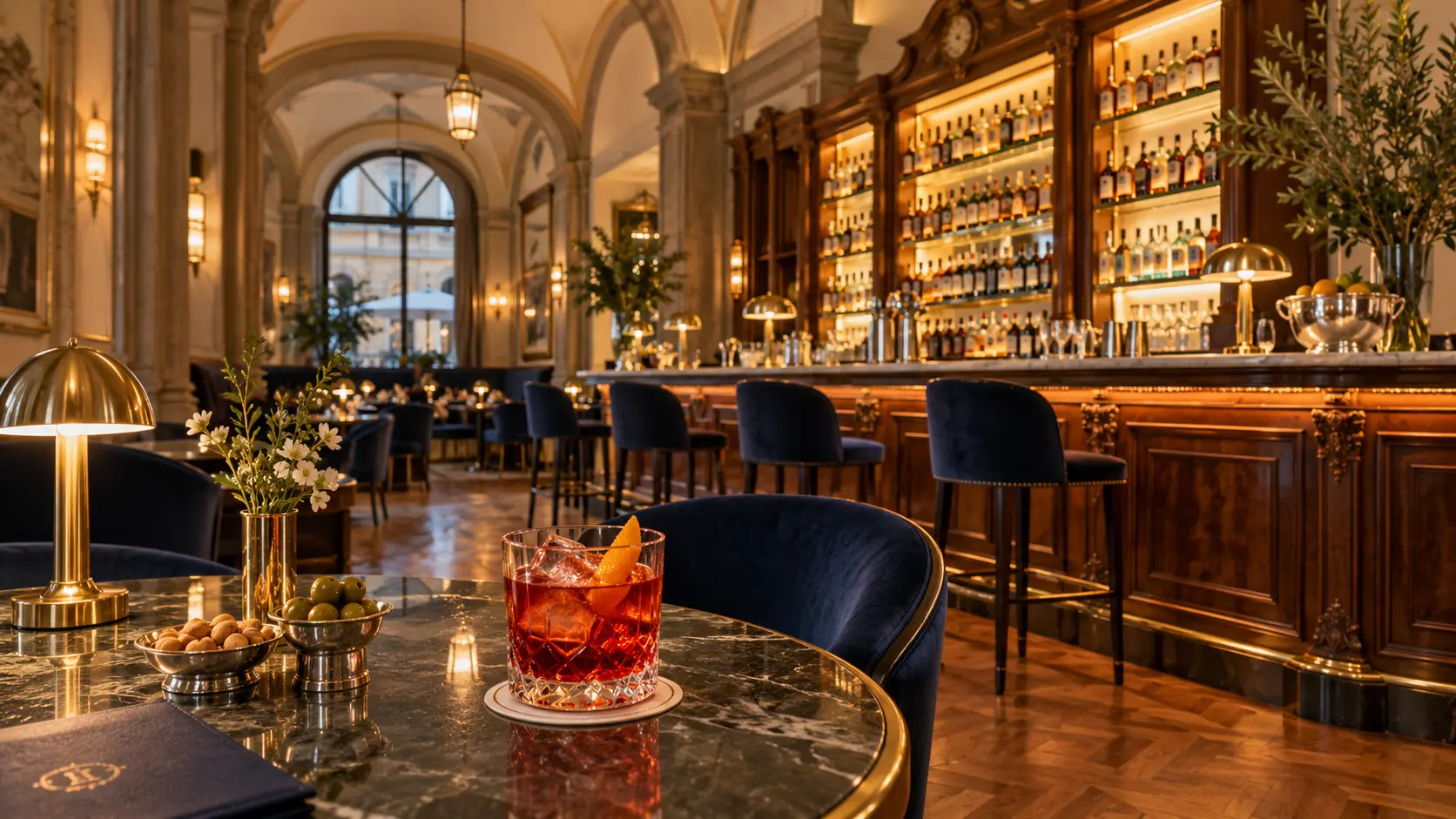
The good news is that the bar has come back. Giacosa reopened in 2023 on the corner of Via de' Tornabuoni and Via della Spada. Inside it's all parquet floors and arched ceilings with grey pietra serena stone, a lot quieter than the animal print days. It's still a terribly fashionable place for a Negroni cocktail. The drink was invented on this very corner in 1919, back when the bar was called Caffè Casoni.
Ferragamo
Often jokingly referred to as the “modern day Medici”, the Ferragamo family was made wealthy by Salvatore Ferragamo's fabulous taste in shoes. Today they own one of the most important fashion houses in Italy, plus some of Florence's most stunning properties and hotels. Although born in southern Italy, Salvatore Ferragamo set up in Florence in 1927. He built himself an empire by fashioning covetable shoes for stars like Marilyn Monroe.
He already knew a thing or two about stars before he got here. He had spent years in California making shoes for Hollywood films. What he found in Florence were the craftsmen, the same leather tradition we write about in leather in Florence.
The current store is housed in Palazzo Spini Feroni, an impressive medieval palazzo on the most luxurious street in Florence. It also includes the unique Salvatore Ferragamo shoe museum, all testament to the continuing reign of the Ferragamo family. Salvatore bought it in 1938, when the building was already well over 600 years old. The museum is down in the old cellars and the exhibitions change every so often. But if the rainbow platform sandal he made for Judy Garland is out, don't miss it!
A day away from the boutiques
Even the most dedicated shopper needs a day off from Via de' Tornabuoni. On The Best of Tuscany Day Trip from Florence, a guide walks you through Siena and into its cathedral. There's free time for the shops in Siena and again in San Gimignano. In between comes lunch at a family-run organic wine estate in Chianti. The day finishes at the Leaning Tower of Pisa, and the coach is back at Santa Maria Novella station around 8.30pm.