In this post
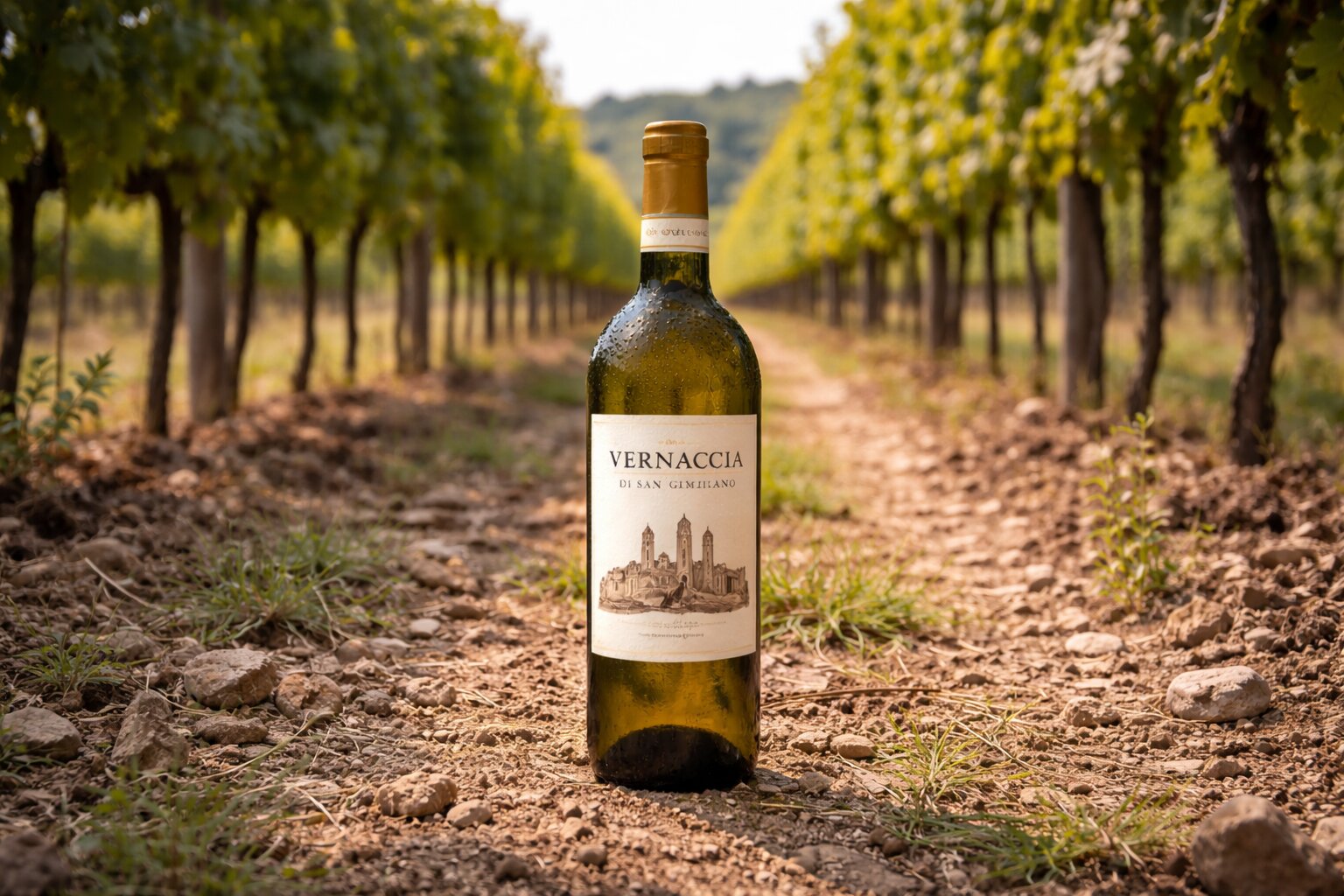
San Gimignano is known for its towers, yet its identity is equally rooted in the land that surrounds them. Beyond stone and skyline lies a quieter legacy: Vernaccia, one of Tuscany’s historic white wines and a defining element of the town’s agricultural life.
Understanding Vernaccia means understanding San Gimignano itself not only as a medieval power center, but as a community sustained by cultivation, trade, and adaptation.
A Wine That Predates the Towers
Long before the skyline became a symbol of rivalry and prestige, vineyards shaped the economy of the territory. Vernaccia is documented as early as the 13th century, when it was already appreciated beyond Tuscany.
Unlike later wine reputations built through marketing, Vernaccia developed organically linked to soil composition, altitude, and the specific microclimate of the hills surrounding San Gimignano.
Wine was not decorative. It was economic infrastructure.
Why Vernaccia Is Different from Other Tuscan Wines
Tuscany is often associated with red wine, particularly Sangiovese and the vineyards of Chianti. Vernaccia, by contrast, expresses a different character.
It is structured yet mineral, often with almond notes and a subtle saline edge that reflects the marine sediments found in the soil. It does not seek intensity through oak or bold fruit. Instead, it reflects clarity and balance.
Its personality mirrors the town itself: vertical, refined, and historically layered rather than expansive or bold.
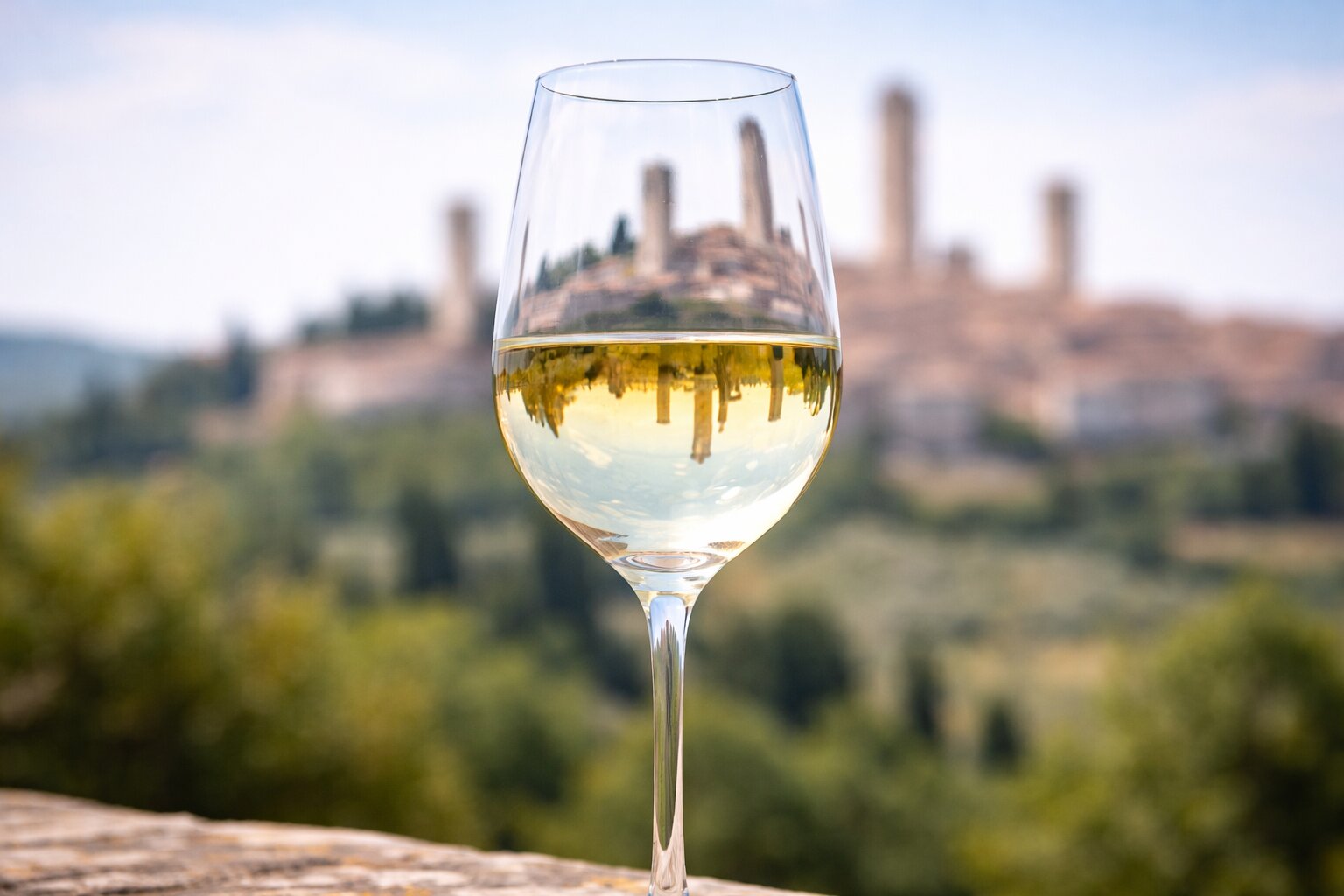
The Landscape Behind the Glass
From the elevated viewpoints of San Gimignano, vineyards stretch beyond the medieval walls, framing the town in cultivated geometry. The relationship between towers and fields is not accidental; urban ambition depended on rural continuity.
Wine here is not merely tasted; it is contextualized. The soil composition, exposure to sunlight, and seasonal rhythms all contribute to the final expression in the glass.
Understanding this connection transforms tasting into interpretation.
Vernaccia in the Present Day
Today, Vernaccia remains central to San Gimignano’s reputation. It was one of the first Italian wines to receive DOC status and later DOCG recognition, reflecting both historical importance and modern quality standards.
Yet despite formal recognition, its appeal remains understated. It pairs naturally with local cuisine pecorino, vegetable dishes, light pasta reinforcing the town’s agricultural rhythms rather than overpowering them.
The wine continues to evolve, balancing tradition with contemporary refinement.
Experiencing Vernaccia Thoughtfully
Tasting Vernaccia in San Gimignano is most meaningful when connected to place. Rather than sampling in isolation, understanding the wine’s agricultural roots deepens appreciation.
Exploring the town through curated private experiences allows visitors to connect towers, terraces, and vineyards into a coherent narrative. Learn more about how this cultural context unfolds in our Private San Gimignano Tours.
Wine, like architecture, becomes part of a broader identity one that reflects both land and history.