In this post
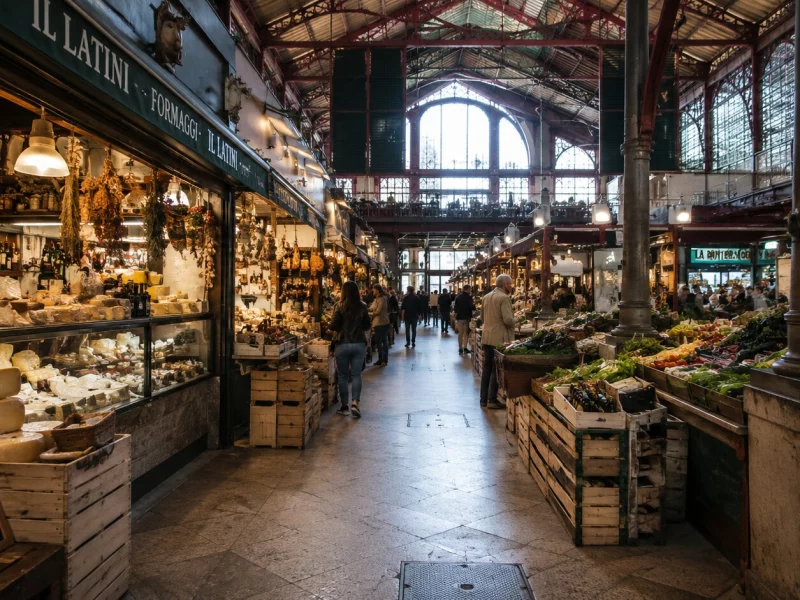
The best Tuscan cooking classes don't start in a kitchen. They start at a market stall. You're standing in front of a butcher who can tell you exactly which farm your pork came from, or a farmer holding out a tomato still warm from the field. Everything that happens later in the kitchen depends on what gets chosen in that first hour.
Starting from the Market, Not the Kitchen
Most cooking classes hand you a fixed recipe and a bag of pre-picked ingredients. A market-first class works the other way around. You walk the stalls first, and what you find there decides what you'll cook. A vendor selling the last of the season's artichokes might change the whole plan for lunch.
That shift matters more than it sounds. An ingredient stops being an abstract line on a recipe card the moment you've watched someone pick it out. You've watched it get weighed, and heard why this batch is better than last week's. You start cooking with context you didn't have an hour earlier.
Ask the person behind the counter a question, and you'll usually get a real answer, not a rehearsed one: how long the cheese aged, why this particular cut of meat costs more than the one next to it, what the family running the stall has sold for three generations. That kind of exchange doesn't happen with pre-bagged ingredients waiting on a kitchen counter.
How the Market Shapes the Menu
The menu isn't locked in before the day starts. What ends up on the plate depends partly on what's in season and what looks good that morning. A particularly good bunch of fresh basil can shift the plan. So can a wheel of pecorino at exactly the right stage of aging, or a farmer with unusually good peaches that morning.
That flexibility mirrors how Tuscan households have always cooked. Build the meal around what's actually good today, not around a recipe printed months in advance. A cooking class that works the same way teaches something closer to how the cuisine actually developed. It's not just a fixed script anyone could follow from a cookbook. Our guide to Florence's food market goes deeper into what to expect from a morning spent shopping among the stalls.
From Selection to Preparation
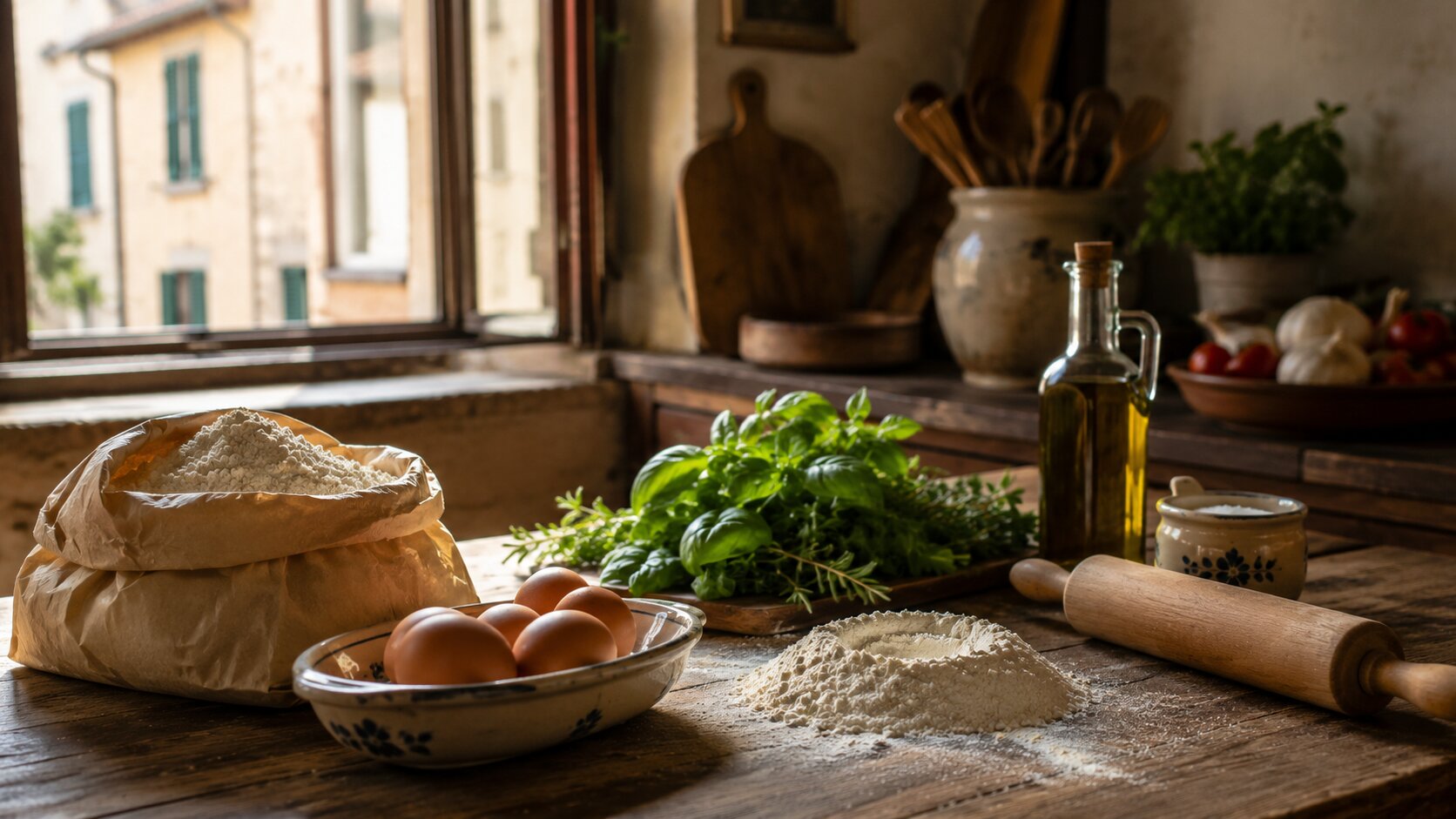
Once the market visit wraps up, the kitchen isn't a separate event. It's the next step in the same process. The tomatoes picked an hour earlier become the base for a bruschetta. The vegetables selected at a farm stand turn into the start of a ragù. Rolling out pasta by hand makes a lot more sense once you've watched a farmer describe how the eggs going into the dough were collected that same morning.
Some techniques feel abstract in a normal cooking class. Why this cut of pork works better roasted than grilled. Why day-old bread belongs in a soup instead of the trash. They click into place once you've seen the ingredient itself and heard why it was chosen. A chunk of unsalted Tuscan bread makes a lot more sense as the base of a soup once you've heard the story of why the region's bread has never carried salt in the first place, rather than reading it as a footnote in a recipe.
The Role of Guidance
A good instructor bridges the two halves of the day. At the market, they point out what a shopper might otherwise miss. Which herbs are actually in season versus flown in. Which cheese counter has been run by the same family for decades. In the kitchen, that same guidance turns into hands-on direction. A correction to a knife grip. An explanation of why the ragù needs another twenty minutes before the pasta goes in.
The best version of this doesn't feel like a lecture. Questions come up naturally, usually tied to something seen at the market that morning. Why this tomato variety. Why this particular cut of meat. Why the bread has no salt in it at all. A good guide answers those questions as they come, rather than sticking to a fixed script.
City Energy and Countryside Rhythm
The morning market runs on city rhythm. Crowded aisles. Vendors calling out prices. The noise and pace of a working market that's been open since sunrise. That energy shapes the first half of the day.
Move the cooking portion out to the countryside, and the rhythm changes completely. The pace slows. There's more space, more quiet, and a much more direct line between the ingredients and the land they came from. A vegetable garden sits right outside the kitchen door, instead of a stall three streets over from the last one. Our comparison of cooking classes in Florence versus the countryside breaks down what actually changes when the kitchen moves outside the city.
That contrast, city market in the morning and countryside kitchen in the afternoon, adds up to something bigger than either setting on its own. One shows where ingredients get chosen. The other shows where, historically, most of them were actually grown.
Why This Experience Feels Different
What sets a market-and-cooking combination apart isn't really the two activities themselves. Plenty of experiences offer both a market visit and a cooking class as separate, unconnected blocks. What matters is whether one actually leads into the other.
Done well, there's no clean break between browsing the stalls and standing at the stove. Each choice at the market shows up again in the kitchen. And each step in the kitchen makes more sense because of a decision made an hour earlier. You come away understanding a process, not just a recipe you could have printed off the internet.
A More Complete Way to Experience Tuscan Cooking
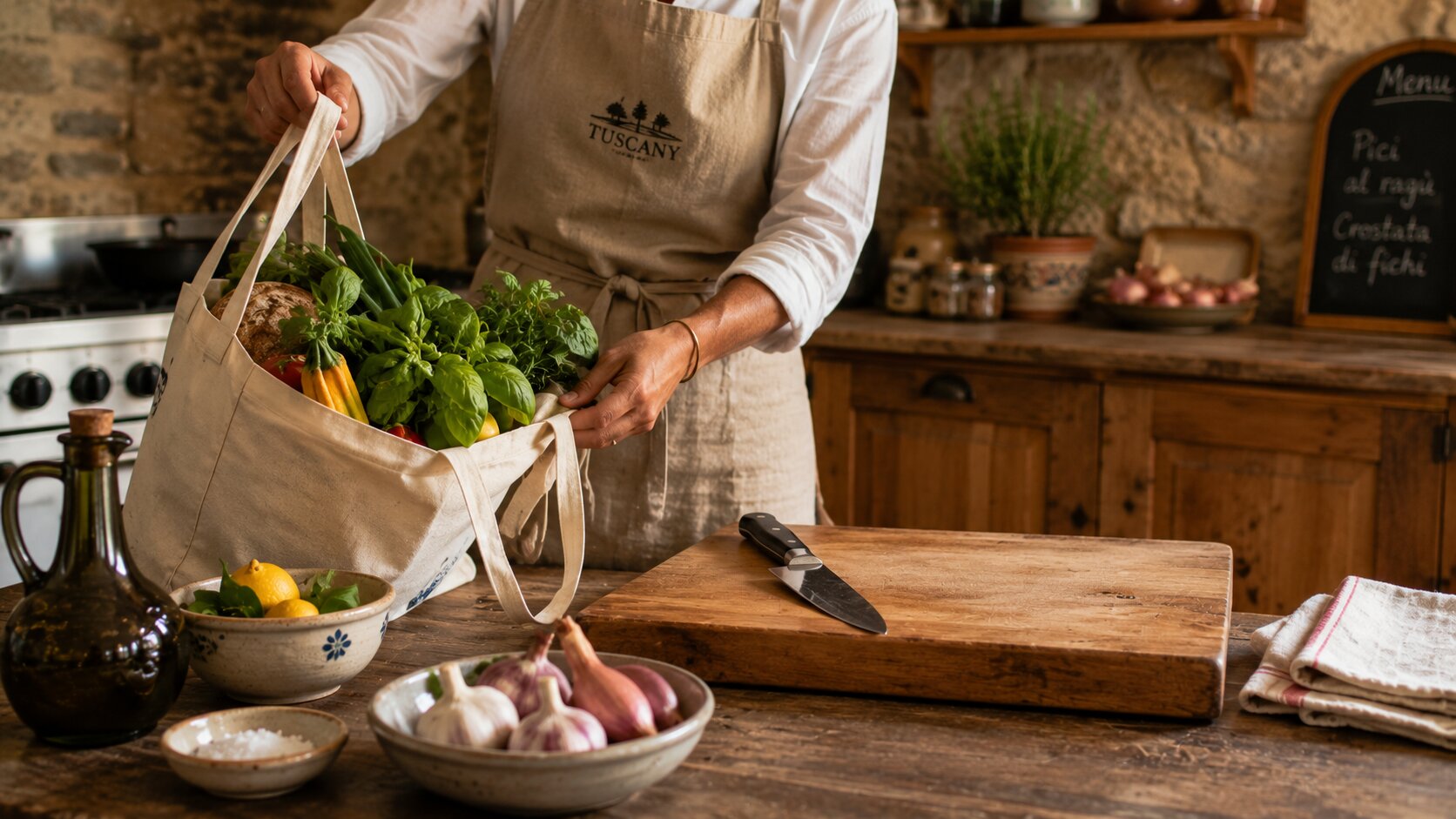
Tuscan food rarely separates cleanly from where it comes from. A market visit makes that connection visible. You can see exactly which farm the tomatoes traveled from, exactly which region a cheese was aged in. A cooking class puts that same connection into practice. It turns what you noticed at the market into something you actually made yourself.
Together, the two halves add up to more than a meal. They show how ingredients, place, and technique actually fit together. A recipe card on its own never quite manages to explain that.