In this post
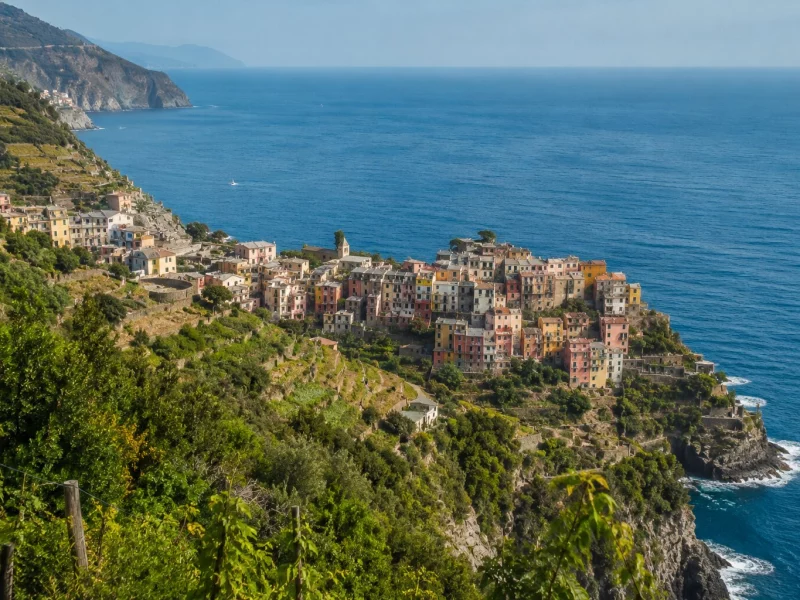
Understanding the Cinque Terre villages means looking beyond their colors and considering how each one relates to the landscape around it.
Although Monterosso, Vernazza, Corniglia, Manarola, and Riomaggiore are often grouped together, they do not offer the same experience. Each village interacts differently with the sea, the cliffs, and the movement of visitors along the coast.
Exploring them with this perspective reveals a more structured and nuanced understanding of the Cinque Terre.
Monterosso: Space and Openness
Monterosso is the most expansive of the five villages.
It is the only one with a significant stretch of beach, and its layout feels more horizontal than vertical. The relationship with the sea is immediate and accessible, creating a different rhythm compared to the other villages.
Movement here feels less compressed. There is more room to pause, to walk along the waterfront, and to experience the coastline without constant elevation changes.
Vernazza: A Balanced Composition
Vernazza is often perceived as the most visually balanced village.
Its harbor creates a natural focal point, while the surrounding buildings rise in a compact yet harmonious way. The connection between land and water is immediate, but also structured.
The village feels centered. Everything leads toward the harbor, and the spatial organization becomes clear almost instantly.
Corniglia: Elevation and Distance
Unlike the others, Corniglia does not sit directly on the sea.
It is positioned on a hill above the coastline, requiring a climb to reach its center. This elevation changes the experience entirely. The sea is present, but at a distance.
The perspective becomes more panoramic than immersive. Views extend outward rather than inward, and the village feels more detached from the immediate movement of the coast.
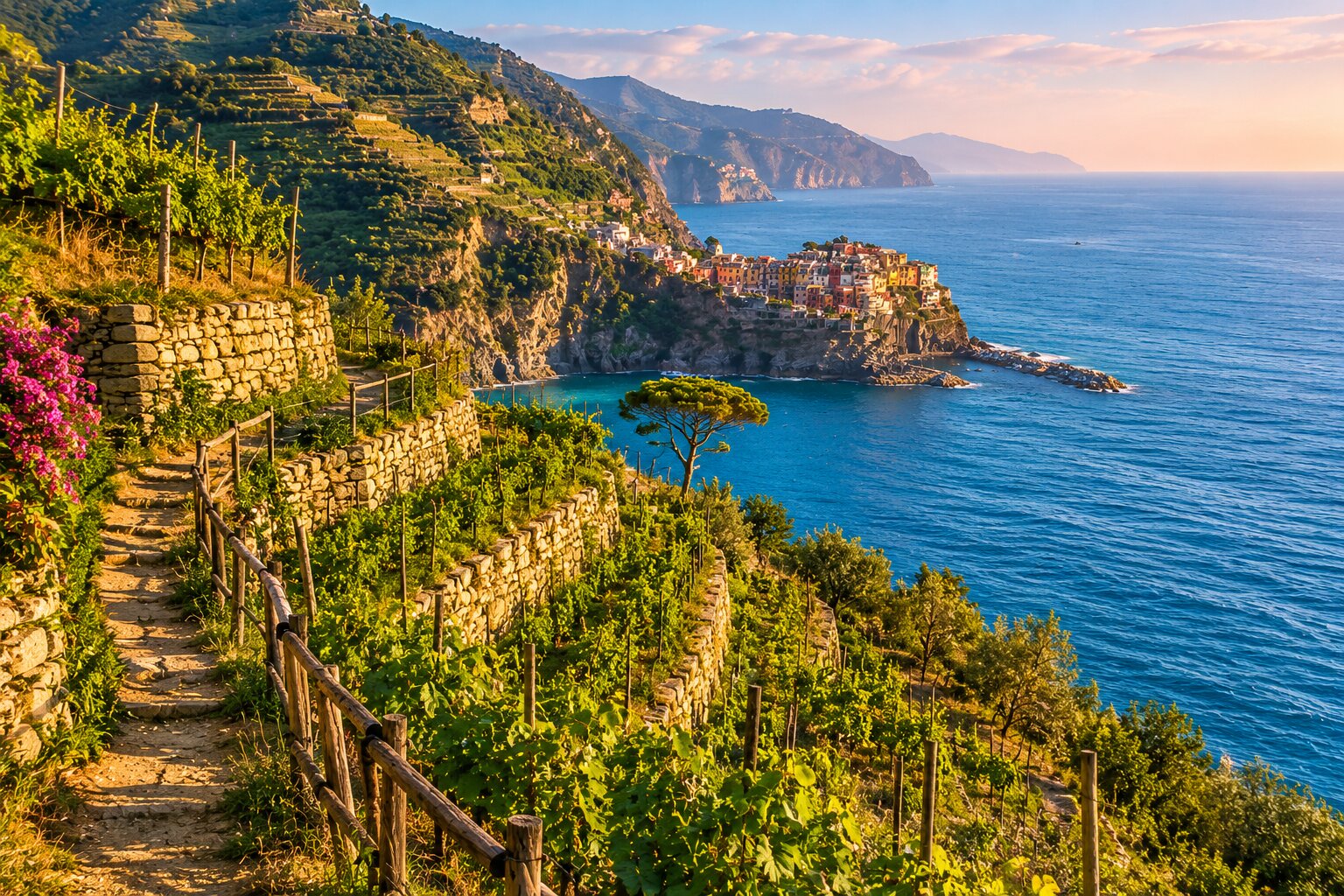
Manarola: Vertical Structure and Light
Manarola is defined by verticality.
Houses rise closely together along the rock, creating a layered composition that changes continuously with light. The relationship between architecture and cliff is particularly evident here.
The absence of a large harbor or beach concentrates movement into narrower spaces, reinforcing the village’s compact and vertical character.
Riomaggiore: Movement and Transition
Riomaggiore often feels like a point of transition.
Its elongated structure follows the natural line of the valley, leading gradually toward the sea. The village unfolds through movement, rather than presenting itself all at once.
This progression creates a different type of experience, where discovery happens step by step.
Understanding the Villages as a System
Rather than approaching the Cinque Terre as five separate stops, it is more useful to understand them as a connected system.
Each village represents a variation of how architecture adapts to terrain. Together, they form a continuous landscape shaped by constraints, geography, and centuries of human activity.
While each village has its own identity, the way you experience them can change everything. As explored in Cinque Terre beyond the crowds, timing and perspective play a key role in shaping a more balanced and meaningful visit.
A More Intentional Way to Experience Cinque Terre
Understanding the differences between the Cinque Terre villages allows for a more intentional approach.
Instead of trying to see everything quickly, the experience becomes more selective. Some villages invite longer pauses, others shorter visits. The sequence matters less than the quality of time spent in each place.
For travelers looking to explore the coastline with greater structure and flexibility, a guided experience can help transform complexity into clarity. You can discover more here: Cinque Terre private tour from Florence with optional hike.
In the end, the Cinque Terre is not defined by a single image, but by the relationship between its villages and the landscape that connects them.