In this post
The word "pasta" in Italian can mean different things. It can refer to any food made from a paste of flour and water, so it covers pastry as well as pasta. Una pasta at breakfast time in a bar means one of the fresh baked sweet pastries people eat with a cappuccino. To avoid confusion, ask for a pezzo dolce, a cornetto (croissant) or a brioche instead. This guide covers the other kind: Tuscan pasta, the plates of pici, pappardelle and tortelli you'll actually order at lunch and dinner.
Pastasciutta and the Primo Piatto
At other meals, pasta means pastasciutta. Chefs make it with pasta secca, the familiar dried pasta, or pasta fresca, the fresh version, usually with eggs, served the same day. Italians call a dish of pasta a primo piatto, or "first course," grouped with rice dishes and soups. Dried pasta tends to turn up with the simpler, more robust Tuscan sauces. Fresh egg pasta is more for special occasions, or for a dish like tordelli, where the dough itself is the point. For a broader look at where pasta fits in a Tuscan meal, our guide to traditional Tuscan food covers the courses before and after it.
Classic Tuscan Pasta Shapes
Each region of Italy has its own local pasta shapes. Here are a few you'll probably come across in Tuscany.
Tortelli mugellani are little parcels of pasta filled with potato. The filling can carry cheese or a little meat. The Mugello area, which gives its name to this pasta, sits in the hills north of Florence. Cooks there traditionally used either wheat or chestnut flour, since chestnuts have long been a staple crop in the area.
Maltagliati are a long flat noodle, similar to tagliatelle but misshapen and rustic looking rather than neatly cut. They originally come from Emilia-Romagna. The name means "badly cut."
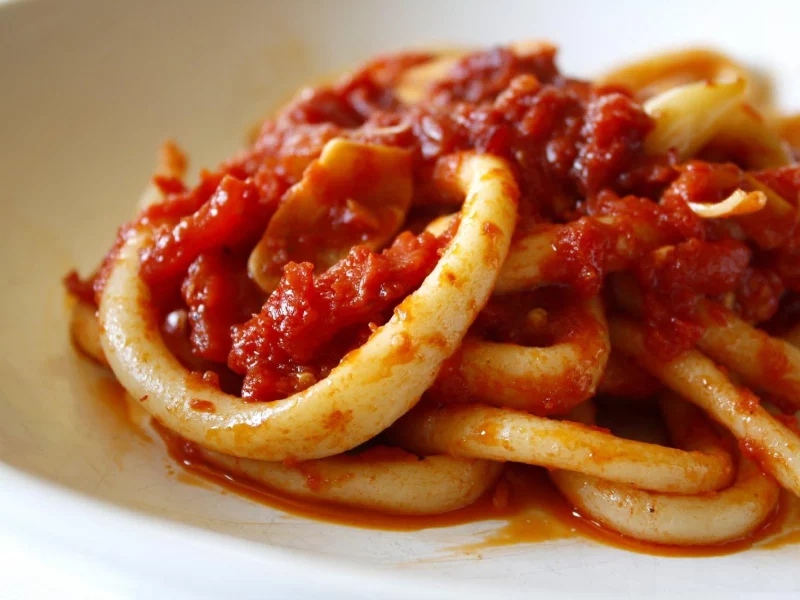
Pici, also called Pici Senesi, are thick spaghetti from southern Tuscany around Siena, hence the name. Cooks roll them out between the fingers rather than running them through a machine, so each one comes out slightly uneven. The traditional sauce is aglione, made with tomatoes and a giant, mild garlic grown around the Valdichiana. You'll also find pici served with a hearty, gamey ragù. Along with pappardelle, it's one of the most widely available Tuscan pasta shapes outside the region itself.
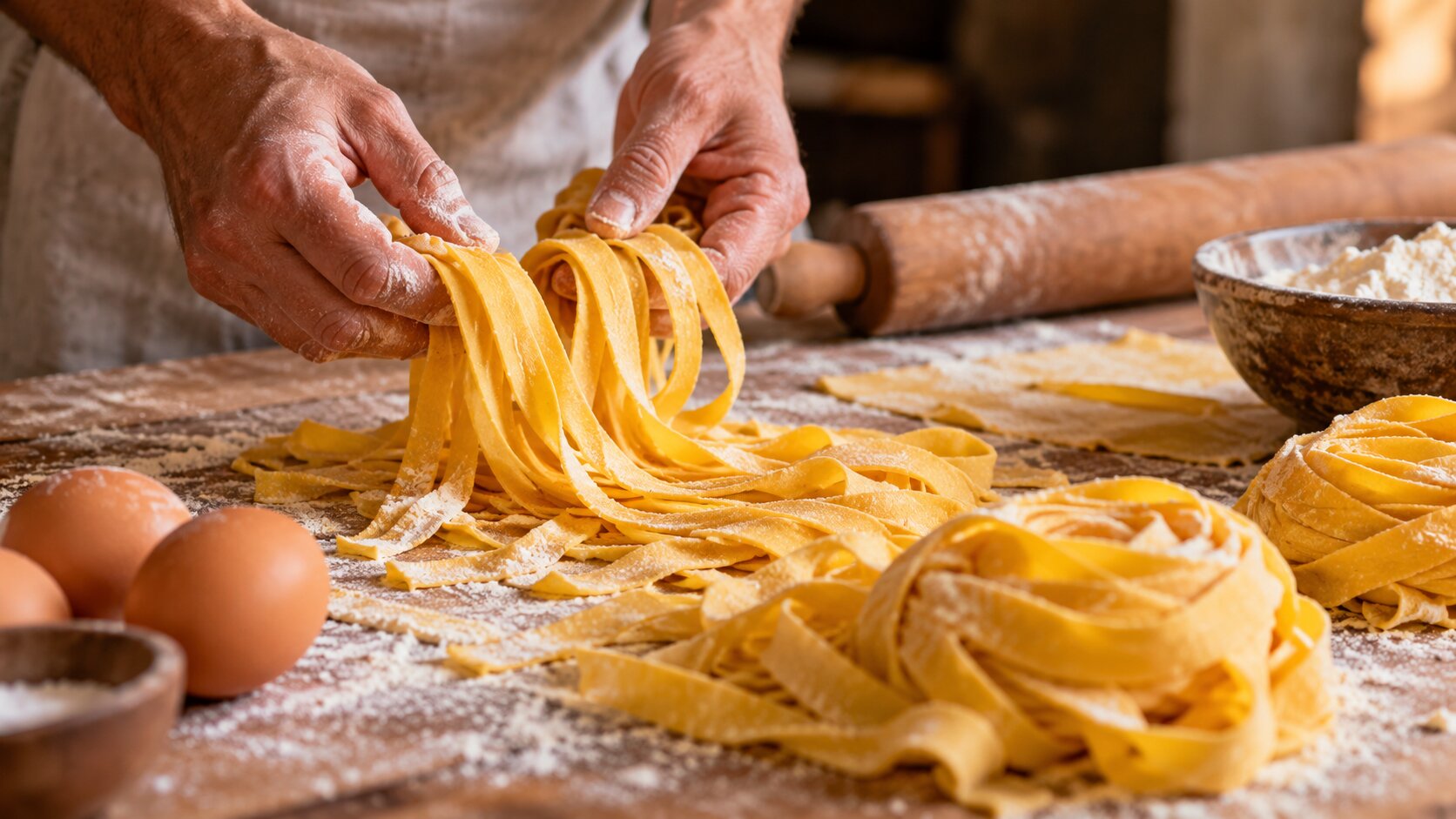
Pappardelle are wide ribbons of pasta from Tuscany. Cooks pair them with rich game sauces: wild boar (cinghiale) in the Maremma, or hare (lepre) from the hills around Florence.
Lesser-Known Tuscan Pasta
Testaroli come from the Lunigiana, the hilly border area between northern Tuscany and Liguria, and they don't resemble anything else on this list. Cooks pour a thin batter of flour, water and salt onto a hot terracotta or cast-iron griddle called a testo. Once it cooks into a spongy sheet, they cut it into diamonds and dip it briefly in boiling water rather than boiling it from raw. It's a very old style of cooking, often described as one of the earliest forms of pasta still made in Italy today. People usually eat it simply, with pecorino and olive oil or a spoonful of pesto. Pontremoli, in the province of Massa-Carrara, is the town most associated with it, and Slow Food now recognises it as a traditional product worth protecting.
Tordelli lucchesi come from the city of Lucca in north-west Tuscany. This bright yellow egg pasta takes the shape of large half-moons, filled with a mixture of meats, usually beef and pork, along with herbs and grated cheese. Cooks generally serve it with a rich meat ragù rather than a lighter sauce. The egg-based dough sets it apart from most of Tuscany's other pastas, which traditionally use just flour and water. Recipes vary from one Lucchese family to the next, so don't expect the same filling twice.
Flour and Water, Mostly
Most of the shapes above, pici, maltagliati and testaroli included, use nothing more than flour, water and salt. This simple dough defines Tuscan peasant cooking. Tordelli lucchesi, made with egg, is more the exception than the rule here. Egg pasta generally belongs to the wealthier regions further north, and Lucca, with its history in banking and silk, is one of the few places in Tuscany where it took hold the same way.
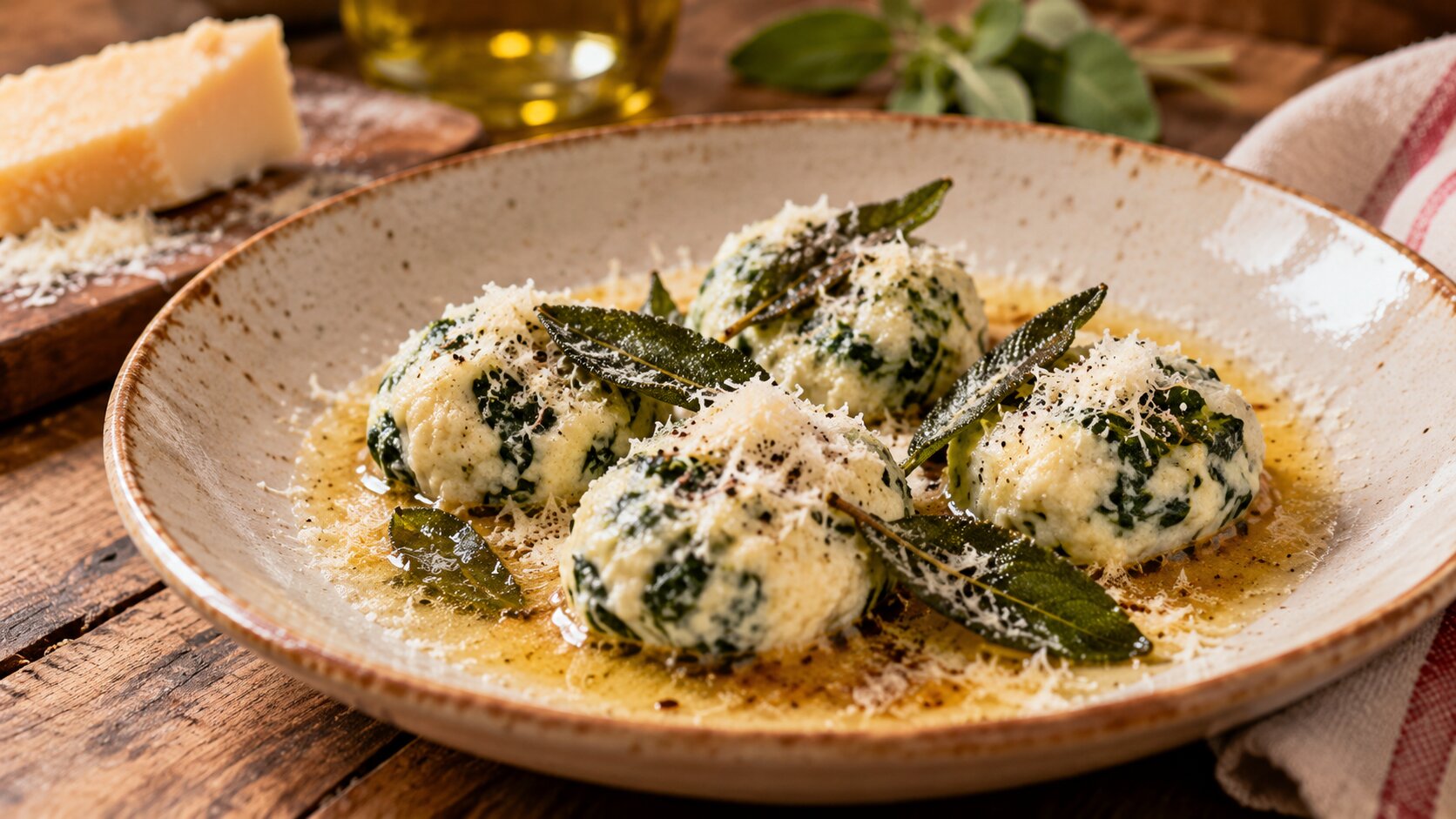
Gnudi, sometimes called malfatti around Siena, are worth a mention even though they aren't technically pasta. They're ricotta and spinach dumplings rather than a dough, and they show up on the same primo piatto menus as everything above. The name means "naked," since the dish is essentially ravioli filling cooked without the pasta wrapped around it. Cooks usually finish it with sage and brown butter.
Ordering Pasta Like a Local
In Tuscany, as in the rest of Italy, pasta is a primo, the first of several courses rather than the main event. A full meal usually continues with a secondo, meat or fish, plus a side dish you order separately. If you only want pasta, just say so; waiters see tourists order a primo alone all the time.
Portions run smaller than you might expect elsewhere, since restaurants scale them for a multi-course meal rather than one plate meant to fill you up. Some places offer a mezza porzione, a half portion, so you can try two different pasta dishes, or sample one before the secondo.
A glass of local wine usually comes alongside it. Chianti pairs naturally with meat-based sauces like a tordelli ragù or wild boar pappardelle. A lighter white, a Vernaccia from San Gimignano for instance, suits something simpler, like pici in olive oil and garlic, better.
Menus change with the seasons, too. Game sauces for pappardelle show up most often in autumn and winter, when hunting season brings wild boar and hare to market. Lighter dressings, olive oil, fresh tomato, a simple pesto, tend to appear more in spring and summer instead.
Learning to Make It Yourself
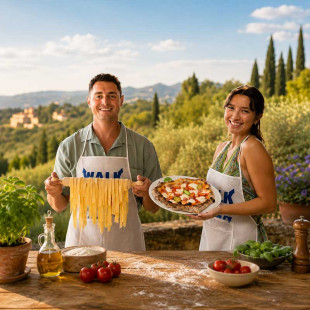
Reading a list of shapes only goes so far. Pasta made by hand looks and feels different from anything that comes out of a packet. Our Florence market tour and cooking class starts at Mercato Centrale, the city's main food market, where you can see the same ingredients that go into dishes like these before heading out to a farmhouse in the Tuscan countryside to cook them.
The class teaches you to make fresh pasta by hand, using freshly-laid eggs, alongside a Tuscan sausage ragù, a bruschetta made with the farmhouse's own olive oil, pesto, and a tiramisù to finish. It's a hands-on lesson rather than a demonstration, so you roll and shape the dough yourself, then sit down afterward to a full lunch of what you made, with Chianti wine alongside it. The class also runs without the market stop for those short on time. Either version ends the same way: a four-course lunch you cooked yourself, in a kitchen on a private Tuscan estate, with a driver waiting afterward to take you back to Florence.